A well pump that freezes in winter can leave a home without water for days, and the symptoms often appear suddenly. The taps sputter and then stop, the pressure gauge drops to zero, and the pump may run continuously or not at all. Unlike a municipal supply, a well system has above-ground components—the pressure tank, the switch, the piping from the wellhead, and sometimes the pump itself—that are exposed to cold air and can freeze when temperatures plunge.
This guide explains why well pumps and their connected piping freeze, how to tell a frozen line from a failed pump or a tripped breaker, the safe way to thaw the system, and the permanent fixes that keep water flowing through the coldest weeks. Safety comes first: a well pump runs on 240 volts, and water plus electricity is a serious hazard. Know where your breaker is and use it before you touch anything.
Why Well Pumps and Well Lines Freeze in Winter
A submersible well pump sits below the frost line and is unlikely to freeze on its own. The vulnerable parts are above ground: the pipe that rises from the wellhead to the pressure tank, the pressure switch and gauge, the tank fittings, and any exposed supply line in a pump house, crawl space, or garage. These components hold water, and still water in an unheated space freezes quickly.
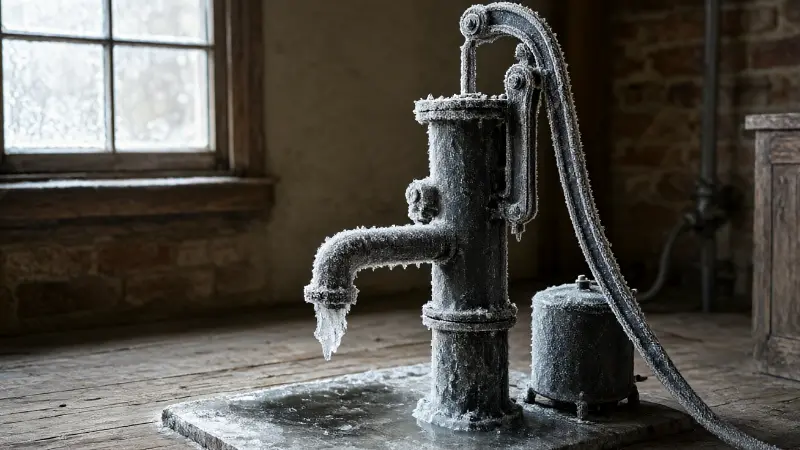
Cold air is the main culprit. A pump house with a loose door, a missing insulation panel, or a failed heat source can drop below freezing overnight. A crawl space with open foundation vents and uninsulated pipes is another common freeze point. Even a wellhead that is properly sealed can transmit cold down the casing if the pitless adapter or the pit cover is damaged.
Wind makes freezing worse by stripping heat from exposed surfaces. A pipe that survives a still night at 20°F can freeze when the same temperature arrives with a 20 mph wind. That is why a well house that worked for years can suddenly fail during a windy cold snap.
Power outages add another layer of risk. If the heat source in a pump house depends on electricity, an outage removes the protection. A well pump that loses power during a freeze may also have water sitting in the lines with no circulation to keep it moving, which accelerates ice formation.
Signs the Well System Is Frozen, Not Failed
The first sign is usually a loss of water pressure at the fixtures. The taps may sputter and then produce nothing, or the flow may be weak and intermittent. Check the pressure gauge on the tank. A gauge that reads zero while the pump is trying to run suggests a frozen line or a closed valve rather than an empty well.
Listen at the pressure tank and the wellhead. A pump that hums but does not build pressure may be running against a frozen line. A pump that is completely silent may have lost power or tripped its breaker. A pump that runs continuously without shutting off can indicate a frozen line that is preventing the system from reaching its cut-off pressure.
Look for visible frost or ice on the exposed piping, the pressure switch, or the tank fittings. A pump house door that is frozen shut or a crawl space with ice on the pipes is a strong clue. Check the breaker panel for a tripped circuit, and confirm that the pressure switch contacts are not stuck open.
If the pump is a jet pump with above-ground components, the pump body and the suction line are both vulnerable. A jet pump that loses prime and will not build pressure after a cold night is a classic freeze symptom. If the system uses a submersible pump, the freeze is more likely in the above-ground piping than in the well itself.
Safety First: Shut Off Power Before You Inspect
Before you open a pump house, remove a panel, or touch any wiring, turn off the circuit that feeds the well pump. The breaker is usually a double-pole 240-volt breaker in the main panel, sometimes labeled “well” or “pump.” If you are not sure which breaker it is, turn off the main breaker or call an electrician rather than guessing.
Verify that the power is off with a non-contact voltage tester at the pump or the pressure switch before you proceed. Do not rely on the breaker label alone. Well pump circuits are often wired with constant power at the pressure switch, and a mistaken assumption can be dangerous.
If the pump house is flooded or the floor is wet, do not enter until the power is off and the water is contained. Standing water around electrical equipment is a shock hazard, and a submersible pump that has been partially pulled from the well can be especially dangerous. Call a well contractor if the situation is beyond a simple thaw.
Never use an open flame, a blowtorch, or a heat gun on high near a well pump, pressure tank, or plastic piping. A pressure tank contains compressed air and water, and heating it can cause a rupture. Plastic pipe can melt or deform, and a flame near a wooden pump house is a fire risk. Warm air, warm towels, and a hair dryer on a low setting are the safe tools.
Thawing the Well Line Safely
Start at the fixture end and work back toward the pressure tank and the wellhead. If a faucet is open and the ice is melting, water needs somewhere to go. Open the nearest cold-water faucet before you apply heat, and leave it open during the thaw.
Use a hair dryer on a low or medium setting, held several inches from the pipe and kept moving. Warm, damp towels wrapped around the frozen section are another safe option; refresh them as they cool. A small space heater placed in the pump house, with proper clearance and never left unattended, can raise the ambient temperature enough to thaw the piping gradually.
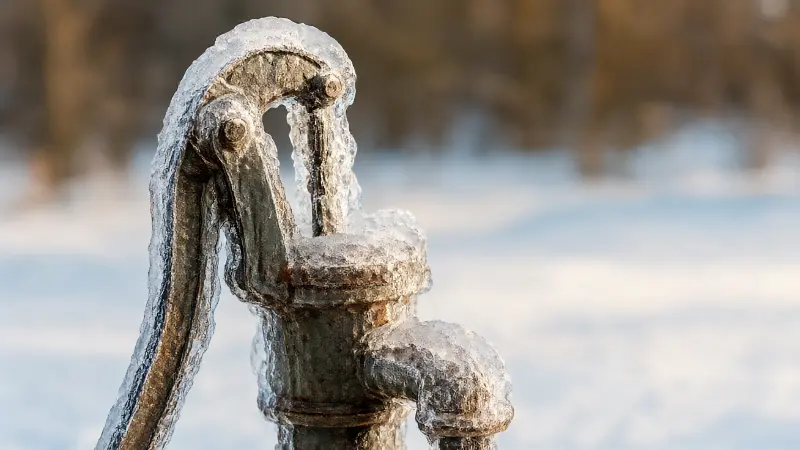
Do not pour boiling water onto a frozen pipe or pressure switch. Thermal shock can crack plastic components and damage the switch. Do not use a hammer or chisel to break ice inside a pipe; mechanical force can split the pipe or damage a fitting that survived the freeze.
If the frozen section is underground or inside a well casing, do not attempt to dig or dismantle the wellhead. Below-ground freezing is uncommon but possible in shallow systems, and it requires a well contractor with the right equipment. Call a professional if the above-ground thaw does not restore flow.
Once water begins to flow, let it run for several minutes and watch the pressure gauge. The pump should build pressure and shut off at the cut-off point. If the pump runs continuously, if the pressure stays low, or if you hear air sputtering at the faucet, the system may still be partially frozen or may have lost prime. A jet pump that has lost prime may need to be reprimed according to the manufacturer’s instructions.
Check the Pressure Switch, Tank, and Pump Components
The pressure switch is a small box mounted near the tank, and it is a common freeze point because it contains a diaphragm and small openings. A frozen switch can stick open and prevent the pump from starting, or stick closed and let the pump run continuously. With the power off, inspect the switch for ice or moisture. Thaw it gently and confirm that the contacts move freely.
The pressure tank contains a bladder and a pre-charge of air. If the tank or its fittings freeze, the bladder can be damaged and the tank may become waterlogged. A waterlogged tank causes the pump to cycle rapidly and can shorten its life. Check the tank’s air charge with a tire gauge at the Schrader valve if the manufacturer provides one, and compare it with the recommended pre-charge.
On a jet pump system, check the pump body, the suction line, and the foot valve. A frozen suction line can prevent the pump from drawing water, and a frozen foot valve can cause a loss of prime. These components are often in a pit or a shallow well, and thawing them may require a professional if access is difficult.
Related winter failures in other water systems follow similar logic. A frozen condensate line on a high-efficiency furnace can shut down the heat, and a guide to a frozen HVAC condensate line covers the thawing and prevention steps for that system. A circulator pump that stops moving water leaves the house without heat, and a guide to a circulator pump not running explains the checks for a hydronic system.
Preventing the Next Freeze
Insulate the exposed piping between the wellhead and the pressure tank. Foam pipe insulation slows heat loss, and sealing the seams and ends keeps cold air from reaching the pipe. Pay attention to elbows, the pressure switch, the gauge, and the tank fittings, because those are the parts most often skipped and most likely to freeze.
Keep the pump house or well pit above freezing. A small thermostatically controlled heater rated for the space can protect the equipment, provided it is installed with proper clearance and on a circuit that can handle the load. Do not use an unvented combustion heater in a confined space, because carbon monoxide can accumulate.
Seal the drafts. A pump house door that does not close tightly, a missing insulation panel, or a gap around the wellhead can let cold air reach the pipes. Weatherstrip the door, insulate the walls and ceiling, and seal the penetrations with a material appropriate for the surface.
During severe cold, leave a faucet dripping slightly to keep water moving through the system. Moving water freezes more slowly, and the open faucet relieves pressure if ice begins to form. This is a low-cost precaution that can protect a marginal installation.
If you leave home for an extended period, do not shut off the heat to the pump house. Keep the thermostat at a temperature that protects the equipment, and ask someone to check the system or use a monitored temperature sensor. A well pump that freezes while you are away can flood the pump house when it thaws.
Other water-handling equipment needs similar attention. A sump pump discharge line that freezes can back water into the basement, and a guide to a sump pump discharge line frozen covers the slope, insulation, and heat-cable fixes that apply to that system.
When to Call a Well Contractor or Plumber
Call a well contractor if the frozen section is below ground, if the wellhead or casing is damaged, if the pump will not build pressure after thawing, or if you suspect the pump itself has been damaged by running against a frozen line. A submersible pump that has been overheated may need to be pulled and replaced, which is a job for a professional with a pump hoist.
Call an electrician if the breaker trips repeatedly, if the pressure switch shows scorched contacts, or if you see damaged wiring in the pump house. Do not attempt to repair a well pump circuit unless you are trained to work safely with 240-volt equipment.
If the pump house has flooded, address the water and the electrical hazard before the plumbing repair. Turn off the power, remove standing water with equipment rated for the job, and dry the space. A well contractor can then inspect the pump, the tank, and the controls before the system is returned to service.
Quick Reference: Frozen Well System Symptoms and Fixes
The table below matches common winter well-system failures with the likely cause and the safest first step. Use it to organize your checks, and stop if a step involves live voltage, a buried line, or a repair you are not trained to perform.
| Symptom | Likely Cause | Safe First Step | When to Call a Pro |
|---|---|---|---|
| Taps sputter, then no water; gauge reads zero | Frozen line between wellhead and tank | Turn off pump power; open a faucet; thaw gently from the fixture end | No flow after a careful thaw |
| Pump hums but pressure does not build | Frozen line or blocked pressure switch | Shut off power; inspect for ice at the switch and piping | Pressure stays low after thawing |
| Pump runs continuously and will not shut off | Frozen line preventing cut-off, or waterlogged tank | Shut off power; check the tank air charge and the switch | Tank is waterlogged or the switch is damaged |
| Pump completely silent, breaker tripped | Electrical fault or overload from a frozen line | Reset the breaker once; if it trips again, stop | Repeated trips require an electrician |
| Jet pump loses prime after a cold night | Frozen suction line or foot valve | Thaw the accessible piping; follow the repriming procedure | Priming fails or the line is underground |
| Ice visible on the pressure switch or tank fittings | Unheated pump house or missing insulation | Thaw gently; add heat and insulation | Freeze repeats after insulation |
| Water returns but pressure is weak | Partial ice blockage or a failing pump | Continue gentle thawing; watch the gauge | Weak pressure persists after thawing |
| Pump house flooded after a thaw | Split pipe or damaged fitting from freezing | Turn off power; contain the water | Always, for a burst line or wet electrical equipment |
FAQ
Can a submersible well pump freeze?
The pump itself sits below the frost line and is unlikely to freeze, but the piping and controls above ground can. A shallow well or a poorly sealed wellhead can allow cold to reach the drop pipe, but the more common freeze points are the line to the pressure tank, the pressure switch, and the tank fittings.
How do I know if my well pump is frozen or burned out?
A frozen line usually produces a pump that hums without building pressure, a gauge that stays at zero, or a pump that runs continuously. A burned-out pump may trip the breaker, run silently, or fail to draw current. Testing the pressure switch and the voltage at the pump can separate the two, and that testing should be done by someone trained for 240-volt work.
Can I thaw a frozen well line with hot water?
Boiling water can crack plastic pipe and damage the pressure switch through thermal shock. Warm water in small amounts, a hair dryer on a low setting, or warm towels are safer. Never use an open flame or a heat gun on high near a pressure tank or plastic piping.
Why does my well pump lose pressure only in winter?
Winter introduces cold air, frozen lines, and frozen pressure switches that do not exist in warm weather. A partially frozen line restricts flow, and a frozen switch can prevent the pump from starting. If the pressure returns when the weather warms and the system has not been repaired, the cause was almost certainly a freeze rather than a failed pump.
Conclusion
A well pump that freezes in winter is usually a problem with the above-ground piping, the pressure switch, or the tank fittings rather than the pump deep in the well. The symptoms are a sudden loss of pressure, a pump that hums without building pressure, or a system that runs continuously and never shuts off. Confirm the freeze, shut off the power, and thaw the exposed components gently with warm air or towels.
Never use a flame, boiling water, or a high-setting heat gun on well equipment. A pressure tank and plastic piping can be damaged by concentrated heat, and a well pump circuit carries 240 volts. If the frozen section is underground, if the pump will not build pressure after thawing, or if the pump house has flooded, call a well contractor or an electrician.
Prevention is the durable fix. Insulate the exposed lines, seal the drafts in the pump house, keep a safe heat source in the space, and let a faucet drip during severe cold. Those steps keep the water flowing and protect the equipment through the coldest part of the season.