A circulator pump that stops running in winter leaves a hydronic heating system with a hot boiler and cold radiators or baseboard. The boiler may fire, the pipes near the boiler may feel warm, and the thermostat may be calling for heat, yet the rooms stay cold because the water is not moving. Because the pump is often tucked in a basement or utility closet and runs quietly, the failure can go unnoticed until the house feels wrong.
The cause can be electrical, mechanical, or related to the control circuit that tells the pump when to run. Some pumps fail outright, while others seize from sitting idle through the summer or lose power because of a zone relay, aquastat, or loose connection. This guide walks through a logical diagnostic order, explains what each component does, and marks the point where a technician should take over.
How a Circulator Pump Fits Into a Hydronic System
A hydronic heating system uses water as the heat carrier. The boiler heats the water, and the circulator pump pushes that water through pipes to radiators, baseboard convectors, or in-floor tubing. The water releases heat into the room and returns to the boiler to be reheated. Without circulation, the boiler can reach its high limit and shut down while the rooms never warm up.
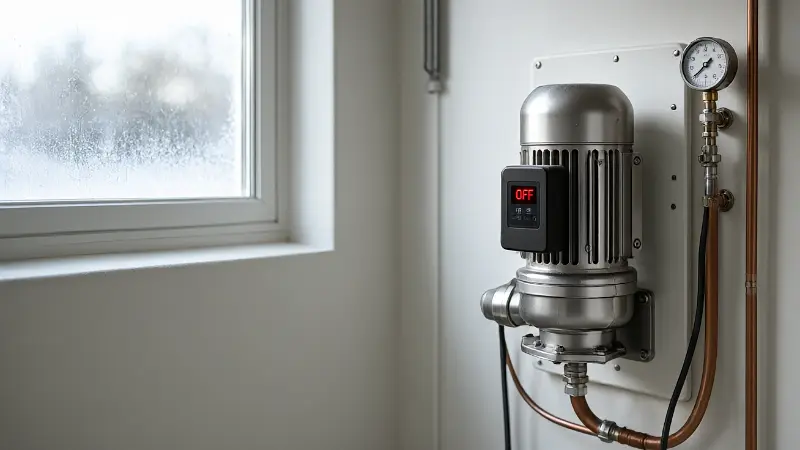
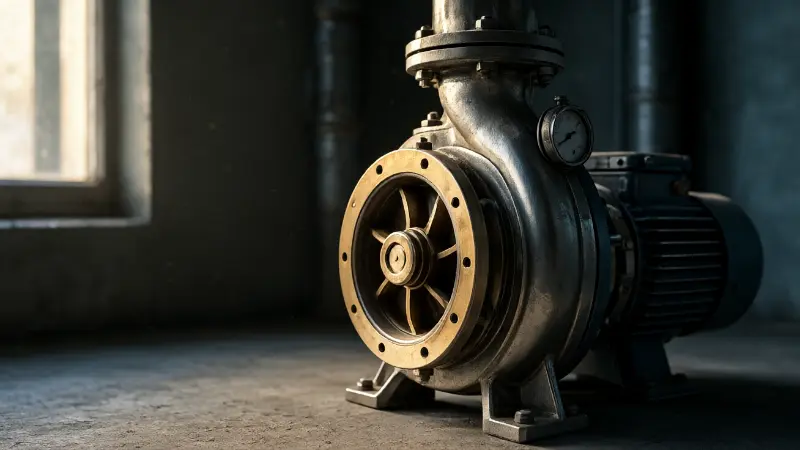
Circulator pumps come in a few common designs. A wet-rotor circulator has the motor windings cooled by the system water and is often used on smaller residential systems. A dry-rotor or three-piece circulator separates the motor from the water with a mechanical seal and coupling. Both types can be driven by a relay, a zone controller, or a boiler control board depending on the installation.
The pump does not decide when to run on its own. It receives power from a control circuit that responds to the thermostat, the zone valve end switch, or the boiler aquastat. That means a pump that appears dead may be perfectly healthy while the control circuit is not sending it voltage. Separating a pump failure from a control failure is the central diagnostic question.
Start With the Thermostat and the Call for Heat
Confirm that the thermostat is actually calling for heat. Set the mode to Heat and raise the set point several degrees above room temperature. Listen for a click at the thermostat and, if you have a zone system, watch for the zone valve to open or the zone relay to activate. A thermostat with dead batteries or a blank display will never start the sequence.
Check whether other zones are working. If one zone heats and another does not, the problem is likely in that zone’s valve, relay, or pump rather than the boiler itself. If no zone heats, the issue may be in the boiler control, the main circulator, or the shared power supply.
Some systems use a single circulator with zone valves, while others use one circulator per zone. Knowing which layout you have narrows the diagnosis quickly. A single-pump system that fails affects every zone at once, while a multi-pump system can lose one zone while the rest keep working.
Check Power, Breaker, and the Service Switch
Before touching the pump, confirm that it has power. Find the circuit breaker that feeds the boiler and circulator circuit and look for a tripped breaker. Reset it once and watch what happens. If it trips again immediately, stop and treat the issue as an electrical fault rather than resetting repeatedly.
Look for a service switch near the boiler or on the side of the pump. It often looks like a light switch or a small disconnect, and it can be turned off accidentally during service or cleaning. Confirm that it is in the On position and that any fuse on the boiler control board is intact.
A pump that is hardwired will not have a plug to test, so voltage checks are the reliable method. Those checks involve live electrical components and should be performed by someone trained to do them safely. If you are not comfortable working around line voltage, this is the point to call a technician.
Listen and Feel for Signs of a Seized Pump
A circulator that has sat idle all summer can seize from sediment, hard water deposits, or a stuck impeller. The motor may hum without turning, or it may be completely silent if the rotor is frozen and the motor has gone into thermal protection. Placing a hand on the pump body can sometimes reveal a faint vibration when the motor is trying to run.
Many wet-rotor circulators have a large screw or plug in the center of the motor housing. Removing that plug with the power off exposes a shaft end that can sometimes be turned with a suitable tool to free a stuck rotor. This is a common service technique, but it requires shutting off power, containing any water that escapes, and avoiding force that could damage the shaft.
On three-piece circulators, the coupling between the motor and the pump body can fail, allowing the motor to spin while the impeller stays still. That condition produces a running motor with no circulation, which can be confusing because the pump sounds normal. A technician can confirm coupling and impeller condition during service.
The same principle of freeing a stuck component appears in other winter equipment. A stuck shear pin on a snow blower is a different mechanism, but the guidance on snow blower shear pin removal illustrates how careful, power-off diagnosis prevents damage to the surrounding parts.
Inspect the Control Circuit and Zone Components
If the pump has power available at its terminals but does not run, the motor or capacitor is the likely fault. If the pump has no power at all, the control circuit is the place to look. Trace the wires back to the relay, zone controller, or boiler aquastat and confirm that each device is passing voltage when it should.
Zone valves and their end switches are frequent culprits on multi-zone systems. The valve opens, the end switch closes, and that switch powers the circulator. If the valve motor fails or the end switch sticks, the pump never receives the signal. The symptoms can look identical to a dead pump, so testing at the pump terminals is the way to separate them.
The boiler aquastat or high-limit control also plays a role. Some wiring arrangements only power the circulator when the boiler water is above a set temperature, a design intended to prevent cold water from being circulated. If the aquastat is set incorrectly or has failed, the pump may not receive power even though the thermostat is calling.
For background on how protective switches can lock out a heating appliance, a look at a furnace pressure switch stuck closed shows a similar logic: a safety device proves a condition before the system is allowed to run, and a fault stops the sequence. Hydronic controls work on the same principle even though the components differ.
Rule Out Air, Water Level, and Flow Problems
A circulator can run perfectly and still fail to move heat if the system is air-bound or low on water. Air pockets can stall circulation in a loop, and a low water level can leave the pump running dry or cavitating. Check the boiler pressure gauge against the manufacturer’s recommended cold fill pressure, and look for a sight glass or low-water cutoff indicator if your system has one.
Listen for gurgling, whooshing, or rattling sounds at the boiler and radiators. Those noises often indicate air in the system. Bleeding radiators and purging air from the loops can restore circulation, but persistent air intrusion points to a leak, a failed automatic vent, or a suction-side issue that needs proper diagnosis.
If the noise is coming from a sump pit rather than the heating loop, a guide to water running in a sump pump can help you separate normal cycling from a fault.
Water quality matters too. Sludge and magnetite can accumulate in older systems, coating the impeller and narrowing the passages. A pump that has been slowing over several seasons may be a symptom of system water that needs flushing and treatment rather than a pump that suddenly failed.
Consider Cold-Weather Effects on Pumps and Piping
Winter adds failure modes that do not exist in mild weather. Pipes in unheated spaces can freeze and block circulation, and a frozen section near an exterior wall can stop a zone even though the pump is running. Insulation, heat tape used according to its listing, and keeping the space above freezing all reduce that risk.
Pump houses, well houses, and outbuildings that contain water equipment need reliable heat, and the heat source matters. A conventional incandescent bulb has sometimes been used for freeze protection, but LEDs produce far less heat, and that difference can matter. A discussion of the best light bulb for pump house heating explains why the choice of bulb affects freeze protection for equipment in those spaces.
Some homeowners also confuse circulator problems with heat pump problems because both leave the house cold. They are different technologies with different diagnostics, and a guide to heat pump not heating below 30 explains the cold-weather behavior of that equipment. Knowing which system you have keeps the troubleshooting focused.
When to Call a Technician
Call a qualified heating technician if you are not comfortable with live voltage testing, if the breaker trips repeatedly, if you see scorched wiring or smell burning, or if the pump has voltage but will not run. A technician can test the capacitor, confirm the control circuit sequence, and replace the pump with a correctly sized unit.
Pump sizing matters more than homeowners often expect. A replacement with the wrong flow rate or head rating can cause noisy operation, uneven heating, or premature failure. Matching the original pump’s specifications, or having a technician calculate the system requirements, is the reliable approach.
If the system is low on water, has a persistent air problem, or shows signs of sludge, the repair involves more than the pump. Addressing only the circulator in those cases often leads to a repeat failure within a season. A proper service visit can assess the pump, the controls, the water quality, and the piping together.
Quick Reference: Symptoms and Likely Causes
The table below matches common “pump not running” symptoms with the conditions that most often produce them. Use it to organise your observations, and stop if a step involves live voltage, gas components, or a part you are not trained to service.
| Symptom | Likely Cause | Safe First Step | When to Call a Pro |
|---|---|---|---|
| Boiler fires but no zone heats | Main circulator not running or control circuit fault | Confirm thermostat call; check breaker and service switch | Pump has power but does not run |
| One zone cold while others heat | Zone valve, end switch, or zone circulator fault | Check that zone’s valve and relay operation | Valve or pump needs testing or replacement |
| Pump hums but does not circulate | Seized rotor or failed capacitor | Turn off power; check for a shaft access plug | Rotor will not free or motor is hot |
| Pump silent with no voltage at terminals | Relay, aquastat, zone control, or wiring fault | Trace the control circuit back to its source | Live voltage testing is needed |
| Pump runs but rooms stay cool | Air-bound loop, low water, or sludge | Check boiler pressure; bleed radiators | Air or low water returns after purging |
| Breaker trips when pump starts | Electrical fault or failing motor | Reset once; stop if it trips again | Repeated trips require diagnosis |
| Noisy pump with gurgling pipes | Cavitation from low pressure or air | Check pressure gauge and bleed the system | Noise persists after purging |
Use the table to narrow the likely cause, but remember that the pump is only one part of the sequence. A control component that fails to send voltage produces the same symptom as a dead motor. Measuring at the pump terminals is what separates the two.
FAQ
How do I know if my circulator pump is bad?
Common signs include a pump that hums without circulating, a pump that is silent with no voltage at its terminals, and a boiler that fires while the rooms stay cold. If the pump has voltage but does not run, the motor or capacitor is suspect. If it has no voltage, the control circuit needs checking.
Can a circulator pump be repaired or does it need replacing?
Some faults are serviceable, such as a stuck rotor that can be freed through the shaft access plug, or a failed capacitor on a three-piece circulator. Seized bearings, damaged impellers, and failed wet-rotor motors usually call for replacement. Matching the original specifications matters for reliable performance.
Why does my pump run but the radiators stay cold?
If the pump is running, the problem is often air in the system, low water pressure, a closed valve, or sludge blocking flow. Check the boiler pressure gauge, bleed the radiators, and confirm that isolation valves are open. If the condition returns after purging, a leak or air-intake fault needs diagnosis.
Should I keep the circulator running all winter?
Running the circulator continuously can help prevent freeze-ups in vulnerable piping, but it also uses energy and may not be appropriate for every system. Follow the boiler manufacturer’s guidance and your heating professional’s advice. In severe cold, maintaining heat and circulation in unheated spaces is often more effective than pump run time alone.
Conclusion
A circulator pump that is not running in winter is usually a power, control, or mechanical problem. Start with the thermostat call, the breaker, and the service switch, then determine whether voltage reaches the pump. A pump with power but no rotation points to the motor, capacitor, or a seized rotor, while a pump with no power points upstream to the relay, zone valve, or aquastat.
Do not ignore air, low water, or sludge, because those conditions can cause a healthy pump to deliver poor circulation and can shorten the life of a replacement. Repeated breaker trips, scorched wiring, and live voltage testing are reasons to call a qualified technician rather than continue on your own.
A methodical approach, a written record of the readings, and a realistic sense of your own limits will restore circulation safely. Check the simple things first, respect the electrical and water-side limits of the system, and bring in professional help when the fault points beyond the pump itself.