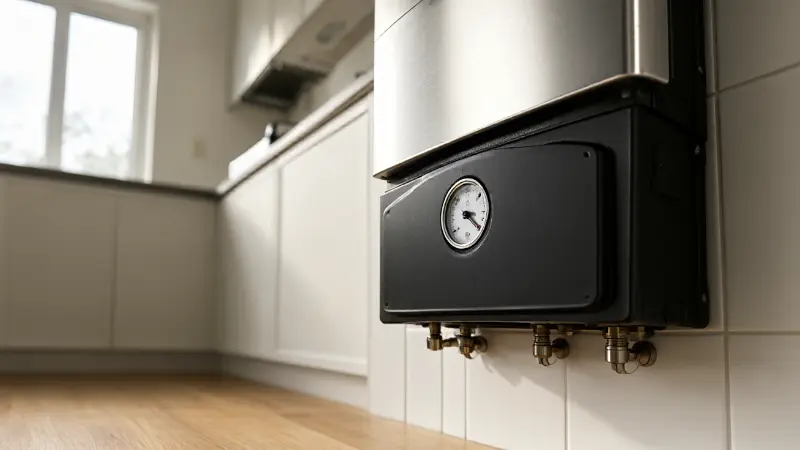
A boiler pressure gauge that falls when the heating starts is a confusing symptom, because most homeowners expect the needle to rise as the system warms up. In a healthy sealed heating circuit, water expands with heat and the pressure climbs slightly. When the opposite happens, the gauge may drop from its cold setting, sometimes far enough to put the boiler into lockout and leave the house without heat or hot water.
The pattern matters as much as the reading. A pressure drop that happens only when the burner fires points toward a different set of causes than a slow loss that occurs over weeks regardless of whether the heating is on. This guide explains how to read the gauge, check the components most likely to be involved, and decide which tasks are safe to handle yourself.
What Normal Boiler Pressure Looks Like
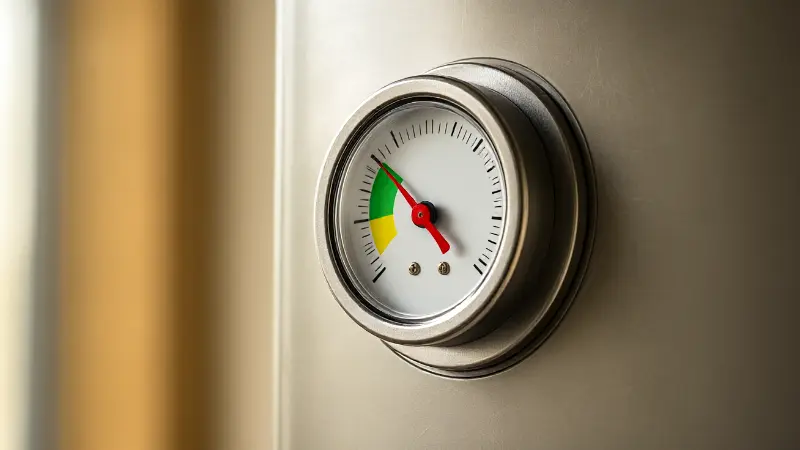
Most sealed central heating systems are designed to sit at roughly 1.0 to 1.5 bar when the system is cold. Once the heating runs and the water warms, the gauge commonly rises toward 1.5 to 2.0 bar. That gentle movement is the system doing its job, and the exact figures vary by boiler model and installation.
A reading below about 1 bar is usually too low for reliable operation. Many modern boilers will lock out and display a fault code to protect themselves rather than run with insufficient water. A reading above roughly 3 bar is also a problem, because it can cause the pressure relief valve to discharge water outside the property.
The key distinction is direction. A gauge that rises a little when hot and settles when cold is behaving normally. A gauge that drops when the heating comes on, or that swings high and then falls sharply, is showing a fault pattern rather than normal expansion. Recording the cold reading, the hot reading, and how quickly the change happens gives you useful information for diagnosis.
Why Pressure Falls When the Heating Starts
When the burner fires, the water in the circuit heats and expands. That extra volume has to go somewhere, and the expansion vessel provides the cushion that absorbs it. If the vessel cannot absorb the expansion, the pressure climbs, the pressure relief valve may discharge water to protect the system, and the gauge then reads low once everything cools.
That sequence explains the frustrating cycle many homeowners describe: the pressure looks acceptable when cold, rises when the heating runs, water escapes through the relief pipe, and the gauge drops again. The drop is not caused by the heating itself in a direct sense. It is caused by water leaving the system because a pressure-control component is not doing its job.
A second pattern involves a leak that only shows up under heat. Joints and seals can weep more when the pipework is warm and under slightly different stress. A tiny leak that evaporates before forming a puddle can still lower the pressure over days or weeks. If the gauge falls mainly when the system is running, a heat-related leak deserves consideration alongside the expansion vessel.
Air trapped in the system is a third possibility. Air pockets can compress differently from water and cause erratic gauge behaviour, including a drop when the pump starts circulating. Air often enters after radiator bleeding, drain-down work, or a repair that was not fully purged.
Check the Expansion Vessel First
The expansion vessel is the component most often responsible for pressure that misbehaves around the heating cycle. It is a small tank, usually red or white, with a rubber diaphragm separating the heating water from a cushion of pressurised air. As the water expands, it pushes against that air cushion instead of driving the pressure up.
Over time, the air charge can be lost through the valve or the diaphragm can perish. When that happens, the vessel becomes waterlogged and stops absorbing expansion. The symptoms are a gauge that climbs too high when the boiler runs, water dripping from the pressure relief pipe outside, and a low reading once the system cools.
Some expansion vessels have a Schrader valve, the same type used on a car tyre, which allows the air charge to be checked with a tyre pressure gauge. A typical pre-charge is around 1 bar, though the correct figure depends on the boiler and the system design. If water comes out of the valve rather than air, the diaphragm has failed and the vessel needs replacement rather than a recharge.
Checking and recharging an expansion vessel safely usually requires isolating the boiler, draining the water side, and confirming the pre-charge with the system at zero pressure. That is more involved than checking tyre pressure on outdoor equipment, and a reference for Ariens snowblower tire pressure is a useful reminder that even simple pressure checks need the right gauge and the correct specification. On a boiler, the specification and the isolation steps matter enough that many homeowners prefer to have a technician handle it.
Look for Leaks on the Heating Circuit
A sealed heating system should hold its water for months without topping up. When the pressure keeps falling, water is leaving somewhere, and a small leak is the most common explanation. The challenge is that many leaks are hidden behind walls, under floors, or inside the boiler casing.
Start with the visible parts of the system. Check the connections at each radiator, especially the valve unions and the bleed points. Dry the joints with a paper towel, then check again the next day for a fresh drip or a white mineral deposit. Look for green or white staining around brass fittings, rust marks, and flaking paint on the pipework or skirting.
Inspect the area beneath the boiler and around the pump, automatic air vents, and isolation valves. A very small weep can evaporate before it forms a puddle, so the evidence may be a faint crust or a musty smell rather than visible water. Check ceilings below upstairs radiators for stains, which can be the first visible sign of a hidden pipe leak.
If the heating includes underfloor circuits, a pressure drop with no visible radiator leak may point to a pipe embedded in screed. Specialist leak detection can use thermal imaging or tracer gas to locate the fault without lifting the floor. That is not a DIY diagnosis, and continued topping up while a hidden leak runs can lead to saturation and structural damage.
Inspect the Pressure Relief Valve
The pressure relief valve, often called the PRV, is a safety device that opens when system pressure gets too high. It discharges water through a copper pipe that normally terminates outside the property. Once the valve has opened, it may not reseat perfectly, leaving a slow drip that gradually lowers the pressure.
Find the discharge pipe outside and check the end for drips or signs that the ground beneath is wet. Check it both when the heating has been off for a while and shortly after it has been running, because a valve that only passes water when hot tells you something different from one that drips constantly.
A PRV that is passing water is usually not a DIY repair, and the reason it opened also needs investigation. If the expansion vessel is waterlogged, replacing the valve alone will not solve the problem, because the next heating cycle will simply push water out again. The valve and the vessel need to be assessed together.
Pressure devices exist across heating equipment for the same protective reason. A furnace pressure switch stuck closed is a different component on a different system, but the principle is similar: the device proves a safe condition before the appliance is allowed to fire, and a fault can lock the system out.
Rule Out Air and Recent Radiator Bleeding
Bleeding a radiator releases trapped air, and a small amount of water usually comes out with it. A single pressure drop after bleeding is normal and expected. The fix is to repressurise the system using the filling loop and then monitor whether the pressure holds.
Repeated pressure loss without any recent bleeding is a different matter. Air can also enter through a loose gland, a failed automatic air vent, or a poorly sealed pump connection. When air is present, the system may sound noisy, radiators may heat unevenly, and the gauge can behave erratically when the pump starts.
If you have recently drained part of the system for a repair, the refill may not have been fully purged. Running the pump and bleeding the radiators can release trapped air, but the pressure may need topping up afterwards. Keep a record of what you did and when, because the timeline helps distinguish a one-off event from an ongoing fault.
Repressurise Correctly and Monitor the Result
If the pressure has fallen below the operating range, the filling loop is the usual way to restore it. The loop is typically a braided hose or an internal key beneath the boiler, with one or two valves that allow mains water into the circuit. Open the valve slowly while watching the gauge, and stop at the cold pressure recommended in the boiler manual, often around 1.0 to 1.5 bar.
Close the valves fully and confirm that the pressure holds. Run the heating and watch the gauge through a full cycle, noting the hot reading and the reading after the system cools. If the pressure returns to a sensible cold level and stays there for weeks, the drop may have been a one-off event such as recent bleeding or air release.
If the pressure falls again within days, the cause is still present and topping up is only masking it. Repeated top-ups introduce fresh, oxygen-rich water into the circuit, which can accelerate corrosion and sludge formation. The goal is to find and fix the reason for the loss rather than to keep refilling.
Do not leave a filling loop permanently open or partially open. A loop that is left connected and open can allow mains pressure to overfill the system, which risks activating the pressure relief valve and causing further problems. Close both valves firmly and disconnect a detachable hose if the manufacturer specifies that.
Know When to Call a Gas Safe Engineer
Work inside the boiler casing, on gas components, on the pressure relief valve, and on the expansion vessel is best handled by a qualified engineer. Gas appliances carry risks that go beyond the water circuit, and an incorrect repair can affect combustion, venting, or safety devices. A Gas Safe registered engineer has the training and instruments to diagnose the fault properly.
Call for professional help if the pressure keeps falling after repressurising, if water is discharging from the relief pipe, if the expansion vessel is waterlogged, or if you cannot find a visible leak. Also call if the boiler shows a fault code, if you smell gas, or if the appliance has been unreliable across multiple heating cycles.
It is also worth looking at the wider heating system rather than only the boiler. A heat pump that loses capacity in cold weather is a different technology with different diagnostics, and a guide to heat pump not heating below 30 explains how cold-weather performance differs from a boiler fault. Knowing which system you have helps you ask the right questions.
Quick Reference: Pressure Patterns and Likely Causes
The table below matches common gauge behaviours with the components most often involved. Use it to organise your observations, and stop if a step involves gas parts, the boiler casing, or a component you are not trained to service.
| Gauge Pattern | Likely Cause | Safe First Step | When to Call an Engineer |
|---|---|---|---|
| Rises gently when hot, settles when cold | Normal thermal expansion | Record cold and hot readings; no action needed | Reading falls below about 1 bar cold |
| Climbs high when hot, drops low when cold | Waterlogged or failed expansion vessel | Check relief pipe for discharge; note the swing | Vessel needs testing, recharge, or replacement |
| Drops steadily over days or weeks | Small leak on the heating circuit | Check radiator valves, joints, and visible pipework | Leak cannot be found or is hidden |
| Drops only when heating runs | Heat-related leak or expansion fault | Dry joints and recheck after a heating cycle | Pattern continues after visible checks |
| Water dripping from outside relief pipe | Pressure relief valve passing | Note when it drips; do not cap the pipe | Valve and expansion vessel need assessment |
| Pressure dropped after radiator bleeding | Expected air and water release | Repressurise via filling loop and monitor | Pressure falls again without further bleeding |
| Noisy system with erratic gauge | Air trapped in the circuit | Bleed radiators and check automatic vents | Air returns or vent is faulty |
Use the table to narrow the likely cause, but remember that the gauge tells you the result rather than the reason. A pressure drop is a symptom, and the component responsible may be inside the boiler casing or hidden in the pipework. Measurements and a proper inspection settle the diagnosis.
FAQ
Why does my boiler pressure drop when the heating comes on instead of rising?
A drop during the heating cycle often means water is leaving the system through a leaking relief valve or a heat-related leak, or that the expansion vessel is not absorbing expansion properly. In some cases, trapped air causes erratic readings. The pattern usually points to a pressure-control fault rather than normal operation.
Can I just keep topping up the boiler pressure?
Occasional topping up after bleeding a radiator is normal. Repeated top-ups every few days mean the underlying cause has not been fixed, and fresh water introduces oxygen that can accelerate corrosion. Find the reason for the loss rather than treating the filling loop as routine maintenance.
How do I know if my expansion vessel has failed?
Common signs include pressure that climbs high when the boiler runs, water dripping from the outside relief pipe, and a low reading once the system cools. If water comes out of the Schrader valve when the air charge is checked, the internal diaphragm has failed and the vessel needs replacement.
Is a dripping pressure relief valve an emergency?
It is not usually an immediate emergency, but it should not be ignored. A valve that passes water will keep lowering the pressure and can waste water continuously. Do not cap or block the discharge pipe. Have the valve and the expansion vessel assessed together so the cause is addressed.
Conclusion
Boiler pressure that drops when the heating comes on usually points to a pressure-control problem rather than a simple lack of water. The expansion vessel, the pressure relief valve, a small leak, and trapped air are the leading explanations, and the pattern of the gauge often indicates which one is involved.
Check the visible parts of the system, record the cold and hot readings, and repressurise only to the level the manual specifies. If the pressure falls again within days, stop topping up and arrange a proper diagnosis. Repeated refilling masks the fault and introduces fresh water that can shorten the life of the system.
Work inside the boiler, on gas components, and on the expansion vessel belongs with a qualified engineer. A methodical approach, a written record of the readings, and a realistic sense of your own limits will get the heating back to a stable pressure without unnecessary risk.