A snow blower that loses traction on ice is both frustrating and unsafe. The machine may spin its wheels while the auger keeps turning, or it may slide sideways on a slope and pull you off balance. Ice is a low-friction surface, and most snow blower tires are designed for snow and packed surfaces rather than glare ice. The result is a machine that cannot deliver the power it produces to the ground.
Traction problems on ice usually come down to the tire type, the tread condition, the inflation pressure, the weight distribution, or the drive system. Some of those are easy to change, and some require a different approach such as chains or studs. This guide explains why traction fails on ice, the five causes worth checking first, the safe fixes, and the operating techniques that keep the machine moving without damaging the driveway or the equipment.
Why Snow Blower Tires Lose Grip on Ice
Traction depends on friction between the tire and the surface. Snow provides some grip because the tire tread can bite into it and push it aside. Ice provides almost none, because the surface is smooth and the tire cannot penetrate it. A tire that works well in snow can slide freely on ice, especially under the load of a heavy machine and a full auger housing.
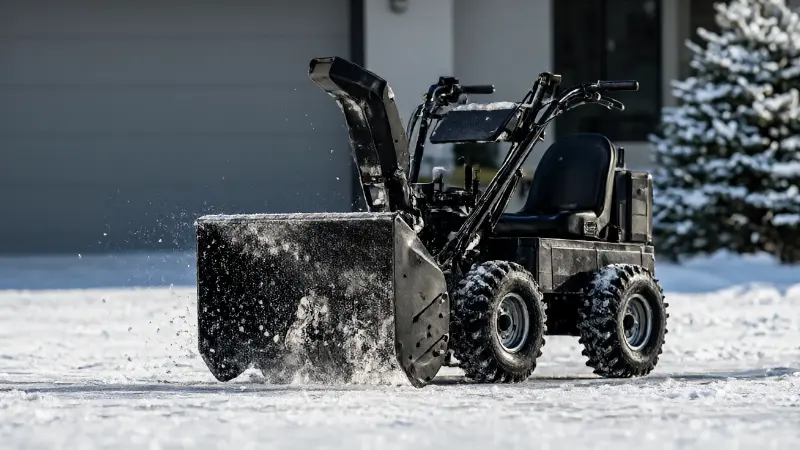
Most residential snow blowers use either pneumatic tires with a turf or snow tread, or solid rubber tires with a ribbed pattern. Pneumatic tires can conform to uneven surfaces, but they also flex and can lose contact on ice. Solid tires are durable but transmit shock and have less compliance. Neither type is designed to grip bare ice without an additional traction device.
Weight distribution matters as much as tread. A snow blower is front-heavy because of the engine and the auger housing, which means the drive tires carry less weight than the front of the machine. On ice, that reduced load on the drive wheels makes it easier for them to spin. Adding weight to the rear, or shifting the machine’s balance, can improve grip, but it must be done within the manufacturer’s limits.
The drive system also affects how traction is delivered. A friction-disc drive can slip under load, and a hydrostatic drive can lose efficiency if the fluid is cold or the linkage is out of adjustment. A machine that is not delivering power smoothly to the wheels will feel like it has no traction even when the tires are in good condition.
Safety First: Traction Aids and Driveway Damage
Before adding chains or studs, check the manufacturer’s guidance and the surface you are clearing. Tire chains can damage paved driveways, especially asphalt and decorative concrete, and they can mark garage floors. They also require clearance around the tires and the housing, and they must be installed and tensioned correctly. Studded tires are not usually available for snow blowers, but some owners add screw-in studs to pneumatic tires, which is a modification that can void a warranty and damage the surface.
Do not operate a snow blower on a slope that feels unsafe, even with traction aids. If the machine slides, release the drive control and let it stop rather than trying to hold it back with your body. Keep the machine in a low gear on slopes and work across the slope rather than straight up and down when possible. Wear boots with good tread, and keep your footing clear.
Keep the tire pressure within the manufacturer’s specification. Overinflating a tire reduces the contact patch and makes it easier to spin. Underinflating can cause the tire to roll off the rim or damage the sidewall. Use a gauge, and check the pressure when the tires are cold. If the machine has a differential lock, engage it only when needed and disengage it for turns.
Cause One: Worn or Incorrect Tires
A tire with worn tread cannot grip ice, even with the right pressure and weight distribution. The tread pattern on a snow blower tire is designed to clear snow and provide some bite, and when the tread is worn down to a smooth surface, the tire becomes a slick. Inspect the tread depth and the condition of the sidewalls. Cracks, cuts, and missing tread blocks are signs that the tire needs replacement.
Some snow blowers are sold with turf tires that are gentle on lawns but poor on ice. A more aggressive snow or lug tread improves grip in snow and on packed surfaces, though it still cannot grip bare ice without chains. If the machine is used mainly on a paved driveway, a tire with a deeper, more open tread is a reasonable upgrade. Check the manufacturer’s options for your model.
Pneumatic tires lose pressure in cold weather, and a tire that was properly inflated in fall may be low by the first storm. A low tire has a larger contact patch, but it also has more rolling resistance and can slip on the rim. Check the pressure before each use and inflate to the specification on the sidewall or in the manual.
Consider the rim and the wheel
A tire that spins on the rim under load will feel like a traction problem. Look for a slipped tire or a damaged rim, especially after hitting a curb or a frozen chunk of ice. A tire that is not seated properly on the rim can leak air or fail under load. Have a dealer reseat or replace a damaged wheel.
Cause Two: Too Little Weight on the Drive Wheels
Snow blowers are front-heavy, and the drive wheels carry a smaller share of the machine’s weight. On ice, that reduced load makes it easier for the wheels to spin. Adding weight to the rear of the machine can improve traction, but it must be done safely and within the manufacturer’s limits. Some manufacturers offer weight kits or ballast boxes for specific models.
Do not add weight by hanging bags of sand or concrete from the handles or the frame unless the manufacturer approves it. An unstable load can shift, damage the machine, or cause a tip-over. If the machine has a rear weight bar or a designated ballast area, use only the recommended amount and secure it properly.
Operator position also affects weight distribution. Standing close to the machine and keeping the handles low can shift some weight forward, but it does not change the machine’s design. On a slope, working across the face rather than straight up or down keeps more weight on the drive wheels and reduces the chance of sliding.
Check the tire pressure on both sides. Uneven pressure can cause one wheel to spin while the other grips, which makes the machine pull to one side. A consistent pressure on both tires improves straight-line traction and reduces the load on the differential.
Cause Three: Slipping Drive System or Belt
A snow blower that has good tires but still spins or stalls may have a drive system problem. The friction-disc drive can slip if the disc is worn or contaminated with oil, and the drive belt can slip if it is loose or glazed. A hydrostatic drive can lose efficiency if the fluid is cold or the linkage is out of adjustment.
Check the drive belt for wear and proper tension. A belt that is glazed, cracked, or loose can slip under load, which feels like a loss of traction. Replace a worn belt and adjust the tension according to the manual. On a friction-disc drive, inspect the disc and the drive plate for wear, oil, or debris. Clean or replace the components as needed.
Check the drive control cable and linkage. A cable that is loose or a linkage that is out of adjustment can prevent the drive from fully engaging, which makes the machine feel like it is slipping. Adjust the cable so the drive engages firmly when the handle is squeezed. If the machine has a hydrostatic transmission, check the fluid level and the linkage adjustment.
A machine that loses traction only when the auger is under load may have an engine power problem rather than a drive problem. Stale fuel, a dirty carburetor, or a clogged air filter can cause the engine to bog down, which reduces power to the wheels. Address the engine before assuming the drive system is at fault.
Cause Four: Ice, Snow, and Debris on the Tires
Ice and packed snow can build up on the tires and the drive mechanism, reducing grip and causing the wheels to spin. Snow that packs into the tread reduces the tire’s ability to bite, and ice on the tire surface turns it into a slick. Check the tires after each pass and clear packed snow and ice from the tread.
Debris on the driveway is another common cause. Sand, gravel, and salt can reduce friction under the tires, especially on a hard surface. A thin layer of sand or salt can actually improve traction on ice, but a thick layer of loose gravel can cause the tires to spin. Clear the loose material or spread a small amount of sand or salt on the icy sections.
The auger housing and the skid shoes can also affect traction. If the skid shoes are set too low, the housing digs into the surface and lifts weight off the drive tires. Adjust the skid shoes so the housing clears the surface by the recommended amount, especially on uneven or gravel driveways. A housing that is dragging reduces traction and strains the machine.
Keep the tires clean
A stiff brush or a plastic scraper can remove packed snow from the tread. Do not use a metal tool that can cut the tire. After clearing, park the machine on a dry surface so the tires do not freeze to the ground.
Cause Five: Operating Technique and Slope
Technique has a large effect on traction. Driving too fast into a heavy bank, turning sharply on ice, or trying to push a pile of snow with the auger housing all increase the chance of spinning. A steady, moderate pace and a straight approach keep more weight on the drive wheels and reduce the load on the tires.
On a slope, work across the face rather than straight up or down when possible. If you must go up or down, use a low gear and keep the machine moving steadily. Do not stop on a slope if you can avoid it, because restarting on ice is difficult. If the machine starts to slide, release the drive control and let it stop rather than trying to hold it with your body.
Clear the driveway in stages. Take a partial width on the first pass and come back for the rest. A full-width pass in heavy snow overloads the auger, which can cause the engine to bog down and the drive to slip. Smaller bites keep the machine moving and reduce the demand on the tires.
Use the differential lock if the machine has one, but only when needed. A locked differential improves traction on ice by forcing both wheels to turn, but it also makes steering harder and can damage the drive system on dry pavement. Disengage it for turns and for clearing paved surfaces.
Traction Aids: Chains, Studs, and Alternatives
Tire chains are the most common traction aid for snow blowers on ice. They wrap around the tire and provide metal edges that bite into the surface. Chains improve grip significantly on ice and packed snow, but they can damage paved driveways and garage floors, and they require clearance around the tires and the housing. Install them according to the manufacturer’s instructions and check the tension before each use.
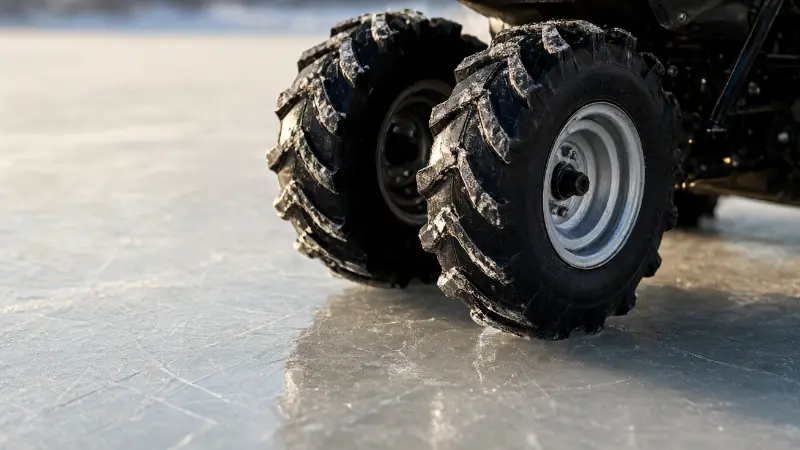
Some owners add screw-in studs to pneumatic tires for extra grip on ice. This is a modification that can void a warranty, and the studs can damage the driveway and the garage floor. Check with the manufacturer before modifying a tire, and use studs only where the surface can tolerate them.
Sand and salt are simple alternatives that improve traction without modifying the machine. Spread a small amount of sand or ice-melt on the icy sections of the driveway before you start. Sand provides grit, and salt melts the ice. Both can be messy, and salt can corrode metal, so use them sparingly and clean the machine afterward.
If the driveway is steep or the ice is severe, consider whether the machine is the right tool. A walk-behind snow blower on a steep icy slope is difficult to control even with chains. In that situation, a professional service or a different approach may be safer.
Prevention and Maintenance
Before the season, inspect the tires for wear, cracks, and proper pressure. Replace worn tires and confirm that the tread is appropriate for the surfaces you clear. Check the drive belt, the friction disc, and the cables, and adjust or replace any component that is worn or out of adjustment. A machine that delivers power smoothly is less likely to spin on ice.
Check the skid shoes and the scraper bar. A housing that drags or a scraper bar that is worn can lift weight off the drive tires and reduce traction. Adjust the skid shoes for the surface, and replace a worn scraper bar. Confirm that the auger and impeller turn freely and that the chute is clear before you start.
During use, keep the tires clean and the driveway clear of loose debris. Work in stages, use a low gear on slopes, and avoid sharp turns on ice. If the machine starts to spin, reduce speed and take a smaller bite rather than forcing it. A steady technique is safer and more effective than a burst of power.
Other snow blower problems often appear at the same time, and they can affect traction indirectly. A machine that is not throwing snow may have a clogged chute, and a guide to a snow blower not throwing snow covers the chute and impeller checks. A chute that clogs constantly reduces the machine’s effectiveness and can cause the operator to force it, which increases wheel spin, and a guide to a snow blower chute clogging constantly covers the causes and fixes. If the auger stops turning, the machine may still drive but cannot clear snow, and a guide to a snow blower auger not turning explains the shear pin, belt, and cable checks.
Quick Reference: Traction Symptoms and Fixes
The table below matches common traction problems on ice with the likely cause and the safest first step. Use it to narrow the diagnosis before you add chains or modify the machine.
| Symptom | Likely Cause | Safe First Step | When to Call a Pro |
|---|---|---|---|
| Wheels spin on ice with little load | Worn tread or low tire pressure | Check the tread and inflate to specification | Tire is cracked or damaged |
| One wheel spins while the other grips | Uneven tire pressure or a slipping drive | Equalize the pressure; check the drive belt | Drive system is damaged |
| Machine slides on a slope | Insufficient weight on the drive wheels | Work across the slope; use a low gear | Slope is unsafe for a walk-behind |
| Wheels spin when the auger is loaded | Engine bogging down or belt slip | Reduce speed; check the fuel and belt | Power loss continues after service |
| Tires packed with snow and ice | Snow buildup in the tread | Clear the tread with a plastic tool | Tire is damaged by ice |
| Housing drags on the surface | Skid shoes set too low | Adjust the skid shoes | Scraper bar or housing is bent |
| Machine spins on a paved driveway with chains | Chains too loose or surface too hard | Check chain tension; use chains only where appropriate | Chains are damaging the surface |
| Drive engages intermittently | Cable or linkage out of adjustment | Adjust the drive cable | Transmission or friction disc worn |
FAQ
Why do my snow blower tires spin on ice but grip in snow?
Snow provides some friction because the tread can bite into it. Ice is smooth and offers almost no grip, so a tire that works in snow can slide freely. Tire chains, sand, or a more aggressive tread can improve grip on ice, but the surface is inherently slippery and requires a slower, more careful technique.
Can I use tire chains on a paved driveway?
Chains can damage asphalt and decorative concrete, and they can mark garage floors. Check the manufacturer’s guidance and the surface condition before using them. If the driveway is paved and in good condition, sand or a slower technique may be a better choice than chains.
Will adding weight to my snow blower improve traction on ice?
Adding weight to the rear can improve traction by putting more load on the drive wheels, but it must be done within the manufacturer’s limits. Do not hang unsecured weights from the handles or frame. Use only approved weight kits or ballast areas, and keep the load stable.
Why does my snow blower spin only when the auger is under load?
When the auger is loaded, the engine has to work harder, and a marginal drive belt or a dirty carburetor can cause the machine to bog down. That reduces power to the wheels and makes them spin. Check the belt tension, the fuel quality, and the air filter before assuming the tires are the problem.
Conclusion
Snow blower tires losing traction on ice usually comes down to worn or incorrect tires, insufficient weight on the drive wheels, a slipping drive system, packed snow and debris, or operating technique that overloads the machine. Start with the tire condition and pressure, then check the drive belt and cables, and adjust your technique for the surface and the slope.
Traction aids such as chains and sand can help, but they have trade-offs. Chains improve grip on ice but can damage paved surfaces, and studs are a modification that may void a warranty. Use them only where appropriate, and follow the manufacturer’s guidance. A steady, moderate pace and a staged clearing pattern are often more effective than adding hardware.
Maintain the tires, the drive system, and the skid shoes before the season, and keep the machine clean during use. If the machine still spins on ice after those steps, check the engine power and the drive system before assuming the tires are at fault. A methodical approach keeps the machine moving and the operator safe on the slickest days of winter.