A snow blower chute that clogs constantly turns a fast job into a stop-and-start ordeal. You make a pass, the chute plugs, you shut down, clear it, start again, and the same thing happens ten feet later. Wet, heavy snow makes it worse, but constant clogging usually points to a correctable issue with technique, the chute surface, the impeller, or the engine’s ability to maintain speed under load.
This guide explains why chutes clog, the five causes that account for most repeat blockages, the safe way to clear a chute, and the adjustments that keep snow moving. Safety comes first: the impeller can rotate after the engine stops, and reaching into the chute is a serious injury risk. Shut off the engine, remove the key, and disconnect the spark plug wire before you clear anything.
Why a Snow Blower Chute Clogs
A snow blower moves snow in two stages. The auger gathers snow and feeds it to the impeller, and the impeller throws it up and out through the discharge chute. The chute is the narrowest part of that path, so it is the first place where snow slows down and packs. When the impeller cannot move snow through the chute faster than the auger delivers it, the chute fills and the machine stops throwing.
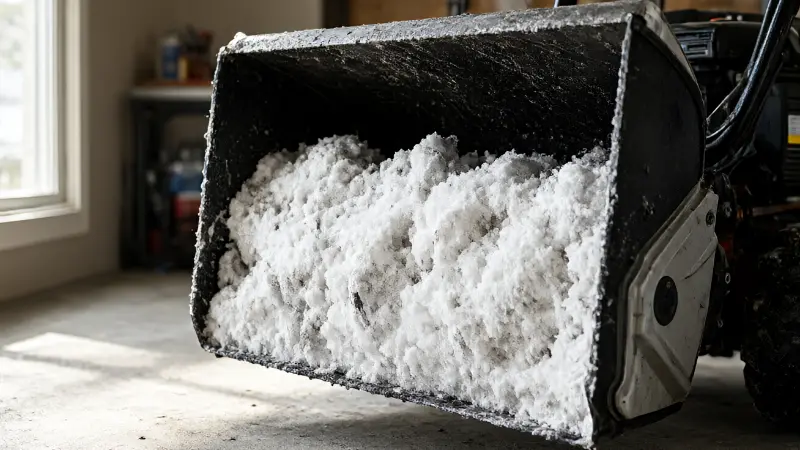
Wet, heavy snow is the most common trigger. It is denser than dry powder, it sticks to surfaces, and it does not flow through the chute the way light snow does. A machine that handles powder easily can clog every few feet in wet snow if the travel speed and engine speed are not adjusted. That is a technique issue, not a mechanical failure.
Ice and packed snow in the chute make the problem worse. A rough or icy surface gives the snow something to grip, and the blockage grows from there. A chute that was not cleaned after the last use can be partly blocked before you start, which reduces capacity and causes early clogging. A non-stick coating or spray helps, but only if the chute is clean and dry when it is applied.
Mechanical factors also matter. A worn impeller, worn paddles, a slipping belt, or an engine that loses power under load all reduce the machine’s ability to throw snow. Those problems often appear as constant clogging in wet conditions, even though the machine runs normally in light snow. The pattern of when the chute clogs is the best clue to which cause is involved.
Safety First: Clear the Chute the Right Way
Before you clear a clogged chute, shut off the engine and remove the key. Wait at least ten seconds for the auger and impeller to stop rotating. Disconnect the spark plug wire and keep it away from the plug so the engine cannot start unexpectedly. On an electric model, unplug the machine and remove the safety key if it has one.
Never use your hands or feet to clear the chute, even with the engine off. The impeller can store energy and rotate after the engine stops, and the blades are sharp. Use a clearing tool, a wooden stick, or the tool supplied with the machine. Keep your hands out of the chute and the auger housing at all times.
Do not use a metal rod or a screwdriver to clear the chute. Metal tools can damage the chute, scratch the surface, and create burrs that make future clogging worse. A wooden stick or a plastic clearing tool is safer for the machine and for you. If the clog is frozen solid, move the machine to a warm space and let the ice melt rather than forcing it.
Wear gloves and eye protection when you work around the chute and the auger. Snow and ice can hide sharp edges and debris, and the clearing tool can slip. Keep children and pets away from the area while the machine is being serviced.
Cause One: Travel Speed and Engine Speed Mismatch
The most common reason a chute clogs constantly is that the machine is moving faster than the impeller can clear snow. In wet, heavy snow, the auger delivers a large volume of dense snow to the impeller, and the impeller needs time and engine speed to throw it. If you are driving forward at full speed, the chute fills faster than it empties, and the blockage is inevitable.
Slow down. In wet snow, use a lower gear or a slower ground speed and take a narrower swath. Let the auger clear the snow rather than forcing the machine forward. If the engine starts to bog down, stop, back up, and take a partial pass. A steady, moderate pace clears more snow in the long run than repeated stops to clear a clogged chute.
Run the engine at full throttle when the auger is engaged. The impeller is designed to throw snow at high speed, and a lower engine speed reduces the throwing distance and the chute’s ability to clear itself. Many homeowners idle the engine down to reduce noise, but that is exactly when the chute clogs. Follow the manufacturer’s guidance for engine speed during snow removal.
Adjust the deflector to match the snow. Wet snow needs a lower deflector angle and a discharge direction that does not fight the wind. Dry snow can be thrown farther with a higher deflector. A deflector that is set too high for wet snow can cause the snow to stall in the chute rather than clear it.
Cause Two: A Rough, Icy, or Damaged Chute
A chute that is rough, icy, or damaged gives snow a place to stick. The surface of a new chute is smooth, and snow slides off it easily. Over time, the surface can become scratched, and ice can form in the corners and along the edges. Once snow starts to stick, the blockage grows quickly, and the chute clogs again and again.
Clean the chute thoroughly after each use. Shut off the engine, remove the key, disconnect the spark plug wire, and use a wooden stick or a plastic tool to remove packed snow and ice. Pay attention to the corners, the deflector, and the area around the chute rotation ring. Those are the places where ice forms first.
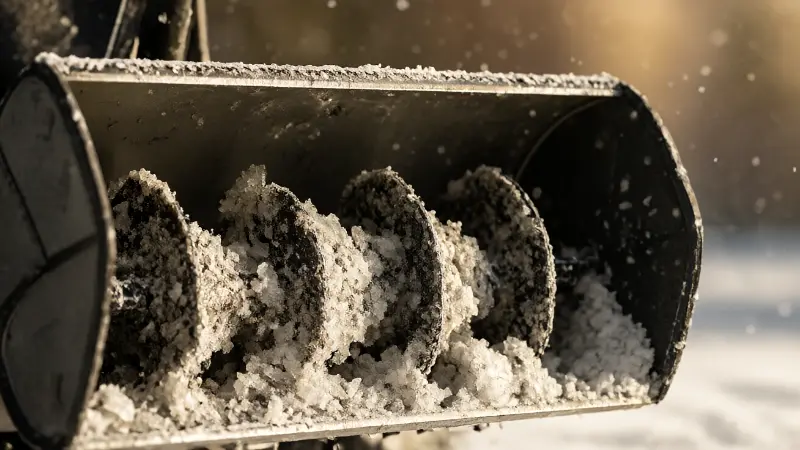
Apply a non-stick spray or a silicone lubricant designed for snow blower chutes. Some owners use cooking spray or wax, but check the manufacturer’s guidance before applying any product, because some products can damage plastic or painted surfaces. Apply the product to a clean, dry chute and let it set before you use the machine.
Inspect the chute for cracks, burrs, and damage. A cracked chute should be replaced rather than repaired, because a crack creates an edge where snow catches. A chute that has been dented or bent can be straightened if the material allows, but a replacement chute is often the more reliable fix. If the chute rotation ring is stiff or damaged, the chute may not sit in the correct position, which affects snow flow.
Cause Three: Worn Impeller or Paddles
The impeller is the fan that throws snow through the chute. Over time, the impeller blades wear down, bend, or lose clearance against the housing. When the clearance is too large, snow slips past the impeller instead of being thrown, and the chute clogs because the snow is not being pushed out fast enough. Worn paddles on a single-stage machine have the same effect.
Inspect the impeller with the engine off and the spark plug wire disconnected. Look for worn blades, bent blades, and a gap between the impeller and the housing. On some machines, the impeller has adjustable or replaceable wear plates. A impeller that is bent or cracked should be replaced rather than straightened.
On a single-stage snow blower, the rubber paddles do both jobs: they gather snow and throw it. Worn paddles leave a gap between the paddle and the housing, and the machine stops clearing effectively. Replacement paddles are available for most models and are a routine maintenance item. Check the paddle height against the manufacturer’s specification and replace them when they are worn below the limit.
A worn impeller or paddle does not always cause a complete failure. The machine may still throw snow in light conditions but clog constantly in wet, heavy snow. That pattern is a strong clue that the impeller or paddle clearance is the problem, especially if the engine runs well and the chute is clean.
Cause Four: Belt Slip or Engine Power Loss
The impeller and auger are driven by belts. A worn or slipping belt reduces the speed of the impeller, which reduces the machine’s ability to throw snow. The chute then clogs because the snow is arriving faster than it can be discharged. A belt that slips only under load can produce intermittent clogging that is hard to diagnose.
Inspect the belts for glazing, cracks, fraying, and proper tension. A belt that is loose or worn should be adjusted or replaced. Check the pulleys for rust and debris, and confirm that the belt is routed correctly according to the manual. A misrouted belt can look fine and still slip under load.
Engine power loss can also cause constant clogging. Stale fuel, a dirty carburetor, a fouled spark plug, or a clogged air filter can cause the engine to bog down when the auger engages. If the engine surges or loses power under load, address the fuel and ignition system before assuming the chute is the problem. A guide to a snow blower surging in cold weather covers the fuel and carburetor checks for that symptom.
If the auger is not turning at all, or turns intermittently, the problem may be a shear pin, a belt, or a cable rather than the chute. A guide to a snow blower auger not turning covers those checks. On an electric model, a power supply or switch problem can reduce the motor speed and cause clogging, and a guide to a Snow Joe snow blower stopped working covers the electrical checks for that brand.
Cause Five: Chute Deflector and Rotation Settings
The deflector and the chute rotation control how the snow leaves the machine. A deflector that is set too high for wet snow can cause the snow to stall in the chute rather than clear it. A chute that is rotated into the wind can cause snow to blow back into the chute and clog it. Those settings are easy to overlook because they are not mechanical failures.
Set the deflector lower for wet, heavy snow and higher for dry, powdery snow. Point the chute downwind so the snow is carried away from the machine rather than blown back into it. Adjust the chute rotation so the snow lands where you want it without fighting the wind. If the chute rotation ring is stiff, lubricate it according to the manual so the chute can be positioned correctly.
Check the chute control cables and linkages. A cable that is loose or a linkage that has come off can prevent the chute from moving through its full range, which limits where you can direct the snow. A chute that is stuck in one position may be pointed into the wind or into a pile, which causes constant clogging.
Some machines have a chute clearing tool or a built-in chute cleaning function. Follow the manufacturer’s instructions for those features. Do not modify the chute or remove the deflector, because those changes can affect safety and performance.
Preventing Repeat Clogs
Prevention starts with the chute. Clean it after each use, apply a non-stick product to a dry surface, and inspect it for cracks and burrs. Store the machine under cover so snow and ice do not accumulate in the chute between storms. A clean, smooth chute is the single most effective defense against repeat clogging.
Match the machine to the snow. Slow down in wet, heavy snow and take a narrower swath. Run the engine at full throttle when the auger is engaged, and adjust the deflector and chute rotation for the conditions. Those technique changes prevent many clogs without any mechanical work.
Keep the impeller and paddles in good condition. Inspect them before the season and replace worn parts. Check the belts for wear and tension, and address engine power problems before they cause the machine to bog down under load. A machine that is running at full strength throws snow more reliably than one that is tired.
Keep the auger and the chute clear between uses. Run the auger briefly after you finish to discharge residual snow, and store the machine under cover. A cover keeps snow and ice out of the chute and the controls, which reduces the chance of a frozen blockage at the start of the next storm.
Quick Reference: Clog Symptoms and Likely Causes
The table below matches common chute clogging patterns with the cause that most often produces them and the safest first step. Use it to narrow the diagnosis before you remove any parts.
| Symptom | Likely Cause | Safe First Step | When to Call a Pro |
|---|---|---|---|
| Clogs only in wet, heavy snow | Travel speed too fast or engine speed too low | Slow down; run at full throttle; take a narrower pass | Clogs continue at moderate pace |
| Snow sticks to the chute surface | Rough, icy, or uncoated chute | Clean and dry the chute; apply a non-stick product | Chute is cracked or damaged |
| Clogs with a worn or bent impeller | Impeller clearance too large | Inspect the impeller and replace worn parts | Impeller is bent or cracked |
| Clogs with a slipping belt | Worn or misrouted belt | Check the belt tension and routing | Belt or pulley needs replacement |
| Engine bogs down and the chute plugs | Fuel, carburetor, or air filter problem | Check the fuel, plug, and filter | Power loss continues after service |
| Clogs when the chute is rotated into the wind | Discharge direction fighting the wind | Rotate the chute downwind; lower the deflector | Chute control is stuck or broken |
| Clogs at the chute rotation ring | Ice or debris in the ring | Clear the ring; lubricate according to the manual | Ring is damaged or seized |
| Clogs after storage | Ice or snow left in the chute | Melt the ice; clean and dry the chute | Chute is cracked from freezing |
FAQ
Why does my snow blower chute clog only in wet snow?
Wet snow is denser and heavier, and it packs against the chute walls. Slow the travel speed, run the engine at full throttle, take a narrower swath, and lower the deflector. A non-stick spray on a clean chute also helps the snow slide rather than stick.
Can I use my hand to clear a clogged chute?
No. The impeller can rotate after the engine stops, and the blades are sharp. Shut off the engine, remove the key, disconnect the spark plug wire, and use a clearing tool or a wooden stick. Never reach into the chute or the auger housing.
Will a non-stick spray stop the chute from clogging?
It helps, but it is not a cure. A clean, smooth chute with a non-stick coating sheds snow better than a rough, icy one, but the machine still needs the right travel speed and engine speed for the conditions. Combine the spray with technique adjustments and good impeller condition.
Why does my chute clog when the engine sounds fine?
The engine can sound normal while the impeller is worn or the belt is slipping. A worn impeller or a loose belt reduces the machine’s ability to throw snow, which shows up as clogging in wet conditions. Inspect the impeller, the paddles, and the belts before assuming the chute is at fault.
Conclusion
A snow blower chute that clogs constantly is usually dealing with a mismatch between travel speed and impeller speed, a rough or icy chute surface, a worn impeller or paddle, a slipping belt, or a deflector setting that fights the snow. Start with the technique: slow down in wet snow, run at full throttle, and adjust the deflector. Then clean and treat the chute, and inspect the impeller and belts for wear.
Clear a clogged chute only with the engine off, the key removed, and the spark plug wire disconnected. Use a wooden stick or a plastic tool, never your hands. Keep the chute clean and dry between uses, and store the machine under cover so ice does not form in the chute.
If the chute still clogs after those steps, check the engine power and the drive system. A machine that bogs down or slips under load will clog no matter how clean the chute is. Address the underlying cause, and the chute will clear itself the way it was designed to.