A snow blower whose auger will not turn is a machine that runs but cannot clear snow. The engine may start normally, the wheels may drive, and the chute controls may move, yet the front auger sits still while snow piles up in front of the housing. The cause is usually mechanical, and in many cases it is a part that is designed to fail in order to protect the rest of the machine.
This guide explains why a snow blower auger stops turning, the five most common causes, the safe way to inspect each one, and the maintenance that prevents a repeat. Safety comes first: the auger and impeller can rotate after the engine stops, and reaching into the housing is a serious injury risk. Shut off the engine, remove the key, and disconnect the spark plug wire before you touch anything.
How the Auger Drive System Works
On a two-stage snow blower, the engine drives two separate systems. The traction drive turns the wheels, and the auger drive turns the front auger through a belt, a pulley, and a gearbox. The auger gathers snow and feeds it to the impeller, which throws it out the chute. On a single-stage machine, the rubber paddles do both jobs, and the drive system is simpler but still depends on a belt and a pulley.
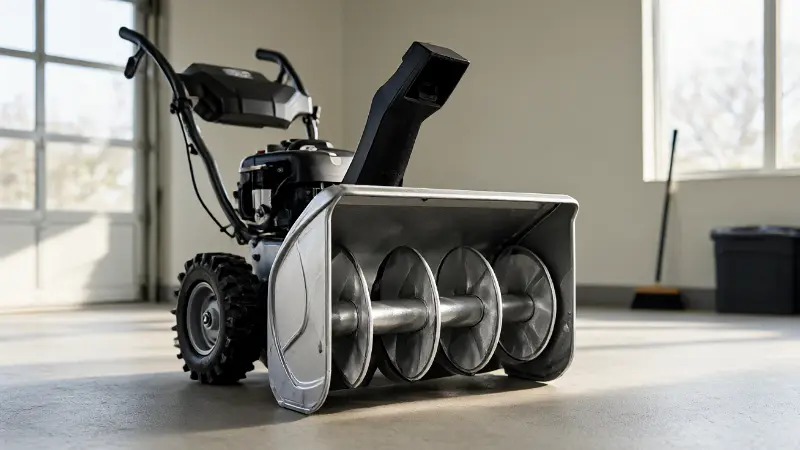
The auger drive usually includes a safety feature called a shear pin. The pin connects the auger to the shaft and is designed to break if the auger hits a rock, a curb, or a chunk of ice. When the pin breaks, that auger stops turning while the rest of the machine keeps running. That is intentional, because the alternative is a damaged gearbox or a bent shaft.
Understanding which part of the system has failed is the key to a fast repair. If the auger turns freely by hand and the pin is missing, the pin is the problem. If the auger will not turn by hand, something is jammed. If the auger turns by hand but not when the handle is squeezed, the belt or the cable is the likely cause. Each pattern points to a different fix.
Safety First: Shut Down and Disconnect Before Inspection
Before you open the belt cover, reach into the housing, or check the shear pins, shut off the engine and remove the key. Wait at least ten seconds for the auger and impeller to stop rotating. Disconnect the spark plug wire and keep it away from the plug so the engine cannot start unexpectedly. On an electric model, unplug the machine and remove the safety key if it has one.
Never use your hands or feet to clear snow or ice from the auger housing or the chute. The impeller can store energy and rotate after the engine stops, and the blades are sharp. Use a clearing tool, a wooden stick, or the tool supplied with the machine. Keep your hands out of the housing even when the machine appears stopped.
Wear gloves and eye protection, and block the wheels if the machine is on a slope. If the machine is running poorly or the engine surges, address that separately rather than reaching into a running machine. A snow blower that is not running correctly is a machine that can start unexpectedly when you least expect it.
Cause One: Broken or Missing Shear Pins
The most common reason an auger stops turning is a broken shear pin. The pin is a soft metal bolt that connects the auger to the drive shaft, and it is designed to snap when the auger hits something solid. When it breaks, the auger on that side spins freely on the shaft, and the machine stops gathering snow on that side. Many machines have one pin per auger, while others use two or more.
Inspect both augers with the engine off. Try to turn each auger by hand while watching the shaft. If the auger spins without turning the shaft, the pin is broken or missing. A missing pin is obvious, but a broken pin can leave the two halves inside the hole, which makes it look like the pin is still there. Push the pin out with a punch or a drift to confirm.
Replace a broken pin with the exact replacement specified for your model. Do not substitute a hardened bolt or a piece of rod, because that defeats the protection and can damage the gearbox or the shaft. A hardened bolt may survive the impact and transfer the force into the gearbox, which is a much more expensive repair.
A stuck or seized shear pin is a related problem. If the pin will not come out, the auger cannot be removed for service, and forcing it can damage the shaft. A guide to a snow blower shear pin stuck covers the safe removal methods and the tools that help without damaging the housing or the shaft.
Cause Two: Worn, Broken, or Slipping Auger Belt
The auger belt transfers power from the engine to the auger pulley. Over time, the belt stretches, glazes, cracks, or wears thin. A worn belt can slip under load, which means the auger turns slowly or stops when it meets resistance. A broken belt means the auger does not turn at all, even though the engine runs normally.
Remove the belt cover according to the manual and inspect the belt. Look for glazing, cracks, fraying, or a belt that has come off the pulley. A belt that is loose enough to slip by hand is a candidate for replacement or adjustment. Some machines have a belt tensioner or an adjustable idler that can restore tension, while others require a new belt.
Check the pulleys for rust, debris, or a worn groove. A rusty pulley can chew through a new belt quickly. Clean the pulley surfaces and confirm that the belt sits fully in the groove rather than riding on the edges. If the belt is oily or contaminated, replace it rather than cleaning it, because the contamination will cause slipping again.
On many two-stage machines, the auger belt and the drive belt are separate. The drive belt moves the wheels, while the auger belt turns the augers. If the machine moves but the auger does not turn, the auger belt is the one to inspect. If the machine neither moves nor turns the auger, both belts may be involved.
Check the belt routing
A belt that is installed on the wrong side of a guide or a tensioner will slip or rub. Compare the routing with the diagram in the manual before you assume the belt is worn. A misrouted belt can look fine and still fail under load.
Cause Three: Auger Control Cable Out of Adjustment
The auger control cable engages the auger when you squeeze the handle. If the cable is loose, stretched, or out of adjustment, the auger may not fully engage, and it will slip or stop under load. The cable can also be disconnected at the handle or at the engagement mechanism, which means the auger never receives the drive signal.
Check the cable at the handle and at the engagement mechanism. Squeeze the handle and watch the point where the cable attaches to the idler or the belt tensioner. The cable should move the mechanism through its full range and hold it firmly when the handle is squeezed. If the cable is loose, adjust it according to the manual so the auger engages fully.
A cable that is frayed or kinked should be replaced rather than adjusted. A frayed cable can break at the worst possible moment, and a kinked cable can bind and prevent full engagement. Replacement cables are available for most models and are usually straightforward to install.
On some machines, the auger engagement is controlled by a rod or a linkage rather than a cable. Check the linkage for wear, missing cotter pins, and bent rods. A linkage that has come apart will prevent the auger from engaging even when the handle is squeezed.
Cause Four: Gearbox or Auger Shaft Failure
The gearbox transfers power from the auger belt to the auger shaft. It contains gears and bearings that can wear out, especially if the machine has been used in heavy snow or if the gearbox has lost its lubricant. A gearbox that is failing may produce a grinding or whining noise, or it may stop transferring power entirely.
Test the auger by hand with the engine off. If the auger turns freely and the shear pins are intact, the gearbox may still be the problem when the machine is running. If the auger will not turn by hand and the housing is clear, the gearbox or the shaft may be seized. A bent auger shaft can also prevent rotation, especially after an impact with a solid object.
Gearbox repair is a service-center job on most machines. It requires specialized tools and the correct parts, and an incorrect repair can damage the machine further. If the gearbox is noisy, leaking lubricant, or visibly damaged, stop using the machine and arrange service.
Check for a bent shaft
A bent auger shaft is often caused by hitting a curb or a hidden obstacle. The auger may turn partway and then bind, or it may not turn at all. Compare the shaft to a straight edge, or rotate it slowly and watch for a wobble. A bent shaft should be replaced rather than straightened.
Cause Five: Jammed Auger or Frozen Housing
A jammed auger is a common cause of a sudden stop. A chunk of ice, a rock, a piece of wood, or a newspaper can wedge between the auger and the housing, preventing rotation. Wet snow can also freeze around the auger and the housing overnight, which locks the auger in place until the ice is cleared.
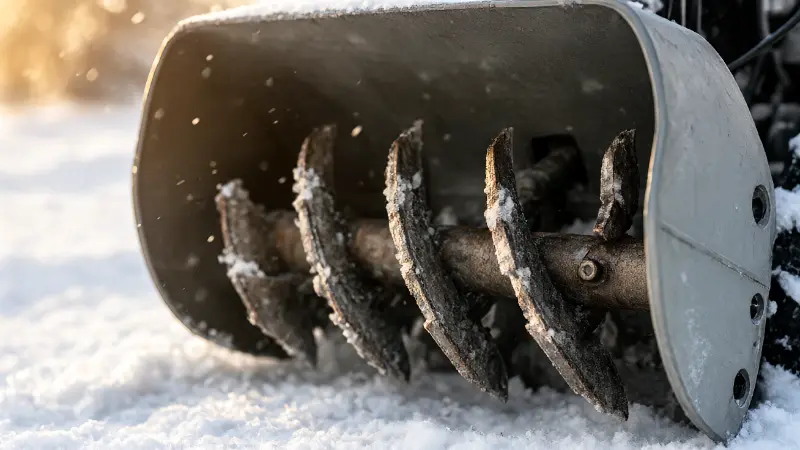
With the engine off and the spark plug wire disconnected, inspect the housing for visible obstructions. Use a clearing tool or a wooden stick to remove debris. Do not use your hands, even with gloves, because the auger blades are sharp and the impeller can rotate. If the housing is frozen, move the machine to a warm space and let the ice melt, or use warm water carefully on the housing without directing it at the engine or the controls.
Check the auger for bent blades or a broken spiral. A bent auger blade can contact the housing and bind, especially when the machine is under load. Replace a bent auger rather than trying to straighten it, because a straightened blade is weaker and may fail again.
If the machine was stored with snow in the housing, the auger may be frozen to the housing at the start of the season. Clear the ice before you start the engine, and run the auger briefly after each use to discharge residual snow. A cover keeps snow and ice out of the housing between storms.
Quick Reference: Symptoms and Likely Causes
The table below matches common snow blower auger symptoms with the cause that most often produces them and the safest first step. Use it to narrow the diagnosis before you remove any parts.
| Symptom | Likely Cause | Safe First Step | When to Call a Pro |
|---|---|---|---|
| Auger spins freely by hand, engine runs | Broken or missing shear pin | Shut off; replace the pin with the exact part | Pin hole is damaged or the shaft is bent |
| Auger will not turn by hand | Jammed housing or seized gearbox | Shut off; inspect for ice, debris, or a bent blade | Gearbox is seized or noisy |
| Auger turns by hand but not when engaged | Worn belt, loose cable, or disconnected linkage | Check the belt and the cable adjustment | Belt is not the issue and the linkage is damaged |
| Auger turns slowly and slips under load | Glazed or stretched belt or a worn pulley | Inspect the belt and the pulleys | Pulley is worn or the belt keeps slipping |
| Grinding noise when the auger is engaged | Gearbox or bearing failure | Stop using the machine | Always, for gearbox noise |
| Auger turns on one side only | Broken shear pin on one auger | Replace the pin on the affected side | Shaft is damaged or the pin will not seat |
| Machine bogs down and the auger stops | Wet snow overload, fuel, or belt slip | Reduce speed; check the fuel and the belt | Engine loses power after fuel service |
| Electric model: auger does not turn | Safety switch, cord, or motor fault | Check the outlet, GFCI, and switches | Motor or switch replacement needed |
Prevention and Seasonal Maintenance
Most auger failures can be prevented with a simple routine. Before the season, inspect the shear pins, the belts, the cable, and the auger blades. Replace worn parts while the machine is in the garage rather than in a driveway during a storm. Check the cable adjustment and confirm that the auger engages firmly.
Use fresh fuel and a fuel stabilizer, and run the machine dry at the end of the season if the manufacturer recommends it. A dirty carburetor can cause the engine to bog down and the auger to stop under load. If the engine is leaking fuel, a guide to an Ariens carburetor leaking gas covers the fuel-side checks for that brand.
After each use, clear the housing and the chute with a tool, and run the auger briefly to discharge residual snow. Store the machine under cover so ice does not form around the auger or the controls. Lubricate the auger and the chute according to the manual to reduce sticking.
Match the machine to the snow. Wet, heavy snow requires a slower travel speed and a narrower swath than dry, powdery snow. If the auger stops repeatedly, reduce the speed and take a partial pass rather than forcing it through a full width. A machine that is not throwing snow may still have a turning auger, and a guide to a snow blower not throwing snow covers the chute, impeller, and clearance checks for that separate symptom.
When to Take the Machine to a Service Center
Take the machine to a service center if the gearbox is noisy or damaged, if the auger shaft is bent, if the engine loses power after fuel and ignition service, or if the repair requires splitting the machine to reach an internal belt. Those jobs require tools and experience that most homeowners do not have, and an incorrect repair can damage the machine further.
Also seek service if the machine is under warranty. Opening the gearbox or replacing internal components may void the coverage. A service center can confirm the diagnosis and perform the repair with the correct parts.
FAQ
Why does my snow blower auger spin freely but not turn the shaft?
A broken or missing shear pin is the most likely cause. The pin connects the auger to the shaft and is designed to break on impact. Replace it with the exact replacement specified for your model. Do not substitute a hardened bolt, because that defeats the protection and can damage the gearbox.
Can I use my snow blower if one auger is not turning?
No. One auger that is not turning will leave snow in the path and can create an imbalance that strains the machine. More importantly, the broken pin or the underlying cause may indicate a problem that can worsen with use. Repair the auger before using the machine again.
How do I know if the auger belt or the cable is the problem?
If the auger turns by hand and the shear pins are intact, but the auger does not turn when you squeeze the handle, the belt or the cable is the likely cause. Check the belt for wear and the cable for slack or a disconnected linkage. Adjust or replace the part that is not transmitting the drive.
Why is my auger frozen and not turning after storage?
Snow or ice left in the housing can freeze around the auger during storage. Move the machine to a warm space and let the ice melt, or use warm water carefully on the housing without directing it at the engine or controls. Clear the housing after each use and store the machine under cover to prevent the problem.
Conclusion
A snow blower auger that is not turning is usually dealing with a broken shear pin, a worn or slipping auger belt, a cable that is out of adjustment, a gearbox problem, or a jammed housing. Start with the simplest checks: the shear pins, the housing, and the belt. Shut off the engine and disconnect the spark plug wire before you inspect anything, and never use your hands to clear a blockage.
If the basic fixes do not restore rotation, check the cable adjustment and the linkage. A machine that bogs down under load may have a fuel or ignition problem rather than a mechanical failure. If the gearbox is noisy or the repair requires splitting the machine, take it to a service center.
Prevention is straightforward. Inspect the wear parts before the season, use fresh fuel, clear the housing after each use, and match the travel speed to the snow conditions. A little maintenance in the fall keeps the auger turning through the heaviest storms of the winter.