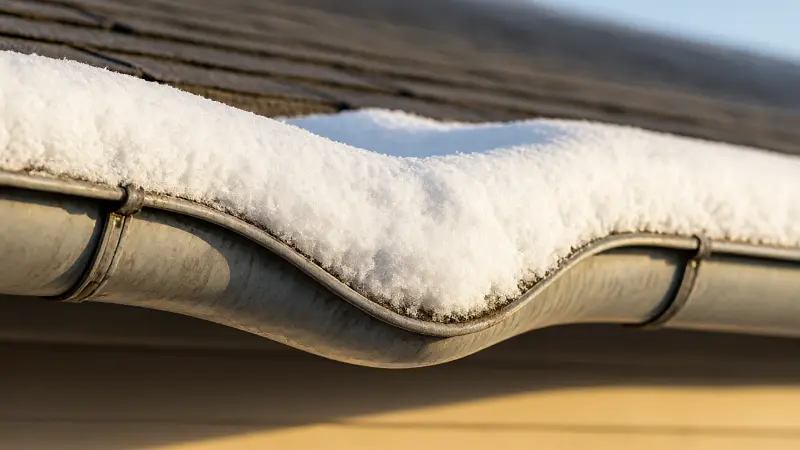
A gutter that sags under snow load is telling you something important about the roof edge, the fasteners, and the weight the system was never meant to carry. Snow is heavy, and when it sits in a gutter or freezes into ice, the load can pull hangers loose, bend the channel, separate seams, and tear the fasteners out of the fascia. The sag is the visible result, but the damage often extends behind the gutter into the wood and the roof edge.
The right response is careful and staged. You need to relieve the load safely, assess the damage without climbing on a winter roof, repair the fasteners and the slope once the weather allows, and address the conditions that let the snow accumulate in the first place. This guide walks through that sequence, explains the risks, and marks the point where a gutter contractor should take over.
Why Snow Load Makes Gutters Sag
A gutter is designed to carry water, not snow and ice. Water flows through the channel and exits at the downspout, so the load is brief and spread along the run. Snow sits in the channel, compacts, and absorbs meltwater. When it refreezes, it becomes a solid mass that can weigh far more than the water the gutter was designed to handle.
The load concentrates at the hangers and the fasteners. A hanger that is spaced too far apart, attached with short screws, or fastened into soft fascia will pull loose under that weight. Once one hanger fails, the load shifts to its neighbors, and the sag spreads along the run. A gutter that looked level in fall can develop a visible dip after a single heavy snow or ice event.
Ice adds a second problem. Ice expands as it forms, and that expansion can open the seams, distort the channel, and push the gutter away from the fascia. When the ice melts, the water has to go somewhere. If the downspout is blocked, the water backs up and adds more weight to an already stressed system.
Heat loss from the house contributes to the cycle. Warm air escaping into the attic melts snow on the roof, and that meltwater runs into a cold gutter and refreezes. The same heat loss that produces ice dams at the eave feeds the ice in the gutter. Fixing the attic is part of the long-term solution, not a separate project.
Safety First: Do Not Climb on a Winter Roof
The most important rule is to stay off the roof and off a ladder when the roof, the gutter, or the ground is covered with snow or ice. A gutter that is already sagging is a sign that the roof edge is under stress, and adding your weight to a ladder leaning against that edge is risky. Falls from gutter height cause serious injuries, and they are far more common in winter than homeowners expect.
Do not stand under a sagging gutter or under icicles that hang above it. A section of gutter that is full of ice can let go suddenly, and the falling ice and metal are dangerous. Keep children and pets away from the area, and park vehicles clear of the drip line until the load is relieved.
Do not try to break the ice out of the gutter with a hammer, an axe, a chisel, or a screwdriver. Metal tools damage the gutter, tear the seals, and can puncture the fascia. They also send ice and debris falling, which is a hazard to anyone below. Do not use a blowtorch or a heat gun on the gutter; the metal will distort and the adjacent siding or fascia can be damaged.
Assess the Damage From the Ground
Start with a visual inspection from the ground. Look along the gutter line for dips, separations, and sections that have pulled away from the fascia. Note where the sag is worst and whether the gutter is bent, cracked, or separated at a seam. Photograph the damage from several angles so you have a record for a contractor or an insurance claim.
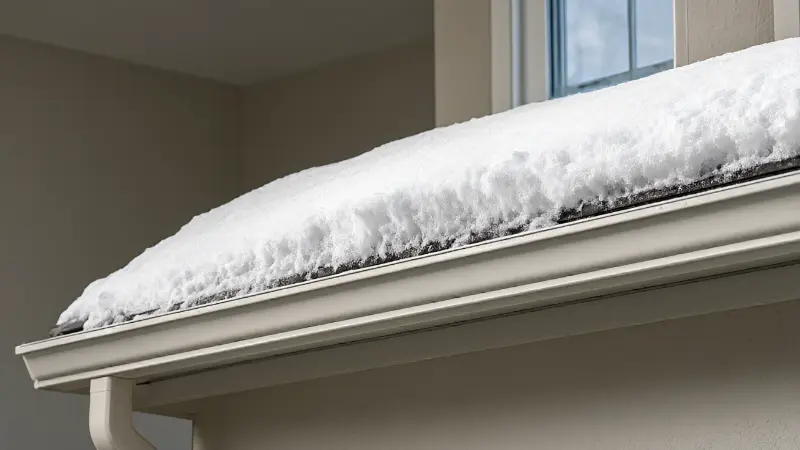
Check the fascia behind the gutter for water stains, peeling paint, and soft wood. A gutter that has been pulling away for a while often leaves a dark streak on the fascia and a gap between the metal and the wood. Soft fascia is a structural issue, not a cosmetic one, and it needs to be repaired before new fasteners can hold.
Look at the ground below the sag. A line of ice, a puddle that refreezes, or a snowbank that has turned solid suggests that water has been spilling over the front edge. If the downspout is blocked, the overflow may be happening at the low point of the sag rather than at the outlet. That pattern tells you whether the problem is the hanger spacing, a blockage, or both.
Inside the house, check for stains on the ceiling near the exterior wall, dampness at the top of the wall, or water in the basement near the downspout location. Water that backs up behind a sagging gutter can work under the roof edge and into the wall assembly. If you see interior damage, treat the gutter and the roof edge as one investigation.
Check the hangers and fasteners where you can reach safely
Some hangers are visible from a stepladder placed on firm, clear ground. If you can inspect a section safely, look for pulled screws, missing hangers, and brackets that have separated from the fascia. Do not reach over your head from an unstable ladder, and do not lean the ladder against the sagging gutter itself. If the ground is icy or the gutter is high, leave the inspection to a professional.
Relieve the Load Safely
The immediate goal is to reduce the weight on the gutter without damaging it further. A long-handled roof rake used from the ground can pull snow off the lower few feet of the roof. That reduces the snow that will slide into the gutter and the meltwater that will refreeze there. Work gently and avoid pulling on the gutter edge with the rake.
Do not try to shovel snow out of the gutter from a ladder. The motion is awkward, the ladder is unstable, and the shovel can catch on the hangers and pull them loose. If the gutter is full of ice, the safest approach is to let it melt gradually and to keep the downspout outlet clear so the water can drain when it does.
Clear the downspout outlet from the ground. Remove snow and ice from the bottom of the downspout and confirm that the discharge path is open. If the outlet is buried, the gutter cannot drain even after the ice melts, and the water will continue to add weight. A splash block or a temporary extension that carries water away from the foundation reduces the chance of ice at the base.
If the sag is severe and the gutter is in danger of falling, keep people away from the area and call a gutter contractor. A section that is hanging by a few fasteners can let go without warning, and the repair is safer and less expensive when it is handled before the gutter falls.
Repair the Hangers and Fasteners
Once the ice has melted and the weather is workable, repair the fasteners. Tighten or replace the screws that have pulled out, and replace any hanger that is bent, cracked, or missing. Use fasteners that are long enough to reach solid wood and that are rated for the gutter material and the local conditions. Follow the gutter manufacturer’s guidance for hanger spacing rather than guessing at a distance.
If the fascia is soft, the new fasteners will not hold. Cut out the rotted section, replace it with sound wood, and seal the joints before reinstalling the gutter. A fastener that is driven into soft wood will pull out again in the next snow, and the repair will be wasted. This is also the time to check the soffit and the roof edge for damage that the ice may have caused.
Re-pitch the gutter after the hangers are secure. Water should move steadily toward the downspout rather than pooling in the middle of the run. A gutter that holds water will freeze again next winter, so correcting the slope is part of the repair rather than an optional extra. Small adjustments at the hangers are usually enough to restore a continuous slope.
Check the seams and the end caps. A sagging gutter often separates at a seam, and a separated seam leaks water against the fascia. Reconnect the sections and seal the joint with a gutter sealant appropriate for the material. If the channel is bent or cracked beyond a simple repair, replace the damaged section rather than patching it.
Correct Slope and Drainage
Drainage is the other half of the repair. A gutter that drains quickly holds less water and less ice, which reduces the load on the hangers. Confirm that the downspouts are clear and that there are enough outlets for the length of the run. A single small downspout on a long roof can be overwhelmed by a rapid melt, and the overflow adds weight to the gutter.
Check the discharge at the ground. Water that pools at the foundation refreezes and can contribute to basement moisture and foundation movement. A splash block, a gravel bed, or a downspout extension that carries water several feet away from the wall reduces that risk. If the downspout empties into a buried line, confirm that the line is clear and that the discharge point is protected from freezing.
If the gutter freezes every winter in the same spot, the cause is often a low point from poor slope, debris that collects in the same place, or a blocked downspout. A guide to a gutter frozen and not draining situation covers the safe clearing techniques and the warning signs to check inside the house. Addressing the pattern is what keeps the repair from becoming an annual event.
Gutter guards can change how snow and ice behave in the channel. A guard that works well in summer can hold snow or allow fine debris to mat on the surface, which adds weight and blocks drainage. A guide to gutter guard winter performance explains the common causes and the adjustments that help.
Prevent Repeat Snow Load Damage
Prevention starts with the hangers and the fasteners. Confirm that the spacing matches the manufacturer’s recommendation and that the screws reach solid wood. Add hangers if the run is long or if the roof sheds snow onto the gutter in a concentrated area. A little extra support at the corners and near the downspouts makes a difference.
Keep the gutters clean before winter. Leaves and debris hold moisture and add weight when they freeze. Flush the downspouts and confirm that water flows freely from the high end to the outlet. A clean gutter drains faster and holds less ice, which reduces the load on the fasteners.
Reduce the snow that reaches the gutter. A roof rake used from the ground can pull snow off the lower roof edge after a heavy storm, which limits the amount that slides into the channel. Do not climb onto the roof, and do not pull on the gutter with the rake. If the roof is steep, high, or difficult to reach, hire a professional.
Address the attic heat loss that feeds the meltwater. Air seal the ceiling plane, insulate to the recommended depth, and keep the soffit-to-ridge ventilation clear. A cold roof produces less meltwater, which means less water in the gutter and fewer ice dams at the eave. The same work reduces the risk of a roof leak during a thaw.
Winter equipment deserves the same preventive attention. A snowblower that stalls under load can leave the driveway half cleared, and the snow that gets piled near the foundation can add to the moisture problem. A guide to a snowblower stalling under load covers the fuel, auger, and belt checks that keep the machine working in heavy snow.
When to Call a Gutter Contractor
Call a gutter contractor if the gutter has pulled away from the house, if the fascia is soft, if a section is bent or cracked, if the downspouts are undersized, or if the repair requires work at height that you cannot do safely. A contractor can assess the hangers, the slope, the roof edge, and the drainage as one system and recommend the right repair.
Call an ice dam removal service if the gutter ice is part of a larger dam at the eave and water is backing up under the shingles. Steam removal clears the ice without damaging the gutter or the roof. Do not hire anyone who offers to chip the ice out with hand tools or a torch.
Call a roofing contractor if the roof edge, the drip edge, or the shingles have been damaged. A sagging gutter often coincides with lifted flashing and water behind the roof edge. The gutter repair and the roof repair should be coordinated so the water has a clear path away from the wall.
Quick Reference: Sagging Gutter Symptoms and Actions
The table below matches common snow-load gutter problems with the likely cause and the safest first step. Use it to decide what to do now and what to schedule for the first safe weather window.
| Symptom | Likely Cause | Safe First Step | When to Call a Pro |
|---|---|---|---|
| Visible dip in the gutter line | Pulled hangers or fasteners under snow and ice load | Stay off the roof; photograph and note the location | Gutter is pulling away or hanging loose |
| Gutter separated at a seam | Ice expansion and weight stressing the joint | Contain the drip; plan a seam repair | Always, for a separated seam |
| Water staining on the fascia | Water running behind the gutter | Check for soft wood from the ground | Fascia is soft or the gap is large |
| Ice mound at the downspout base | Blocked outlet or discharge pooling | Clear the outlet; add a splash block or extension | Water is reaching the foundation |
| Gutter full of ice and snow | Snow accumulation and refreezing meltwater | Reduce snow on the lower roof with a rake from the ground | Ice is thick or water is entering the house |
| Hanger screws pulled out of the fascia | Fasteners too short or wood too soft | Plan a repair with longer fasteners and sound wood | Fascia is rotted or the run is long |
| Water spilling over the front during a thaw | Blocked downspout or poor slope | Clear the outlet; check the pitch | Overflow continues after clearing |
| Same section sags every winter | Insufficient hangers, attic heat loss, or debris | Add support, clean the gutter, and air seal the attic | Repeat sag after corrections |
FAQ
How much snow can a gutter hold?
There is no single answer that applies to every gutter. Capacity depends on the gutter material, the hanger spacing, the fasteners, and the condition of the fascia. Snow and ice can weigh far more than the water the gutter was designed to carry, which is why a gutter that handles rain well can still sag after a heavy snow.
Can I push the snow out of my gutter with a shovel?
Do not shovel snow out of a gutter from a ladder. The motion is awkward, the ladder is unstable, and the shovel can catch on the hangers and pull them loose. Use a long-handled roof rake from the ground to reduce the snow on the lower roof, and let the ice in the gutter melt gradually.
Will a sagging gutter fix itself when the snow melts?
The sag will remain after the ice melts unless the hangers and fasteners are repaired. The snow load may have bent the channel or pulled the fasteners out of the fascia. Once the weather allows, check the hangers, the slope, and the fascia, and repair the damage before the next storm.
Should I replace the gutter or just repair the hangers?
If the channel is bent, cracked, or separated at multiple seams, replacement may be the better choice. If the gutter is intact and only the fasteners have pulled loose, repairing the hangers and re-pitching the run is usually sufficient. A contractor can assess the condition and recommend the right option.
Conclusion
A gutter sagging under snow load is a sign that the hangers, the fasteners, or the fascia have reached their limit. The immediate priority is safety: stay off the roof, keep people away from the drip line, and reduce the snow on the lower roof from the ground. Do not chip at the ice or climb a ladder in winter conditions.
Once the ice melts, repair the hangers, replace any rotted fascia, reconnect the seams, and re-pitch the gutter so it drains. Clear the downspouts and improve the discharge so water moves away from the foundation. Address the attic heat loss that feeds the meltwater, because a cold roof is the condition that prevents the next overload.
Call a professional for a loose gutter, soft fascia, a damaged roof edge, or any repair that requires working at height. A gutter that is repaired before it falls costs far less than one that takes the fascia and the roof edge with it. A methodical approach keeps the drainage system working through the heaviest snow and the coldest nights.