A gutter that is frozen and not draining is a winter problem that can quietly damage the roof edge, the fascia, and the foundation. Ice blocks the channel, meltwater backs up under the shingles, and the weight of the ice can pull the gutter away from the house. The visible sign is often a curtain of icicles or water spilling over the front edge, but the real damage is happening behind the gutter and above the soffit.
This guide explains why gutters freeze, the risks of leaving a frozen gutter alone, the safe ways to clear ice and restore drainage, the repairs that follow a freeze event, and the prevention steps that keep the gutter working through the coldest weeks. Safety comes first: ladders, roofs, and ice are a dangerous combination, and many of the fixes are best done from the ground or by a professional.
Why Gutters Freeze and Stop Draining
A gutter freezes when water in the channel stays still long enough to lose its heat. That happens when the downspout is blocked, when the gutter has a low spot that holds water, or when snow melts on the roof and refreezes in the cold gutter. The ice then dams the channel, and any further meltwater backs up rather than draining away.
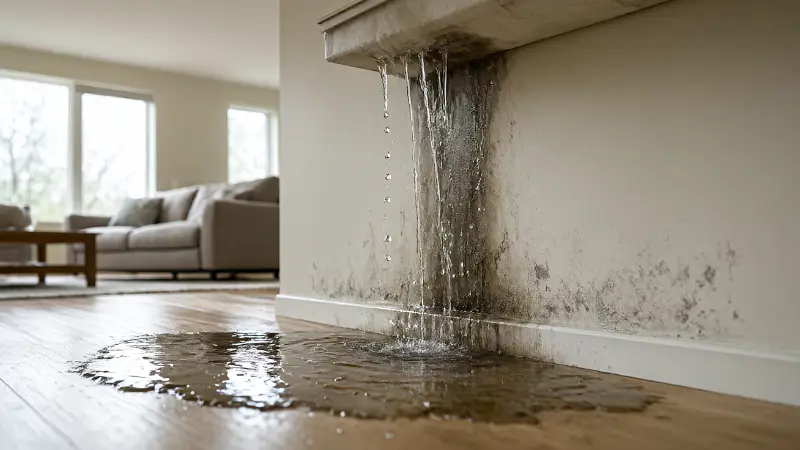
Clogged gutters are the most common cause. Leaves, twigs, and shingle granules collect in the channel and block the outlet. Water sits behind the debris, freezes, and expands. A downspout that is clogged at the bottom or buried in snow produces the same result, because the gutter cannot empty even when the channel itself is clear.
Poor slope is another factor. Gutters need a slight pitch toward the downspout so water drains instead of pooling. A gutter that has sagged, pulled loose, or was installed level will hold water in low spots that freeze first. Ice in those spots grows and can bend the hangers or open the seams.
Heat loss from the house also contributes. Warm air escaping into the attic melts snow on the roof, and that meltwater runs into a cold gutter and refreezes. The same heat loss that causes ice dams at the eave also feeds the ice in the gutter. Fixing the attic is part of the long-term solution.
What a Frozen Gutter Can Damage
The weight of ice is significant. A gutter full of ice can pull the fasteners out of the fascia, bend the hangers, and separate the sections at the seams. Once the gutter is loose, water runs behind it, soaking the fascia board and the soffit. Soft fascia is a structural problem rather than a cosmetic one, and it can allow water into the wall assembly.
Backed-up water can also work under the roof edge. The drip edge and the first shingle course are designed to shed water away from the fascia, but water that is pushed upward by ice can get behind them. From there it can enter the attic, soak the insulation, and stain the ceiling. That is the same mechanism that produces ice dam leaks, and a frozen gutter makes it more likely.
When the ice finally melts, the water has to go somewhere. If the downspout is still blocked, the water overflows at the gutter and lands at the foundation. Repeated freeze-thaw cycles can saturate the soil near the basement wall and contribute to damp basements and foundation movement. A gutter that does not drain is a water management problem for the whole house.
Signs Your Gutter Is Frozen and Not Draining
The most obvious sign is ice visible in the channel or hanging from the edge. A solid block of ice along the gutter, or a thick curtain of icicles, suggests the channel is full and not moving water. Water spilling over the front edge during a thaw is another sign that the gutter is blocked somewhere.
Look at the downspout. If it is coated in ice or if water is running out of the gutter seam rather than the outlet, the downspout is likely blocked. A downspout that is buried in snow or connected to an underground drain that has frozen will back water up into the gutter.
Check the gutter for sagging, separation, or pulled fasteners. A gutter that has moved is a sign that ice weight has already done damage. Look at the fascia behind the gutter for water stains, soft wood, or peeling paint. Those are signs that water has been running behind the gutter rather than through it.
Inside the house, watch for stains on the ceiling near an exterior wall or under a roof valley. Water that backs up under the shingles can travel along the framing and appear well away from the gutter. If you see a stain during or after a thaw, treat the gutter and the roof edge as part of the same investigation.
Safe Ways to Clear a Frozen Gutter
The safest approach is to work from the ground. A long-handled roof rake can pull snow off the lower roof edge, which reduces the meltwater that feeds the gutter. Clearing the snow does not remove the ice in the channel, but it slows the growth of the blockage and reduces the load on the roof.
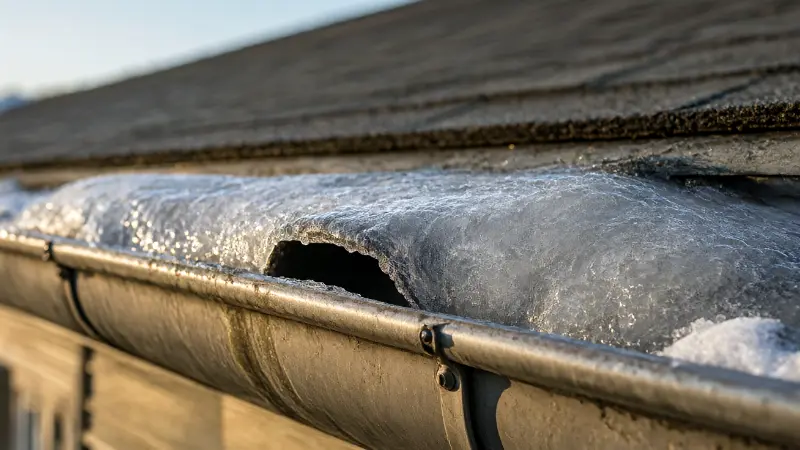
For the gutter itself, warm water can be used carefully if the gutter is reachable from a stable ladder on level ground. Pour warm, not boiling, water into the channel at the high end and work toward the downspout. Boiling water can crack the gutter and the fascia through thermal shock, and it can refreeze quickly if the air is cold. Have a helper and keep the ladder clear of ice.
Do not chip the ice with a hammer, an axe, a chisel, or a screwdriver. Metal tools damage the gutter, tear the seals, and can puncture the fascia. They also send ice and debris falling, which is a hazard to anyone below. Do not climb onto a snowy or icy roof to reach the gutter; a fall from the roof edge is a serious injury.
Chemical de-icers are not a good substitute for clearing. Many products can stain siding, damage the gutter coating, and harm plants at the base of the wall. Some are corrosive to metal fasteners. If you use a de-icer, choose one labeled for roof and gutter use and follow the directions, but understand that it is a temporary measure rather than a repair.
Clear the downspout from the ground
A clogged downspout is often the real reason the gutter will not drain. If the outlet is reachable, clear snow and ice from the bottom and check for a visible blockage. Do not insert a metal rod or a wire into the downspout from the top while standing on a ladder; the rod can jam and the ladder can shift. A plumber’s snake or a flexible drain brush used from the bottom is safer.
Repairs After the Ice Melts
Once the gutter is clear and the weather allows, inspect the fasteners, the hangers, and the seams. Tighten or replace the screws that have pulled out, and re-pitch any section that has sagged. A gutter that holds water in a low spot will freeze again next winter, so correcting the slope is part of the repair rather than an optional extra.
Look at the fascia behind the gutter. Soft wood, peeling paint, and dark stains mean water has been running behind the channel. Replace any rotted sections and seal the joints before the gutter is reinstalled. If the damage extends into the soffit or the wall, the repair is larger than a gutter fix.
Check the drip edge and the first shingle course for damage. Ice can lift the drip edge and open the seam at the roof edge. A roofing contractor can confirm whether the flashing needs to be reworked. Do not simply caulk over a lifted edge; the water will find the same path again.
If the downspout discharges into an underground drain, confirm that the drain is clear and that the discharge point is below the frost line or protected from freezing. A buried drain that freezes will back water up into the gutter and reproduce the problem. In cold climates, a temporary above-ground extension during winter may be more reliable than a buried line.
Prevent the Next Frozen Gutter
Clean the gutters in fall after the leaves have fallen and before the first freeze. Remove the debris from the channel and flush the downspouts with a hose. Confirm that water flows freely from the high end to the outlet. This single step prevents most winter gutter freezes.
Check the slope and the fasteners while the gutter is clean. A gutter that is loose or level will hold water. Tighten the hangers, replace any that are corroded, and adjust the pitch toward the downspout. Small corrections now prevent ice from forming in the same low spot every year.
Address the attic heat loss that feeds the meltwater. Air seal the ceiling plane, insulate to the recommended depth, and keep the soffit-to-ridge ventilation clear. A cold roof produces less meltwater, which means less water in the gutter and fewer ice dams at the eave. The same work reduces the risk of a roof leak during a thaw.
Keep the downspouts clear during winter. Clear snow from the outlet after storms, and check that the discharge is not blocked by ice at the ground. If the downspout empties into a splash block, make sure the block is not buried under snow. Water that cannot exit will always back up.
If the home has gutters that freeze every year, consider adding gutter guards or a wider downspout. A guard keeps large debris out of the channel, and a larger outlet drains faster. These are not substitutes for cleaning and slope correction, but they reduce the load on the system.
When to Call a Professional
Call a gutter or roofing contractor if the gutter is pulling away from the house, if the fascia is soft, if water is entering the attic or the ceiling, or if the gutter cannot be cleared safely from the ground. A professional can assess the fasteners, the slope, and the roof edge as one system and recommend the right repair.
Call an ice dam removal service if the gutter ice is part of a larger dam at the eave. Steam removal clears the ice without damaging the gutter or the shingles. Do not hire anyone who offers to chip the ice out with hand tools or a torch.
Other winter water problems follow similar logic and often appear at the same time. An outdoor faucet frozen and leaking inside the wall needs immediate isolation, and a refrigerator water line frozen in garage can produce a leak that looks unrelated. If a supply line is already frozen, the steps for thawing frozen pipes under sink cover the safe warming technique. Keep the gutter work separate from the plumbing work so each repair gets the right tools and precautions.
Quick Reference: Frozen Gutter Symptoms and Actions
The table below matches common frozen gutter situations with the likely cause and the safest first step. Use it to decide what to do now and what to schedule for the first safe weather window.
| Symptom | Likely Cause | Safe First Step | When to Call a Pro |
|---|---|---|---|
| Ice visible in the channel, water spilling over the front | Blocked downspout or debris in the gutter | Clear snow from the outlet; use warm water if reachable safely | Gutter is pulling away or the fascia is soft |
| Thick icicles along the eave | Meltwater refreezing in a cold gutter | Reduce snow on the lower roof with a rake from the ground | Ice is part of an ice dam or water is entering the house |
| Downspout coated in ice | Blocked outlet or buried discharge | Clear the bottom of the downspout from the ground | Downspout is damaged or the line is buried |
| Gutter sagging or separated at a seam | Ice weight pulling the fasteners | Do not climb; plan a repair | Always, for a loose gutter |
| Water staining behind the gutter or on the fascia | Water running behind the channel | Note the location; check for soft wood | Fascia is soft or water is reaching the wall |
| Ceiling stain near an exterior wall after a thaw | Backed-up water under the shingles | Contain the drip; document; inspect the roof edge | Water is entering or the stain grows |
| Water pooling at the foundation | Downspout not draining away | Extend the discharge away from the wall if safe | Foundation or basement moisture persists |
| Gutter freezes every winter in the same spot | Poor slope, debris, or attic heat loss | Clean, re-pitch, and air seal the attic | Repeat freeze after corrections |
FAQ
Can I pour hot water on a frozen gutter?
Warm, not boiling, water is safer. Boiling water can crack the gutter and the fascia through thermal shock and can refreeze quickly in cold air. Use warm water from a container at the high end of the gutter and work toward the downspout, with a helper and a stable ladder on level ground.
Why does my gutter keep freezing in the same spot?
A repeat freeze usually points to a low spot from poor slope, debris that collects in the same place, or a blocked downspout. It can also be fed by attic heat loss that melts snow on the roof. Clean the gutter, correct the pitch, clear the downspout, and address the attic if the pattern continues.
Should I use a de-icer on a frozen gutter?
Chemical de-icers can damage the gutter coating, stain siding, and harm plants. They are a temporary measure rather than a repair. If you use one, choose a product labeled for roof and gutter use and follow the directions. Clearing the blockage and correcting the slope is the durable fix.
Is it safe to climb on the roof to clear the gutter?
Climbing onto a snowy or icy roof is a serious fall hazard. Work from the ground with a long-handled tool, or hire a professional. Do not lean a ladder against a frozen gutter, and do not walk on a wet or icy roof surface.
Conclusion
A gutter that is frozen and not draining is usually caused by a blocked downspout, debris in the channel, or a slope problem that lets water pool and freeze. The safe response is to work from the ground, clear what you can reach, reduce the snow feeding the gutter, and avoid chipping at the ice or climbing on a winter roof. Warm water used carefully is the tool of choice when the channel is reachable.
Repairs after the melt matter as much as the thaw. Tighten the fasteners, correct the slope, replace soft fascia, and check the drip edge and the shingles. Address the attic heat loss that feeds the meltwater, and clean the gutters in fall so the next winter starts with a clear channel.
Call a professional for a loose gutter, soft fascia, roof edge damage, or any situation that cannot be handled safely from the ground. A frozen gutter is a manageable problem when it is handled early, and a costly one when the ice is allowed to pull the gutter off the house.