A septic line that freezes in winter can bring a household to a standstill. Drains slow to a trickle, toilets gurgle and refuse to flush properly, and wastewater may back up into the lowest fixtures in the home. Unlike a frozen water supply pipe, a frozen septic line involves sewage, which makes the repair more delicate and the health risks more serious. The instinct to grab a torch or pour a chemical down the drain is understandable, but both can cause damage and create hazards.
This guide explains why septic lines freeze, how to recognize the problem, why most thawing should be left to a septic professional, and what you can safely do while you wait for help. It also covers the steps that prevent a repeat freeze next winter. The goal is to protect your system, your home, and your family from a problem that is far easier to prevent than to fix.
Why Septic Lines Freeze in Winter
A septic line carries warm wastewater from the house to the tank, and that warmth is part of what keeps the pipe from freezing. When the flow slows or stops, the pipe cools toward the surrounding soil temperature. If the pipe is shallow, poorly insulated, or exposed to cold air, the water inside can freeze solid.
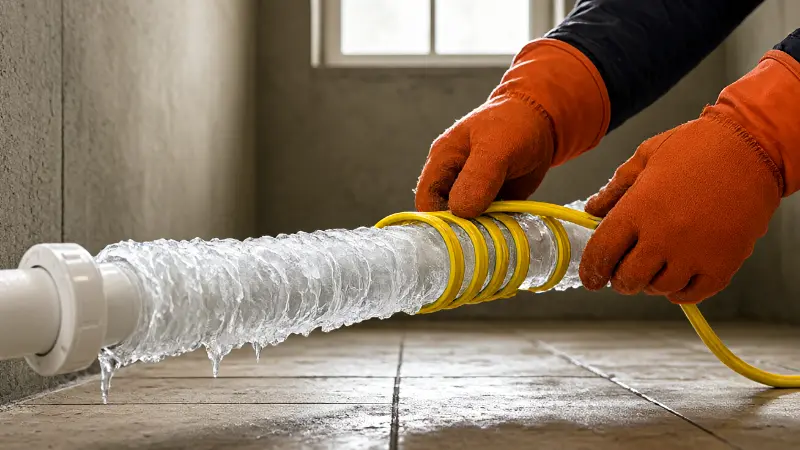
Several conditions make a freeze more likely. A pipe that was installed with a shallow cover, a line that has settled and created a low spot where water collects, and a section that runs under a driveway or a compacted path are all vulnerable. A leaky toilet or a dripping faucet can send a thin trickle of water into the line, which freezes in a thin film along the pipe wall and gradually builds into a blockage.
Low water use is another common factor. A vacation home, a guest house, or a primary residence left empty for a week or more receives little warm water, and the pipe cools. When the household returns and uses water heavily, the frozen section blocks the flow and the system backs up. Seasonal properties are especially prone to this pattern.
Finally, cold air can enter the system through an open riser, a cracked lid, or a gap where the pipe passes through the foundation. That air chills the tank and the line, and it can freeze the contents even when the soil around the pipe is not deeply frozen. A missing or damaged cover is a simple problem with serious consequences.
Signs Your Septic Line Is Frozen
The earliest sign is often a slow drain that gets progressively slower. A toilet may flush weakly, gurgle, or refill slowly. Water may back up briefly in a shower or tub and then drain away. Those symptoms can look like a clog, but in cold weather they can also indicate that ice is narrowing the pipe.
Watch for a pattern that changes with temperature. If water flows during the day and stops at night when temperatures drop, a partial freeze is likely. Frost or ice visible on an exposed pipe, a riser, or the ground near the tank is another clue. A septic odor inside the home near drains can indicate that wastewater is not moving as it should.
A sewage backup into the lowest fixtures is a late and serious sign. By that point, the blockage is significant, and the system needs professional attention. If you see standing water or sewage surfacing near the tank or the drain field, keep people and pets away and call a septic professional immediately.
If the home has a pump tank or a dosing system, a frozen line may cause the pump to run continuously or cycle on and off. An alarm may sound, or the pump may fail to move effluent to the drain field. Those systems need a professional assessment rather than a homeowner remedy.
Why DIY Thawing Is Risky
The most common DIY instinct is to pour hot water, antifreeze, or a chemical drain cleaner into the line. Each of those approaches carries problems. Hot water can crack a cold plastic pipe through thermal shock, and it may not reach the frozen section if the line is long or buried. Antifreeze and drain chemicals can kill the bacteria that break down waste in the tank, and they can contaminate the drain field and groundwater.
An open flame or a heat gun on a septic line is even more dangerous. The pipe may be plastic or thin-wall material that deforms or melts under concentrated heat. If the line runs under a lawn or a driveway, the heat source may be far from the blockage, and the effort may damage the surrounding area without solving the problem.
Running water continuously in an attempt to thaw the line is another common mistake. A continuous flow can overload the tank and the drain field, causing sewage to surface in the yard or back up into the home. It also adds more water to a system that cannot accept it, which increases the risk of a larger failure.
Digging up a frozen line without knowing its exact route and depth can damage the pipe, the tank, or a drain field component. A septic professional has a camera to locate the blockage and equipment to thaw the line without excavation in many cases. The cost of a service call is usually far less than the cost of repairing a broken line or a damaged drain field.
Professional Thawing Methods
Septic contractors use several methods to thaw a frozen line safely. The right choice depends on the location of the freeze, the pipe material, and the access available. A camera inspection is often the first step, because it confirms where the ice is and whether the pipe is damaged.
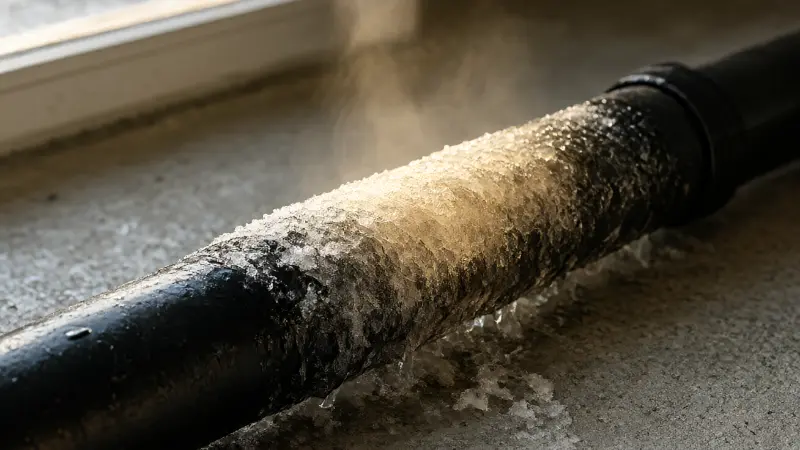
Steam is one of the most common tools. A steamer delivers hot vapor through a hose or a wand, and the steam transfers heat efficiently without the thermal shock of liquid water. The contractor can direct the steam to the frozen section through a cleanout, a riser, or a small access point. Steam is effective on both plastic and cast iron lines when it is applied correctly.
A hot-water jetter is another option. It combines high-pressure water with heat to break up ice and flush the line. Jetters are used carefully to avoid damaging the pipe, and they are often paired with a camera to confirm progress. Some contractors also use heat tape or a temporary heated enclosure over an exposed section.
If the freeze is in an exposed pipe above ground, a contractor may use a heated blanket or a purpose-made thawing unit. If the freeze is in a shallow buried line, the contractor may need to excavate a small access point or use a technique that directs heat along the pipe from a cleanout. Each method has limits, and the contractor will choose based on the specific situation.
For a frozen pump chamber or force main, the approach is different. The pump may need to be pulled, the chamber thawed, and the line cleared with equipment designed for pressurized systems. A homeowner should not attempt to disassemble a pump tank or a force main.
What You Can Do Safely
While you wait for a professional, reduce water use to the minimum. Short showers, fewer flushes, and full dishwasher loads reduce the volume entering the system and lower the risk of a backup. If the tank is full and the system cannot accept water, a licensed pumper can empty it and the tank can serve as a holding tank until the line thaws.
Do not pour antifreeze, salt, or septic additives into the system. Those products can harm the bacteria, damage the drain field, and contaminate groundwater. Do not use an open flame, a heat gun, or boiling water on the line. Do not dig up the line without professional guidance.
If you have a cleanout or an accessible riser, confirm that the cover is intact and that cold air is not entering the system. A temporary insulated cover over a riser can help, but do not seal a vent that is designed to allow gas to escape. Keep the area around the tank clear of snow and debris so the professional can access it quickly.
Other winter systems have similar freeze risks and similar rules about safe thawing. A frozen sump pump discharge line can back water into a basement, and a guide to a sump pump discharge line frozen covers the safe approach for that system. A frozen HVAC condensate line can shut down a furnace, and a guide to a frozen HVAC condensate line explains the thawing and prevention steps for that equipment.
Preventing the Next Freeze
Prevention starts with insulation and cover. Add a layer of loose mulch, straw, or leaves over the line and the tank before the ground freezes. The material should stay uncompacted so air pockets remain and provide insulation. Do not use heavy soil or equipment that compacts the ground, because compaction conducts cold downward.
Keep vehicles, heavy equipment, and livestock off the entire system, including the area between the house and the tank. That rule applies all year, but it matters most in winter when the snow is the only insulation. If you need to clear a path, avoid the tank and the drain field, and do not plow snow off the system.
Fix leaks before winter. A toilet flapper that does not seal, a faucet that drips, or an appliance that seeps can send a thin trickle into the line that freezes easily. Repairing those fixtures reduces the freeze risk and also reduces the volume of water the system has to treat.
Maintain consistent water use during cold snaps. Spread out laundry and dishwashing rather than running several large loads back to back. A steady trickle of warm water throughout the day keeps the line warmer than a single large surge followed by hours of inactivity. If you leave for an extended period, arrange for someone to run warm water regularly or have the tank pumped before you go.
Confirm that all covers and risers are intact and secure. A missing or cracked lid allows cold air to enter the tank and chill the contents. Replace damaged covers before winter, and seal gaps around the pipe where it passes through the foundation.
If a section of line is shallow or cannot be re-graded, insulated pipe or a layer of foam panels over the line can provide protection. The goal is to keep the pipe above freezing and to ensure that no water remains in it between uses.
When to Call a Septic Professional
Call a septic professional if you suspect a freeze, if you see a backup, if sewage is surfacing, or if the system has stopped accepting water. A contractor can inspect the tank, camera the lines, and determine whether the problem is a freeze, a clog, a failed component, or a saturated drain field. The earlier you call, the less damage the system sustains.
Call before you dig. A homeowner who tries to excavate a frozen line can damage the pipe, the tank, or a drain field component. The repair cost rises quickly when a small freeze becomes a broken line or a crushed riser.
If the frozen section is inside a wall or under a floor, the approach is similar to thawing a frozen water pipe, but the sewage hazard makes professional help even more important. A guide to a frozen pipe in exterior wall covers the safe warming techniques for that situation, and the same caution about open flames and thermal shock applies.
Quick Reference: Thawing Methods and Suitability
The table below compares common thawing approaches for a frozen septic line, along with their risks and the situations where each is appropriate. Use it to understand the options, not as a substitute for professional advice.
| Method | How It Works | Best For | Risks and Cautions |
|---|---|---|---|
| Steam | Hot vapor delivered through a hose or wand | Most residential septic lines, plastic or cast iron | Requires professional equipment; misuse can damage pipe |
| Hot-water jetter | High-pressure heated water breaks up ice and flushes the line | Lines with access points and confirmed blockages | Pressure can damage weak pipe; professional use recommended |
| Heat tape or heated blanket | Electric heat applied to an exposed section | Above-ground or accessible pipes | Must be rated for the pipe; fire risk if misused |
| Excavation and direct thaw | Access the buried pipe and warm it directly | Shallow lines with a known freeze location | Labor-intensive; risk of pipe damage during digging |
| Camera inspection | Locates the ice and checks for damage | Any suspected freeze before thawing | Diagnostic only; does not thaw the line |
| Hot water poured down a drain | Homeowner attempt to melt ice | Not recommended | Thermal shock, insufficient reach, can overload the system |
| Antifreeze or chemicals | Homeowner attempt to lower the freezing point | Not recommended | Kills bacteria, contaminates groundwater, damages drain field |
| Open flame or heat gun | Direct high heat on the pipe | Not recommended | Fire risk, melts plastic, damages surrounding materials |
FAQ
How do I know if my septic line is frozen or just clogged?
Cold weather, a shallow line, and low water use point toward a freeze, especially if the problem appeared during a cold snap. A camera inspection by a septic professional is the reliable way to tell the difference. Do not assume it is a clog and pour chemicals down the drain.
Can I pour hot water down the toilet to thaw a septic line?
Hot water can crack a cold plastic pipe through thermal shock, and it rarely reaches the frozen section in a buried line. It also adds water to a system that cannot accept it. Call a septic professional rather than improvising with hot water or chemicals.
How long does it take to thaw a frozen septic line?
It depends on the length and depth of the frozen section and the method used. A short freeze in an accessible line may clear in a few hours, while a long buried section may take longer and require excavation. A camera inspection helps the contractor estimate the time and the approach.
Will the septic system thaw on its own when the weather warms?
It may, but waiting can cause a backup and damage to the system. A frozen line that blocks flow can cause sewage to back up into the home or surface in the yard. Calling a professional earlier limits the damage and restores service sooner.
Conclusion
A frozen septic line is a problem best handled by a septic professional. The risks of DIY thawing—thermal shock to the pipe, contamination from chemicals, and damage to the drain field—outweigh the cost of a service call. A camera inspection, steam, or a hot-water jetter can clear the line safely when used by someone with the right equipment.
While you wait for help, reduce water use, keep the area clear, and do not pour antifreeze, salt, or drain chemicals into the system. Do not use an open flame or boiling water on the line. Those shortcuts can turn a temporary freeze into a permanent repair.
Prevention is the durable fix. Insulate the line with loose mulch, keep traffic off the system, repair leaks, and maintain consistent warm-water use. Those habits protect the tank, the drain field, and the home through the coldest part of the year.