A septic tank that freezes in winter is a problem that often catches homeowners by surprise, because the tank sits underground and seems insulated from the weather. In reality, the system depends on a delicate balance of warmth from the house, heat from the soil, and a protective blanket of snow or mulch. When that balance is disrupted, the pipes between the house and the tank, the tank itself, or the drain field can freeze and stop accepting wastewater.
The consequences range from slow drains and gurgling toilets to sewage backing up into the home. This guide explains why septic systems freeze, the warning signs to watch for, the five causes that most often lead to a freeze-up, and the steps that prevent it. It also covers what to do if the system has already frozen, including the actions that make the problem worse.
Why Septic Systems Freeze in Winter
A septic system relies on warm wastewater from the house to keep the tank and the pipes above freezing. Bacteria in the tank also generate some heat as they break down waste. The soil around the tank and the drain field holds geothermal heat from deeper underground, and snow or vegetation on the surface acts as an insulating blanket.
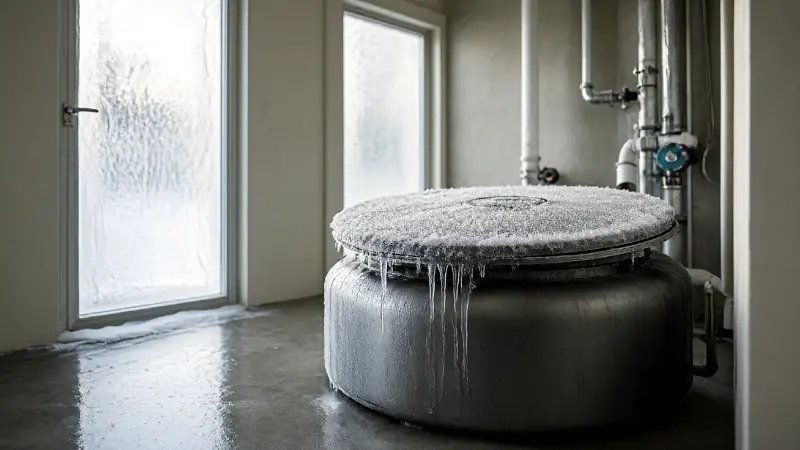
When any of those heat sources is reduced, the system can cool toward freezing. A shallow pipe loses heat to the cold air above it. A tank that receives very little wastewater has less warm inflow to replace what it loses through the walls and lid. Compacted snow or bare ground allows frost to drive deeper than it would under loose snow or a layer of mulch.
Cold weather also slows the bacterial activity inside the tank. The bacteria work more slowly, the sludge layer accumulates faster, and the liquid portion has less time and warmth to separate. A tank that is already full of solids has less liquid volume to absorb the cold, which makes it more vulnerable to freezing.
Freezing is rarely caused by a single factor. It is usually a combination: a shallow line, low water use during a vacation, a leaky toilet that sends a thin trickle into the pipe, and a winter with little snow cover. Understanding those combinations helps you identify the risk before the system stops working.
Signs Your Septic System Is Freezing
The earliest signs are often subtle. Drains may slow down, toilets may gurgle after flushing, or water may back up briefly and then drain normally. Those symptoms can look like a clog, but in cold weather they can also indicate that ice is beginning to narrow the pipe.
Watch for water that flows during the day but stops at night when temperatures drop. That pattern suggests a partial freeze in the line that thaws during warmer hours and refreezes overnight. Frost or ice visible on exposed pipes, risers, or the ground near the tank is another warning sign.
Unusual odors near the tank or the drain field, or inside the home near drains, can indicate that wastewater is not moving as it should. If the system has a pump tank, the sound of water running constantly or a pump that cycles on and off repeatedly can signal a frozen line or a frozen pump chamber.
A sewage backup into the lowest fixtures in the home is a late and serious sign. By that point, the blockage is significant, and the system needs professional attention rather than a homeowner remedy. If you see standing water or sewage surfacing near the tank or drain field, keep people and pets away and call a septic professional.
Cause One: Little Snow Cover and Compacted Snow
Snow is one of the best insulators a septic system has. Loose, undisturbed snow traps air and holds the heat rising from the soil and the tank, keeping frost from penetrating deeply. A winter with cold temperatures but little snow is therefore more dangerous for a septic system than a colder winter with a deep, fluffy snowpack.
Compacted snow is a different story. Snow that has been driven over by vehicles, snowmobiles, ATVs, or even repeated foot traffic loses its air pockets and conducts cold downward instead of insulating. That is why a system can freeze in a yard where the snow looks deep but has been packed into a hard layer over the tank or the drain field.
Keep vehicles, heavy equipment, and livestock off the entire system, including the area between the house and the tank. That rule applies all year, but it matters most in winter when the soil is cold and the snow is the only insulation. If you need to clear a path, avoid the tank and the drain field, and do not plow snow off the system.
If your area has unreliable snow cover, add a layer of mulch, straw, or leaves over the pipes and the tank before the ground freezes. A layer roughly 8 to 12 inches thick provides insulation without compaction, and it is particularly valuable for new systems where vegetation has not yet established. Do not add mulch over a system that is already frozen, because it will slow the spring thaw.
Cause Two: Low or Irregular Water Use
A septic system needs regular warm wastewater to stay warm. When a home is vacant for a week or more, or when only one or two people are using a system designed for a larger household, the tank receives very little warm inflow. The liquid cools, the bacteria slow down, and the risk of freezing rises.
Seasonal cabins and guest houses are especially vulnerable. A system that sits unused for weeks and then receives a sudden burst of water during a holiday visit can freeze in the pipes before the warm water has a chance to warm the tank. The same problem can occur in a primary home during a winter vacation.
If you leave for an extended period, arrange for someone to run warm water in the home regularly, or have the tank pumped before you go. Pumping removes the accumulated solids and leaves more liquid volume, which freezes more slowly than a nearly full tank. Do not pump in the middle of winter unless it is an emergency, because disturbing the soil over the tank reduces its insulating value.
During cold snaps, spread out laundry and dishwashing rather than running several large loads back to back. A steady trickle of warm water throughout the day keeps the line and the tank warmer than a single large surge followed by hours of inactivity. The goal is consistent flow, not a continuous stream.
Cause Three: Leaks and Trickle Flows
A leaky toilet, a dripping faucet, or a humidifier draining into the system can send a thin, slow trickle of water into the septic line. That trickle does not carry enough warmth to protect the pipe, but it does add water that can freeze in a thin film along the pipe wall. Over time, the film builds into a solid blockage.
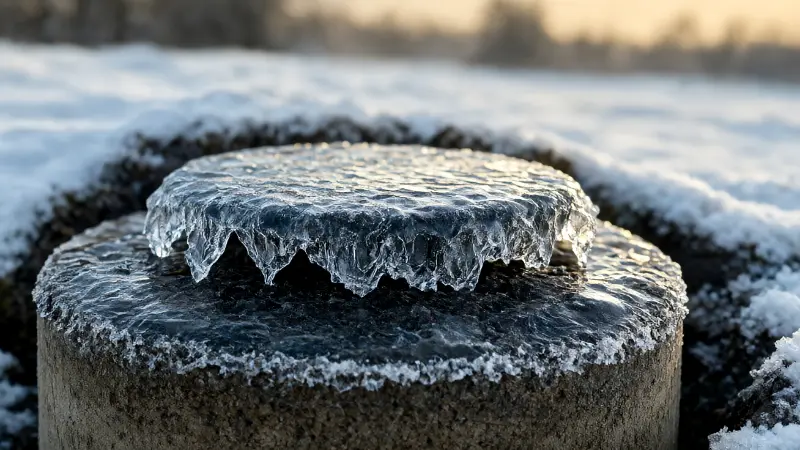
High-efficiency furnaces and humidifiers are common culprits because their condensate drains produce a small, steady flow. The water is often cool, and it moves slowly enough to freeze in a shallow or exposed section of pipe. If the furnace or humidifier drain connects to the septic system, check that the line is insulated and that the flow is not creating a freeze risk.
Fix leaks before winter. A toilet flapper that does not seal, a faucet that drips, or an appliance that seeps can all contribute to the problem. Repairing those fixtures reduces the freeze risk and also reduces the volume of water the system has to treat, which is good for the drain field year-round.
If you cannot eliminate a small condensate flow, route it to a location that does not freeze, or insulate the line that carries it. Do not simply ignore a trickle because it seems minor. In a cold snap, a minor trickle is one of the most reliable ways to freeze a pipe solid.
Cause Four: Improper Slope and Settled Lines
Sewer lines need a continuous downward slope from the house to the tank so that water and solids drain completely after each use. If the pipe has a low spot, a sag, or a section that runs uphill, wastewater collects there and freezes. A frozen low spot blocks the entire line, even if the rest of the pipe is clear.
Settling soil is a common cause. Backfill around a new tank or a repaired line can settle over time, creating a dip that was not present at installation. Landscaping work, a new driveway, or a utility trench can also change the grade. A force main from a pump tank is especially vulnerable because it must drain completely after each dose.
Signs of a slope problem include repeated slow drains at the same fixture, gurgling after flushing, and a freeze that occurs in the same location every winter. A septic professional can camera the line to find the low spot and recommend a repair, which may involve re-bedding the pipe or adding insulation and soil cover.
If a section of line is shallow or cannot be re-graded, insulated pipe or a layer of foam panels over the line can provide protection. The goal is to keep the pipe above freezing and to ensure that no water remains in it between uses.
Cause Five: Cold Air Entering the System
An open, broken, or uncapped riser allows cold air to enter the tank directly. A missing manhole cover, a cracked lid, or a riser that sits above the snow line can funnel freezing air into the tank and chill the contents. The same problem can occur at an inspection port or a vent that is not properly protected.
Check that all covers and lids are secure and intact before winter. A cracked lid should be replaced, and a riser that extends above grade should be insulated or covered with a purpose-made blanket. Do not seal a vent that is designed to allow gas to escape, but confirm that the vent is routed correctly and not acting as a cold-air intake.
Cold air can also enter through gaps around the pipe where it penetrates the foundation. Sealing those gaps with a flexible sealant reduces drafts and keeps the pipe warmer. The same principle applies to a crawl space or basement where the sewer line exits the house.
Other winter systems have similar vulnerabilities. A frozen HVAC condensate line can shut down a furnace, and a frozen HVAC condensate line guide covers the thawing and prevention steps. A sump pump that stops during a thaw can flood a basement, and a guide to a sump pump not running during winter thaw explains the checks for that system.
Preparing a Septic System for Winter
Preparation starts in fall. Have the tank inspected and pumped if it is due, because a tank with less sludge has more liquid volume and freezes more slowly. Check for leaks at every fixture and appliance connected to the system, and repair them before the cold arrives.
Add insulation over the pipes, the tank, and the drain field if snow cover is unreliable. Loose mulch, straw, or leaves work well, and the material should stay uncompacted so air pockets remain. Do not use heavy soil or equipment that compacts the ground, because compaction conducts cold downward.
Keep the grass long over the drain field and the tank for additional insulation and snow retention. Remove trees and shrubs with aggressive roots from the area, because roots can damage pipes and create entry points for cold air. Confirm that all risers and covers are intact and secure.
Know where your system components are located so you can avoid driving or plowing over them. Mark the corners of the drain field if necessary, and instruct anyone who clears snow to stay off the system. A little planning in fall prevents most winter freeze-ups.
What to Do If the Septic System Freezes
If you suspect a freeze, call a septic professional first. They have cameras to locate the blockage and equipment such as steamers, hot-water jetters, and heat tape to thaw pipes safely. Do not attempt to thaw a septic line with an open flame, and do not pour antifreeze, salt, or septic additives into the system. Those products can harm the bacteria, damage the drain field, and contaminate groundwater.
Reduce water use while the system is frozen. Short showers, fewer flushes, and full dishwasher loads reduce the volume entering the system and lower the risk of a backup. If the tank is full and the system cannot accept water, a licensed pumper can empty it and the tank can serve as a holding tank until the line thaws.
Do not run water continuously in an attempt to unfreeze the line. A continuous flow can overload the drain field and cause sewage to surface. Do not pump sewage onto the ground, and do not start a fire over the system. Those shortcuts create health hazards and can damage the system permanently.
If the freeze is in the line between the house and the tank, a professional may be able to thaw it without excavating. If the tank or the drain field is frozen, the remedy may involve steam, insulation, or waiting for warmer weather. A septic professional can advise on the least damaging approach.
When to Call a Septic Professional
Call a professional if you see a backup, if sewage is surfacing, if the system has frozen, or if you cannot identify why the system is not draining. A septic contractor can inspect the tank, camera the lines, and determine whether the problem is a freeze, a clog, a failed component, or a saturated drain field.
Call before you dig. A homeowner who tries to excavate a frozen line can damage the pipe, the tank, or a drain field component. The repair cost rises quickly when a small freeze becomes a broken line or a crushed riser.
Regular maintenance is the best prevention. A system that is inspected and pumped on a sensible schedule, with leaks repaired and insulation in place, is far less likely to freeze. Understanding the basic layout of your system helps you maintain it, and a guide to septic tank design basics explains the components and why each one matters in cold weather.
Quick Reference: Freeze Causes and Prevention
The table below matches common winter freeze causes with the prevention steps that address them. Use it to plan fall maintenance and to narrow the diagnosis if the system has already stopped accepting water.
| Cause | Why It Matters in Winter | Prevention | Warning Sign |
|---|---|---|---|
| Little or no snow cover | Frost penetrates deeper without insulation | Add 8–12 inches of loose mulch or straw | Bare ground over the tank or drain field |
| Compacted snow or soil | Compaction conducts cold downward | Keep vehicles, animals, and foot traffic off the system | Hard-packed snow or tire tracks over the system |
| Low or irregular water use | Less warm inflow to keep the tank and pipes above freezing | Arrange regular warm-water use or pump before vacation | System unused for weeks, then slow drains |
| Leaks and trickle flows | Thin, slow water freezes easily in the pipe | Repair fixtures and insulate condensate lines | Dripping faucet, running toilet, or furnace condensate |
| Improper slope or settled line | Water collects in a low spot and freezes | Camera the line; re-bed or insulate shallow sections | Same fixture slow every winter |
| Cold air entering the tank | Open risers and gaps chill the contents | Secure and insulate covers; seal foundation gaps | Missing or cracked lid; frost on riser |
| Full tank with little liquid | Solids reduce the liquid volume that resists freezing | Pump on schedule before winter | Slow drains and frequent backups |
| Frozen pump chamber or force main | Pump cannot move effluent to the drain field | Insulate the pump chamber; ensure the force main drains | Pump runs constantly or alarm sounds |
FAQ
How do I know if my septic tank is frozen?
Common signs include slow drains, gurgling toilets, water that flows during the day but stops at night, frost on exposed pipes or risers, and a pump that runs constantly. A sewage backup is a late sign. A septic professional can camera the line to confirm the location and extent of the freeze.
Can I thaw a frozen septic line myself?
Do not use an open flame, antifreeze, salt, or a continuous flow of water. Those methods can damage the pipe, harm the bacteria, or overload the drain field. A septic professional has steamers, hot-water jetters, and heat tape to thaw the line safely. Call for help rather than improvising.
Does snow help or hurt a septic system?
Loose, undisturbed snow insulates the system and helps hold heat in the soil. Compacted snow does the opposite and conducts cold downward. Keep vehicles and heavy traffic off the system, and let snow accumulate naturally over the tank and drain field rather than plowing it away.
Should I pump my septic tank before winter?
If the tank is due for pumping, do it in fall. A tank with less sludge has more liquid volume, which freezes more slowly. Avoid pumping in the middle of winter unless it is an emergency, because disturbing the soil over the tank reduces its insulating value.
Conclusion
Septic tank freezing in winter usually comes down to a loss of insulation, a loss of warm inflow, or a path for cold air to reach the system. Little snow cover, compacted snow, low water use, leaks and trickle flows, poor pipe slope, and open risers are the five causes worth checking first. Most of them can be addressed with preparation in fall.
Fix leaks, add loose insulation over the system, keep traffic off the tank and drain field, and maintain consistent warm-water use through the cold months. If the system does freeze, call a septic professional rather than using antifreeze, salt, or an open flame. Those shortcuts can damage the system and create health hazards.
A septic system that is properly maintained and protected is unlikely to freeze, even in a hard winter. Know where the components are, keep the snow undisturbed, and watch for the early signs of slow drains and gurgling. That attention protects the system, the drain field, and the home through the coldest part of the year.