A cold guest room is one of the most common headaches for holiday hosts. The rest of the house feels fine, the thermostat shows a comfortable number, but the room where your visitors will sleep stays stubbornly chilly. Fixing it before guests arrive is a matter of working through the system in a logical order, starting with the simplest explanations and moving toward the ones that require a technician.
This guide walks through the realistic causes of a single cold room, the checks a homeowner can safely perform, and the point at which calling a professional becomes the smarter choice. It also covers temporary heating options and the safety rules that matter when guests are sleeping in an unfamiliar space.
Start With the Thermostat and the Zone Controls
Before touching any equipment, confirm that the room is actually asking for heat. If the guest room has its own thermostat, check the batteries and make sure the setpoint is above the current room temperature. A thermostat with dead batteries or a loose wire will not send a call for heat, and the rest of the system will never know that room needs warming. On a zoned system, open the control panel and verify that the zone serving the guest room is active and set to a temperature at least a few degrees above the current reading.
A common holiday mistake is closing the guest room door for privacy or storage in the weeks before arrival. In a forced-air house, a closed door can pressurize the room and reduce the return airflow that keeps the whole loop balanced. If the room has been shut off, open the door for a day or two and see whether the temperature recovers before assuming a mechanical fault.
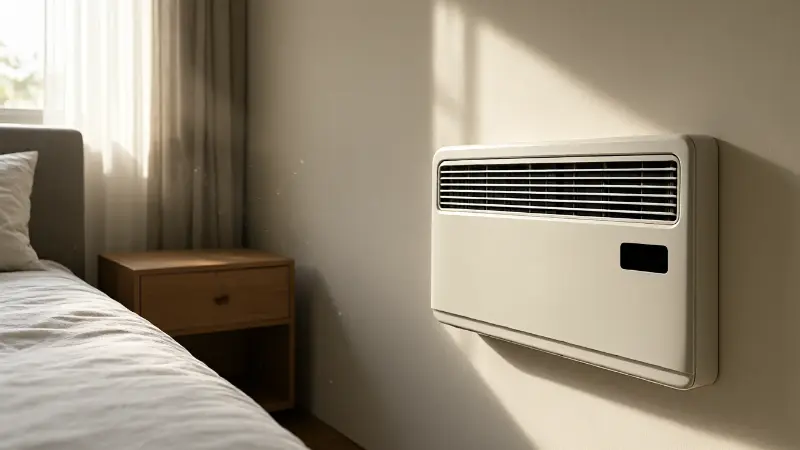
Thermostat placement matters too, though this is more often a whole-house problem than a single-room one. If the main thermostat sits in a warm hallway or near a kitchen that runs hot during cooking, it may satisfy the setpoint while the guest room remains cold. The thermostat measures only the air around it, not the temperature at the far end of the house. A remote sensor or a smart thermostat with room sensors can help, but that is a longer project than a pre-holiday repair.
Check Vents, Dampers, and Airflow Obstructions
Forced-air systems fail in one room for a short list of reasons, and blocked airflow sits at the top. Look at the supply vent in the guest room and confirm that the louvers are open. Furniture, curtains, rugs, or a stored box can cover a floor or wall vent without anyone noticing. Vacuum the grille if it is dusty, because a clogged face reduces delivery even when the damper behind it is wide open.
Then follow the duct run as far as you can see it. In a basement or crawlspace, look for a branch damper serving that room and confirm it has not been closed during a previous renovation or a summer cooling adjustment. A damper that is partly shut will still let some air through, which is why the room feels cool rather than completely unheated. If the duct passes through an unconditioned attic or garage ceiling, check for disconnected sections, crushed flex duct, or tears that bleed warm air before it reaches the register.
Return air deserves equal attention. A guest room with a supply register but a blocked or missing return path can become pressurized, and the heated air will struggle to circulate. Leaving the door open, adding a return-air grille, or installing a jumper duct are common fixes, but the last two are renovation tasks. For the holiday window, an open door and a clear path under the door are the practical moves.
Diagnose Zone Valves and Radiator Problems
Homes with hydronic heat, whether baseboard or radiators, use zone valves to direct hot water to different parts of the house. When a zone valve sticks closed, that room stays cold while every other zone heats normally. Many zone valves have a small manual lever on the actuator head. Moving that lever to the manual-open position and feeling whether the pipe downstream warms up is a safe homeowner test. If the pipe heats with the lever engaged but cools when the lever is released, the actuator motor is the likely failure, not the valve body.
If the valve opens but the room stays cold, trapped air is a frequent culprit. A gurgling radiator or a baseboard unit that is warm at the bottom and cool at the top points toward air in the loop. Bleeding a radiator is a manageable DIY task with a bleed key and a cloth, but a zone that needs repeated bleeding may have a deeper circulation problem. A failed circulator pump or a restricted balancing valve can mimic an air lock, and those checks are best left to a technician.
For steam systems, the logic is different and the safety stakes are higher. Steam radiators depend on pitch, valve condition, and unobstructed vents. Never open a steam valve while the system is hot, and do not attempt to adjust a steam boiler’s pressure settings without training. If the guest room has a steam radiator that stays cold while others heat, call a technician who works on steam rather than experimenting during a holiday week.
Look for Heat Loss Before Assuming a Equipment Fault
Sometimes the heating system is delivering air or water at the right temperature, but the room loses heat faster than it can be replaced. A guest room over an unheated garage, above a crawlspace, or at the end of a long duct run is a classic cold-room candidate. Inadequate insulation in the floor, ceiling, or exterior walls will keep the room chilly no matter how well the furnace runs. This is not a holiday-week fix, but it explains why turning up the thermostat does not solve the problem.
Windows and exterior doors are the next place to look. A draft around a window frame or a door threshold can make a room feel several degrees cooler than the thermostat suggests. Check the weatherstripping and caulk for gaps, and feel for moving air on a windy day. Heavy curtains can reduce the chill from single-pane glass, but they will not stop air infiltration. A temporary draft stopper at the door and removable window film are reasonable short-term measures that do not require a contractor.
One practical test is to run the furnace blower in the “on” position for an hour or two while the room is occupied and the door is open. Continuous circulation can even out temperature differences that a cycling blower leaves behind. This is not a repair, but it is a useful holiday-week strategy for a room that is only slightly underheated.
Compare Heating System Types and Likely Failure Points
The right troubleshooting step depends on what kind of heat serves the guest room. The table below summarizes the common system types, the checks a homeowner can perform, and the signs that point to a professional repair.
| System type | Common cause of one cold room | Safe homeowner check | Call a professional if |
|---|---|---|---|
| Forced-air furnace or heat pump | Closed damper, blocked vent, disconnected duct, dirty filter | Open vents, replace filter, inspect visible duct runs | Ductwork is hidden, torn, or disconnected; airflow is weak at every register |
| Hydronic baseboard or radiators | Stuck zone valve, air lock, failed circulator | Manual valve lever test, bleed radiator, check thermostat batteries | Repeated air locks, no circulation after manual override, boiler fault codes |
| Steam radiators | Blocked air vent, incorrect pitch, stuck supply valve | Confirm the valve is open; do not open a hot valve | Any steam system work beyond a vent replacement |
| Electric baseboard or wall heaters | Tripped breaker, failed thermostat, burned-out element | Reset breaker once, confirm thermostat is on | Breaker trips again, burning smell, or no power at the heater |
| Ductless mini-split | Unit turned off, filter clogged, refrigerant fault | Clean filter, confirm remote settings, check breaker | Error code persists, outdoor unit does not run, ice on coils |
Electric baseboard heaters are common in older guest rooms and additions because they are cheap to install and easy to zone. If the heater is completely dead, check the breaker once. If it trips again immediately, stop and call an electrician. A breaker that trips repeatedly is protecting a fault, not asking to be reset a second time. The same caution applies to a wall heater that smells scorched or shows discoloration around the grille.
Use Space Heaters Carefully in Guest Rooms
When the central system cannot be fixed in time, a space heater can bridge the gap. The safety rules are not optional, especially in a room where a guest is sleeping. Keep the heater at least three feet away from bedding, curtains, upholstered furniture, and luggage. Plug it directly into a wall outlet, not an extension cord or a power strip, and choose a model with a tip-over shutoff and a thermostat that cycles the unit off when the set temperature is reached.
Never leave a space heater running overnight in an occupied room unless the manufacturer’s instructions explicitly permit it, and never leave one unattended in an empty room. Fuel-burning heaters, including kerosene and propane models, produce carbon monoxide and should not be used indoors in a sleeping area under any circumstances. If you provide a heater for guests, show them how to turn it off and where the nearest smoke alarm is located.
A safer temporary option for a guest room is often a low-wattage electric panel or a heated mattress pad, used according to the manufacturer’s instructions. These warm the sleeping surface rather than the whole room, which reduces the load on the circuit and the risk of a tip-over. Whichever option you choose, clear the area around it and keep coats, bags, and decorative blankets off the unit.
Know When to Stop and Call a Technician
Some pre-holiday heating problems are reasonable DIY checks. A closed damper, a dead thermostat battery, a blocked vent, and a dirty filter are all within reach for most homeowners. The list of repairs that should stop immediately includes gas odors, soot around a combustion appliance, repeated breaker trips, active water leaks from a boiler or circulator, and any work that requires opening a sealed refrigerant circuit.
If the room has its own zone valve and the manual lever does not restore flow, the next step is a multimeter test for 24 volts at the actuator. That test is safe when done carefully, but replacing the actuator head requires shutting off power and matching the part to the valve body. If you are not comfortable with that sequence, a technician can usually diagnose and replace a zone valve head in a single visit. The same applies to a circulator pump that runs but does not move water, or a boiler that fires but does not distribute heat to one loop.
Schedule the service call before the busiest travel days if possible. Holiday weeks fill up quickly for HVAC and plumbing companies, and a non-emergency call placed early is easier to schedule than a same-day emergency. If the guest room is the only affected space, you have more flexibility, but a furnace that is struggling to keep up in one room can be a sign of a larger airflow or capacity issue that will affect the whole house when the weather turns colder.
A Pre-Arrival Checklist for the Guest Room
Work through this sequence a few days before guests arrive, rather than on the day of arrival. Start with the thermostat and the zone controls, then move to airflow, then heat loss, and finally temporary heat. If something fails at the first step, you still have time to book a technician or set up a safe backup plan.
- Thermostat and zone: Replace batteries, confirm the setpoint is above room temperature, and check that the zone is active.
- Vent and damper: Open the supply register, clear obstructions, vacuum the grille, and inspect visible duct dampers.
- Filter and blower: Replace the furnace filter and run the blower continuously for a few hours to test circulation.
- Door and return air: Leave the guest room door open and confirm there is a clear path for return air.
- Drafts and windows: Check weatherstripping, add a temporary door draft stopper, and close curtains at night.
- Backup heat: If needed, place a certified electric space heater with a tip-over switch and clear the three-foot zone.
- Safety: Test the smoke alarm nearest the guest room and confirm that guests know how to turn off any portable heater.
It also helps to prepare the rest of the house for the extra load. A fresh air filter, open vents in every occupied room, and a thermostat schedule that accounts for a full house can reduce the chance that the guest room becomes the coldest spot. If you are also getting the guest bathroom ready, a few small repairs there prevent a separate set of holiday headaches. A quick guide to prepping the guest bathroom for holiday visitors covers the fixtures and supplies that matter most.
If the guest room shares a wall with a gas fireplace or a decorative hearth, confirm that the fireplace is working correctly before guests rely on it for ambiance or backup heat. A flame that will not adjust properly is worth diagnosing early rather than discovering on a cold evening. This walkthrough of gas fireplace flame adjustment problems explains the common causes and the checks that are safe to perform.
For homeowners planning a larger bathroom renovation after the holidays, it also helps to understand the cost structure before committing. A detailed breakdown of wet room installation costs can inform a budget conversation, though that project is best kept separate from the immediate goal of making the guest room warm and safe for the visit.
FAQ
Why is only the guest room cold when the rest of the house is warm?
The most common causes are a closed or blocked vent, a duct damper serving that room, a stuck zone valve, or a thermostat that is reading a warmer part of the house. Heat loss through windows, floors, or an unheated space below the room can also make it feel colder than the thermostat suggests.
Can I just close the guest room door to keep the heat in?
A closed door can actually make the room colder in a forced-air system by restricting return airflow. Leave the door open while the heating system is running, or install a return-air path if the room is consistently pressurized and underheated.
Is it safe to leave a space heater on for guests overnight?
Follow the manufacturer’s instructions and keep the heater at least three feet from anything combustible. Never use a fuel-burning heater in a sleeping room, and never plug an electric heater into an extension cord. A heater with a tip-over shutoff and a thermostat is a safer choice than a basic on-off model.
How long should I wait before calling a technician?
If you have checked the thermostat, vent, damper, filter, and door airflow and the room is still cold, call a technician. Repeated breaker trips, a zone valve that will not open manually, or any gas or combustion smell should prompt an immediate call rather than further DIY attempts.
Conclusion
A guest room that will not heat is usually a distribution problem rather than a complete system failure. Thermostat settings, closed dampers, blocked vents, and restricted return air account for a large share of cold-room complaints, and those checks cost nothing but time. Zone valves and air locks are the next layer, and they are diagnosable with a few safe homeowner tests.
When the repair moves beyond a filter, a battery, or a manual valve lever, calling a technician before the holiday rush is the practical choice. In the meantime, a certified electric space heater used with clear space around it and direct wall power can keep the room usable without introducing a safety risk. The goal is a warm, safe room for your guests, not a perfect heating system by the end of the week.