Holiday cooking pushes a kitchen sink harder than any other week of the year. Grease, potato peels, rice, coffee grounds, flour paste, and repeated rounds of dishwashing all travel down the same drain, and the combination is a classic recipe for a slow or fully blocked sink. The good news is that most post-holiday clogs respond to a handful of patient, low-risk steps you can do with tools you likely already own.
The order of operations matters. Going straight to a harsh chemical drain cleaner can damage pipes, create a splash hazard, and make later mechanical clearing messier and less safe. Working from the simplest method to the most involved one protects both your plumbing and your holiday schedule.
First, Confirm What Is Actually Blocked
Before you reach for a tool, figure out where the water is backing up. Fill the sink with a few inches of water, then watch how it drains. If both bowls of a double sink drain slowly at the same rate, the clog is likely past the trap, in the shared drain line. If only one bowl backs up, the blockage may be in that bowl’s tailpiece or in the branch serving it.
Run the dishwasher through a short cycle and watch the sink. Water rising in the sink during a dishwasher cycle points to a shared drain restriction or a clogged air gap. Check whether nearby fixtures are also slow. A gurgling bathroom sink or a shower that drains poorly suggests the problem sits further down the main line rather than in the kitchen branch.
Note what went down the drain in the days before the blockage. Holiday cooking sends a predictable list of culprits into kitchen drains: solidified fats and oils, starchy water from potatoes and pasta, coffee grounds, eggshells, fibrous vegetable trimmings, and flour or batter that sets like paste. Identifying the likely material helps you choose the right approach, since grease responds to heat and detergent while fibrous or starchy debris usually needs mechanical removal.
Method One: Hot Water, Dish Soap, and Gravity
For a slow drain rather than a full blockage, start with the gentlest option. Bring a pot of water to a near-boil, add a generous squeeze of grease-cutting dish soap, and pour it slowly down the drain in stages rather than all at once. The heat helps soften congealed fat while the detergent lifts it from the pipe wall so water can carry it away.
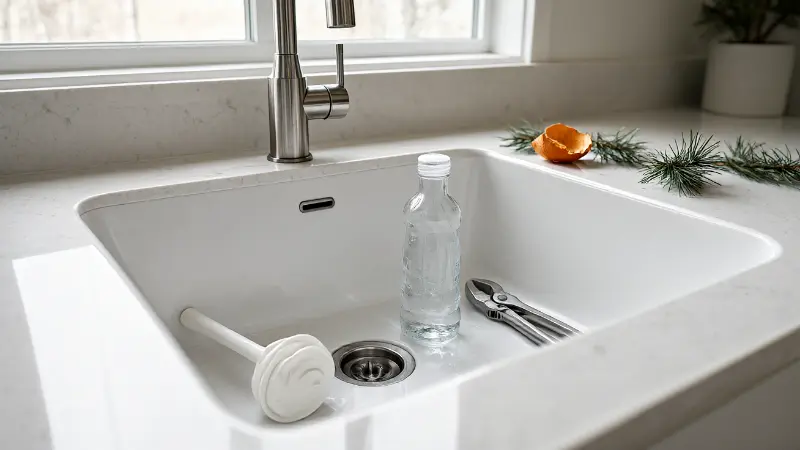
Give it several minutes between pours and watch the drain response. If the water begins moving faster, repeat once or twice and then flush with hot tap water. Avoid boiling water on PVC drain lines if you are unsure of the pipe material, since very hot water can soften some plastics. Hot tap water plus soap is a safer default when the plumbing material is unknown.
This method works best on fresh grease clogs. It is much less effective on a drain packed with solid debris, and it will not clear a blockage caused by a foreign object. If the water does not improve after two or three attempts, move on rather than continuing to add volume to a drain that is not draining.
Method Two: The Plunger, Done Properly
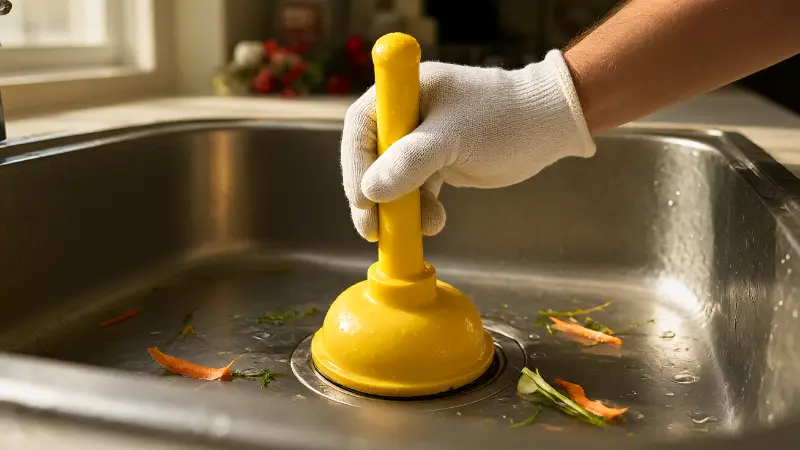
A plunger is the most underrated tool in a kitchen. Use a cup plunger, not a flange plunger meant for toilets, and make sure the rubber cup seals around the drain opening. If you have a double sink, seal the other drain with a wet rag or a stopper so the pressure goes down the blocked line rather than up the open bowl.
Add enough water to cover the cup, then plunge with firm, steady strokes rather than short jabs. Keep the cup sealed on the upstroke as well as the downstroke, since the suction phase is what pulls debris loose. Work for fifteen to twenty strokes, then release and check whether the water starts moving. Repeat a few times before deciding the method has failed.
Plunging is effective on soft blockages in the trap and the immediate drain branch. It is less useful on a clog that sits deep in the line, and it does nothing for a blockage caused by a solid object. If the sink has a garbage disposal, never plunge with the disposal running, and confirm the disposal is switched off at the wall before you begin.
Method Three: The Drain Snake or Zip Tool
When plunging does not clear the line, mechanical removal is the next step. A short hair snake or a flexible zip tool is inexpensive and reaches into the trap and the first section of the drain branch. Remove the strainer or stopper first, then feed the tool slowly with a twisting motion until you feel resistance. Pull it back and clean off whatever it brings up, then repeat.
Work gradually and avoid forcing the tool. A zip tool with a barbed end can snag soft debris well, but it can also catch on older fittings if it is pushed aggressively. For a clog that sits beyond the trap, a hand auger with a longer cable is more effective. Feed the cable, crank clockwise, and pull back when you feel the head grab the blockage.
After clearing the debris, flush the drain with hot water and soap to move residual material along. If the water still drains slowly, the clog may be further down the branch or in the main line, and that is where a plumber’s camera and auger become worth the call.
Method Four: Clean the P-Trap
The P-trap under the sink is designed to hold water and catch debris, which makes it a frequent clog location. Place a bucket underneath before you start, since the trap will hold water. Hand-tighten only when reassembling, and inspect the slip-joint washers for wear while the trap is apart.
Unscrew the slip nuts slowly and lift the trap out, then clean the interior with a bottle brush and hot soapy water. Many kitchen clogs are a plug of grease and food debris sitting right in this section, and a trap cleanout solves the problem without any chemical or tool work in the drain line itself. Reassemble carefully, run water for a minute, and check every joint for weeping before you put the cabinet contents back.
If your sink has a disposal, do not reach into the disposal housing with your hand at any point. Use pliers or a disposal wrench for anything inside the grinding chamber, and switch the unit off at the breaker or unplug it before any work.
Method Five: The Garbage Disposal Connection
Many kitchen clogs after heavy cooking start at the disposal. If the disposal hums but does not turn, the unit is jammed rather than blocked. Switch off the power, then use the hex wrench supplied with the unit to free the flywheel from the bottom, or insert a disposal wrench into the center of the grinding plate from above. Remove the obstruction and press the reset button on the bottom of the unit.
If the disposal runs but the sink drains slowly, check the dishwasher connection and the drain hose for a partial blockage. A disposal that is undersized for the volume of holiday scraps will also struggle, and fibrous items like celery strings, artichoke leaves, and corn husks are known to wrap around the impellers. Keep those out of the disposal and compost or bin them instead.
Run cold water while the disposal is running and for several seconds afterward. Cold water helps carry debris through the trap, while hot water can melt fats that then re-solidify further down the line. This is one place where the intuitive choice, hot water, works against you.
What to Avoid When Clearing a Kitchen Clog
Chemical drain cleaners are tempting because they require no tools, but they carry real trade-offs. Caustic formulations can damage older pipes, and they create a serious splash and burn hazard if the drain is already full of standing water. If a chemical cleaner fails, the drain is now full of a caustic liquid that can splash back when you plunge or snake, so mechanical methods become riskier.
Never mix drain cleaning products, and never combine a chemical cleaner with a plunger in the same session. If you have already poured a chemical product down the drain and it did not work, call a plumber and tell them what was used. Store any drain chemicals out of reach of children and pets, and follow the label instructions exactly if you choose to use one at all.
Also avoid treating the sink as a disposal for fats, oils, and grease. Pour cooled cooking fat into a container and bin it rather than rinsing it down the drain. Wipe greasy pans with a paper towel before washing. These habits prevent the next holiday clog more reliably than any tool in the cabinet.
Choosing the Right Method for the Clog
The table below summarizes each method, what it handles well, and where it falls short. Use it to pick the next step rather than repeating a method that has already failed.
| Method | Best for | Limitations and risks | Tools needed |
|---|---|---|---|
| Hot water and dish soap | Slow drains with fresh grease buildup | Ineffective on solid debris; very hot water can stress some plastic pipe | Pot, dish soap |
| Cup plunger | Soft clogs in the trap and first branch | Needs a good seal; will not clear a deep or solid blockage | Cup plunger, rag to seal the second bowl |
| Zip tool or hand auger | Debris lodged past the strainer and in the branch | Can snag older fittings if forced; limited reach on long runs | Zip tool or drain auger |
| P-trap cleanout | Grease and food plugs sitting in the trap | Requires access under the sink; washers may need replacement | Bucket, adjustable pliers, brush |
| Disposal jam clearing | Humming disposal or slow drain at the disposal side | Must cut power first; never reach in by hand | Hex wrench or disposal wrench |
| Chemical drain cleaner | Light organic buildup when mechanical methods are not an option | Pipe damage risk, splash hazard, complicates later mechanical work | None, but read the label carefully |
Preventing the Next Holiday Clog
Most post-holiday clogs are preventable with a few habits that cost almost nothing. Keep a small strainer in the sink basket and empty it into the bin rather than tapping it into the drain. Scrape plates into the trash before washing, and wipe greasy pans with a paper towel. These steps remove the material that turns into a plug once it cools.
Run hot water for a short period after washing greasy dishes to help move residue along, and flush the drain with hot soapy water once a week during heavy cooking periods. If your kitchen has a dishwasher, confirm the drain hose has a proper high loop or air gap so dirty water cannot siphon back into the appliance.
If you are planning kitchen improvements after the holidays, some projects pair naturally with this kind of maintenance. Refinishing or replacing cabinet fronts often exposes plumbing and disposal connections, which makes it a good time to check for slow drains and worn trap washers. A guide to updating kitchen cabinets on a budget covers the options that do not require a full tear-out.
If the cabinet boxes themselves are due for replacement, the decision between prefabricated and made-to-order units affects cost, lead time, and how much plumbing access you gain during the project. A comparison of custom vs stock kitchen cabinets lays out the trade-offs in plain terms.
While the kitchen is the focus of holiday cooking, the guest bathroom takes its own share of wear from visitors. Small fixes there before arrival prevent bigger headaches later, and a checklist for prepping the guest bathroom for visitors covers the fixtures and supplies worth checking.
When to Call a Plumber
Some clogs are beyond the scope of a homeowner’s toolkit. Call a plumber if water backs up in multiple fixtures at once, if a plunger and snake have both failed, or if you suspect a solid object is lodged in the line. Recurring slow drains in the same spot often point to grease buildup deeper in the branch or a partially collapsed pipe, and a camera inspection answers that question quickly.
Call immediately if you see water pooling under the cabinet, smell sewage, or hear gurgling in other drains when the kitchen sink runs. These signs suggest a venting or main-line problem rather than a simple kitchen clog. Also call a professional if you have already used a chemical drain cleaner and the drain remains blocked, since the standing liquid creates a hazard for anyone working on the line.
FAQ
Can I use boiling water to clear a greasy kitchen clog?
Hot water helps soften fat, but near-boiling water can stress some plastic drain pipes and glued joints. Hot tap water with dish soap is a safer first attempt when the pipe material is unknown, and it can be repeated several times.
Why does my sink clog every time I cook a large meal?
Large meals send more grease, starch, and fibrous scraps into the drain in a short period. A strainer, scraping plates into the bin, and binning cooking fat rather than rinsing it down usually reduce the frequency of clogs.
Should I use a chemical drain cleaner first or last?
Mechanical methods are generally safer to try first. Chemical cleaners can damage older pipes and create a splash hazard if the drain is still blocked and you later need to plunge or snake it.
Is it safe to plunge a sink with a garbage disposal?
Yes, provided the disposal is switched off at the wall or breaker and you never reach into the grinding chamber. Seal the second bowl of a double sink so the pressure goes down the blocked line.
Conclusion
Most kitchen sink clogs after holiday cooking come from grease, starch, and food debris that accumulate faster than the drain can carry them away. Working from hot water and soap, to a properly sealed plunger, to a snake or trap cleanout gives you the best chance of clearing the blockage without damaging the plumbing. Chemical cleaners are best kept as a last resort, if they are used at all.
If several fixtures are slow, the water is not moving after a mechanical attempt, or you have already poured a caustic product into a blocked drain, a plumber is the right call. In the meantime, strainers, scraping plates, and binning cooking fat will keep the next round of holiday dishes from turning into the same problem. A few minutes of prevention goes further than any single tool.