Custom kitchen cabinets versus stock cabinets is a comparison that trips up even experienced remodelers, because the two options are not simply good and cheap versions of the same thing. They are different products built through different supply chains, and the pros and cons shift depending on your kitchen’s dimensions, your timeline, and how long you intend to stay in the home.
This guide approaches the decision as a series of trade-offs rather than a verdict. It covers where each option wins, where each one quietly costs you more than the sticker price suggests, and how semi-custom cabinetry fits between the two. It also explains the construction details that determine whether cabinets last a decade or a generation.
The Three Cabinet Categories Explained
Before comparing pros and cons, it helps to understand what actually separates the categories. Dealers sometimes blur the definitions, so knowing the distinctions protects you during negotiations.
Stock cabinets are built in fixed production runs and stored in warehouses. Widths, depths, and door styles come from a catalogue, and the units arrive assembled and ready to set. Because production is standardized, stock lines tend to be the least expensive per unit.
Semi-custom cabinets begin with a manufacturer’s standard line but permit adjustments. You may be able to change cabinet depth, select from a wider finish palette, or add interior accessories such as roll-out trays and dividers. Pricing and lead times sit between the other two categories.
Custom cabinets are fabricated to the dimensions of your specific kitchen, usually by a local shop. Every box and door front is made for your space, which permits irregular walls, tall ceilings, and integrated appliances. Cost and lead time are generally highest, and the final quality depends heavily on the fabricator’s skill and process control.
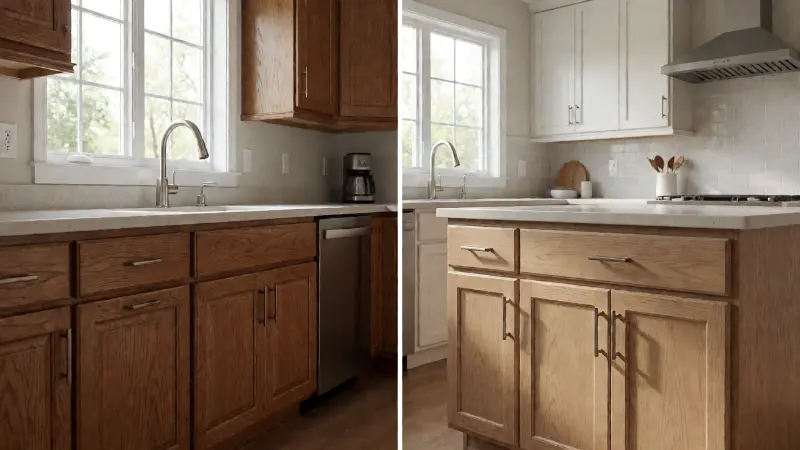
Custom Cabinets: Where They Genuinely Win
Custom cabinetry earns its premium by solving problems that a catalogue cannot. These advantages are concrete rather than cosmetic.
Fitting Rooms That Are Not Square
Older homes rarely have plumb walls, level ceilings, or standard wall lengths. A custom shop measures actual site conditions and builds to those numbers. That removes the wide filler strips and awkward gaps that appear when stock units meet an imperfect wall.
Angled walls, chimney breasts, radiator recesses, and low soffits can all be handled cleanly. The finished result reads as part of the architecture rather than a collection of boxes.
Control Over Every Specification
Wood species, door profile, stain, glaze, sheen, and interior layout are all specified by you. If you need a finish matched to existing trim or a drawer configuration built around specific cookware, that is achievable. Stock lines cannot offer that degree of control.
Recovering Vertical Storage
Custom cabinets can be built to the ceiling, which adds storage and removes the dusty gap above the uppers. Tall pantry units, appliance garages, and custom drawer depths all become possible. In a small kitchen, that recovered volume changes how the room functions daily.
Integrating Appliances and Accessories
Panel-ready refrigerators, integrated dishwashers, and concealed waste bins are easier to accommodate when the cabinetry is designed around them. Custom shops can also build charging drawers, spice pull-outs, and tray dividers to suit real habits rather than a generic template.
Higher Quality Ceiling
A reputable shop may use plywood boxes, solid wood frames, dovetail drawer joinery, and premium hardware. You can specify soft-close hinges and full-extension glides. The quality ceiling is higher than most stock lines, though a weak custom shop can underperform a strong stock brand.
Custom Cabinets: The Real Drawbacks
The disadvantages of custom work are mostly about money, time, and risk. None of them are trivial.
Highest Total Cost
Custom cabinets generally cost more than semi-custom and considerably more than stock. The premium reflects design time, skilled labour, and the inefficiency of one-off production. In a constrained budget, custom cabinetry can crowd out countertops, lighting, and installation labour.
Longer and Less Predictable Lead Times
Custom shops often carry backlogs, and the build itself takes time. A delay on a single cabinet can hold up installation, which then delays countertop templating. If you are working toward a fixed deadline, that scheduling risk deserves serious weight.
Quality Depends Entirely on the Shop
Custom quality varies widely. A skilled shop delivers precise, durable cabinetry. A less experienced shop may produce doors that do not align, uneven finishes, or boxes that are out of square. Vetting the fabricator matters as much as choosing the category.
Harder to Match Years Later
Adding cabinets or replacing a damaged door later can be difficult with custom work. The original shop may have closed, changed suppliers, or discontinued the finish. Stock lines face similar issues over long periods, but replacement tends to be simpler while the line remains current.
Stock Cabinets: The Practical Advantages
Stock cabinetry is popular for reasons that go well beyond price.
Lowest Upfront Cost
Mass production and regional warehousing keep stock cabinets the most economical option. That preserves budget for countertops, lighting, flooring, and trades. For rentals, flips, and value-focused remodels, this is often the deciding factor.
Fast Availability
Stock cabinets are frequently in stock or available within a short window. That compresses the overall schedule, which matters when the kitchen is out of service and the household wants normal life back quickly.
Consistent, Repeatable Quality
Factory production delivers consistent dimensions and finishes across units. Replacement doors and additional cabinets are often straightforward to match while the line is in production. Warranties are typically standardized and clearly written.
Easy to Inspect Before Buying
Stock lines are displayed in showrooms and described in catalogues, which makes comparison shopping practical. You can see the door style, feel the finish, and examine construction before ordering. That transparency reduces the chance of an unpleasant surprise on delivery.
Stock Cabinets: The Honest Limitations
The constraints of stock cabinetry appear most clearly in irregular spaces and ambitious designs.
Fixed Sizes and Configurations
Stock cabinets come in a defined range of widths and depths. When a wall measures between two standard sizes, you bridge the gap with a filler strip or accept a compromise. In rooms with several odd dimensions, accumulated fillers can look untidy.
Narrower Finish and Door Selection
Stock lines offer fewer door styles and finishes than semi-custom or custom. Matching a specific existing colour, or finding a door profile suited to a historic home, may not be possible from the catalogue.
Variable Construction Quality
Some stock cabinets use particleboard boxes, stapled joints, and thin panels. Glides and hinges may be basic rather than soft-close. Quality varies considerably by brand, so the cheapest unit is rarely the best long-term value.
Wasted Space
Because stock cabinets often stop short of the ceiling, a gap remains above the uppers that collects dust and stores little. Corners may be less efficient, and tall storage is limited to standard pantry sizes. Over years of daily use, that lost capacity adds up.
Side-by-Side Comparison
The table below summarizes the factors that most often decide the choice. Treat the cost column as a relative comparison rather than a price list, since regional labour and material rates vary widely.
| Factor | Stock Cabinets | Semi-Custom Cabinets | Custom Cabinets |
|---|---|---|---|
| Relative cost | Lowest | Middle | Highest |
| Lead time | Often short | Moderate | Longest, shop-dependent |
| Size flexibility | Fixed standard sizes only | Some dimension and depth changes | Built to exact site measurements |
| Finish options | Limited palette | Wider palette and glazes | Unlimited within shop capability |
| Fit in awkward rooms | Poor, depends on fillers | Moderate | Excellent |
| Storage efficiency | Basic, gap above uppers | Improved with accessories | Optimized to ceiling and corners |
| Construction quality ceiling | Variable by brand | Generally good | Potentially highest |
| Replacement ease | Easiest while line is current | Moderate | Hardest to match later |
| Design risk | Low, you inspect before buying | Moderate | Depends heavily on fabricator |
| Budget impact | Preserves funds for other items | Balances fit and cost | Consumes a large share of budget |
Why Semi-Custom Frequently Decides the Argument
Semi-custom cabinets address the most common complaints about stock without the full premium of bespoke work. A semi-custom line can often adjust depth, offer a wider door selection, and provide interior accessories such as roll-out trays and dividers.
The practical advantage is that you can solve one or two awkward spots without commissioning an entire custom kitchen. If the rest of the layout fits standard sizes, semi-custom keeps costs reasonable while improving the finished look noticeably.
When comparing lines, ask specifically what can be modified and what cannot. Some manufacturers permit only finish changes, while others allow meaningful dimensional adjustments. The answers determine whether semi-custom actually solves your problem or merely sounds flexible in the showroom.
Construction Details That Outweigh the Category Label
The custom-versus-stock label matters less than how the cabinets are actually built. A well-made stock cabinet can outperform a poorly made custom one. The following details deserve scrutiny regardless of category.
- Box material: Plywood boxes tend to resist moisture and hold fasteners well, while dense, well-sealed particleboard can perform acceptably in dry conditions.
- Joinery: Dovetail drawers and doweled or mortise-and-tenon frames generally indicate sturdier construction than stapled joints.
- Drawer glides: Full-extension, soft-close glides improve access and reduce wear. Undermount glides keep the drawer box clean and easier to wipe down.
- Hinges: Adjustable, soft-close hinges let doors be aligned after installation and reduce slam damage over time.
- Finish durability: Catalyzed lacquer and conversion varnish generally hold up better in busy kitchens than simple paint.
- Back panels and toe kicks: Solid backs and finished toe kicks resist moisture and look better after years of cleaning.
If you are keeping existing cabinets rather than replacing them, refinishing is a separate path with its own trade-offs. A guide to updating kitchen cabinets on a budget covers preparation, product selection, and the mistakes that cause finishes to fail early.
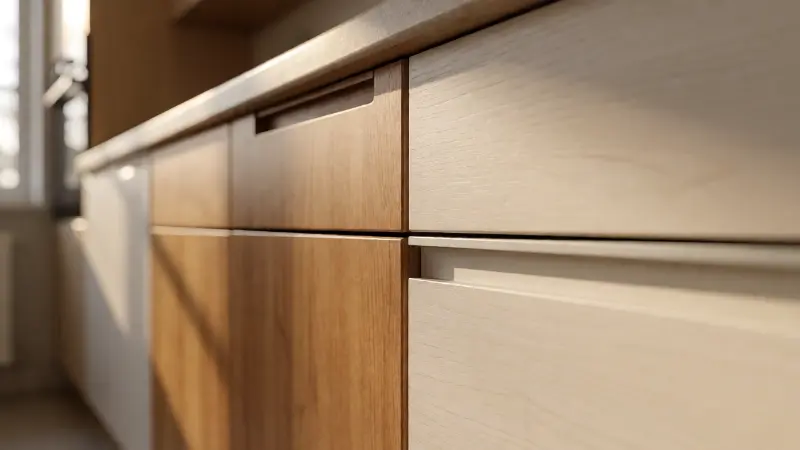
Costs That Sit Outside the Cabinet Invoice
The cabinet price is only part of the total project. Your choice affects installation labour, countertop templating, and the overall schedule in ways that are easy to overlook.
Custom cabinets are built to fit, so installation can be faster and require less on-site adjustment. Stock cabinets often need filler strips, scribing, and shimming to sit correctly against imperfect walls. That extra labour is a genuine cost even when it does not appear on the cabinet quote.
Countertop templating is another consideration. Precisely installed cabinets simplify templating and reduce the risk of gaps at the edges. With stock cabinets and wide fillers, the fabricator may need to work around irregular conditions, which can add labour and time.
Lead time also carries an indirect cost. A long cabinet delay can push countertop installation, appliance delivery, and plumbing hookup, and trades returning for a second visit may charge for the trip.
Matching the Choice to Your Situation
The right answer depends on a few concrete questions about your home and your plans. Working through them in order usually narrows the field quickly.
How Irregular Is Your Kitchen?
A compact galley with square walls and standard dimensions may work perfectly well with stock cabinets. A large, irregular space with vaulted ceilings, multiple corners, and a chimney breast is a much stronger candidate for custom work.
How Long Will You Stay?
If you plan to sell within a few years, the premium for bespoke cabinetry may not be recovered, though a well-fitted kitchen can help the home stand out. If this is your long-term home, daily usability often justifies the investment.
What Storage Do You Actually Need?
Deep drawers for pots, tall cabinets for baking sheets, and dedicated recycling pull-outs change how a kitchen feels day to day. These features can be added to any category, but custom work makes them easier to integrate without compromise.
How Firm Is Your Deadline?
If the kitchen must be functional by a specific date, a long custom lead time introduces risk. Stock or semi-custom lines with confirmed availability reduce scheduling uncertainty.
Vetting Brands, Shops, and Reviews
Whether you buy stock or commission custom work, the supplier’s reputation matters more than the brochure. For stock and semi-custom lines, read independent reviews rather than relying only on showroom displays. Reviews of the NorthPoint cabinets buying mistakes illustrate why it pays to verify construction details and warranty terms before ordering.
For custom shops, ask to visit the workshop and see work in progress. Request references from projects completed a year or more ago, so you can ask how the finish has held up. Confirm who handles installation and what happens if a door arrives damaged.
Get written specifications for materials, hardware brands, and finish type. A detailed quote protects you if the delivered product does not match expectations, and it gives you a fair basis for comparing suppliers.
Practical Features Worth Budgeting For
Regardless of category, some features deliver outsized value. Soft-close hinges and full-extension drawers reduce wear and improve daily use. Pull-out trays in base cabinets make deep storage accessible without kneeling and reaching.
Lighting and ventilation also shape daily function. Under-cabinet lighting reduces shadows on work surfaces, and a toe-kick heater can take the chill off tile floors in cooler months. Before wiring for that option, it helps to review the toe kick heater pros and cons, including placement, noise, and how the unit interacts with cabinetry.
Do not overlook the value of a well-planned corner. Blind corner cabinets waste space unless fitted with a lazy Susan, a pull-out, or a Le Mans-style mechanism. These accessories can be specified on stock, semi-custom, and custom lines alike, and they often cost less than the square footage they recover.
FAQ
Are custom cabinets worth the extra cost?
They can be, particularly in older homes with uneven walls or kitchens with awkward dimensions that stock sizes cannot address. If your layout is standard and your budget is tight, semi-custom or quality stock cabinets may deliver better overall value.
How much longer do custom cabinets take?
Lead times vary by shop and workload, and custom work generally takes longer than stock or semi-custom. Ask for a written schedule with milestones before placing a deposit, and confirm what happens if the date slips.
Can I mix stock and custom cabinets in one kitchen?
Mixing is possible, especially if custom pieces are in less visible areas or if door styles and finishes can be matched closely. The risk is a visible mismatch in colour or profile, so compare finish samples side by side before ordering.
What is the main disadvantage of stock cabinets?
Limited sizes and finishes are the biggest drawbacks. Fillers bridge gaps, which can look untidy, and the narrower palette may not match existing trim or a specific design vision. Construction quality also varies by brand.
Do custom cabinets add resale value?
They can help a kitchen stand out, but the return depends on the local market and how the rest of the home compares. Buyers often respond more to overall function and condition than to the custom label itself.
What should I check before buying stock cabinets?
Check box material, drawer joinery, glide and hinge quality, and finish durability. Confirm warranty terms and whether matching cabinets will be available later. Measure carefully, because returns on assembled cabinets can be difficult.
Is semi-custom a good compromise?
For many kitchens it is. Semi-custom allows dimension and finish adjustments without the full cost of bespoke work. It works best when only a few areas need modification and the rest of the layout fits standard sizes.
Does cabinet choice affect countertop installation?
It can. Precisely installed cabinets simplify templating and reduce the risk of gaps at the edges. Fillers and uneven installations may require the countertop fabricator to work around irregular conditions, which can add labour.
The choice between custom and stock cabinets comes down to how well your kitchen fits standard dimensions and how much of the budget you want to reserve for other parts of the project. Semi-custom often bridges the gap for homeowners who need flexibility without the full premium. Whichever path you take, inspect construction details, get specifications in writing, and confirm lead times before you commit.