Hosting for the holidays puts extra strain on every room in your home. Guests use the bathroom more often, the kitchen runs hotter and longer, and small defects you have learned to live with suddenly become obvious. A thoughtful holiday hosting home repair checklist helps you spot those issues before they turn into awkward moments or expensive emergencies.
This guide focuses on practical repairs, sensible priorities, and the trade-offs that matter when time and budget are tight. It is not about turning your house into a showroom. It is about making the spaces guests rely on safe, functional, and comfortable.
Start With a Room-by-Room Walkthrough
Begin with a slow walkthrough of the rooms guests will actually use: entryway, guest bathroom, kitchen, dining area, living room, and guest bedroom. Bring a notepad and look at each space as a visitor would. Check doors, drains, outlets, lighting, handles, locks, and anything that wobbles, sticks, drips, or looks tired.
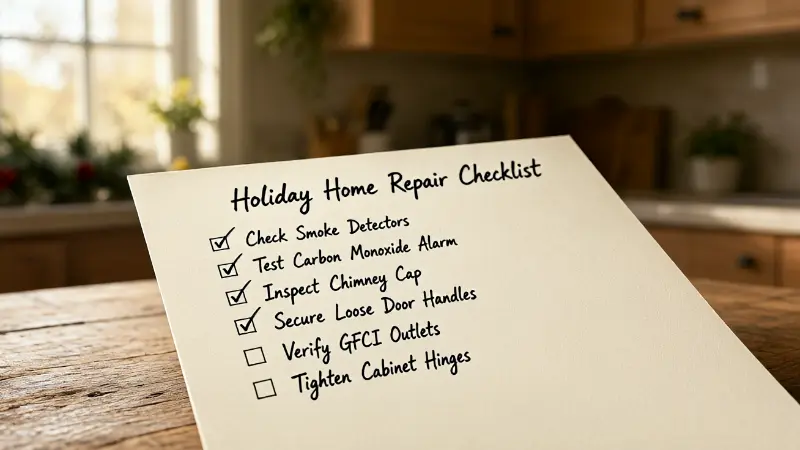
Group findings into three buckets: safety issues, functional problems, and cosmetic upgrades. Safety and function come first. A loose handrail or a slow bathroom drain matters more than a scuffed baseboard. If you plan to tackle a larger project after the holidays, keep it separate from the hosting checklist so it does not delay the essentials.
Set a cut-off date for messy or disruptive work. Painting, flooring, and major plumbing repairs need drying and cleanup time. If the holiday gathering is close, focus on quick wins and defer projects that require curing, ordering special parts, or shutting off water for long periods.
Guest Bathroom Repairs That Prevent Awkward Moments
The guest bathroom earns more scrutiny than any other room. Test the toilet for a weak flush, a running fill valve, or a loose seat. Check under the sink for leaks and slow cabinet hinges. Run the shower and sink together to see how drainage behaves under load. A drain that gurgles or pools is a warning sign worth addressing before guests arrive.
Replace worn caulk around the tub and sink if it is cracked or discolored. Clean or replace the exhaust fan grille, and confirm the fan actually moves air. A bathroom that stays steamy can lead to slippery floors and peeling paint. Install or test a nightlight, and make sure there is a clear place to hang towels and place toiletries.
Check the water pressure at the sink and shower. Low flow can be a clogged aerator or a partly closed valve. High pressure can splash and stress fittings. If you are not comfortable opening a valve or replacing a fixture, call a plumber for the items that involve supply lines or shut-off valves. Keep a small plunger and a spare toilet paper supply visible but discreet.
Quick bathroom fixes to prioritize
- Secure a loose toilet seat and check the fill valve.
- Clear slow drains with a drain snake or call a pro for recurring clogs.
- Replace cracked caulk and worn grout in wet areas.
- Test ground-fault circuit interrupter outlets and bathroom lighting.
- Add a non-slip bath mat and a stable towel hook.
Kitchen Repairs for Heavy Holiday Use
The kitchen becomes the command center during holiday hosting. Check the refrigerator temperature with a thermometer and clear blocked vents. Pull out the appliance only if you can do so safely, then vacuum the coils if they are accessible. A refrigerator that struggles to stay cold under extra opening and closing is a risk you want to catch early.
Test every burner, the oven light, and the exhaust hood. Clean the hood filter if it is greasy, and confirm the fan vents outdoors or recirculates properly. Inspect the dishwasher for leaks around the door and under the unit. Run a short cycle before guests arrive and watch for pooling water. If the dishwasher has a recurring leak, avoid using it for the gathering and wash by hand or call for service.
Check cabinet hinges, drawer slides, and handles. Tighten loose knobs and add bumpers where doors slam. Look at the garbage disposal for odors and slow drainage; grind ice and citrus peels only if the manufacturer allows it. Confirm that your kitchen fire extinguisher is present and in date, and keep a lid nearby for stovetop flare-ups.
Kitchen safety and flow
Clear counter space for prep and serving, and move knives away from the sink edge. Test outlets near the counter and avoid overloading circuits with multiple high-draw appliances. If you need extra seating or a quieter workspace, consider temporary changes rather than major remodeling during the busiest season. For noise control in a nearby office or guest work area, DIY acoustic panel installation can be a practical weekend project.
Living Areas, Entryways, and Guest Bedrooms
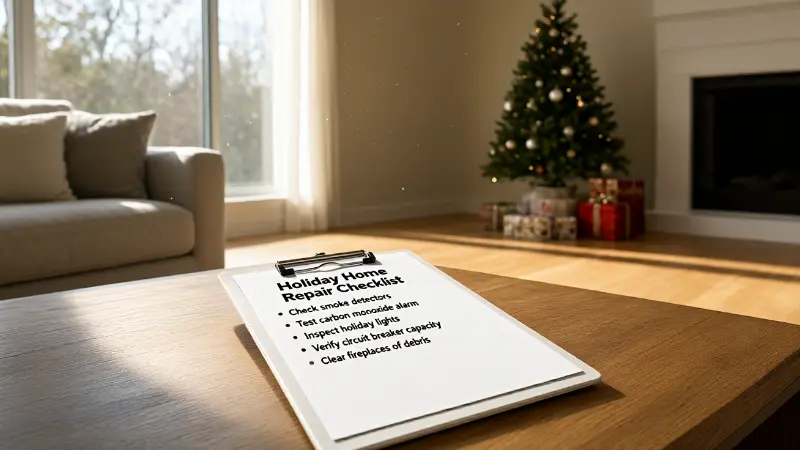
In living areas, check furniture stability, lamp cords, and loose floor transitions. A rocking chair with a loose joint or a rug that curls at the edge can trip a guest. Add slip-resistant pads under rugs and secure cords along walls. Test smoke and carbon monoxide alarms, replace batteries if needed, and confirm that each sleeping area has a clear path to an exit.
The entryway deserves attention because it sets the tone. Fix a sticking door, lubricate hinges, and make sure the exterior light works. Check the threshold for gaps that let in cold air or water. If the doormat slides, add a grippy pad. Keep a boot tray and a place for coats so wet weather does not create a slipping hazard.
In the guest bedroom, inspect the bed frame, headboard, and any folding furniture. A squeaky bed or a wobbly side table is a small repair that improves rest. Test lamps and outlets, and provide a clear surface for a phone and glasses. If carpet is stained, worn, or lifting at a transition, decide whether a deep clean is enough or whether replacement should wait until after the holidays. When comparing replacement options, this guide to Home Depot vs Lowe’s carpet installation can help you weigh convenience and cost.
Plumbing, Heating, and Electrical Checks
Run every faucet and watch the supply lines and drain connections. Look for corrosion, dampness, or mineral buildup. Flush toilets and listen for refill valves that keep running. If you find an active leak, shut off the supply and make a temporary repair only if you are confident. A holiday gathering is not the time to learn soldering or pipe fitting.
Test the heating system before the first cold snap. Replace the filter if it is dirty, confirm that vents are open, and listen for unusual noises. If the system has not been serviced in several years, schedule maintenance before the busy week. Do not block return-air grilles with furniture or decorations. Keep space heaters away from curtains and never leave them running unattended.
Electrical checks should focus on obvious hazards. Look for cracked outlet covers, warm faceplates, flickering lights, and cords that run under rugs. Avoid daisy-chaining power strips. If a breaker trips repeatedly, stop resetting it and call an electrician. Extension cords are for temporary use, not permanent furniture wiring.
When to call a professional
Call a licensed professional for gas odors, active water leaks inside walls, repeated breaker trips, faulty ground-fault outlets, roof leaks, and any repair that requires opening a sealed system. If your holiday planning overlaps with a larger home decision, such as choosing a builder for a future move, compare options carefully with resources like Schumacher Homes vs America’s Home Place before committing.
Priority Repair Matrix for Holiday Hosting
Use a simple priority matrix to decide what gets fixed now, what gets a temporary fix, and what waits. The goal is to reduce risk without starting projects that cannot be finished cleanly before guests arrive.
| Area | Repair or check | Priority | Practical timing |
|---|---|---|---|
| Guest bathroom | Toilet fill valve, slow drain, caulk, exhaust fan | High | At least one week before guests |
| Kitchen | Refrigerator vents, dishwasher leak, oven and hood, cabinet hardware | High | Before heavy cooking begins |
| Entryway | Door swing, exterior light, threshold gaps, rug grip | High | Any time before arrival |
| Living areas | Loose furniture, cords, rug edges, lamp and outlet checks | Medium | During final cleaning week |
| Guest bedroom | Bed frame, lamps, outlet access, carpet transitions | Medium | Before making up the room |
| Whole home | Smoke and carbon monoxide alarms, heating filter, visible leaks | High | At least two weeks before hosting |
| Cosmetic | Paint touch-ups, scuffed trim, decorative updates | Low | Only if time and drying allow |
Create a Realistic Repair Schedule
Work backward from the day guests arrive. Put safety checks and plumbing first, then bathroom and kitchen function, then guest-room comfort, and finally cosmetic touches. Leave a buffer day for cleanup and unexpected trips to the hardware store. If a repair needs a part you must order, decide early whether to wait or choose a temporary workaround.
Keep repairs small and reversible when the calendar is tight. Tightening hardware, replacing caulk, clearing a drain, and swapping a worn lamp cord are manageable. Replacing a toilet, installing a new faucet, or refinishing a tub can create delays if a part is wrong or a shut-off valve fails. Have a plan for shutting off water and power before you start any repair that touches those systems.
Make a simple tool kit for the checklist: screwdrivers, adjustable wrench, pliers, utility knife, caulk gun, flashlight, tape measure, and a container for loose screws. Add gloves and safety glasses for any work near sharp edges or chemicals. Read manufacturer instructions for parts and products, and follow local rules for work that requires permits.
Last-Minute Checks Before Guests Arrive
On the day before arrival, do a final function test rather than starting new repairs. Flush toilets, run faucets, open and close doors, test lights, and walk the guest path from driveway to bedroom. Clear tripping hazards and make sure overnight guests can find a light switch, towel, and outlet without searching.
Set out spare toilet paper, trash bags, and a small basket for toiletries. Confirm that the guest room has a place to set a suitcase and that closet doors open freely. If something cannot be repaired in time, label it clearly or remove it from guest use. A safe, honest workaround is better than a rushed repair that fails during the visit.
FAQ
What should I check first in a holiday hosting repair checklist?
Start with safety and function: smoke and carbon monoxide alarms, active leaks, toilet operation, bathroom drainage, heating, and clear walking paths. These items protect guests and prevent disruptive failures during the gathering.
Should I paint before hosting?
Only if the paint has time to cure and the room can be ventilated and cleaned. Paint touch-ups can be quick, but full-room painting often creates fumes, drying delays, and furniture moving challenges close to the event.
How do I handle a repair I cannot finish before guests arrive?
Make the area safe, remove the item from guest use, and label it if needed. For plumbing or electrical issues, shut off the affected system and call a professional rather than leaving a temporary fix unattended.
Is it worth replacing carpet before a holiday gathering?
Usually not unless the carpet is a safety hazard or the room is unusable. Deep cleaning and securing transitions are faster. Replacement involves ordering, scheduling, and drying time that can collide with hosting plans.
Conclusion
A holiday hosting home repair checklist works best when it stays focused on safety, function, and guest comfort. Prioritize the bathroom, kitchen, entryway, and sleeping areas, and defer cosmetic projects that could create mess or delay. Small repairs completed early often matter more than ambitious upgrades rushed at the last minute.
Use the priority matrix to separate must-fix items from nice-to-have changes, and keep a buffer for cleanup and unexpected parts. If a repair touches gas, major electrical work, or hidden plumbing, call a qualified professional rather than risking a temporary fix. With a realistic schedule and a room-by-room walkthrough, your home can be ready for guests without turning the season into a renovation project.