The holiday season brings guests, cooking, decorations, and a lot of extra dust into the home. Between the boxes pulled from storage, the candles, the extra baking, and the traffic through the front door, your furnace filter can load up faster than it does during an ordinary month. A furnace filter clogged from holiday dust restricts airflow, and that restriction can turn a comfortable house into one with cold rooms, high energy bills, and a heating system that shuts down at the worst possible time.
The good news is that this is one of the easiest heating problems to prevent and fix. A new filter costs little, takes minutes to install, and can restore airflow immediately. This guide explains why holiday dust is harder on filters than everyday dust, how to recognize a clogged filter, how to choose and replace the right one, and what to do when a neglected filter has already caused secondary problems.
Why Holiday Dust Clogs Furnace Filters Faster
Holiday dust is not just ordinary household dust. It includes fibers from storage boxes and tissue paper, paper dust from gift wrap and decorations, soot from candles, cooking aerosols from roasting and frying, and additional lint from extra laundry and blankets. Every one of those particles has to pass through the filter before it reaches the blower and the heat exchanger.
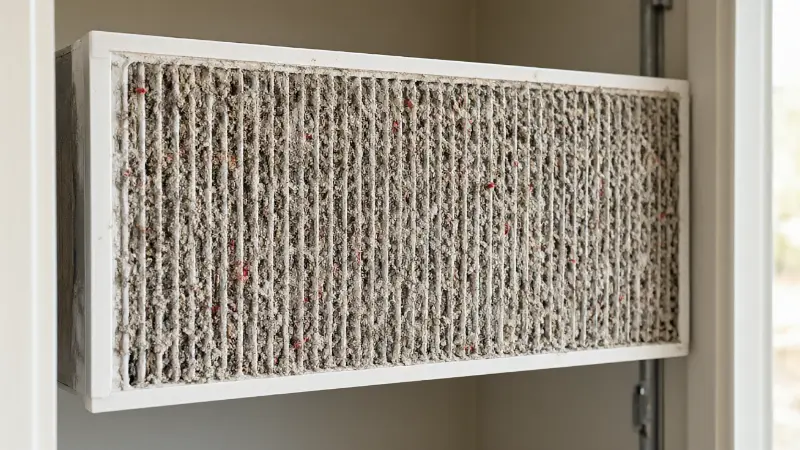
The volume of particles matters as much as the type. A home that normally sees two people and a pet may host eight or ten people for several days. That means more skin cells, more clothing fibers, more hair, and more cooking residue circulating through the return air. A filter that was already a few weeks from replacement can load to the point of restriction during a single holiday weekend.
Candles deserve special mention. Scented candles produce soot particles that are fine enough to remain airborne for long periods, and they can coat a filter with a gray film that is easy to overlook. A filter that looks only lightly dusty on the surface may be much more loaded than it appears. The same is true of fireplace use, which can introduce ash and smoke particles into the return air.
Homeowners also tend to change filters less often in winter because the heating season feels like a long stretch of steady operation. The filter installed in October may be overdue by the time holiday guests arrive. Checking and replacing the filter before the holiday rush is a simple precaution that prevents most airflow problems.
Signs Your Furnace Filter Is Clogged
A clogged filter does not always announce itself with a dramatic failure. Many homes simply become slightly less comfortable, and the furnace runs longer without keeping up. Recognizing the quieter symptoms early can save you from a cold night and an unnecessary service call.

Weak airflow at the registers is one of the most common signs. If the air coming from the vents feels weaker than it did a month ago, or if some rooms are noticeably cooler than others, the filter is a sensible first check. A blower that sounds strained or runs constantly can also indicate restriction.
Rising energy bills during a period of steady weather are another clue. A furnace that has to work harder to move air through a loaded filter uses more energy and may run longer cycles. Short cycling, in which the furnace starts and stops frequently, can also result from airflow restriction that trips a safety limit.
Visible dust on furniture and surfaces shortly after cleaning can point to a filter that is no longer capturing particles effectively. If you notice more dust than usual during the holidays, check the filter before assuming the house is simply busier. A filter that is loaded may also allow dust to bypass or be re-released into the air.
Check the filter directly
The most reliable test is to remove the filter and hold it up to a light. A clean filter allows light through, while a loaded filter blocks it. Look at both sides, because some filters capture different particle sizes on each face. If you cannot see light through the filter, it is due for replacement.
Replace the Filter With the Right Type
Replacing a furnace filter is a straightforward task that most homeowners can complete safely. Start by turning off the furnace at the thermostat and the service switch so the blower does not run while the filter compartment is open. Locate the filter slot, which is usually on the side of the furnace, in the return duct, or behind a return grille.
Note the size printed on the old filter and the airflow direction arrow. The arrow points toward the furnace, indicating the direction of airflow. Installing a filter backward reduces its effectiveness and can cause the filter media to collapse or load unevenly. Match the size exactly, because a filter that is too small allows air to bypass it.
Choose a filter with a MERV rating appropriate for your system. A higher MERV rating captures smaller particles, but it also creates more resistance. Many residential systems are designed for filters in the MERV 8 to MERV 11 range, and a filter that is too restrictive for the blower can cause the same airflow problems you are trying to solve. Check the furnace manufacturer’s guidance and, when in doubt, use the rating that matches the original equipment recommendation.
Write the installation date on the filter frame with a marker. That simple habit makes it much easier to keep track of replacement intervals and prevents the filter from being forgotten until the next holiday season. Keep a spare filter on hand so replacement is quick and convenient.
Washable filters need more attention
If your system uses a washable filter, follow the manufacturer’s cleaning instructions and allow it to dry completely before reinstalling it. A damp filter can promote mold growth and restrict airflow. Washable filters often need cleaning more frequently than disposable filters need replacement, especially in a busy holiday household.
Reduce Holiday Dust at the Source
Replacing the filter solves the immediate restriction, but reducing the dust load keeps the new filter cleaner for longer. Start with the decorations. Boxes and tissue paper release fibers, so unpack decorations in a garage or on a porch if possible, and wipe down items before bringing them into the living space.
Holiday candles are a significant source of fine soot particles. Limit the number of candles burning at one time, keep wicks trimmed, and place candles away from return air grilles where their soot can be drawn directly into the filter. Battery-operated candles are a lower-particle alternative for everyday ambiance.
Cooking is another major contributor during the holidays. Use the range hood whenever you roast, fry, or bake, and confirm that the hood is venting outdoors rather than recirculating. A hood that recirculates through a charcoal filter still helps, but it does not remove all cooking aerosols. Opening a window briefly during heavy cooking can reduce the load on the furnace filter.
Extra laundry, blankets, and pets add fibers and dander to the air. Vacuum more often during the holiday period, using a vacuum with a HEPA filter if you have one. Change bedding in guest rooms before guests arrive, and wash throw blankets that have been in storage. These small steps reduce the particles that reach the filter.
Manage the holiday decoration setup
Decorating often involves extension cords and lighting, and the way those are routed can affect airflow and safety. A guide to hide extension cords for holiday lights covers routing tips that keep cords out of walkways and away from heat sources. Keeping returns and registers clear of decorations is part of the same planning.
Keep Returns and Registers Clear
A filter can only do its job if air can reach it. Holiday furniture arrangements, inflatable decorations, storage bins, and gifts often end up in front of return grilles or supply registers. A blocked return starves the system for air, which increases the pressure drop across the filter and can cause overheating or short cycling.
Walk through each room before guests arrive and confirm that every return grille has clear space in front of it. Check that curtains, sofa backs, and bedding are not covering registers. If a piece of furniture must be moved for the holiday, choose a location that does not block airflow.
In homes with multiple returns, a single blocked grille can create a pressure imbalance that affects the whole system. Pay particular attention to returns in hallways, near the floor, and behind furniture that gets rearranged for gatherings. A few minutes of clearance checking can prevent a filter from loading unevenly and a blower from straining.
Supply registers matter too. Closing vents in unused guest rooms seems like an energy-saving move, but it can raise pressure in the duct system and reduce airflow across the coil or heat exchanger. Keep registers open and let the system operate as designed.
Watch for Secondary Problems Caused by a Clogged Filter
A clogged filter is a simple problem, but leaving it in place can cause larger ones. Restricted airflow is one of the leading causes of furnace overheating, and repeated overheating can trip the high-limit switch, shorten the life of the blower motor, and stress the heat exchanger. A furnace that has been running with a loaded filter may develop symptoms that look unrelated to filtration.
Short cycling is a common result. When the furnace overheats because of restricted airflow, the limit switch opens and shuts down the burner. The blower continues to run and cool the heat exchanger, and then the burner relights. The result is a furnace that cycles on and off every few minutes and never seems to satisfy the thermostat. If the filter is clean and the cycling continues, other causes deserve attention.
Ignition problems can appear to follow a clogged filter because the furnace locks out after an overheat event. A furnace that will not light or that shuts down shortly after ignition may need a furnace ignitor not glowing check, but the filter should be ruled out first because it is the simplest and least expensive fix.
Noises are another secondary symptom. A furnace that is straining against a restricted filter may produce banging, popping, or rumbling sounds as the heat exchanger expands and contracts or as the blower struggles. A guide to a furnace making loud bang when starting covers several causes, and airflow restriction belongs on that list.
When to stop and call a technician
If a new filter restores normal airflow and the furnace still short cycles, overheats, or produces unusual noises, the problem is beyond filtration. Call a qualified HVAC technician to check the blower, the heat exchanger, the limit switch, and the duct system. Do not continue to operate a furnace that repeatedly locks out or trips a safety device.
Set a Holiday Filter Maintenance Routine
The best defense against a holiday-clogged filter is a simple schedule. Check the filter at the start of the heating season, then again before the busiest holiday gatherings. In a home with pets, heavy foot traffic, or a lot of cooking, monthly checks are reasonable. In a smaller, quieter home, every two to three months may be sufficient.
Keep a spare filter of the correct size in a closet or utility area. When you replace the filter, write the date on the frame and set a reminder on your phone for the next check. A reminder is more reliable than memory, especially during a season when routines are disrupted by travel and guests.
Consider the filter when you plan other holiday preparations. If you are hosting, schedule filter replacement a few days before guests arrive so the system has time to stabilize. If you are traveling, change the filter before you leave and confirm that the thermostat is set to a reasonable temperature that will keep the house from getting too cold.
Air quality matters for guests with allergies or respiratory sensitivities. A clean filter and clear returns reduce the particles circulating in the living space, which can make a visit more comfortable. If someone in the home has significant allergies, a higher-efficiency filter may help, but confirm that the system can handle the added resistance.
Quick Reference: Symptoms and Fixes
The table below matches common symptoms of a holiday-clogged filter with the checks and fixes that address them. Use it to organize your troubleshooting, and stop if a step involves electrical components or a part you are not comfortable handling.
| Symptom | Likely Cause | Safe First Step | When to Call a Pro |
|---|---|---|---|
| Weak airflow at registers | Clogged filter or blocked return | Replace filter; clear returns and registers | Airflow stays weak with a new filter |
| Furnace short cycles frequently | Overheating from restricted airflow | Replace filter; open all registers | Cycling continues after filter change |
| Higher energy bills with steady weather | Blower working harder through a loaded filter | Check filter; replace if light-blocking | Bills stay high with a clean filter |
| Dust on furniture soon after cleaning | Filter no longer capturing particles effectively | Replace filter; vacuum more often | Dust persists with a new filter |
| Furnace shuts down and restarts | High-limit switch tripping from airflow restriction | Replace filter; confirm returns are clear | Repeated lockouts or limit trips |
| Banging or rumbling at startup | Heat exchanger stress from overheating | Replace filter; check for blocked vents | Noise continues or is new and severe |
| Burning or dusty smell at startup | Dust burning off the heat exchanger | Replace filter; run a short cycle | Smell persists or smells like burning plastic |
Use the table to narrow the likely cause, but remember that a filter is only one part of the airflow path. Returns, supply registers, ductwork, and the blower all affect how much air the system moves. A new filter is the cheapest and simplest first step, and it is the one most likely to solve a holiday-related airflow problem.
FAQ
How often should I change my furnace filter during the holidays?
Check the filter before the holiday gatherings begin, and again after a busy week of hosting. In homes with pets, heavy cooking, or many guests, monthly replacement is reasonable. In quieter homes, every two to three months may be sufficient. Visible light blockage is the most reliable indicator.
Can a clogged filter cause the furnace to stop working completely?
It can. Restricted airflow can cause the furnace to overheat, trip the high-limit switch, and lock out. Some furnaces will restart after cooling, while others require a reset. If the furnace will not stay running with a new filter installed, the problem may be a limit switch, blower, or heat exchanger issue that needs professional diagnosis.
What MERV rating is best for a furnace filter?
Many residential systems are designed for MERV 8 to MERV 11 filters, but the right rating depends on the furnace and blower. A filter that is too restrictive can reduce airflow and cause the same problems you are trying to solve. Check the furnace manufacturer’s recommendation or ask a technician before upgrading to a higher rating.
Why does my house still feel dusty after changing the filter?
A new filter captures particles that pass through the return, but it does not remove dust already settled on surfaces. Vacuuming, dusting, washing bedding, and reducing candle and cooking particles all help. If dust returns quickly, check for blocked returns, leaky ducts, or a filter that is too small for the slot.
Conclusion
A furnace filter clogged from holiday dust is one of the most common and most preventable heating problems of the season. Extra guests, decorations, candles, cooking, and stored items all add particles to the return air, and a filter that was fine in October can be restrictive by December. Checking the filter before guests arrive and replacing it with the correct size and rating restores airflow and prevents secondary problems.
Reduce the dust load where you can. Unpack decorations outside, limit candle soot, use the range hood, vacuum more often, and keep returns and registers clear of furniture and gifts. A written date on the filter and a reminder on your phone make the maintenance routine reliable rather than accidental.
If a new filter does not solve the problem, or if the furnace short cycles, overheats, or makes unusual noises, call a qualified technician. A clean filter is the first step in airflow troubleshooting, not the last, and a proper diagnosis protects the equipment and the household through the rest of the heating season.