Hiding extension cords for holiday lights makes a display look cleaner and reduces trip hazards, but it also introduces safety considerations that are easy to overlook. A cord that is tucked under a rug, pinched in a door, or buried without protection can overheat, short circuit, or fail when the weather turns wet. The goal is to route cords out of sight while keeping them ventilated, dry, and accessible for inspection.
This guide covers practical methods for concealing cords along walls, gutters, landscaping, and outdoor structures. It explains which covers and clips are suitable for outdoor use, how to protect connections from moisture, and which hiding methods create fire or shock risks. It also explains when a cord should be replaced rather than hidden.
Why Hiding Extension Cords Requires More Than Good Looks
Extension cords are designed to dissipate heat through their jacket and surrounding air. Covering a cord with a rug, a blanket of mulch, or a tight enclosure can trap heat and raise the conductor temperature. If the cord is undersized for the load, the risk increases. A cord that feels warm is a warning sign, and an article on an extension cord getting hot explains how to diagnose overload and connection problems before they become a hazard.
Moisture is the other major concern. Outdoor connections that sit in puddles, snow, or wet soil can develop ground faults, especially when plugged into GFCI-protected circuits. Hiding a connection does not make it waterproof. Any concealment method must keep the connection elevated, dry, and protected by a weatherproof enclosure. If the cord or plug shows corrosion or heat damage, replace it rather than hiding it.
Accessibility matters too. A cord that is buried under permanent landscaping or sealed behind trim is difficult to inspect and remove at the end of the season. Plan the route so that connections remain reachable and the cord can be checked periodically. A hidden cord should still be a serviceable cord.
Route Cords Along Existing Lines and Edges
The simplest way to hide a cord is to follow a line that already exists. Run the cord along the base of a wall, behind a downspout, under the lip of a gutter, or along the edge of a porch. These routes use visual clutter to break up the line of the cord, and they often provide natural attachment points. Keep the cord slightly loose rather than pulling it tight, because tension can damage the conductors and put strain on the plug.
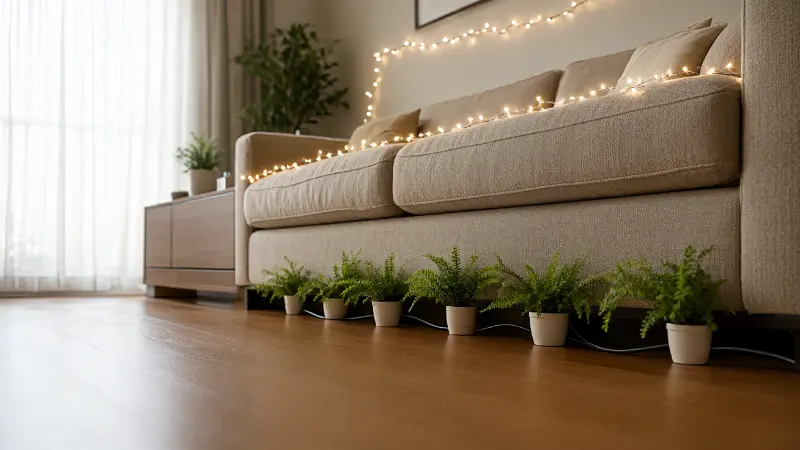
When routing along a wall, use clips that hold the cord without crushing it. Avoid pinching the cord between siding and trim or forcing it into a gap that is too narrow. A cord that is compressed can develop internal damage that is not visible from the outside. If the route passes a sharp metal edge, add a protective grommet or route the cord around the edge rather than over it.
Along gutters, use clips designed for the gutter lip rather than wedging the cord behind the gutter. A cord that is pulled over a gutter edge can rub against the metal in the wind and wear through its jacket. If the gutter is loose or sagging, do not add the weight of a cord or light string. Repair or secure the gutter first, then plan the cord route.
Use Cord Covers and Cable Raceways
Cord covers, sometimes called cable raceways or floor cord protectors, conceal cords while providing a physical barrier. Outdoor-rated covers are available in colours that blend with siding, decking, and trim. They are useful for short runs across a patio, along a fence, or up a wall. Choose a cover that is wide enough for the cord and any connectors, and avoid compressing the cord when closing the cover.
Raceways that attach with adhesive should be used only on clean, dry surfaces and within the product’s temperature range. Adhesive may fail in cold or wet conditions, so check the attachment periodically. If the raceway is screwed to a surface, seal the fasteners to prevent water intrusion. Do not use raceways to conceal damaged cords or to cover connections that are not weatherproof.
Cord covers are not a substitute for proper load management. A cover can hide a cord that is too thin for the load, and the heat has nowhere to go. Check the cord rating against the connected lights, and confirm that the cover is suitable for the cord’s heat output. If the cover feels warm or the cord inside is discoloured, remove the cover and investigate.
Secure Cords with Clips and Hooks
Plastic clips and hooks hold cords neatly without piercing them. Clips that screw into siding or fascia should be sealed to prevent water entry, and the screw should not penetrate the cord. Adhesive clips can work on smooth surfaces in mild conditions, but they may fail in cold or wet weather. Magnetic hooks are useful on metal gutters and trim, but they should not be relied on in high wind.
Space the clips evenly so the cord does not sag or rub. A cord that sags can catch on tools, feet, or pets, and a cord that is pulled tight can strain the connections. Leave a small drip loop at each connection so water runs away from the plug. Check the clips after installation and adjust any point where the cord is in firm contact with a sharp edge or a rough surface.
Do not use staples, nails, or screws through the cord. These fasteners can damage the insulation and create a shock or fire hazard. If a clip will not hold, find a different attachment point rather than forcing the fastener. A loose cord is easier to fix than a damaged conductor.
Conceal Cords in Planters, Mulch, and Landscape Edging
Landscaping can hide cords effectively, but the method must protect the cord from moisture and physical damage. A cord laid on the surface and covered with mulch is exposed to water, insects, and garden tools. A better approach is to run the cord through a rigid conduit or a dedicated outdoor raceway that is designed for direct burial, and then cover the conduit with mulch or edging.
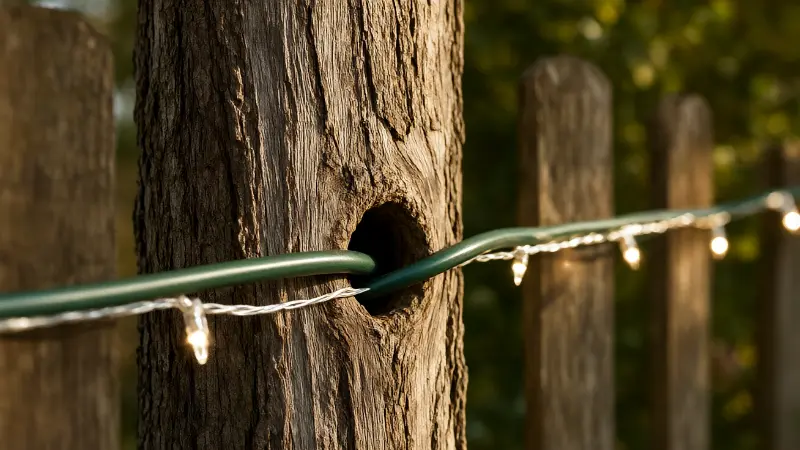
If you use a conduit, choose one rated for the application and size it so the cord can be pulled through without force. Seal the ends to prevent water and debris from entering, but leave a drain point if condensation is possible. Do not bury a standard extension cord directly in soil. Soil moisture and physical damage can degrade the jacket, and the cord may not be rated for direct burial.
Planters can conceal a short vertical run, but the cord must be protected from water and from being crushed by the pot. Use a planter with a drainage hole that does not direct water onto the cord, and keep the connection above the soil line. If the planter is heavy, route the cord around it rather than under it. Check the cord when you water the plants, because repeated wetting can accelerate corrosion.
Route Through a Garage, Shed, or Porch
If an outdoor outlet is not available, a cord may need to run through a garage, shed, or porch. This can be a neat solution, but the route must not create a trip hazard or a fire risk. Do not run a cord through a doorway that can close on it, and do not run it through a window that can pinch the jacket. Use a dedicated pass-through or a weatherproof bulkhead fitting if the cord must cross a wall.
Keep the cord away from heat sources, sharp edges, and moving parts. In a garage, route it overhead or along a wall rather than across the floor. In a shed, keep it away from stored chemicals and tools that could damage the jacket. If the cord passes through a wall, seal the opening to prevent drafts and water entry, and make sure the cord is not compressed by the seal.
Indoor cords are not suitable for outdoor use, even if they are hidden. Use an outdoor-rated cord with a jacket that resists moisture, sunlight, and temperature changes. If the route is long, consider whether a longer outdoor-rated cord or a remote outlet is a better solution. Voltage drop on a long cord can cause lights to dim and motors to run hot.
Manage Connections and Power Strips Safely
Connections are the most vulnerable part of any holiday lighting setup. Keep them off the ground and inside a weatherproof enclosure. A simple plastic bag is not a reliable enclosure; use a box designed for outdoor connections with gasketed entries. Arrange the cords so that water runs away from the plug, and check the enclosure after rain or snow.
Do not daisy chain power strips or plug a power strip into another power strip. This concentrates the load and can overheat the strip. Use a single outdoor-rated strip with a built-in breaker if you need multiple outlets, and keep the total load within the strip’s rating. If the strip feels warm or the breaker trips, reduce the load and investigate.
Label the cords and connections if you have a complex display. Labels make it easier to isolate a fault and to remove the lights at the end of the season. Keep a diagram of the layout if the display is large. Good records reduce the temptation to improvise with unsafe connections next year.
Comparison Table: Concealment Methods and Suitability
| Method | Best use | Safety notes |
|---|---|---|
| Along baseboards and trim | Short runs on walls and porches | Use clips; avoid pinching; keep connections dry |
| Gutter clips and raceways | Roofline and eave runs | Do not overload a loose gutter; avoid abrasion |
| Outdoor cord covers | Patios, decks, and walkways | Choose outdoor-rated covers; check for heat buildup |
| Rigid conduit under mulch | Garden and landscape crossings | Use suitable conduit; do not bury standard cords directly |
| Planters and edging | Short vertical or border runs | Keep connections above soil; protect from water and crushing |
| Garage or shed pass-through | Reaching an outdoor display from an indoor outlet | Seal wall entries; avoid doors and sharp edges |
| Under rugs or furniture | Not recommended outdoors | Heat trapping and crush damage risk |
What Not to Do When Hiding Cords
Do not run cords under carpets, rugs, or furniture where foot traffic can crush them. Do not pinch cords in doors or windows, and do not cover them with insulation or flammable materials. Do not bury standard indoor extension cords directly in soil, and do not conceal damaged cords with tape or covers. These shortcuts can lead to overheating, shock, or fire.
Do not use a cord that is too thin for the load. Check the rating on the cord and compare it with the total current of the lights. If you are unsure, use a shorter, heavier cord or split the display across multiple circuits. A cord that is warm to the touch is a sign that it is working too hard.
Do not ignore a GFCI that trips repeatedly. A GFCI trip indicates a ground fault, and hiding the connection does not fix the fault. Unplug the affected equipment and inspect for moisture, damage, or a failed component. If the trip continues, call a qualified electrician. While you are preparing the house, remember that other tasks also matter; if you notice your oven not heating evenly before holiday baking, address it before the cooking marathon begins.
As you tidy outdoor spaces and prepare for guests, you may also be prepping the guest bathroom for holiday visitors. Keep those indoor tasks separate from outdoor electrical work so that each gets proper attention. A rushed job on either front can create problems later.
Seasonal Removal and Storage
At the end of the season, remove the cords carefully rather than pulling them free. Pulling can damage clips, strain connections, and crack the cord jacket in cold weather. Work along the route and release each clip or cover in turn. Inspect the cord as you remove it, and note any areas of wear, discoloration, or stiffness.
Clean and dry the cords before storage. Coil them loosely rather than wrapping them tightly around your elbow, which can kink the conductors. Store them in a cool, dry place away from rodents and sunlight. Label the cords by length and location if you have a complex display. Good storage makes next year’s installation safer and faster.
Check the cords before the next holiday season. A cord that was fine last year may have deteriorated in storage. Discard any cord with cracked insulation, a loose plug, or a damaged jacket. Replacement is inexpensive compared with the cost of a fire or a shock.
FAQ
Can I bury an extension cord under mulch to hide it?
A standard extension cord should not be buried directly in soil or mulch. Moisture, insects, and garden tools can damage the jacket. If you need to cross a garden area, run the cord through a rigid conduit rated for the application and seal the ends.
Is it safe to cover an extension cord with a rug?
Covering a cord with a rug traps heat and exposes the cord to crush damage from foot traffic. This is not a safe way to hide a cord. Use a cord cover designed for the purpose, or reroute the cord along a wall or edge instead.
How do I hide the connection between two light strings?
Keep the connection off the ground and inside a weatherproof enclosure. Arrange a drip loop so water runs away from the plug, and check the enclosure after rain or snow. Do not wrap the connection in plastic bags or tape, which can trap moisture.
Conclusion
Hiding extension cords for holiday lights is a balance between appearance and safety. Routing cords along existing lines, using outdoor-rated covers and clips, and protecting connections from moisture can create a tidy display without trapping heat or damaging the cord. Burying standard cords directly, covering them with rugs, or pinching them in doors are shortcuts that create real hazards.
Choose concealment methods that keep the cord ventilated, accessible, and dry. Check the cord rating against the load, replace damaged cords, and keep connections inside weatherproof enclosures. If a GFCI trips or a cord feels warm, stop and investigate rather than hiding the problem.
With a planned route and the right materials, you can enjoy a clean-looking display and a safer outdoor electrical setup throughout the holiday season.