A chimney that smells like smoke when there is no fire burning is a common and frustrating problem, especially in the warmer months or during humid weather. The smell can range from a faint campfire odour to a sharp, acrid reek that seems to settle into the living room. It is rarely a sign of something supernatural, and in most cases it points to one of a few specific, findable causes related to creosote, moisture, airflow, or debris.
Understanding why the smell appears is the first step toward fixing it properly. This guide explains the main causes of a smoky chimney odour when the fireplace is idle, how to diagnose each one, and what practical steps you can take. It also covers when to call a certified chimney sweep and which safety issues should never be ignored.
Why a Cold Chimney Smells Like Smoke
Chimneys work on the principle of draft. Hot exhaust gases rise through the flue and exit at the top, pulling fresh air into the firebox to support combustion. When the fireplace is not in use, the chimney is simply a vertical shaft connecting the inside of your home to the outdoors. If air flows down that shaft instead of up, it can carry the lingering odour of past fires, creosote, or moisture into the living space.
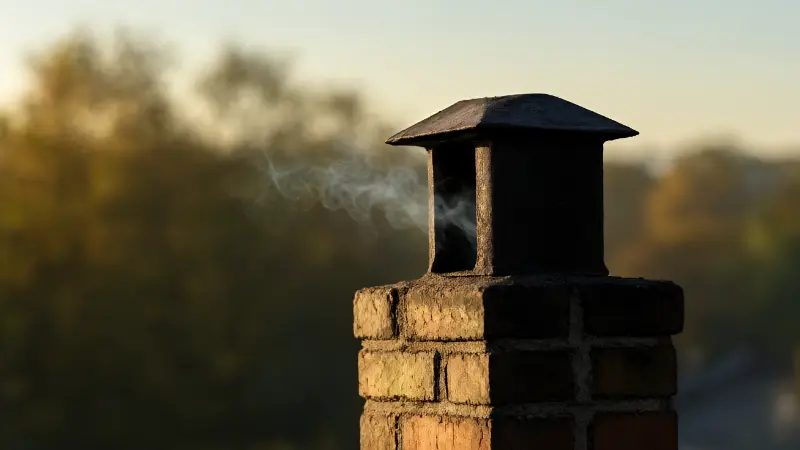
Several conditions can reverse or disrupt the normal upward flow. A cold flue, negative pressure inside the house, a missing chimney cap, or a blockage can all turn the chimney into an unwanted air intake. The smell itself is often a clue. A sharp, campfire-like odour tends to point toward creosote, while a damp or musty smell suggests moisture. A rotten or ammonia-like smell may indicate animal activity or decaying debris.
It also helps to consider the season. A chimney that smells strongly in summer or during humid weather is often releasing odours from creosote that has absorbed moisture from the air. A chimney that smells worse when exhaust fans run is likely affected by negative pressure. A chimney that smells after rain may have a water intrusion problem. Matching the pattern to the cause makes diagnosis much more straightforward.
Cause 1: Creosote Off-Gassing in Warm or Humid Weather
Creosote is a tar-like byproduct of burning wood, and it coats the inside of the flue over time. Even a well-maintained fireplace leaves some creosote behind after each season. When the weather turns warm and humid, that creosote absorbs moisture from the air and begins to release odour. The smell is often described as smoky, sooty, or similar to a wet ashtray or hot asphalt. It is usually strongest on muggy days and may fade when the air dries out.
This is one of the most common reasons a chimney smells like smoke when not in use, and it is often the easiest to address with a professional cleaning. A certified chimney sweep can remove the creosote deposits from the flue, eliminating the source of the odour. Masking the smell with air fresheners or bowls of vinegar may provide temporary relief, but it does not remove the buildup that is causing the problem.
Heavier creosote buildup is also a fire hazard. Glazed or tar-like creosote is more combustible than light soot, and it can ignite if the flue reaches a high enough temperature. If the smell is strong, persistent, or accompanied by a visible buildup around the damper or smoke chamber, schedule a sweep before the next heating season. An annual inspection is a sensible baseline for any wood-burning appliance.
Cause 2: Negative Pressure Pulling Air Down the Flue
Modern homes are built to be airtight for energy efficiency, but that tightness can create negative pressure indoors. When exhaust appliances such as kitchen range hoods, bathroom fans, clothes dryers, or central vacuum systems pull air out of the house, replacement air has to come from somewhere. The chimney is often the path of least resistance, so air flows down the flue and brings chimney odours with it.
You can often identify negative pressure by timing. If the smoky smell appears when you turn on the extractor fan or the clothes dryer, or if it is worse on windy days, pressure imbalance is a likely factor. Cracking a window near the fireplace for a few minutes can sometimes relieve the smell by giving the house an alternative source of replacement air. If the odour fades quickly after cracking a window, negative pressure is a strong suspect.
Long-term fixes may include balancing the ventilation system, adding a dedicated outside air intake near the fireplace, or installing a top-sealing damper that closes off the flue when the fireplace is idle. A tight-sealing damper reduces the opportunity for air to flow down the chimney and helps keep the living space separated from the flue when there is no fire.
Cause 3: Moisture, a Missing Cap, or a Leaking Crown
Water and chimney odours often go together. A missing or damaged chimney cap allows rain to enter the flue, where it mixes with soot and creosote. Wet creosote smells stronger than dry creosote, and the moisture can also encourage mold or mildew growth on masonry surfaces. A cracked crown or failing flashing can let water into the chimney structure from a different direction, producing a damp, musty smell that is distinct from a sharp smoke odour.
Inspect the top of the chimney from the ground with binoculars if it is safe to do so. Look for a cap that is missing, loose, or clogged with debris. Check the crown for visible cracks and the flashing around the chimney for gaps or lifting. A cap with a good screen keeps rain, leaves, and animals out while allowing exhaust gases to escape. If the cap is damaged, replacing it is a relatively straightforward repair that addresses both odour and water intrusion.
If water has already entered the masonry, the chimney may need time to dry before the smell improves. A chimney sweep or masonry professional can assess the extent of the moisture damage and recommend repairs to the crown, flashing, or brickwork. Do not seal a damp chimney without addressing the source of the water, because trapped moisture can worsen the problem over time.
Cause 4: Animal Nests, Droppings, or Decaying Debris
An uncapped chimney is an inviting space for birds, squirrels, raccoons, and other animals. Nests made of twigs, leaves, and feathers can block airflow and create a fire hazard. Droppings and decaying organic matter produce strong, unpleasant odours that can drift into the living space. If an animal has become trapped and died in the flue, the smell can be particularly severe and may be accompanied by flies or other insects.
Signs of animal activity include scratching, chirping, or fluttering sounds from the chimney, debris such as twigs or feathers on the fireplace floor, and a foul or ammonia-like odour. Do not attempt to remove a wild animal yourself. Animals in a confined space can be defensive, and droppings can carry disease. A chimney sweep or pest control professional has the equipment and training to remove the animal safely and clean the flue.
Once the animal and nesting material are removed, a properly fitted chimney cap with a screen is essential to prevent a repeat problem. The cap should be sized for the flue and installed securely. Regular inspections, especially before the heating season, can catch nests and debris before they become a larger issue.
Cause 5: A Cold Flue, Downdraft, or Blocked Passage
Even a clean, dry chimney can smell smoky when it is not in use if the flue is cold. A cold column of air inside the chimney is denser than the warmer air in the house, and it can flow downward, carrying odours with it. This is more common with exterior chimneys that are exposed to cold outdoor temperatures. The smell may be most noticeable on still, cold days or when the wind blows across the top of the chimney.
A partial blockage from creosote, debris, or a damaged flue liner can also disrupt draft and allow odours to linger. If the chimney has not been inspected in more than a year, a professional sweep can confirm whether the flue is clear. A blocked flue is not only an odour problem; it can cause smoke to roll into the room when you light a fire, and it can allow carbon monoxide to accumulate indoors.
Wind-induced downdrafts can sometimes be reduced with a chimney cowl or a wind cap designed for the flue termination. The right solution depends on the chimney height, the local wind patterns, and the appliance. A chimney professional can recommend a suitable cap or draft-improvement device rather than relying on a generic product.
Diagnosing the Smell: A Practical Checklist
The pattern of the smell is often the best diagnostic clue. Before calling a professional, note when the odour appears and what else is happening in the house. This information can help narrow the cause and may save time during a service visit.
- Smell is worse in humid or rainy weather: likely creosote off-gassing or moisture intrusion.
- Smell appears when exhaust fans or the dryer run: likely negative pressure.
- Smell is worse after rain or snowmelt: likely a missing cap, cracked crown, or flashing leak.
- Smell is rotten or ammonia-like: possible animal activity or decaying debris.
- Smell is worse on cold, still days: possible cold flue or downdraft.
- Smell is accompanied by smoke rolling into the room when a fire is lit: possible blockage or severe draft problem.
Check the damper position first. A damper that is partly open or not sealing properly allows flue air to enter the room even when the fireplace is off. Open and close the damper several times to confirm that it moves freely and seats correctly. If the damper is warped, rusted, or stuck, it may need repair or replacement. A tight-sealing top-mount damper can be a good upgrade for an idle fireplace.
Comparison Table: Smell Patterns and Likely Causes
| When the smell appears | Likely cause | First check |
|---|---|---|
| Warm, humid days, no rain | Creosote off-gassing | Schedule a chimney sweep; inspect flue for buildup |
| When exhaust fans or dryer run | Negative pressure | Crack a window; check ventilation balance |
| After rain or snowmelt | Missing cap, cracked crown, or flashing leak | Inspect chimney top from the ground; check cap and crown |
| Rotten or ammonia-like odour | Animal nest, droppings, or decaying debris | Listen for sounds; call a sweep or pest professional |
| Cold, still days, no fire | Cold flue or downdraft | Check damper seal; consider a top-sealing damper |
| Smoke rolls into room when fire is lit | Blockage or severe draft problem | Stop using the fireplace; call a certified sweep |
DIY Steps Versus Professional Help
Some checks are safe for a homeowner. You can confirm that the damper closes fully, look for a missing cap from the ground, clear old ash from the firebox, and note when the smell occurs. You can also crack a window to test for negative pressure and keep the fireplace area clean. These steps may reduce the smell or help you identify the cause, but they do not replace a professional inspection if the problem persists.
A certified chimney sweep has the tools to inspect the flue, remove creosote and debris, and check for damage that is not visible from the living room. The Chimney Safety Institute of America recommends an annual inspection for chimneys that are used regularly, and a sweep when buildup is present. If you have never had the chimney inspected, or if it has been more than a year, booking a service is a sensible starting point.
Do not use a chimney fire suppressant, a deodorising spray, or a homemade remedy as a substitute for cleaning. These products may mask the smell temporarily, but they leave the underlying creosote or debris in place. A clean flue and a properly sealed chimney are the durable solutions.
Safety Notes: Carbon Monoxide and Fire Risk
A smoky smell is a nuisance, but it can also be a warning. A blocked or partially blocked flue can allow carbon monoxide, an odourless gas, to enter the living space. If anyone in the home experiences headaches, dizziness, nausea, or confusion, leave the building immediately and call emergency services from outside. Do not wait to see whether the symptoms pass.
Creosote buildup is the leading cause of chimney fires. A chimney fire can damage the flue liner and spread to the structure of the house. If you hear a roaring sound from the chimney, see flames or sparks at the top, or notice a sudden increase in smoke, evacuate the home and call the fire service. Do not use the fireplace again until it has been inspected and cleared by a professional.
Carbon monoxide alarms and smoke alarms should be tested regularly, and batteries should be replaced according to the manufacturer’s guidance. If you are unsure which breaker controls your smoke detector circuit, a guide on finding the smoke detector breaker can help you work safely. A smoke alarm that behaves unusually, such as three beeps then silence, should be investigated rather than ignored.
Preventing Future Chimney Odours
The most effective prevention is regular maintenance. An annual sweep removes creosote before it can absorb moisture and release odour, and an inspection catches damaged caps, cracked crowns, and blockages before they become serious. Keep the damper closed when the fireplace is not in use, and make sure the cap has an intact screen to keep animals and debris out.
Burn dry, seasoned wood to reduce creosote production. Wet or unseasoned wood burns at a lower temperature and produces more smoke and deposits. Avoid smouldering fires, which create more creosote than hot, efficient burns. If you have a wood stove or insert, follow the manufacturer’s guidance on air controls and fuel quality.
Address negative pressure if it is a recurring issue. A ventilation specialist can assess the balance of exhaust fans and fresh-air intakes in the home. Sometimes a simple adjustment, such as cracking a window or installing a make-up air vent, can reduce the frequency of downdrafts. For persistent problems, a top-sealing damper or a chimney fan may be appropriate, but these should be selected with professional advice.
Other household odours can sometimes be confused with a chimney smell. A musty or sewer-like odour in a bathroom, for example, is more likely related to drain traps than to the chimney. A guide on a shower drain smelling like sewer gas explains how to distinguish that problem. If the smell is clearly coming from the fireplace area and follows the patterns described above, the chimney is the place to focus.
FAQ
Why does my chimney smell like smoke in the summer?
Summer humidity causes creosote deposits in the flue to absorb moisture and release odour. The smell is usually strongest on warm, muggy days. A professional chimney sweep removes the creosote and eliminates the source of the smell.
Can I just use an air freshener to get rid of the smell?
Air fresheners and bowls of vinegar may mask the odour temporarily, but they do not remove creosote, moisture, or debris. The smell will return until the underlying cause is addressed. A sweep and a proper chimney cap are more durable solutions.
Why does the smell get worse when I turn on the kitchen fan?
Exhaust fans can create negative pressure in a tight home, pulling air down the chimney. Cracking a window near the fireplace can relieve the pressure and stop the smell. If the problem persists, a ventilation assessment or a top-sealing damper may help.
Is a smoky smell dangerous?
A smoky smell alone is not usually an immediate emergency, but it can indicate a blockage or draft problem that may allow carbon monoxide to enter the home. If you also have headaches, dizziness, or nausea, leave the building and call emergency services. A persistent smell should be investigated by a certified sweep.
Conclusion
A chimney that smells like smoke when not in use is usually reacting to creosote, moisture, negative pressure, animal debris, or a cold flue. The pattern of the smell, the weather, and the appliances running in the home provide useful clues for identifying the cause. Checking the damper, inspecting the chimney cap, and noting when the odour appears are safe first steps.
For a persistent or strong smell, a professional chimney sweep is the most reliable route to a lasting fix. A clean flue, a properly fitted cap, and a sealed damper address the most common causes and reduce the risk of chimney fires and carbon monoxide problems. Do not rely on masking agents or temporary repairs when the underlying issue can be corrected.
With regular maintenance and attention to airflow in the home, you can keep the fireplace ready for the heating season and avoid the unpleasant surprise of a smoky living room when no fire is burning.