An inflatable Holiday decoration that will not inflate is a frustrating sight, especially when you are trying to finish an outdoor display before guests arrive. These decorations depend on a small blower motor that continuously pushes air into the fabric shell, so a failure can come from the power supply, the blower itself, an air leak, or the way the decoration is positioned. The good news is that most problems can be traced with a few simple checks before you consider replacing the item.
This guide explains how an inflatable decoration works and walks through the likely causes of poor or failed inflation. It covers electrical checks, blower inspection, fabric repairs, tethering, cold-weather effects, and control module faults. It also explains when a repair is sensible and when replacement is the safer choice.
How an Inflatable Decoration Inflates and Why It Can Fail
Most inflatable holiday decorations use a small centrifugal blower mounted at the base or inside the figure. The blower draws air through an intake and pushes it into the fabric shell. The shell is usually made from a coated synthetic fabric with seams, a zipper, and one or more internal baffles that help the figure hold its shape. The blower runs continuously while the decoration is in use because the fabric is not airtight; a small amount of air escapes through seams and vents, and the blower replaces it to keep the figure firm.
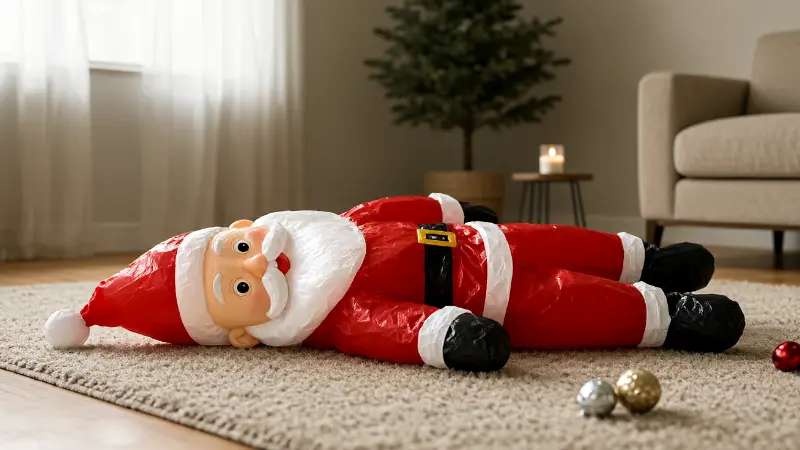
Because the system depends on continuous airflow, a failure can occur at several points. The blower may not receive power, the fan may be obstructed or damaged, the fabric may have a large tear or an open zipper, or the control module may not be sending power to the blower. Cold weather can also make the fabric stiff and harder to inflate, and a decoration that is tethered too tightly may not be able to expand fully. Identifying which part of the system is failing is the key to a quick fix.
Start by confirming that the decoration is assembled correctly. Some figures have an internal zipper that must be closed, and some have a base that must be zipped or fastened before inflation. Check that the blower is seated correctly in its sleeve and that the intake is not covered by fabric. A blower that is installed backwards or not fully inserted can run without inflating the figure. These assembly checks cost nothing and can solve the problem before you reach for tools.
Check the Power Supply, Outlet, and Control Module
Electrical problems are among the most common reasons an inflatable decoration fails to inflate. Test the outlet with a small lamp or another device to confirm that it is live. If the outlet is protected by a GFCI, check whether the device has tripped and reset it once. Outdoor receptacles are often on GFCI protection, and a tripped device will cut power to the decoration even though the blower itself is fine.
Inspect the plug and the low-voltage adapter or control module for damage. Many inflatables use a control box that contains a transformer, a timer, and sometimes a remote receiver. Check that all connections are fully engaged and that the cord is not damaged. If the module has a fuse, confirm that it is intact and replace it only with the correct rating. Do not bypass a fuse or a safety device, because the module is designed to protect the blower and the wiring.
If the decoration is far from a receptacle, a guide to hanging lights without an outlet can help you plan a safer power route. Use an outdoor-rated extension cord that is suitable for the load, and keep connections off the ground and protected from water. A cord that is too thin or too long can cause voltage drop, and the blower may run slowly or fail to start. If a breaker trips when the blower starts, understanding lights tripping a breaker can help you separate a circuit problem from a decoration fault.
Inspect the Blower Fan and Air Intake
The blower is the heart of the inflation system, and a blocked or damaged fan will prevent the decoration from inflating. Unplug the decoration and open the blower housing if the design allows access. Look for leaves, grass, insulation, spider webs, or small debris that may be wrapped around the fan blade. A fan that cannot turn freely will often cause the motor to hum without moving air, and the motor may overheat or trip an internal thermal protector.
Check the fan blade for cracks, missing fins, or a loose fit on the motor shaft. A broken blade may still spin but will not move enough air to inflate the figure. Spin the blade gently with your finger; it should turn freely without rubbing against the housing. If the blade is damaged or the motor shaft is bent, the blower assembly usually needs replacement. Some blowers are available as separate replacement parts, which is often cheaper than replacing the entire decoration.
Confirm that the air intake is clear. The intake may be at the base of the blower or inside the decoration, and it can become blocked by fabric, snow, or debris. A blower that is pushed into soft ground or buried in snow may not be able to draw enough air. Raise the blower on a firm, level surface and clear the intake area. If the blower runs but produces weak airflow, a blocked intake or a dirty fan is a likely cause.
Check the Fabric, Zippers, and Seams for Leaks
A large air leak can prevent an inflatable from becoming firm even when the blower is working correctly. Inspect the fabric shell for tears, punctures, and separated seams. Pay attention to areas that flex during inflation, such as the base, the neck, and the points where tethers attach. A tear near the blower sleeve is especially important because it allows air to escape before it can pressurise the figure.
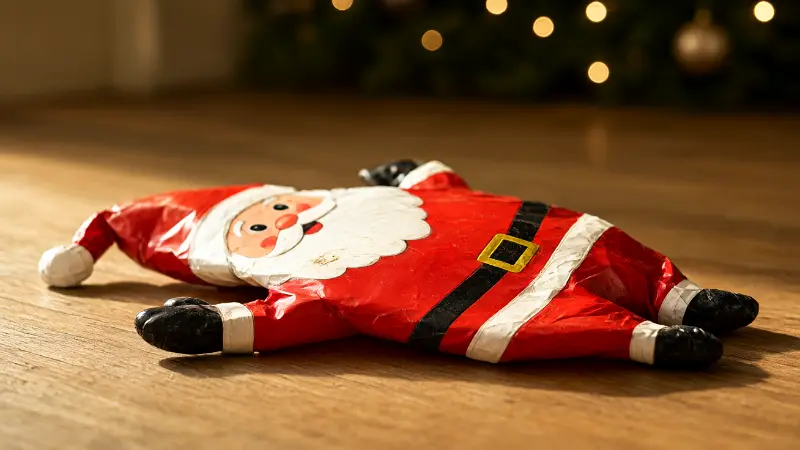
Check that all zippers are fully closed. Many inflatables have a zipper at the base or along the back, and an open zipper will release air as fast as the blower can supply it. Look for a zipper that is partly open, damaged, or missing a pull. If the zipper is broken, a replacement zipper or a manufacturer-supplied repair kit may be available. Do not use household tape as a permanent repair on an outdoor inflatable, because it may not hold in cold or wet conditions.
Small leaks can be difficult to find. Inflate the decoration as far as it will go and listen for hissing, or feel along the seams for escaping air. A soapy water solution can help reveal small leaks, but use it carefully and dry the area afterward. Repair kits for inflatable fabrics are available, and the patch should be applied to a clean, dry surface according to the product instructions. If the fabric is brittle, cracked, or extensively delaminated, repair may not be worthwhile.
Check Tethers, Stakes, and Positioning
Tethers and stakes keep the decoration upright, but they can also prevent it from inflating if they are too tight. The figure needs some freedom to expand as the blower fills it. If the tethers are pulling the fabric against the blower or compressing the shape, loosen them slightly and allow the decoration to inflate before final tightening. Check that the stakes are not piercing the fabric or trapping the base in a way that blocks airflow.
Position the decoration on a firm, level surface. Soft ground, tall grass, or deep snow can block the blower intake or allow the base to sink. Keep the blower above the level of standing water, and route the cord so that it does not create a trip hazard. If the decoration is near a walkway, use cord covers or route the cord around the edge of the path. A stable base also reduces strain on the fabric and seams in windy conditions.
If you are also planning lights along the roofline, review hanging lights without roof damage before you climb the ladder. Planning the display as a whole helps you avoid overloading one circuit and reduces the number of times you need to move a ladder. Keep inflatables and light cords separated where possible, and use separate outdoor-rated connections for each part of the display.
Consider Cold Weather and Material Stiffness
Cold weather affects both the blower and the fabric. PVC and similar coated fabrics become stiffer at low temperatures, and a stiff shell can be harder to inflate. The blower may need more time to fill the figure, and the seams may be under more stress during the first few minutes. Allow the decoration to inflate gradually and avoid pulling or shaking it while the fabric is stiff.
If the blower runs but the figure stays partly collapsed, check whether the fabric is folded or stuck to itself. Some inflatables have internal ties or baffles that can become twisted during storage. Open the zipper, reach inside if the design allows, and gently separate the fabric. Do not use sharp tools inside the shell, because a puncture is difficult to repair and may allow water to enter the blower.
Snow and ice can block the intake or weigh down the fabric. Clear snow from around the blower and from the top of the figure if it is safe to do so. Do not strike the decoration with a shovel or a hard tool to remove ice. If the blower is frozen, bring it indoors to thaw before testing it. Running a frozen blower can damage the fan or the motor.
Test the Control Module, Timer, and Internal Wiring
Many inflatables include a control module with a timer, a remote receiver, or a light sensor. If the module is set to a timer mode, the blower may be off at the time you expect it to run. Check the mode and the timer setting before assuming a fault. Some modules have a manual override, and testing the blower in manual mode can confirm whether the module is the problem.
Inspect the wiring between the module and the blower for loose connectors, pinched cables, or corrosion. A connector that is not fully seated can cause intermittent operation. If the module has a fuse, test it for continuity and replace it with the same rating if it has failed. Do not open a sealed module or attempt to repair internal components unless you have the training and the correct parts. A damaged module should be replaced with a compatible unit.
If the blower runs when connected directly to a known-good power source but not through the module, the module or its wiring is the likely fault. If the blower does not run even on a direct test, the blower motor or its thermal protector is suspect. Some small blowers have a thermal cutout that resets after cooling, so allow the unit to cool before testing again. If the motor hums but does not turn, stop and investigate the fan for obstruction or damage.
Step-by-Step Diagnostic Sequence
A methodical sequence helps you avoid replacing parts that are still working. Start with the simplest checks and move toward the components that require disassembly. Keep the decoration unplugged while you inspect the blower, fabric, and wiring, and reconnect power only for brief tests.
- Confirm that the outlet is live and that any GFCI device has not tripped.
- Check the control module settings, timer, and fuse.
- Inspect the plug, adapter, and extension cord for damage or loose connections.
- Open the zipper and check that the fabric is not folded or stuck together.
- Remove the blower and clear the intake and fan of debris.
- Spin the fan by hand to check for free movement and damaged blades.
- Test the blower on a known-good outlet, following the manufacturer’s instructions.
- Inflate the decoration and listen for leaks along seams and around the zipper.
- Adjust tethers and positioning so the fabric can expand fully.
- If the blower runs but airflow is weak, replace the blower assembly or seek service.
Comparison Table: Inflation Symptoms and Likely Causes
| Symptom | Likely cause | Practical check |
|---|---|---|
| Blower does not run and no lights come on | No power at outlet, tripped GFCI, or faulty module | Test outlet with a lamp; reset GFCI once; check module fuse |
| Blower hums but fan does not turn | Obstructed fan, damaged blade, or failing motor | Unplug and clear debris; spin fan by hand; inspect blade |
| Blower runs but figure stays soft | Open zipper, torn fabric, or separated seam | Close zipper; inspect seams; listen for escaping air |
| Figure inflates partly and leans | Tethers too tight or base not level | Loosen tethers; reposition on firm ground; clear intake |
| Blower runs slowly in cold weather | Stiff fabric or increased motor load | Allow gradual inflation; clear snow and ice; thaw frozen blower |
| Decoration works intermittently | Loose connector, timer setting, or damaged cord | Check module mode; reseat connectors; inspect cord for damage |
Repair or Replace: Making the Call
The decision to repair or replace depends on the cost of the failed part and the condition of the fabric. A replacement blower is often available and can extend the life of the decoration. A small fabric repair kit can solve a puncture or a short seam separation. If the fabric is brittle, heavily faded, or torn in several places, replacement may be more economical than repeated repairs.
Safety should guide the decision. A blower with a damaged cord, a cracked housing, or a burning smell should be taken out of service. Do not tape a damaged cord or attempt to bypass a thermal protector. Use only replacement parts that are compatible with the decoration and rated for outdoor use. If the module is sealed and damaged, replace it rather than opening it.
Store the decoration clean and dry at the end of the season. Allow it to dry fully before folding, and keep it in a rodent-resistant container. A decoration that is stored wet can develop mildew and fabric damage, and a blower stored in a damp place can corrode. Good storage habits reduce the chance of a repeat failure next holiday season.
FAQ
Why does my inflatable run but not stand up?
A blower that runs but does not inflate the figure usually points to an air leak, an open zipper, or a blocked intake. Check the zipper first, then inspect seams and fabric for tears. If the blower feels weak, clear the fan and intake before assuming the motor has failed.
Can I use a regular extension cord with an inflatable decoration?
Use an outdoor-rated extension cord that is suitable for the load and the length of the run. A cord that is too thin or too long can cause voltage drop, and the blower may run slowly or fail to start. Keep connections off the ground and protected from water.
How do I find a leak in an inflatable decoration?
Inflate the decoration as far as it will go and listen for hissing along seams, the zipper, and the blower sleeve. A soapy water solution can help reveal small leaks, but dry the area afterward. Repair kits for inflatable fabric are available for small punctures and seam separations.
Conclusion
An inflatable Holiday decoration that will not inflate is usually suffering from a power problem, a blocked or damaged blower, an air leak, or incorrect positioning. Checking the outlet, module, zipper, fabric, and blower in a logical order helps you isolate the fault without replacing parts unnecessarily. Cold weather and stiff fabric can also affect inflation, so allow extra time and clear snow and ice from the intake.
Repair is often worthwhile when the fault is a blower, a fuse, or a small fabric tear. Replacement makes more sense when the fabric is brittle or extensively damaged. Safety comes first: unplug the decoration before inspection, use compatible outdoor-rated parts, and take damaged electrical components out of service.
With a careful diagnostic sequence and good storage habits, you can often get the decoration standing tall again and keep it ready for future holiday seasons.