Outdoor holiday lights that stop working after rain are a common holiday frustration. Water can trip a GFCI outlet, seep into plug connections, or create corrosion that interrupts the circuit. The good news is that many rain-related failures are temporary and can be diagnosed safely with a logical approach.
This guide explains why rain affects outdoor lighting, how to check the power source without putting yourself at risk, and how to inspect connections, strands, and controllers. It also covers prevention so the next storm does not leave your display dark. Safety comes first: never handle wet electrical equipment with the power on.
Why Rain Causes Outdoor Holiday Lights to Fail
Outdoor lights are designed to withstand weather, but rain can still find weak points. Extension cord connections lying on the ground, plugs that are not fully seated, and cracked sockets can let water reach energized parts. Even a small amount of moisture can cause a short, trip a protective device, or corrode contacts over time.
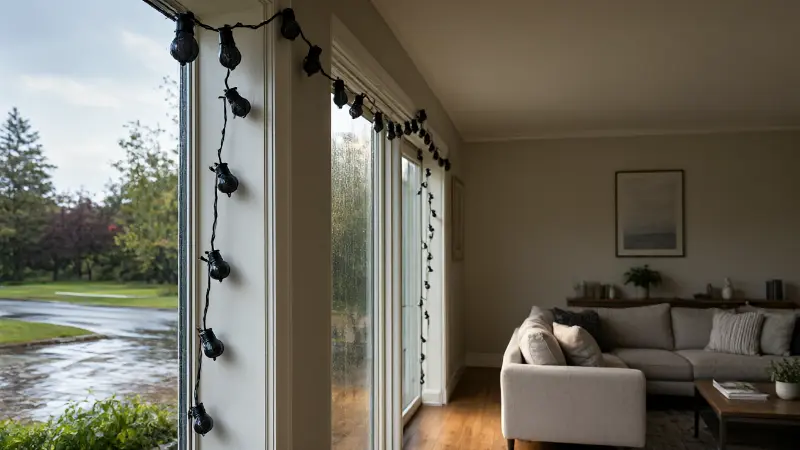
Ground-fault circuit interrupter outlets, often called GFCIs, are required in many outdoor locations because they protect against shock. When moisture creates a leakage path, the GFCI may trip and cut power to the entire string. That is a safety feature working as intended, not necessarily a sign that the lights are ruined.
Rain can also affect timers, controllers, and power adapters that are not rated for outdoor use. Water entering a controller housing can cause erratic behavior or a complete shutdown. In some cases, the lights are fine but the power supply or the connection point has failed.
Safety First: Turn Off Power Before Inspecting
Before you touch any outdoor lights, unplug them or switch off the circuit that feeds the outdoor outlet. Do not rely on a remote control or a timer to keep the circuit off. If the outlet is controlled by a switch inside the house, turn it off and consider placing a note so no one turns it back on while you work.
Never stand in water or on wet ground while handling electrical cords. Wear dry gloves and dry footwear, and keep your hands dry. If you cannot reach the connection safely, wait until conditions improve or call a qualified electrician.
If a GFCI will not reset or trips immediately after you plug in the lights, stop and investigate. Repeated resetting without finding the cause can damage the outlet or create a shock hazard. A GFCI that will not reset may need replacement, and that is a job for someone comfortable with electrical work.
Check the Power Source and GFCI Outlet
Start at the outlet. Confirm that the GFCI has not tripped by pressing the reset button firmly. If it resets and stays in, plug in a small tested device such as a lamp to confirm the outlet has power. If the GFCI trips again with the lights connected, the problem is likely in the lights or the connections.
Check the circuit breaker that feeds the outdoor outlet. A tripped breaker may indicate a short caused by water intrusion. Reset it once and test. If it trips again, leave it off and move on to inspecting the light string and connections rather than repeatedly resetting.
Look at the outlet cover and the plug. A loose or missing outlet cover allows rain to reach the receptacle. An outdoor-rated in-use cover, sometimes called a bubble cover, protects the plug while it is connected. If the cover is damaged, replace it with a listed product suitable for outdoor use.
Inspect Plug Connections and Extension Cords
Water often collects at the point where two cords connect. Unplug the connection, shake out any visible water, and dry the plugs with a clean cloth. Look for corrosion, darkened metal, or melted plastic. Corroded contacts may need cleaning with an appropriate electrical contact cleaner, or the cord may need replacement.
Check that the connection is not lying in a puddle or in a low spot where water pools. Raise connections off the ground using cord hooks or clips designed for the purpose. A connection that stays dry is less likely to trip a GFCI or corrode.
Inspect extension cords for nicks, crushed sections, or exposed wire. A damaged cord should be replaced rather than taped for outdoor use. Use cords rated for outdoor use and confirm that the wire gauge is appropriate for the load and the length of the run.
Use waterproof connections where possible
Waterproof cord connectors or protective covers can help keep moisture out of plug connections. These accessories are not a substitute for safe routing and a GFCI, but they can reduce the chance of rain-related failures. Follow the manufacturer’s instructions and do not seal a connection in a way that traps water inside.
Look for Water Inside Sockets and Bulb Holders
Water can enter sockets through gaps around bulbs or through cracked housings. With the power off, inspect a few sockets along the string. Look for moisture, rust, or green corrosion on the contacts. A socket that is wet or corroded may need to dry thoroughly before it works again.
Remove bulbs carefully if the design allows, and check for water inside the holder. Do not force a bulb that is stuck. Allow the socket to dry in a warm, dry place before reassembling. Do not use a hair dryer on a high setting near plastic sockets, because heat can deform the housing.
If a socket is cracked or the contacts are severely corroded, replace the strand or the socket according to the manufacturer’s guidance. Repairing a socket on a sealed string may not be practical, and a compromised socket is a shock risk in wet conditions.
Test the Strands and Isolate the Fault
If only part of the display is out, the problem may be a single failed strand or a connection between strands. Disconnect the affected section and test it indoors or in a dry area if possible. Follow the manufacturer’s instructions for your light type, because LED and incandescent strings behave differently.
For strings with replaceable fuses in the plug, check the fuse with the power off. A blown fuse can stop the whole strand. Replace it only with a fuse of the same rating. If the replacement fuse blows immediately, there is likely a short or water intrusion that needs to be found before the lights are used again.
If one strand works and another does not, swap the working strand into the suspect position to confirm whether the problem is the strand or the connection. This simple swap saves time and prevents replacing parts that are not faulty. Keep notes so you do not repeat the same test.
Consider the age of the lights
Older light sets may have brittle insulation and corroded contacts that are more vulnerable to moisture. If a strand has failed repeatedly after rain, replacement may be more reliable than repeated repairs. Choose lights listed for outdoor use and follow the manufacturer’s guidance on connecting multiple strands.
Check Timers, Controllers, and Power Adapters
Timers and controllers must be rated for outdoor use and protected from direct rain. If water enters the housing, the device may fail or behave erratically. Unplug the controller and inspect it for moisture or corrosion. Allow it to dry completely before testing, and replace it if it shows signs of water damage.
Power adapters for LED strings can be sensitive to moisture. Check that the adapter is elevated and protected by a cover. If the adapter is warm, discolored, or smells burnt, stop using it. A failed adapter can be a fire risk, so replacement is usually the safer choice.
If you use a smart plug or Wi-Fi controller outdoors, confirm that it is rated for the location and that its cover is secure. Smart devices can add convenience, but they still depend on a dry connection. A holiday lights tripping breaker guide can help you understand common electrical causes if the problem moves indoors as well.
Dry Out the System Safely
After a storm, give the lights and connections time to dry before testing. Moisture trapped in a socket or plug can cause a trip even if the components are otherwise healthy. Wipe visible water from accessible plugs and connectors, and leave covers open only if it is safe and does not expose live parts.
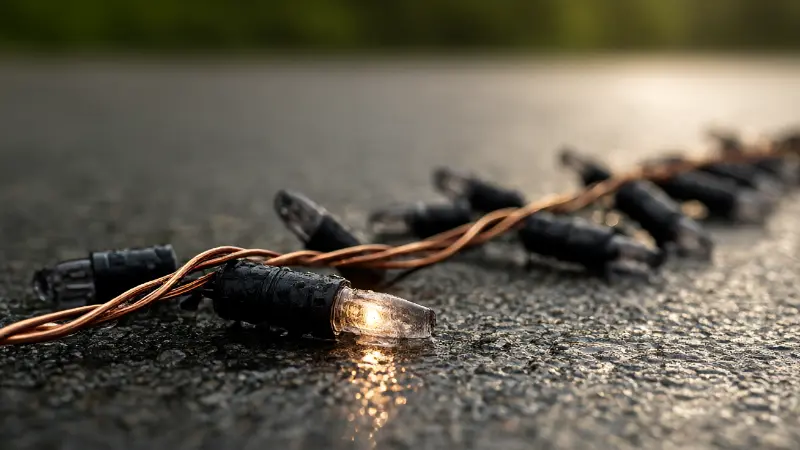
Do not use a heat gun, open flame, or high-temperature hair dryer near plastic light components. Warm air from a household fan or a low-setting hair dryer held at a distance may help, but the power must be off while you work. Never dry electrical parts in an oven or microwave.
If the lights still fail after drying, inspect again for corrosion or water trapped inside a sealed controller. Some failures require replacement rather than repair. Replacing a damaged controller or strand is usually less expensive than risking a shock or a fire.
Prevent Rain Problems for the Rest of the Season
Route connections so they are not sitting in puddles. Use clips or hooks to lift plugs off the ground, and avoid low spots where water collects. Keep the GFCI outlet protected with an in-use cover, and make sure the cover closes around the cord.
Use outdoor-rated extension cords and light sets, and do not overload circuits. Spread the load across more than one circuit if needed, and avoid daisy-chaining more strands than the manufacturer allows. A circuit that is already near capacity is more likely to trip when moisture adds a small leakage path.
Inspect the display after storms and remove standing water from covers and connectors. A quick check after heavy rain can catch a loose connection before it corrodes. If you plan to add more lights, a guide on hanging lights without an outlet can help you plan safe power routing.
If you need to repair a damaged cord or splice a connection, use methods appropriate for outdoor wiring. Guidance on splicing 3 wire holiday lights explains safe techniques and the importance of weatherproofing. Never splice a cord that is energized, and replace any repair that shows signs of moisture or heat damage.
Know When to Call an Electrician
Call a qualified electrician if a GFCI will not reset after replacement, if a breaker trips repeatedly, or if you see scorched outlets or smell burning. These symptoms may indicate a wiring fault that is beyond a holiday light problem. Outdoor receptacles and wiring are exposed to weather, and damaged components can be a shock or fire hazard.
If water has entered a wall or an electrical box, do not use the circuit until it has been inspected. Turn off the breaker and keep people away from the area. A licensed electrician can determine whether the wiring is safe to restore.
For simple strand and connection issues, a careful DIY approach is often reasonable. For anything involving permanent wiring, panel work, or repeated GFCI trips, professional help is the safer choice. The cost of an inspection is usually small compared with the risk of an electrical fire or injury.
Quick Reference: Symptoms and Sensible Actions
The table below summarizes common rain-related failures and safe first steps. Use it as a general guide, and always turn off power before inspecting connections. If a step feels unsafe, stop and call a professional.
| Symptom | Likely Cause | Safe First Step | When to Call a Pro |
|---|---|---|---|
| Entire display is dark after rain | Tripped GFCI or breaker | Turn off power; reset GFCI once; test outlet with a lamp | GFCI will not reset or breaker trips again |
| GFCI trips when lights are plugged in | Moisture in a connection or damaged cord | Unplug; dry and inspect connections; look for damage | Trips persist after drying and inspection |
| Only part of a strand is out | Failed bulb, fuse, or section of wire | Check plug fuse; test strand in a dry area | Fuse blows repeatedly or socket is damaged |
| Lights flicker after rain | Loose connection or water in a socket | Turn off; dry and reseat connections | Flicker continues or plastic is melted |
| Controller or timer is unresponsive | Water inside housing or failed adapter | Unplug; dry thoroughly; inspect for corrosion | Burnt smell, heat, or visible water damage |
| Corroded plug contacts | Moisture and dissimilar metals | Replace cord or clean with proper contact cleaner | Corrosion returns or metal is pitted |
| Outlet cover will not close over cord | Missing or wrong in-use cover | Install a listed outdoor in-use cover | Outlet or box is damaged |
Use the table to narrow down the cause, but do not skip the power shutoff. A quick visual inspection with the circuit off is safer than testing a wet connection while it is energized. If you are unsure about a repair, choose replacement or professional help.
FAQ
Can outdoor holiday lights be used again after getting wet?
Many outdoor-rated lights can work again after drying if the connections and sockets are not corroded or damaged. Inspect for water, corrosion, and cracked plastic before reconnecting. If a GFCI trips repeatedly or you see heat damage, replace the affected parts.
Why does my GFCI trip only when the holiday lights are plugged in?
The lights or their connections are likely allowing moisture to create a leakage path. Unplug the lights, dry the plugs and sockets, and inspect for damaged insulation. If the GFCI still trips after everything is dry, the fault may be in the cord or a controller.
Should I use a regular extension cord outdoors?
Use an extension cord rated for outdoor use and sized for the load and length of the run. Indoor cords may not have the same jacket or weather resistance. Keep connections off the ground and protected by an in-use cover where possible.
Conclusion
Outdoor holiday lights that fail after
rain are often affected by moisture at the outlet, plug connections, or
sockets. Start at the GFCI, confirm the power source, and inspect
connections with the circuit off. Dry the components thoroughly and
isolate the faulty strand or controller before replacing parts.
Prevention
makes a difference: lift connections off the ground, use outdoor-rated
covers and cords, and avoid overloading circuits. If a GFCI will not
reset, a breaker trips repeatedly, or you see heat damage, call an
electrician rather than pushing ahead. Safety around wet electrical
equipment is not negotiable.
A logical check can often restore the
display without a major repair. Give wet components time to dry, test
one section at a time, and replace anything that is cracked or corroded.
That approach keeps the holiday display bright and the season safe.