A refrigerator that is not cold enough for holiday food storage can turn a busy season into a stressful one. You may be planning to chill a turkey, store side dishes, or keep extra desserts ready for guests, and a fridge that runs warm puts those plans at risk. The good news is that many cooling problems have simple causes that you can check before calling a technician.
This guide explains why a refrigerator may struggle during the holidays and how to diagnose the most likely faults. It covers airflow, door seals, thermostats, defrost systems, and condenser components. It also explains when to move food to a safe alternative and when a professional repair is the sensible choice.
Why Holiday Food Storage Puts Extra Demand on a Refrigerator
Holiday food storage often means a fuller fridge than usual. More containers, platters, and bags reduce the open space inside the cabinet. Cold air needs room to circulate around food, and a crowded refrigerator can develop warm pockets even when the appliance is working correctly. This is one reason a fridge that seems fine during normal weeks can feel inadequate when it is packed for a holiday meal.
Frequent door opening is another factor. During cooking and entertaining, the door may be opened more often than usual, allowing room air to enter and cold air to escape. The compressor has to work harder to recover. If the refrigerator is already marginal because of a worn seal or a dirty condenser, the extra demand can expose the weakness.
It also helps to think about what you are storing. Large items such as a whole turkey or a big pot of soup can block vents and interrupt airflow. Warm leftovers placed directly into the fridge can raise the internal temperature for a period. Planning storage around airflow and cooling capacity is part of getting the appliance through the holiday period.
Start With Temperature and Airflow Checks
Before investigating parts, confirm that the refrigerator is actually set correctly. Check the control panel or dial and make sure it has not been changed accidentally. Some models have separate settings for the fridge and freezer, and a setting intended for the freezer may leave the fresh-food compartment too warm. If the controls are electronic, look for a display code or a flashing indicator that may point to a specific fault.
Use a refrigerator thermometer placed in the middle of the cabinet rather than relying on the appliance’s own display. The display may show a set point rather than the actual temperature. Leave the thermometer in place for several hours without opening the door frequently. If the reading is above the safe range recommended by your local food safety authority, treat the fridge as not cold enough and continue troubleshooting.
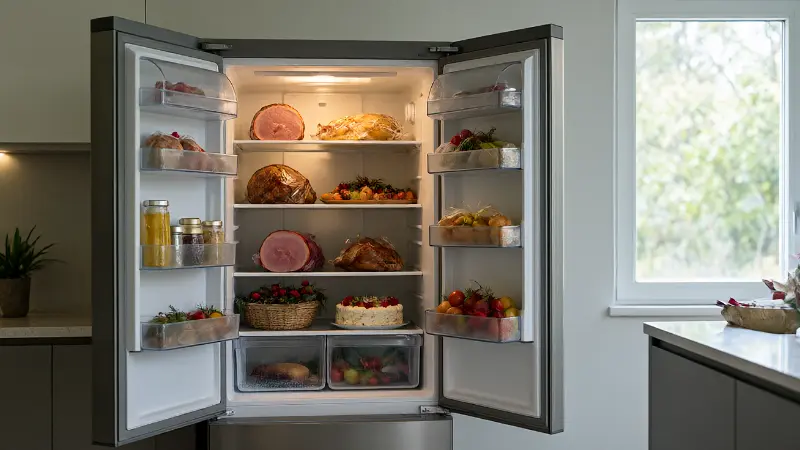
Next, inspect airflow. Find the vents that supply cold air from the freezer or evaporator compartment. Make sure they are not blocked by tall containers, bags, or platters. Leave a gap around the back and sides of the cabinet so air can move. If you have pushed the refrigerator tight against the wall, check that there is adequate clearance for the condenser and for door operation.
Organization matters during the holidays. Group items that you need often near the front and keep less-used items toward the back. Avoid stacking containers against the rear wall, where they can block the return air path. If the fridge has a meat drawer or a crisper with its own slider, check that the slider is not set to a position that restricts cold air flow.
Check the Door Seals and Door Alignment
A worn or dirty door gasket can let warm room air into the cabinet continuously. Over time, the compressor runs longer and the interior struggles to stay cold. Inspect the gasket around the entire door for cracks, tears, stiffness, or food residue. Clean the gasket with mild soapy water and dry it thoroughly. A gasket that is dirty or sticky may not seal properly even if it is not visibly damaged.
Test the seal with a simple paper check. Close the door on a piece of paper and try to pull it out at several points around the perimeter. If the paper slides out easily in one area, the seal may be weak there. This is not a precise test, but it can help you identify a localised sealing problem. If the gasket is torn or permanently deformed, replacement is usually the practical solution.
Door alignment can also affect sealing. A door that has dropped on its hinges may not close squarely against the frame. Check that the door is level and that the hinges are secure. On some models, hinge adjustment is possible; on others, a worn hinge or a damaged door bin can prevent proper closure. A door that does not latch firmly should be repaired before you rely on the fridge for holiday storage.
Inspect the Condenser Coils and Airflow Path
Condenser coils release heat from the refrigerator. If they are covered in dust, pet hair, or lint, the appliance cannot reject heat efficiently. The compressor runs longer, the interior may not reach the set temperature, and energy use rises. Coils are often located at the rear of the appliance, behind a kick plate at the bottom, or sometimes behind side panels. Check your model’s instructions for the correct location and cleaning method.
Before cleaning, unplug the refrigerator or switch off its dedicated circuit. Use a vacuum with a brush attachment or a coil brush to remove loose debris. Avoid bending the fins or puncturing any tubing. Clean the area around the coils as well, because debris can be drawn back into the coil area. If the coils are heavily coated with grease, a suitable coil cleaner may help, but follow the product instructions and allow the area to dry before restoring power.
Check that the refrigerator has enough clearance from the wall and cabinets. Many manufacturers specify a minimum clearance for proper airflow. If the appliance is enclosed too tightly, heat can build up around the condenser. This is especially relevant in a warm kitchen during holiday cooking. If the fridge is in a garage or a cold room, review common garage refrigerator problems because ambient conditions can affect cooling performance.
Check the Evaporator Fan and Air Circulation
The evaporator fan moves cold air from the evaporator coil into the refrigerator and freezer compartments. If the fan motor fails or the fan blade is obstructed, cold air may not reach the fresh-food section. You may hear the compressor running but notice that the fridge section stays warm while the freezer remains cold. This pattern is a useful clue because it points toward an air circulation problem rather than a complete loss of refrigeration.
Open the freezer and listen for the fan. On many models, the fan runs when the compressor is on, and it may stop when the door is open. If you cannot hear it, or if it makes a grinding or rattling noise, the fan motor or blade may need attention. Access to the evaporator fan is usually behind a panel inside the freezer. This repair involves dismantling interior panels and should be done with the power disconnected.
Air circulation can also be disrupted by ice buildup. If the defrost system is not working, frost can block the evaporator coil and the air passages. The refrigerator may run continuously without cooling properly. You may notice frost on the back wall of the freezer or ice around the evaporator cover. A manual defrost may restore temporary cooling, but if the problem returns, the defrost system needs diagnosis.
Investigate the Defrost System and Evaporator Frost
Frost-free refrigerators run a defrost cycle to melt ice from the evaporator coil. The system usually includes a defrost heater, a defrost thermostat or sensor, and a timer or control board function. If one of these components fails, ice can accumulate on the coil and restrict airflow. The result is a refrigerator that seems to run constantly but does not keep food cold enough.
A common sign of a defrost fault is a freezer that is cold but a refrigerator section that is warm. The evaporator may be encased in frost, preventing the fan from moving cold air into the fresh-food compartment. You may also see ice on the floor of the freezer or water leaking inside the cabinet. These symptoms should prompt a careful inspection of the defrost components.
Testing the defrost heater and thermostat requires a multimeter and access to the evaporator area. The heater should show continuity if it is intact. The defrost thermostat or sensor should change state at the appropriate temperature. The control board or timer must also send power to the heater during the defrost cycle. Because this work involves both electrical testing and interior disassembly, it is often best handled by a technician unless you have the service information for your model.
Do not use a knife, screwdriver, or heat gun to chip ice from the evaporator. Sharp tools can puncture the refrigerant tubing, and concentrated heat can damage plastic components. If you need to remove ice for diagnosis, switch off the appliance and allow it to defrost naturally with the doors open and towels or trays in place. A hair dryer on a low setting may help in some areas, but keep it moving and away from plastic and wiring.
Consider the Thermostat, Thermistor, and Control Board
The refrigerator uses a thermostat or thermistor to sense temperature and signal the control board to start or stop cooling. If the sensor sends an inaccurate reading, the control board may not run the compressor long enough. The fridge may feel cool but not cold enough, or it may cycle unpredictably. Some models display an error code when a sensor is out of range, but not all faults produce a visible code.
Testing a thermistor usually involves checking its resistance at a known temperature and comparing it with the manufacturer’s specification. A sensor that is open, shorted, or far out of range should be replaced. The sensor is often a small probe clipped to the evaporator or mounted inside the cabinet. Its wiring can also be damaged by frost, rodents, or repeated door movement.
The control board itself can fail in ways that affect cooling. A relay that controls the compressor or the evaporator fan may stop working. The board may also fail to initiate a defrost cycle. Control board diagnosis is not a simple visual check, and replacement boards can be expensive. Before replacing a board, a technician will usually test the sensors, fans, compressor, and defrost components to confirm that the board is the actual cause.
Look at the Compressor and Sealed System
The compressor is the heart of the refrigeration system. If it is not running, or if it runs but cannot build pressure, the refrigerator will not cool properly. You may hear a clicking sound as the compressor tries to start, or you may hear nothing at all. The compressor may be hot to the touch, or it may be silent. These signs should be treated with caution because the sealed system contains refrigerant under pressure.
Sealed-system repairs are not typical DIY work. They require specialised tools, refrigerant handling equipment, and training. If a technician diagnoses a compressor failure, a refrigerant leak, or a restriction in the sealed system, the repair can be costly. On an older appliance, replacement may be more economical than repair. On a newer appliance, check the warranty before authorising work.
There are also simpler electrical causes for a compressor that will not start. A failed start relay or a tripped overload protector can prevent the compressor from running. These parts are sometimes replaceable, but the diagnosis must be made carefully. If the compressor attempts to start and then clicks off repeatedly, stop and call a technician. Repeated start attempts can damage the compressor.
Comparison Table: Warm Refrigerator Symptoms and Checks
| Symptom | Possible cause | Practical check |
|---|---|---|
| Fridge section warm, freezer cold, fan running | Blocked air vent or airflow obstruction | Move containers away from vents and rear wall |
| Fridge and freezer both warm, compressor running | Dirty condenser coils or poor ventilation | Clean coils and confirm clearance around the appliance |
| Fridge warm after door use, gasket looks worn | Failed or dirty door seal | Clean gasket and perform a paper seal check |
| Freezer cold, fridge warm, frost visible inside freezer | Defrost system fault or iced evaporator | Defrost manually and test heater, sensor, and control |
| Compressor clicks repeatedly or does not run | Start relay, overload, or compressor fault | Call a technician for electrical and sealed-system testing |
| Temperature fluctuates and display shows error code | Thermistor or control board fault | Check sensor resistance and consult model service information |
Make an Emergency Plan for Holiday Food Safety
If the refrigerator is not cold enough, food safety comes first. Move perishable items to a working refrigerator or freezer as soon as possible. If you have a spare fridge, confirm that it is holding a safe temperature before loading it with high-risk foods. Coolers with ice packs can provide short-term storage, but they need to be monitored and replenished.
Keep the refrigerator door closed as much as possible while you troubleshoot. Every opening allows cold air to escape and warm air to enter. If you need to inspect the interior, plan what you need to check before opening the door. Avoid placing warm food directly into the fridge during this period; cool leftovers quickly in shallow containers and refrigerate them promptly.
If you are preparing the house for guests, a quick guide to prepping the guest bathroom can help you stay organised while you deal with the kitchen. After the meal, a guide to unclogging a kitchen sink can be useful if cooking fats and food scraps cause a blockage. These tasks are easier when you plan them alongside your food storage arrangements.
If food has been above the safe temperature range for an extended period, discard it rather than risk illness. Do not rely on taste or smell to judge safety. When in doubt, throw it out. This is especially important for meat, dairy, eggs, and prepared dishes that will be served to guests. A replacement dish is cheaper than a holiday ruined by food poisoning.
When to Call a Refrigerator Technician
Call a technician if you have checked the controls, airflow, door seals, and condenser coils and the refrigerator is still warm. Also call if you see frost buildup that returns after defrosting, hear repeated compressor clicking, or notice a burning smell. These symptoms point to faults that require specialised tools or service information. A prompt diagnosis can prevent further damage and help you decide whether repair or replacement makes sense.
Before the technician arrives, clear access to the refrigerator and note the model and serial number. Write down the symptoms, including when the problem started and whether the freezer is affected. If you have a thermometer reading, share it. This information helps the technician prepare and can shorten the diagnostic visit.
During the holiday period, appliance repair services can be busy, so book early if you suspect a serious fault. If the refrigerator is under warranty, contact the manufacturer or retailer before authorising any repair. DIY work on a warranted appliance can complicate a claim. A short delay in diagnosis can be frustrating, but it is better than a repair that creates a larger problem.
Conclusion
A refrigerator that is not cold enough for holiday food storage is often suffering from a straightforward issue such as blocked airflow, a dirty condenser coil, or a worn door seal. Checking the temperature with a separate thermometer and confirming that vents are clear are sensible first steps. If those checks do not solve the problem, the evaporator fan, defrost system, thermistor, and control board are the next areas to investigate.
Food safety should guide your decisions while you troubleshoot. Move perishable food to a working appliance or cooler, keep the door closed as much as possible, and discard food that has been held too warm for too long. If the fault involves the sealed system, a repeatedly clicking compressor, or repeated frost buildup, call a qualified technician rather than attempting a risky repair.
With a methodical approach, you can often restore cooling or arrange a repair before the holiday meal. Start with the simple checks, protect the food, and escalate to professional help when the symptoms point to a complex fault. That approach gives you the best chance of keeping holiday food storage safe and stress-free.