
A furnace that makes a loud bang when it starts is a sound that gets your attention immediately. It can rattle the floor, echo through the ducts, and leave you wondering whether the system is safe to run. The good news is that the noise usually falls into one of two categories: a combustion problem at the furnace itself, or a pressure problem in the ductwork. Telling them apart is the first step toward a safe and lasting fix.
This guide explains why a furnace bangs on start-up, how to distinguish a serious ignition fault from a harmless duct pop, and which checks are safe for a homeowner. It covers delayed ignition, dirty burners, weak igniters, gas pressure, duct oil canning, airflow restrictions, and the risk of a cracked heat exchanger. It also explains when to shut the system down and call a qualified technician.
Why a Furnace Bangs on Start-Up: Two Very Different Sounds
Homeowners often use the same word for two noises that come from opposite ends of the heating system. A sharp, percussive bang from the furnace cabinet, occurring a second or two after the system calls for heat, is usually a combustion event. A duller, hollow pop from the ductwork, occurring as the blower ramps up or shuts down, is usually expanding metal. The first is a safety concern; the second is often a nuisance.
Location and timing are the best clues. Stand near the furnace on the next start-up and listen. If you hear the click of the gas valve or igniter, then a pause, then a deep boom from the cabinet, the problem is delayed ignition. If the pop comes from the ducts a few feet away after the blower starts, the problem is likely oil canning. When you cannot tell where the sound originates, treat it as a combustion issue until a technician confirms otherwise.
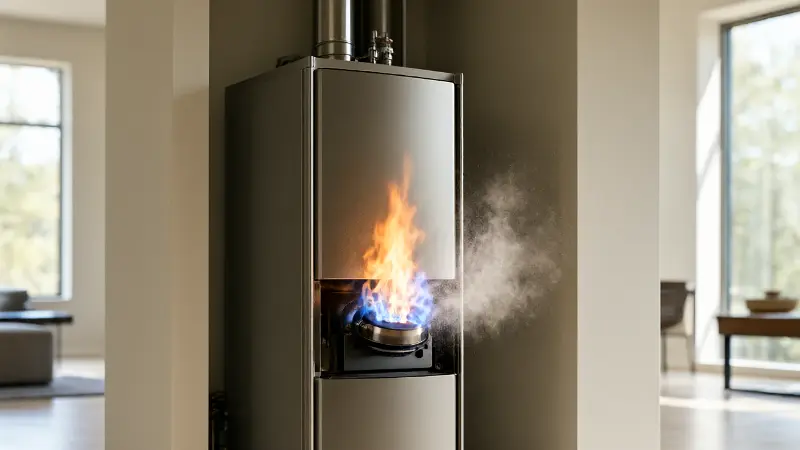
The distinction matters because the consequences are different. Repeated delayed ignition puts mechanical stress on the heat exchanger, the sealed metal component that keeps combustion gases separate from the air you breathe. Over time, that stress can lead to a crack, which is a carbon monoxide hazard. Duct oil canning is annoying, but it does not usually create a combustion safety risk unless it is caused by a severe airflow restriction.
Cause 1: Delayed Ignition from Dirty or Clogged Burners
Delayed ignition is the most common cause of a loud bang at the furnace. The gas valve opens, but the burners do not light immediately. Gas collects in the combustion chamber for a second or two, and when it finally ignites, the accumulated gas burns all at once. The result is a contained mini-explosion that produces the bang you hear.
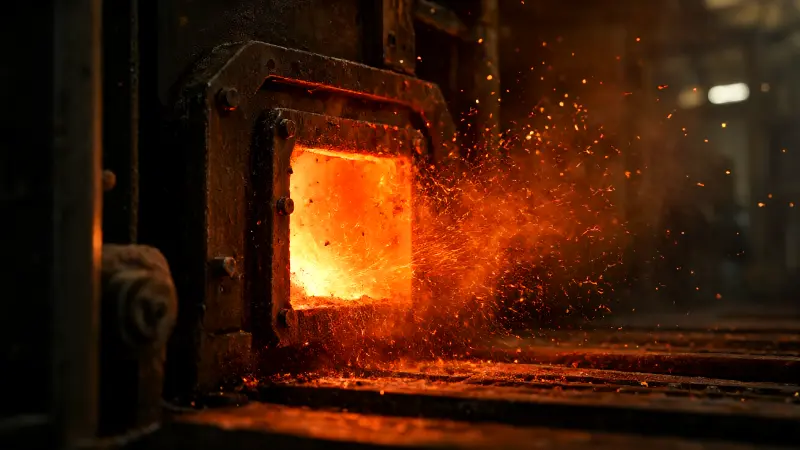
Dirty burners are a leading contributor. Dust, rust, and debris can clog the small ports where gas exits the burner. Spider webs are a surprisingly common culprit in furnaces that sit unused for months. When the ports are partially blocked, the gas does not flow evenly, and ignition is delayed. The burner assembly may also be misaligned, which can prevent the flame from crossing from one burner to the next at the correct moment.
Cleaning the burners is not a typical homeowner task. The burner compartment contains gas and electrical components, and an incorrect reassembly can create a dangerous condition. A qualified technician can remove the burner assembly, clean the ports, verify alignment, and confirm that ignition occurs promptly. Annual maintenance before the heating season is the best way to prevent this cause from developing.
Cause 2: A Weak or Misaligned Igniter
The igniter is the component that lights the gas. Older furnaces may use a standing pilot, while modern furnaces use a hot surface igniter or a direct spark igniter. A hot surface igniter glows to light the gas; a direct spark igniter produces a spark. If either component is weak, dirty, or misaligned, ignition can be delayed even when the gas valve opens on schedule.
A hot surface igniter that is nearing the end of its life may still glow, but not hot enough to light the gas promptly. A spark igniter may spark intermittently or at the wrong location. In both cases, gas continues to flow while the igniter struggles, and the eventual ignition produces a bang. A visual inspection may reveal a cracked igniter or a heavy coating, but the definitive test requires a technician with a multimeter and the manufacturer’s specifications.
Do not attempt to replace an igniter yourself unless you are trained and the power and gas have been safely isolated. The igniter is fragile, and an incorrect replacement can fail immediately or create a safety hazard. If the furnace has a history of repeated igniter failures, the underlying cause may be voltage problems, moisture, or a control board issue that needs professional diagnosis.
Cause 3: Gas Pressure Problems
Gas pressure that has drifted off specification can contribute to delayed ignition. If the pressure is too low, the burners may be slow to light or may light weakly. If the pressure is too high, the flame may be unstable or noisy. In either case, the ignition sequence can be disrupted, allowing gas to accumulate before it finally ignites.
Gas pressure is not a homeowner adjustment. It requires a manometer and training to measure and set correctly. A technician will check the inlet pressure and the manifold pressure, compare them with the appliance rating plate, and adjust the regulator if necessary. Do not attempt to adjust the gas valve or the regulator yourself. An incorrect adjustment can create a carbon monoxide hazard, a fire risk, or both.
If other gas appliances in the home are also behaving unusually, the problem may be with the supply rather than the furnace. A propane tank that is low, a utility interruption, or a regulator issue can affect multiple appliances. Contact the gas supplier or a qualified technician if you suspect a supply problem. If you smell gas at any point, leave the area and call the gas utility’s emergency line from outside.
Cause 4: Duct Oil Canning from Expanding Metal
Not every bang is a combustion event. Sheet metal ducts expand and contract as they heat and cool, and the resulting movement can produce a sharp pop or a hollow boom. The effect is known as oil canning, after the flexible metal of old oil cans that made a similar sound when pressed. The noise often occurs as the blower starts or stops, not at the moment of ignition.
Oil canning is more common in rectangular ducts than in round ones, and it can be worse in long runs of exposed sheet metal with little rigidity. A duct that is undersized for the airflow can flex more dramatically, producing a louder pop. Loose joints, missing screws, and inadequate support can also contribute to the noise. In some cases, the fix is as simple as tightening screws or adding reinforcement to a weak panel.
Duct oil canning is usually not a safety emergency, but it can indicate an airflow problem that deserves attention. A clogged filter, closed registers, or a duct that is too small can increase the pressure and make the noise worse. If the pop is accompanied by weak airflow, high energy bills, or a furnace that short-cycles, the duct system should be assessed by a technician. The noise may be the least of the problems.
Cause 5: Airflow Restrictions and Blower Problems
A clogged air filter restricts airflow across the heat exchanger. The furnace can overheat, and the high-limit switch may cycle the burners on and off. The resulting temperature swings can contribute to expansion noises, and the restricted airflow can worsen oil canning in the ducts. Replacing the filter is a simple first step that addresses both performance and noise.
Blower problems can also produce bangs and rattles. A blower wheel that has come loose on its shaft may scrape against the housing, producing a rhythmic scrape rather than a single bang. Worn motor mounts or a loose panel can rattle as the blower spins up. These noises are different from a combustion bang, but they can be confused with one if the source is not identified.
If the blower is noisy, smells hot, or does not start reliably, turn the furnace off at the thermostat and call for service. Do not attempt to repair a blower motor unless you have the training and the correct replacement parts. A blower that seizes during a cold snap can turn a manageable repair into a no-heat emergency, and a loose wheel can damage the housing if it is left running.
The Risk That Makes a Bang Worth Fixing Quickly
A single delayed ignition is unlikely to destroy a furnace, but repetition is the problem. Each bang sends a pressure shock through the heat exchanger. Over months of heating season, that repeated stress can fatigue the metal at the seams and lead to a crack. A cracked heat exchanger is a serious safety hazard because it can allow carbon monoxide to enter the air supply.
Carbon monoxide is colourless and odourless, and it can cause headaches, dizziness, nausea, and confusion. A cracked heat exchanger does not always produce obvious signs, which is why technicians treat repeated ignition bangs as a warning rather than a nuisance. If you have a carbon monoxide alarm, test it regularly and replace the batteries according to the manufacturer’s guidance. If the alarm sounds, evacuate the home and call emergency services.
Do not rely on a visual inspection alone to rule out a cracked heat exchanger. A crack can be small, hidden, or located in an area that is not visible without disassembly. A technician uses combustion analysis and specialised inspection tools to assess the heat exchanger. If a crack is confirmed, the furnace should not be operated until the component is replaced or the appliance is replaced. This is not a repair to defer.
Safe Diagnostic Steps for Homeowners
Before calling a technician, you can perform a few safe checks that do not require opening the furnace cabinet or touching gas components. These steps can help you distinguish a duct noise from a combustion noise and identify simple airflow problems.
- Stand near the furnace on the next start-up and listen for where the bang originates.
- Note whether the bang occurs right after the gas valve clicks or later when the blower starts.
- Check the air filter and replace it if it is dirty or overdue.
- Confirm that supply registers and return grilles are open and unobstructed.
- Listen for other noises such as scraping, squealing, or repeated clicking.
- If you smell gas, leave the area and call the gas utility from outside.
- If the bang is at the furnace or you cannot tell, turn the system off and call a technician.
Do not remove the furnace cover, adjust the gas valve, or bypass a safety switch. These actions can create a carbon monoxide hazard or an electrical shock risk. If the furnace has a diagnostic code, record it and share it with the technician. The code can narrow the fault to ignition, flame sensing, pressure switch, or limit switch, which helps the service visit go faster.
Comparison Table: Bang Patterns and Likely Causes
| Sound pattern | Likely cause | Recommended action |
|---|---|---|
| Sharp bang from the furnace cabinet, right after ignition | Delayed ignition from dirty burners, weak igniter, or gas pressure | Turn off the furnace; call a technician for combustion inspection |
| Hollow pop from the ducts as the blower starts | Oil canning from expanding sheet metal | Check the filter and airflow; consider duct reinforcement |
| Bang accompanied by weak airflow and short cycling | Clogged filter or restricted duct system | Replace the filter; have ducts assessed if the noise persists |
| Rhythmic scrape or rattle with the blower | Loose blower wheel or worn motor mounts | Turn off the system; call for blower inspection |
| Bang plus gas smell or carbon monoxide alarm | Gas leak or combustion hazard | Evacuate; call emergency services and the gas utility |
When to Call a Professional
Call a qualified HVAC technician if the bang comes from the furnace cabinet, if it happens repeatedly, or if you cannot determine the source. Delayed ignition involves gas and combustion, and it is not a safe DIY repair. A technician can clean the burners, test the igniter, measure gas pressure, and inspect the heat exchanger for cracks or other damage.
Also call if you notice a gas smell, soot, scorch marks, or a yellow or lifting flame. These signs can indicate incomplete combustion, a venting problem, or a gas leak. Turn off the furnace at the thermostat, follow the gas safety instructions from your utility, and do not operate the appliance until it has been inspected. If a carbon monoxide alarm sounds, evacuate and call emergency services from outside.
If the furnace will not start at all when the temperature drops, the problem may be a thermostat, a safety switch, or a control fault. A guide to a furnace not kicking on covers common causes and safe checks. If the furnace starts and stops frequently, a guide to furnace short cycling explains the patterns to watch for. And if the system runs but delivers cool air, a guide to furnace blowing cold air can help you narrow the fault.
Preventing Future Start-Up Bangs
Annual furnace maintenance is the most effective prevention. A technician will clean the burners, inspect the igniter, test the flame sensor, measure gas pressure, and check the heat exchanger. Regular service catches worn components before they cause a delayed ignition, and it provides an opportunity to confirm that the furnace is operating safely. Schedule the service before the heating season, not after the first cold snap.
Replace the air filter according to the manufacturer’s guidance, and keep the furnace area clean. Dust and debris are contributors to burner clogging and airflow restriction. If you have pets, check the filter more often. Clear the return grilles and keep stored items away from the furnace. A clean system runs more efficiently and is less likely to produce unusual noises.
If the ducts are noisy, consider whether the duct system is adequately sized and supported. A technician can assess airflow and recommend reinforcement or sealing for weak panels. Do not attempt to dismantle ductwork or seal joints with improvised materials. Proper duct sealing and support reduce oil canning and improve comfort throughout the house.
FAQ
Is a single loud bang from my furnace an emergency?
A single bang is not automatically an emergency, but it should not be ignored. If the sound comes from the furnace cabinet and occurs right after ignition, treat it as delayed ignition and have the system inspected. If the sound comes from the ducts and occurs as the blower starts, it is more likely oil canning, which is usually less urgent.
Can I still run my furnace if it bangs only sometimes?
Intermittent banging still indicates a fault that can worsen over time. Repeated delayed ignition stresses the heat exchanger, and a crack can lead to carbon monoxide exposure. Have the furnace inspected before relying on it for the season. If you smell gas or a carbon monoxide alarm sounds, stop using the furnace immediately.
Why does the bang happen more on cold mornings?
Cold weather can affect gas pressure and combustion, and a furnace that has been idle overnight may be more likely to have a delayed ignition on the first start. The underlying cause is still dirty burners, a weak igniter, or a gas pressure issue. Cold weather exposes the fault rather than creating it.
Conclusion
A furnace making a loud bang when starting is usually a sign of delayed ignition at the burners or oil canning in the ductwork. A sharp bang from the furnace cabinet, occurring right after the gas valve opens, is the pattern to take most seriously because repeated ignition delays can crack the heat exchanger and create a carbon monoxide hazard. A hollow pop from the ducts as the blower starts is more often expanding metal and is usually less urgent.
Safe homeowner checks include listening for the location and timing of the bang, replacing a dirty filter, and clearing blocked registers. Do not open the furnace cabinet, adjust gas pressure, or bypass safety switches. If the bang comes from the furnace, repeats, or is accompanied by a gas smell or a carbon monoxide alarm, turn the system off and call a qualified technician.
Annual maintenance, a clean filter, and prompt attention to unusual noises reduce the chance of a start-up bang and help keep the heating system safe through the coldest months. When in doubt, treat the noise as a reason to call a professional rather than a reason to wait.