Leaving gasoline in a Toro snowblower through the off-season is one of the most common ways to create a costly repair. Modern fuel degrades in weeks, not months, and the varnish and gum it leaves behind can clog the tiny passages in the carburetor. A machine that ran perfectly in March may refuse to start in November, and the fix often costs more than a season’s worth of fuel.
Draining the gas is a straightforward maintenance task, but Toro’s designs vary across models. Some units have a fuel shut-off valve and a carburetor bowl drain screw, while others require a siphon or a run-dry approach. This guide covers the methods Toro specifies, the tools each one needs, and the safety steps that matter when you are working with gasoline.
Why Draining the Gas Matters for a Toro Snowblower
Gasoline is not a stable product. The lighter compounds evaporate, and the remaining fuel oxidizes and forms deposits. Ethanol blends, which are common at most pumps, absorb moisture from the air and can phase-separate in a vented fuel tank. Those deposits are the root cause of most small-engine no-start problems, and they are entirely preventable.
Toro’s own storage guidance is built around this reality. The company recommends adding fuel stabilizer to fresh fuel on the last refueling of the season, running the engine for about ten minutes to distribute the treated fuel, and then draining the tank and carburetor. Stabilizer slows degradation, but it does not eliminate it, which is why draining is still part of the process.
The alternative to draining is running the engine until it stops from fuel starvation. That approach works, but it leaves a small amount of fuel in the carburetor bowl. Toro’s instructions typically include a final step to drain that residual fuel through the bowl screw. Skipping that step leaves the most vulnerable part of the fuel system wet.
Safety First: Fuel Handling Basics
Gasoline vapors are heavier than air and can travel along the floor to a pilot light, a water heater, or a spark from a tool. Work outdoors or in a well-ventilated space, away from appliances with pilot lights. Do not smoke, and keep a dry chemical fire extinguisher within reach.
Let the engine cool before you start. A hot muffler or exhaust component can ignite fuel vapors. Wear nitrile gloves and eye protection, and use an approved fuel container with a tight-fitting cap. A shallow drain pan designed for oil changes works well for catching fuel, but it must be dedicated to fuel or thoroughly cleaned afterward.
Never tip a Toro snowblower forward or backward with fuel in the tank. Toro explicitly warns against this because fuel can leak from the machine. If you need to access the underside, siphon or drain the tank first, or use a method that does not require tilting. If fuel spills on the machine or the ground, wipe it up immediately and allow the area to ventilate before starting any equipment.
Method 1: Use the Fuel Shut-Off Valve and Carburetor Bowl Drain
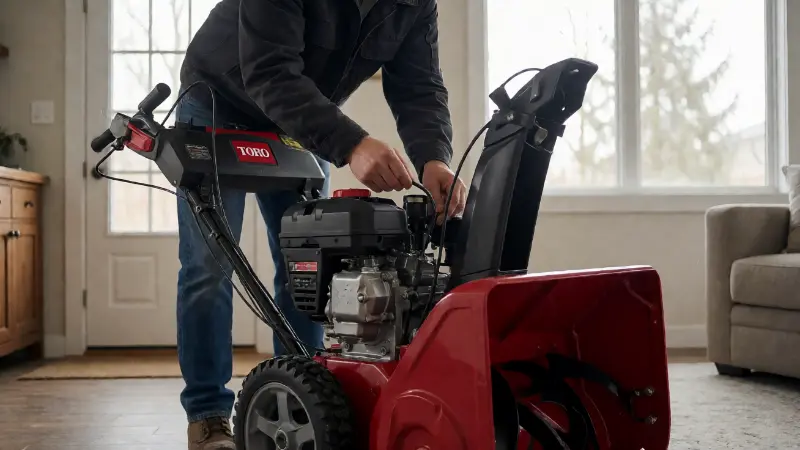
Many Toro two-stage and premium single-stage models have a fuel shut-off valve between the tank and the carburetor. The valve is usually a small plastic lever or a rotating knob located under the fuel tank or near the carburetor. Closing it stops the flow of fuel from the tank, which lets you drain the carburetor without emptying the entire tank first.
Locate the carburetor bowl. It is the small, cup-shaped reservoir on the side or bottom of the carburetor, usually held in place by a bolt or a retaining nut. On many Toro carburetors, there is a small drain screw on the side of the bowl. Loosen that screw, but do not remove it, and fuel will begin to trickle out. Place an approved container underneath before you loosen it.
Toro’s manuals are specific about one detail: do not remove the carburetor bowl bolt on the bottom of the carburetor. That bolt holds the bowl in place, and removing it can damage the bowl gasket or cause a sudden release of fuel. The small side screw is the correct drain point. Once the flow slows to a stop, tighten the screw gently. Overtightening can strip the threads and create a leak, so use a handheld screwdriver rather than a driver with a long handle for leverage.
If your Toro has a shut-off valve, close it before you drain the bowl. That prevents fuel from the tank from continuing to flow into the carburetor while you work. After the bowl is drained, you can reopen the valve if you plan to run the engine, or leave it closed for storage. If the valve is difficult to reach, a guide on draining an Ariens snowblower shows how similar valve-and-bowl systems are accessed on comparable machines.
Method 2: Siphon or Pump the Fuel from the Tank
If your Toro does not have a convenient shut-off valve, or if the tank is nearly full, a siphon or a hand pump is the faster way to empty the tank. A dedicated fuel siphon with a primer bulb is inexpensive and keeps your mouth away from the fuel. A hand-operated transfer pump works equally well and gives you more control over the flow.
Insert the siphon hose into the tank until it reaches the lowest point. Pump the primer bulb or operate the hand pump until fuel begins to flow into your container. Keep the container below the level of the tank, and watch the flow so you can stop before the container overfills. Once the tank is empty, reconnect the fuel line if you disconnected it, and proceed to drain the carburetor bowl using the side screw described above.
A word of caution: do not use a shop vacuum to remove fuel. Gasoline vapors can be ignited by the vacuum’s motor, and the result can be a fire or an explosion. A dedicated fluid extractor or a manual siphon is the safe choice. If you do not own a siphon, running the engine dry is an alternative, but it takes longer and still requires the bowl drain step.
Method 3: Run the Engine Until It Stops
Running the engine until it runs out of fuel is a practical option when you do not have a siphon and the tank is nearly empty. Start the engine outdoors, close the fuel shut-off valve if the machine has one, and let it run. The engine will lean out and stall as the carburetor bowl empties. Once it stops, engage the choke and try to restart it a few times. That pulls the last of the fuel through the system.
This method does not eliminate the need to drain the bowl. A small amount of fuel remains in the bowl even after the engine stalls, and that residual fuel is enough to cause problems over a long storage period. Loosen the bowl drain screw after the engine stops and let the remaining fuel trickle into a container. Toro’s off-season storage guidance includes this step for a reason.
Do not run the engine indoors, even with the doors open. Carbon monoxide is colorless and odorless, and a running engine produces it continuously. Run the machine outside, away from windows and doors, and let it cool before you move it back into storage. If the engine surges or runs poorly during the run-dry process, that is a sign of a fuel system issue that should be addressed before storage, not after.
Method 4: Remove the Fuel Tank for a Thorough Drain
Some Toro models, particularly certain single-stage and older two-stage designs, make the fuel tank relatively easy to remove. Removing the tank gives you full access for a complete drain and lets you inspect the tank interior for rust, sediment, or degraded fuel lines. It is more work than the siphon method, but it is the most thorough approach.
Before removing the tank, drain as much fuel as possible with a siphon. Then disconnect the fuel line at the carburetor or at the tank outlet, depending on the design. Slide the clamp back, twist the line gently to break the seal, and pull it off. Plug the line or place a rag under the connection to catch drips. Remove the tank mounting bolts, lift the tank away, and pour the remaining fuel into your container.
Inspect the tank outlet and the fuel filter while the tank is off. Replace the fuel line if it is hard, cracked, or soft. A new line is inexpensive and prevents a leak that could develop later. Reinstall the tank in the reverse order, reconnect the line, and tighten the clamp. If the tank has a shut-off valve, check that it operates smoothly before you refill.
Not every Toro model is designed for easy tank removal. On some machines, the tank is buried under shrouds and the fuel line is routed behind panels. If access is difficult, the siphon-and-bowl-drain method is the more practical choice. For a comparison of how different Toro models are laid out, the article on Ariens Deluxe 24 vs Toro 824 discusses design differences that affect maintenance access.
Comparison Table: Drain Methods for a Toro Snowblower
| Method | Best for | Tools needed | Thoroughness | Time required |
|---|---|---|---|---|
| Shut-off valve and bowl drain | Models with a fuel valve and bowl drain screw | Approved container, screwdriver | High for the carburetor; tank remains full | 10–15 minutes |
| Siphon or hand pump | Most models, especially when the tank is full | Fuel siphon or transfer pump, container | High for the tank; bowl drain still needed | 15–20 minutes |
| Run engine until it stops | Nearly empty tank and no siphon available | Approved container, screwdriver | Moderate; bowl drain still needed | 20–30 minutes |
| Fuel tank removal | Models with easy tank access and thorough cleaning goals | Socket set, screwdriver, line clamps, container | Highest; allows tank inspection | 30–60 minutes |
Disposing of Old Gas Safely
Old gasoline is a hazardous material and should not be poured down a drain, onto the ground, or into the trash. Many municipalities have household hazardous waste collection events or permanent drop-off sites. Check with your local waste authority for the options in your area. Some communities allow small quantities of old fuel to be mixed with fresh fuel in a vehicle, but only if the fuel is not contaminated with water or debris.
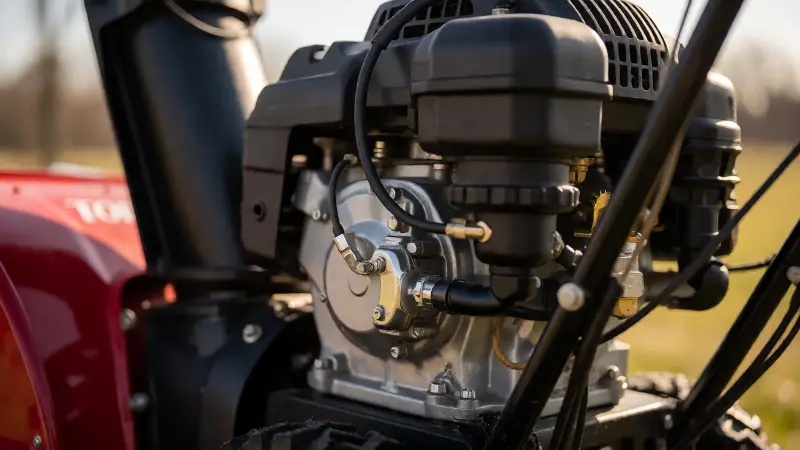
If you have a small amount of fuel that is only a few months old and has been treated with stabilizer, it can often be used in a vehicle or in a piece of power equipment that is not sensitive to minor fuel degradation. Do not use old fuel in a modern vehicle with a high-pressure fuel system or in a two-stroke engine that requires a precise fuel-oil mix. When in doubt, dispose of it properly rather than risking damage to an engine.
Store the drained fuel in an approved container with a tight cap, and label it clearly. Keep it out of the reach of children and pets, and away from ignition sources. If you plan to reuse the fuel in a vehicle, do so within a reasonable period rather than storing it indefinitely. Fuel that has already degraded will continue to degrade in the container.
Preventing Fuel Problems Before They Start
Fresh fuel and a stabilizer are the first line of defense. Buy only as much fuel as you will use in a month or two, and add stabilizer as soon as you bring it home. Keep the fuel can sealed and stored in a cool, dry place. Do not top off the snowblower’s tank at the end of the season; leave it low so there is less fuel to drain or stabilize.
Inspect the fuel lines and the carburetor bowl gasket at the start of each season. A hardened line or a brittle gasket can leak, and a leak near a hot engine is a serious hazard. If you notice a fuel smell or a drip, address it before you run the machine. The guide on common snowblower gas leak causes covers the most frequent failure points and how to repair them.
If the machine will sit for more than a few months, follow Toro’s storage procedure: treat the fuel, run the engine, drain the tank and bowl, change the oil, and remove the spark plug to add a small amount of oil to the cylinder. That last step is often overlooked, but it protects the cylinder walls from corrosion during long storage. Store the machine in a dry place, covered, and out of reach of children.
FAQ
Do I need to drain the gas from my Toro snowblower every season?
Toro’s storage guidance recommends draining the tank and carburetor at the end of the season, even if you use fuel stabilizer. Stabilizer slows fuel degradation but does not stop it completely, and the carburetor bowl is the most vulnerable part of the system. Draining prevents the varnish and gum that cause most off-season starting problems.
Where is the carburetor drain screw on a Toro snowblower?
The drain screw is a small screw on the side of the carburetor fuel bowl, not the larger bolt on the bottom that holds the bowl in place. Toro’s manuals specify loosening the small side screw until fuel begins to drain, and they explicitly warn against removing the bottom bowl bolt. The screw is often accessible through a panel or from the side of the engine.
Can I just run the snowblower until it runs out of gas?
Running the engine until it stops is an acceptable way to empty the tank and most of the fuel system, but it does not empty the carburetor bowl completely. You still need to loosen the bowl drain screw to remove the residual fuel. Running the engine dry also takes longer than siphoning, and it should be done outdoors because of exhaust fumes.
What should I do with the old gasoline?
Dispose of it through your local household hazardous waste program. Do not pour it down a drain, onto the ground, or into the trash. Small quantities of fuel that are only a few months old and have been treated with stabilizer may be usable in a vehicle, but fuel that is contaminated or heavily degraded should be recycled properly.
Why does my Toro snowblower leak gas after I drain it?
A leak after draining usually points to a bowl gasket that was disturbed, a drain screw that is not seated, or a fuel line that was disconnected and not reconnected properly. Check the bowl screw first, then inspect the fuel line connections. If the leak persists, the carburetor may need a new bowl gasket or the fuel valve may be faulty.
Can I use a siphon to drain the tank instead of removing it?
Yes. A dedicated fuel siphon or a hand-operated transfer pump is the fastest way to empty the tank on most Toro models. It avoids the work of removing shrouds and fuel lines, and it lets you control the flow into an approved container. After siphoning, drain the carburetor bowl to complete the process.
When to Stop and Call a Professional
Most draining tasks are within reach for a homeowner with basic tools and a willingness to work carefully. But some situations warrant professional help. If fuel is leaking from the carburetor body, the fuel tank, or a line that you cannot access, stop and have the machine serviced. A fuel leak near a hot engine is a fire risk, and a persistent leak can damage components beyond the point of economical repair.
If the engine will not start after you have drained and refilled with fresh fuel, the carburetor may need to be cleaned or rebuilt. That job requires disassembly, cleaning of tiny passages, and careful reassembly with new gaskets. It is a manageable DIY task for someone with experience, but it is also easy to introduce a new problem if a jet is lost or a gasket is installed incorrectly. A small-engine shop can handle it quickly.
Finally, if your Toro has a fuel shut-off valve that is stuck or broken, do not force it. A cracked valve or a damaged tank outlet can turn a simple drain into a larger repair. Replace the valve rather than trying to free it with excessive force. The same caution applies to the carburetor bowl screw: if it will not loosen, stop before you strip the head.