Choosing between the Ariens Deluxe 24 and the Toro Power Max 824 OE is a familiar dilemma for homeowners who want a capable two-stage snowblower without stepping into commercial pricing. Both machines share a 24-inch clearing width, both offer electric start, and both come from brands with strong reputations in outdoor power equipment. Yet they are engineered with different priorities. The Ariens leans toward heavy-duty construction and long-term durability, while the Toro emphasizes lighter weight and user-friendly controls.
This comparison breaks down the specifications that matter, explains how each machine behaves in real-world clearing, and highlights the trade-offs owners report after living with these snowblowers through multiple winters. The goal is not to declare a universal winner, but to help you match the machine to your driveway, your snowfall, and your tolerance for maintenance.
Quick Specs: Ariens Deluxe 24 vs Toro Power Max 824 OE
The headline numbers look similar, but the differences underneath explain why these two snowblowers feel distinct in use. The table below summarizes the published specifications and the practical implications of each.
| Specification | Ariens Deluxe 24 | Toro Power Max 824 OE |
|---|---|---|
| Engine | Ariens AX, around 254 cc | Toro Premium OHV, 252 cc |
| Clearing width | 24 inches | 24 inches |
| Intake height | 21 inches | 20 inches |
| Auger and impeller diameter | 14 inches | Smaller, around 12 inches |
| Throw distance | Up to about 50 feet | Up to about 45 feet |
| Drive system | Disc-O-Matic with Auto-Turn steering | Friction-disc drive, no auto-steer |
| Speeds | 6 forward, 2 reverse | 6 forward, 2 reverse |
| Chute control | Remote, dash-mounted, 200-degree rotation | Quick Stick joystick, single-hand control |
| Weight | Around 246 pounds | Around 184 pounds |
| Warranty | 3-year residential, 5-year gear case | 3-year limited residential |
| Typical price | Higher | Lower |
Engine and Power Delivery
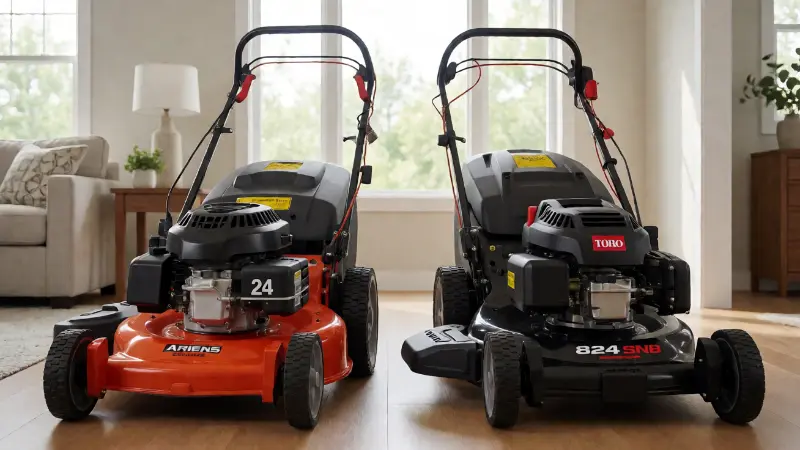
Both snowblowers use engines in the same displacement class, and on paper the power difference is small. The Ariens AX engine is a proven design with a reputation for torque and durability. The Toro Premium OHV engine is also well regarded and is shared across several Toro models. Owners and forum comparisons often describe the engines as roughly equal in quality, with the Ariens offering a slight edge in low-end grunt that shows up when the auger bites into wet, heavy snow.
The Ariens uses a dual-belt drive for the impeller, which is designed to resist slipping under heavy loads. That matters when you are clearing the dense, plowed snow at the end of a driveway. The Toro uses a single-belt setup in this trim, though its Anti-Clogging System is designed to keep snow moving through the chute rather than packing in. The Toro system redirects snow back into the auger when the intake begins to overload, which can reduce the frequency of chute clogs.
One notable difference is the Ariens gear case. The Deluxe 24 uses a cast-iron gear case with alloy gears, and Ariens backs that component with a five-year warranty. The Toro uses hardened gears in its auger gearbox and, notably, does not use shear pins. Instead, Toro designs the system to stall the engine if the auger hits something hard, which protects the gearbox without requiring pin replacement. That is a meaningful convenience for owners who have spent time drilling out broken shear pins in the cold.
If you are comparing long-term engine reliability, both brands have their share of satisfied owners and reported failures. Ariens engine issues are not unheard of, and some owners have reported ignition coil or drive-related failures. Toro owners have reported gearbox and belt issues in some cases. The difference is less about which engine is fundamentally better and more about the specific unit and how it is maintained.
Clearing Performance: Width, Height, and Throw Distance
The Ariens Deluxe 24 has a slight advantage in intake height, at 21 inches versus 20 inches for the Toro. That extra inch matters when you are facing tall plow berms at the end of the driveway or drifts that have piled up. A taller housing lets the machine take a bigger bite without ramming the pile repeatedly.
The bigger difference is the auger and impeller diameter. The Ariens uses a 14-inch impeller, which is larger than the Toro’s impeller in this trim. A larger impeller can move more snow per revolution and throw it farther, particularly in wet, heavy snow that tends to fall short from smaller machines. Ariens rates the Deluxe 24 for throws up to about 50 feet, while Toro rates the 824 OE for up to about 45 feet. Those figures are best-case scenarios, but the relative difference is consistent with owner reports.
The Toro’s smaller impeller and auger make it slightly less capable in deep, heavy snow, but the Anti-Clogging System helps compensate by keeping the chute clear. In light to moderate snow, the difference in throw distance is less noticeable. In wet, heavy snow or at the end of a long driveway, the Ariens tends to clear more aggressively.
For a typical suburban driveway with occasional plow berms, both machines are capable. For long driveways, rural properties, or areas that receive frequent heavy, wet snow, the Ariens has a performance edge. The Toro is not underpowered, but it is tuned more for maneuverability than maximum throw.
Drive System and Handling
Handling is where the two machines diverge most sharply. The Ariens Deluxe 24 uses Auto-Turn steering, a trigger-less system that senses the direction you lean and adjusts the wheel drive accordingly. In practice, this makes turning at the end of a pass nearly effortless. You do not squeeze triggers or wrestle the handles; the machine pivots with your body movement. Owners who have used both systems often praise Auto-Turn for reducing fatigue on large driveways.
The Toro 824 OE uses a friction-disc drive with six forward and two reverse speeds, but it does not have an auto-steer system at this trim. You turn the machine by muscling it, which is manageable because the Toro weighs significantly less than the Ariens. At around 184 pounds, the Toro is roughly 60 pounds lighter. That lighter weight makes it easier to push, load, and maneuver in tight spaces, even without power steering.
There is a trade-off. The Ariens is heavier, which can translate to better traction and stability in deep snow. The Toro’s lighter weight makes it more agile but can cause it to ride up on packed snow or ice in some conditions. Owners of lighter machines sometimes report that the blower tends to skip or climb over hard-packed surfaces rather than biting in. The Ariens, with its greater weight and larger tires, tends to stay planted.
Neither system is objectively better; they suit different users. If you have a large driveway with many turns and you want to reduce physical effort, the Ariens Auto-Turn is a clear advantage. If you have a smaller, flatter driveway and you value easy maneuverability and lighter weight, the Toro’s simpler system is entirely adequate. If you are unsure which model year you are looking at, a guide on decoding your Ariens snowblower year can help confirm the specs for a specific machine.
Chute Control and Operator Comfort
The Ariens Deluxe 24 uses a dash-mounted remote chute and deflector control with 200-degree rotation. You can adjust the chute direction and deflector angle without leaving the handles, which is useful when the wind shifts or you need to direct snow to a different part of the yard. The control is mechanical and has a proven track record, though some owners find it less intuitive than a joystick at first.
The Toro’s Quick Stick joystick is a standout feature. It lets you move the chute and deflector together with one hand in a single motion. The joystick is mounted on the dashboard and is easy to reach, and the single-hand operation frees your other hand for the drive controls. Owners consistently praise the Quick Stick for its convenience, though a few question how the plastic components will hold up over many seasons of heavy use.
Neither machine includes heated grips as standard equipment at this trim, which is worth noting if you clear snow in bitter cold for extended periods. Heated grips can often be added as an accessory. The Ariens has a reputation for a more robust handle and control layout, while the Toro’s controls are designed for simplicity and one-handed use. The Toro’s steel chute and heavy-duty handles are built to take abuse, and the Quick Stick is a genuine ergonomic advantage for frequent chute adjustments.
Build Quality and Durability
The Ariens Deluxe 24 is often described as the heavier-duty machine. Its cast-iron gear case, steel serrated auger, and larger impeller contribute to a sense of solid construction. The frame and housing are designed for long service, and the machine carries a five-year warranty on the gear case, which signals confidence in that critical component. The trade-off is weight: at around 246 pounds, it is not a machine you want to move up stairs or load into a truck regularly.
The Toro 824 OE is lighter and uses a mix of steel and composite components. Its steel chute and heavy-duty handles are durable, and the absence of shear pins simplifies maintenance. However, some owners report that the overall materials feel less substantial than the Ariens. Reports of belt wear, pulley issues, and occasional gearbox problems exist, though many owners run their Toros for years without major issues. The lighter build is not inherently fragile, but it is designed for residential use rather than commercial abuse.
Long-term durability depends heavily on maintenance. Oil changes, fresh fuel, belt inspection, and proper storage matter more than brand loyalty. The Ariens gear case is a known weak point in some older or heavily used units, and gearbox leaks have been reported. The Toro’s friction-disc drive is simple and repairable, but belt and pulley wear can occur. Neither machine is immune to problems, but the Ariens has an edge in component robustness for heavy use.
If you are maintaining an Ariens machine, proper lubrication of the gear case is important. The guide on Ariens L3 gear lube tips covers the specifics for keeping that component healthy. For Toro owners, regular belt inspection and keeping the friction disc clean are the equivalent maintenance priorities.
Owner Reviews and Common Complaints
Owner feedback for both machines is mixed, which is typical for consumer snowblowers. The Ariens Deluxe 24 earns praise for its throwing power, Auto-Turn steering, and sturdy construction. Common complaints include the machine’s weight, occasional belt-throwing issues, and the cost of replacement parts. Some owners have reported ignition coil failures, gearbox leaks, and drive shaft problems, though these are not universal. The Auto-Turn system can feel jerky on uneven ground, and a few users find the throttle awkward.
The Toro 824 OE is praised for its lighter weight, easy maneuverability, and the Quick Stick chute control. The Anti-Clogging System is a genuine benefit in wet snow, and the lack of shear pins simplifies maintenance. Complaints include the machine riding up on packed snow, belt and pulley wear, and occasional gearbox issues. Some owners feel the materials are less premium than the Ariens, and a few have reported engine problems requiring dealer service.
Forum discussions often summarize the choice as a durability-versus-agility trade-off. One owner put it simply: Ariens is the one to buy if you want something that will probably last longer, while Toro is the choice if you want something lighter and easy to finesse. That sentiment aligns with the engineering differences between the two machines.
It is worth noting that both brands have electronic fuel injection (EFI) variants and other models with different features. The comparison here is specific to the Deluxe 24 and the Power Max 824 OE. If you are considering an EFI-equipped Ariens, the guide on common Ariens EFI problems is a useful resource for understanding potential issues before you buy.
Price, Value, and Resale
The Toro Power Max 824 OE typically costs less than the Ariens Deluxe 24, often by a meaningful margin. The price gap reflects the Ariens’s heavier construction, larger impeller, and Auto-Turn steering. For budget-conscious buyers, the Toro offers a capable machine at a lower entry point. For buyers who plan to keep the machine for a decade or more and want the extra capability, the Ariens premium can be justified.
Resale value is another factor. Ariens snowblowers, particularly the Deluxe series, tend to hold their value well in the used market. Used Deluxe 24s often sell for a significant fraction of their original price, which reduces the net cost of ownership. Toro snowblowers also hold value reasonably well, but the Ariens has a stronger reputation among enthusiasts and professionals, which supports resale.
Neither machine is an investment, but the total cost of ownership matters. A lower purchase price with more frequent repairs can erase the initial savings. A higher purchase price with fewer problems and better resale can be the better financial choice over time. The right answer depends on your expected lifespan, your willingness to maintain the machine, and the severity of your winters.
Which Snowblower Should You Choose?
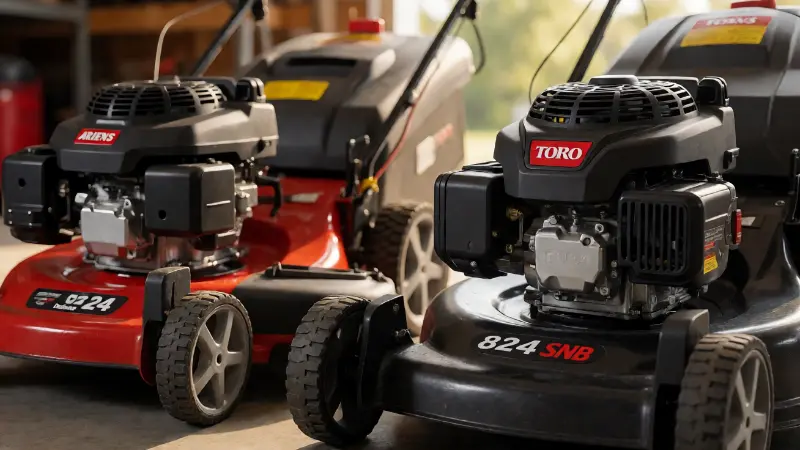
Choose the Ariens Deluxe 24 if you have a long driveway, face heavy or wet snow regularly, want the confidence of Auto-Turn steering, and value a heavier, more substantial machine with a strong gear case warranty. It is the better choice for buyers who prioritize throwing power and long-term durability over light weight and a lower price.
Choose the Toro Power Max 824 OE if you want a lighter, more maneuverable machine for a typical suburban driveway, appreciate the Quick Stick chute control, and prefer the simplicity of a shear-pin-free auger system. It is the better choice for buyers who clear moderate snowfall, value ease of use, and want to spend less upfront.
If your driveway is small and flat, either machine will serve you well, and the Toro’s lower price and lighter weight may be the deciding factors. If your driveway is large, sloped, or exposed to heavy plow berms, the Ariens’s extra power and Auto-Turn steering are worth the additional cost and weight. Neither choice is wrong; the key is matching the machine to the work it will actually do.
FAQ
Is the Ariens Deluxe 24 better than the Toro 824?
Neither is universally better. The Ariens offers more throwing power, a larger impeller, and Auto-Turn steering, while the Toro is lighter and easier to maneuver. The better choice depends on your driveway size, typical snow conditions, and whether you prioritize durability or agility.
Does the Toro 824 have power steering?
The Toro Power Max 824 OE does not have an auto-steer or power steering system at this trim. It relies on its lighter weight to remain maneuverable, and owners turn it manually. The Ariens Deluxe 24, by contrast, uses Auto-Turn steering that follows the operator’s lean.
Why doesn’t the Toro 824 use shear pins?
Toro designs its auger system to stall the engine if the auger hits a hard object, rather than using shear pins that break to protect the gearbox. This eliminates the need to replace pins, though it means the engine may stall in certain conditions. The system is designed to protect the gearbox without user intervention.
Which snowblower is easier to maintain?
The Toro is generally simpler to maintain because it has no shear pins and uses a straightforward friction-disc drive. The Ariens requires periodic gear case lubrication and belt inspection, but its components are robust. Both machines benefit from fresh fuel, regular oil changes, and proper off-season storage.
Can I add heated grips to either machine?
Heated grips are not standard on either model at this trim, but they can often be added as an accessory. Check the manufacturer’s accessory catalog for compatibility. Some higher trims of both brands include heated grips from the factory.