An engine that fires up and then quits after a few seconds is one of the most common snowblower complaints, and it is also one of the most diagnosable. The pattern itself is the clue. The machine starts, which means you have spark, compression, and at least some fuel. Then it dies, which means something that was supplying one of those three is being cut off shortly after startup. The engine is not failing to run; it is running out of what it needs.
This guide works through the causes in the order that matches the symptom, starting with the ones that produce exactly this behavior and moving toward the less likely ones. It covers venting, fuel delivery, carburetor metering, oil shutdown systems, and ignition faults, plus the seasonal mistakes that cause the same complaint every first storm. Each section explains why the fault produces a short run rather than a no-start, so you can match your machine’s behavior to the right fix.
Safety First: Prepare the Machine Before You Diagnose
Work outdoors or in a well-ventilated space, and keep the machine away from pilot lights, water heaters, and anything that can spark. Gasoline vapor is heavier than air and can travel along a floor, so a garage with a gas appliance is not a safe diagnostic space. Let the engine cool before you open the fuel system, and keep a rag and a drip pan under the work area.
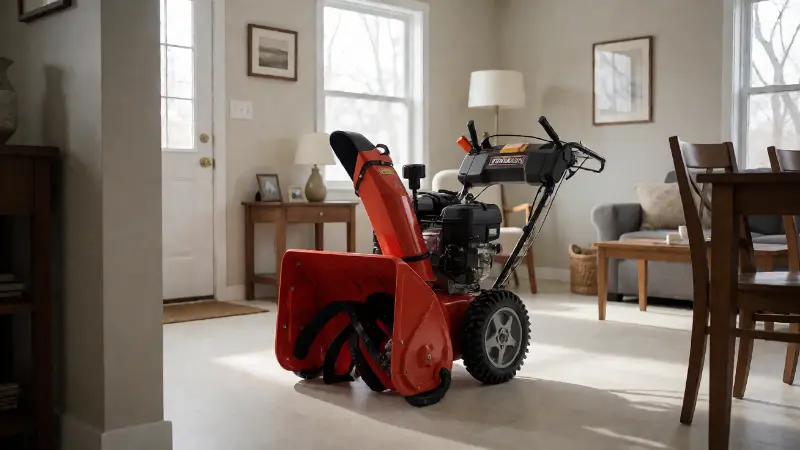
Disconnect the spark plug wire before you reach near the auger, the impeller, or any rotating part, and remove the key on electric-start models. Wear eye protection when working around fuel and carburetor cleaner. If you smell strong fuel or see a steady leak, stop and fix the leak before testing the engine, since a running engine next to a fuel leak is a fire risk.
One more safety point that gets overlooked: never run the engine indoors to “see if it stays running.” Carbon monoxide is odorless and builds quickly in a closed space. If you need to test a repair, do it outside with the machine on a level surface and the chute pointed away from people and property.
Cause 1: A Clogged Fuel Cap Vent
This is the classic cause of a snowblower that runs for a few seconds and then dies, and it is often the first thing a small-engine mechanic checks. Fuel tanks are vented so that air can enter as fuel leaves. If the vent is clogged with debris, ice, or dried fuel residue, the tank cannot equalize pressure. The engine draws fuel for a moment, a partial vacuum forms in the tank, and fuel flow stops. The engine dies. Wait a minute and try again, and it may start and die in the same pattern.
The tell is the pattern: it starts reliably, runs for a consistent short period, dies, and restarts after a pause. If you loosen or remove the fuel cap and the engine then runs normally, you have confirmed the diagnosis. Do not run the machine with the cap off as a permanent fix, because fuel can splash out and debris can enter the tank. Clean the vent passage, or replace the cap with the correct part for your model.
Vent clogging is especially common after off-season storage. Fuel residue, dust, and insect nesting can all block the small vent hole. Inspect the cap closely, and if you cannot see through the vent or clear it with a thin wire, replace it. A cap is inexpensive compared with the time spent chasing a fuel problem that is really a venting problem.
Cause 2: Fuel Supply Problems Between Tank and Carburetor
If the cap is fine, look at the path the fuel takes to reach the carburetor. A partially blocked fuel filter, a failing shut-off valve, a collapsed or kinked fuel line, or a clogged tank outlet screen can all deliver enough fuel for a few seconds of running and then fall behind demand. The engine uses the fuel sitting in the carburetor bowl, then starves.
Inspect the fuel line along its full length for cracks, soft spots, and kinks. A line that is collapsing internally can look fine from the outside and still restrict flow. Check the shut-off valve by opening and closing it and confirming that fuel flows freely when open. If the machine has an inline filter, replace it rather than trying to clean it, since filters are inexpensive and a partially restricted filter is hard to assess by eye.
Drain a small amount of fuel into a clear container and let it settle. Water in the fuel separates and sits at the bottom, and a slug of water reaching the carburetor will stall the engine shortly after startup. Stale fuel with varnish and gum can also clog passages and screens. If the fuel looks cloudy, smells sour, or shows a visible water layer, drain the tank and refill with fresh fuel before continuing.
The primer bulb is part of this system on many machines. A bulb that is cracked, hardened, or not returning to shape can affect starting and fuel delivery, though it usually causes a no-start rather than a short run. Check it while you are in the area so you are not revisiting the same fuel lines twice.
Cause 3: Carburetor Metering Faults
The carburetor holds a small reservoir of fuel in the bowl, regulated by a float and needle valve. If the needle is sticking, the float is set wrong or saturated, or the inlet seat is partially blocked, the bowl may fill slowly or not refill fast enough once the engine starts drawing fuel. The engine runs on the bowl’s contents, then leans out and dies. This produces a very consistent short-run pattern.
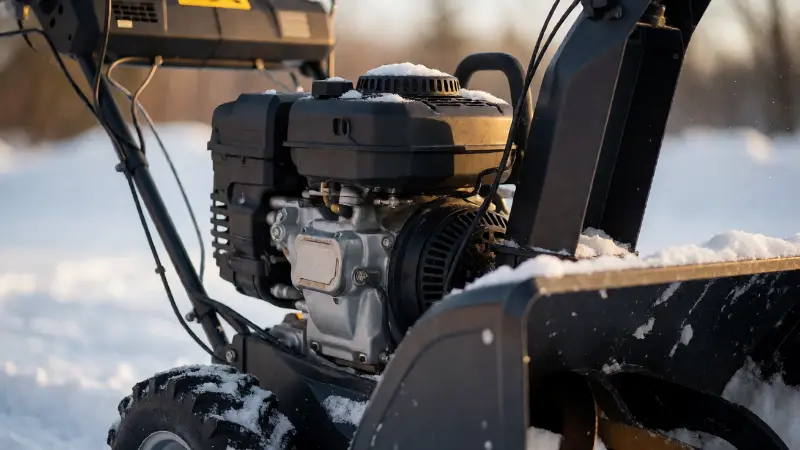
Dirty main or idle jets cause a related symptom, though they more often produce surging or rough running than an immediate stall. A machine that ran fine last season and now dies after a few seconds is a strong candidate for a gummed-up carburetor, especially if it was stored with fuel in the bowl. Modern ethanol-blended fuel is a common contributor, because it attracts moisture and leaves deposits as it evaporates.
A carburetor clean and rebuild is within reach for a careful DIYer. Remove the bowl, inspect the float for fuel inside it, clean the passages with carburetor cleaner and compressed air, and replace the bowl gasket, needle, and seat if a kit is available. Work over a tray so small parts do not disappear, and take photos as you disassemble. If the throttle shaft is worn or the body is corroded, replacement is usually more reliable than a rebuild.
One adjustment worth checking before you rebuild: the idle mixture screw. If it has been turned in too far or backed out, the engine can start and then stall. Count the turns as you remove it so you can return it to the same position, then follow the manual for the baseline setting. Do not force any adjustment screw past its stop.
Cause 4: Low-Oil Shutdown and Other Safety Interlocks
Many snowblower engines are equipped with a low-oil sensor that shuts the engine down to protect it from running without lubrication. The behavior can look exactly like a fuel problem: the engine starts, runs briefly, and stops. Some units will not restart until the oil level is corrected, while others restart and repeat the cycle. Check the oil level on a level surface with the engine off, and top up to the correct mark using the grade specified in the manual.
If the oil level is correct but the engine still shuts down, the sensor itself may be faulty, or the wiring to it may be damaged. A sensor that is stuck or a connector that is loose can trigger a shutdown that looks random. Do not disconnect the sensor as a workaround. It exists to protect the engine, and disabling it turns a minor inconvenience into a potentially expensive failure.
Other interlocks can produce similar symptoms. The auger and drive control levers must be in their neutral or disengaged positions for starting on many models, and a sticking lever or a misadjusted cable can engage a safety switch that kills the engine. Check that both levers move freely and return fully, and inspect the cables for binding. If the machine has a seat or presence switch, confirm it is functioning as designed.
Cause 5: Ignition and Electrical Faults
Ignition problems are less likely to produce a clean few-seconds run and a clean stall, but they can. A failing ignition coil can work when cold and break down as it heats, which produces a run-then-die pattern that repeats more reliably the warmer the engine gets. A spark plug with the wrong gap or a cracked insulator can also cause intermittent firing. Start with the simple checks: inspect the plug, confirm the gap, and replace it if it looks fouled or worn.
The kill switch and its wiring deserve a look. A chafed wire or a switch that is partially engaged can ground the ignition after the engine starts vibrating. Trace the wire from the switch to the coil and look for bare spots, pinched sections, or a loose connector. If the engine dies when you wiggle the harness, you have found the area to repair.
Testing spark properly means checking for a strong, consistent spark with the plug grounded against the engine block while you crank. A weak or intermittent spark points toward the coil, the plug, or the wiring rather than the fuel system. If you are not comfortable testing ignition components, a small-engine shop can do it quickly and save you from replacing parts at random.
Cause 6: Choke, Airflow, and Exhaust Restrictions
A choke left partially on after the engine warms can cause rich running and a stall, though it more often causes rough running and black smoke than an immediate shutdown. Check that the choke linkage moves through its full range and returns to the run position. On machines that have sat, the linkage can bind or the cable can stick.
A severely clogged air filter can cause rich running and stalling, and a blocked exhaust or a crushed muffler can cause the engine to lose power and quit. These are less common than fuel and oil issues, but they are easy to rule out. Inspect the air filter, clean or replace it as needed, and check that the exhaust outlet is clear and the muffler is not damaged.
A machine stored with a cover or in a shed can also accumulate a nest in the air intake or the cooling fins. Debris in the cooling passages causes overheating, and an overheated engine can shut down and then restart after it cools. Clean the cooling fins and the intake area as part of your seasonal service.
Comparing Short-Run Symptoms and Their Causes
The table below maps the behavior you observe to the most likely cause. Use it to prioritize your checks, then confirm with a physical inspection rather than replacing parts on a guess.
| Observed behavior | Most likely cause | Quick confirmation | Typical fix |
|---|---|---|---|
| Starts, runs a consistent few seconds, dies, restarts after a pause | Clogged fuel cap vent | Loosen the cap and retest | Clean or replace the cap |
| Starts, dies under load or when the throttle is advanced | Restricted fuel flow from filter, line, or valve | Check flow at the fuel line and inspect the filter | Replace filter and lines; clear the valve |
| Starts, runs briefly, then leans out and stalls repeatedly | Carburetor needle, seat, or jet issue | Inspect the bowl and needle; check for varnish | Clean or rebuild the carburetor |
| Starts, shuts down within seconds, will not stay running | Low-oil sensor or oil level | Check oil level on a level surface | Top up oil; repair sensor if level is correct |
| Runs longer when cold, dies as it warms, restarts after cooling | Failing ignition coil or plug | Check spark quality when hot | Replace plug or coil |
| Runs rough, surges, then stalls; black smoke possible | Choke stuck on or air filter clogged | Check choke linkage and filter | Free the linkage; clean or replace the filter |
A Practical Diagnostic Sequence
Work from the simplest and least invasive checks toward the more involved ones. This order avoids opening the carburetor when the real problem is a clogged cap, and it avoids replacing ignition parts when the fuel system is starving the engine.
- Check the oil level on a level surface with the engine off. Correct it if needed and retest. This takes a minute and rules out a common shutdown cause.
- Loosen the fuel cap and retest. If the engine now stays running, clean or replace the cap vent.
- Drain and inspect the fuel. Look for water and contamination, and refill with fresh fuel if anything looks off.
- Inspect the fuel line, filter, and shut-off valve. Confirm steady flow to the carburetor and replace restricted components.
- Check the choke linkage and air filter. Confirm the choke returns to the run position and the filter is not clogged.
- Inspect the spark plug and test for consistent spark. Replace a fouled or worn plug, and check the kill switch wiring for chafing.
- Clean or rebuild the carburetor only after the simpler checks are cleared, using a kit matched to your engine.
Test after each step rather than making several changes at once. If the engine starts staying running after one change, you know what fixed it, and you avoid creating a new problem with an unnecessary repair. Keep notes on what you checked so a repeat issue is easier to diagnose next season.
Related Symptoms That Can Confuse the Diagnosis
Not every short-run complaint is an engine problem. If the engine runs fine but the machine will not move, the fault is in the drive system rather than the fuel system, and a guide to Ariens wheels locked up covers the common traction and drive causes. Separating an engine stall from a drive failure early saves a lot of unnecessary carburetor work.
Traction issues can also make a healthy engine feel like it is failing under load. If the machine spins or slips when you engage the drive, check tire condition and inflation before assuming a power problem, and a reference on Ariens snowblower tire pressure explains how uneven pressure affects grip and handling.
A machine that runs but surges or hunts for speed is a different fault pattern from one that dies outright. If your engine stays running but will not hold a steady speed, the guide to Ariens snowblower engine surging covers the lean-condition and governor causes that produce that behavior instead.
Prevention: Stop the Problem Before Next Season
Most short-run failures trace back to storage. Fuel left in the tank and bowl for months evaporates, leaves varnish, and clogs the small passages that the engine depends on. Before off-season storage, run the engine with the fuel valve closed until it stalls, or drain the tank and bowl completely. If you leave fuel in the machine, add a stabilizer and run it through the system so it reaches the carburetor.
Store the machine in a dry area with the cap vent clear and the cooling fins clean. Check the oil level at the start of the season, inspect the fuel lines and filter, and replace the spark plug as part of routine service. These steps take less time than a single diagnostic session in a cold garage, and they address the causes that produce the run-then-die pattern most often.
If the machine has been sitting for more than a season, assume the fuel system needs attention before you try to start it. Fresh fuel and a clean carburetor solve the majority of these complaints, and starting with old fuel often just moves the problem around. When a repair does not hold, revisit the basics rather than adding new parts on top of an unresolved fuel delivery issue.
FAQ
Why does my snowblower start and then die after a few seconds?
The most common cause is a clogged fuel cap vent that creates a vacuum and stops fuel flow. Other likely causes include a restricted fuel filter or line, a carburetor needle or jet issue, a low-oil shutdown, or a failing ignition coil. The consistent short-run pattern points most often to fuel delivery.
How can I test the fuel cap vent quickly?
Start the engine and let it die as usual, then loosen or remove the fuel cap and restart. If the engine now stays running, the vent is clogged. Clean the vent passage or replace the cap rather than running with it loose.
Can low oil cause a snowblower to start and then stop?
Yes. Many engines have a low-oil sensor that shuts the engine down to protect it. The behavior can look exactly like a fuel problem. Check the oil level on a level surface with the engine off and top up to the correct mark before chasing other causes.
Will fresh fuel fix a snowblower that dies after starting?
It can, if the old fuel is stale or contaminated with water. Drain the tank and refill with fresh fuel, and if the carburetor bowl contains varnish or water, clean it as well. Fresh fuel alone will not clear a blocked jet or a clogged cap vent.
When should I stop diagnosing and take the machine in?
Stop if you smell a strong fuel leak you cannot locate, if the engine shows no spark after basic checks, or if you have cleaned the fuel system and the problem persists. A small-engine shop can test ignition components and compression quickly, which is often cheaper than replacing parts at random.