A propane heater that flares up is alarming for good reason. A sudden burst of flame, a flash of orange outside the burner, or a flame that rolls and lifts can mean unburned gas is igniting where it should not, and that is a genuine safety concern rather than a cosmetic quirk. The reassuring part is that most flare-ups trace to a small set of well-understood causes, and the troubleshooting steps are documented in every heater manual for a reason.
This guide explains what a flare-up actually looks like, why it happens, and the checks that resolve it most often. It covers blocked mixing tubes, clogged orifices, regulator and excess-flow issues, air and venting problems, and flame-spreader behavior that some heaters exhibit by design. It also covers the checks you should never skip and the situations where the heater should stay off until a qualified technician inspects it.
What a Flare-Up Actually Looks Like
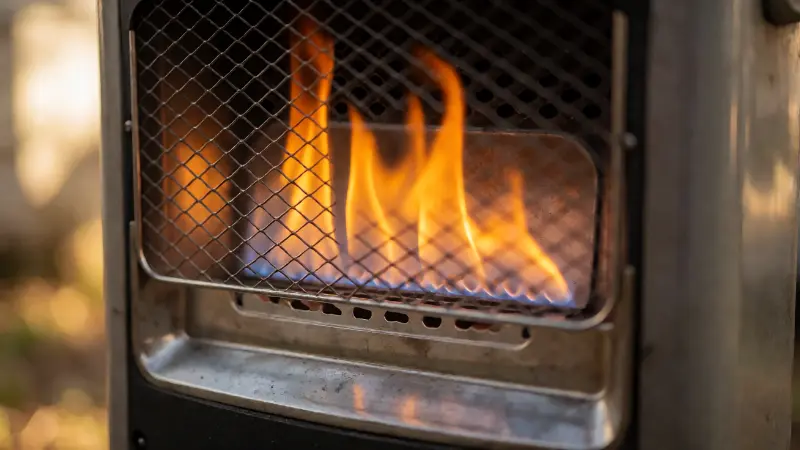
Terminology matters here because different flame problems have different causes. A flare-up usually means a sudden, uncontrolled burst of flame, often accompanied by a whoosh or a pop. A flashback is flame burning back inside the burner tube or mixing chamber rather than at the burner ports. A lifting flame is one that rises off the burner surface and burns above it, sometimes with a roaring sound. A yellow, lazy flame with black soot is a combustion problem rather than a flare-up, but it often appears alongside one.
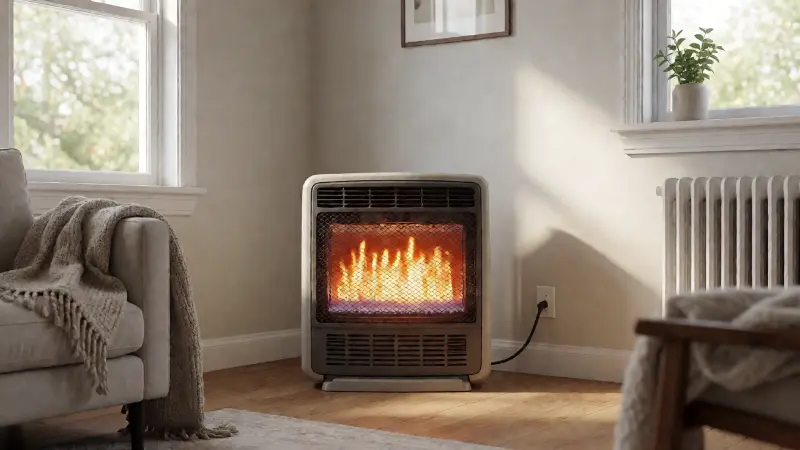
The heater manual for a tank-top construction heater lists the symptom as “excessive flames coming out of burner, not glowing red,” and traces it to debris or spider webs in the mixing tube or a clogged orifice[reference:0]. Another manual describes “flames flashback/burn inside the mixing tube” with the same two causes[reference:1]. That consistency across brands is useful: when flame appears where it should not, the first suspects are air and gas passageways.
A catalytic heater behaves differently. The manufacturer of one catalytic model explains that a flare-up on startup is caused by the flame spreader warming the thermocouple, and states that there is no way to correct it because that is how the unit is designed to operate[reference:2]. If you have a catalytic heater, check the manual before assuming a fault. What looks like a malfunction may be normal startup behavior for that design.
Safety First: When to Stop and Shut It Down
Shut off the gas supply immediately if you smell gas, if the flame is rolling or roaring outside the heater, if you see soot or black smoke, or if the heater makes a popping or whooshing sound on ignition. Do not try to relight it until the cause is understood. The manuals are explicit on this point: if you smell gas, shut off the supply, do not light any appliance, do not touch electrical switches, and call your gas supplier from a neighbor’s phone[reference:3].
Wait at least five minutes after shutting off the gas before attempting to relight, so any accumulated gas can dissipate. One manual warns specifically that holding the control knob in for more than ten seconds before igniting will cause a ball of flame on ignition[reference:4]. That is a useful reminder that some flare-ups are operator-induced rather than mechanical.
Never service a heater while it is connected to the propane supply, operating, or hot. Severe burns can occur, and the manuals warn against it directly[reference:5]. Let the unit cool completely, disconnect the tank, and work outdoors or in a well-ventilated space. If the heater is a vent-free indoor model, do not operate it in a bedroom or as a primary heat source, and make sure the space has adequate ventilation[reference:6].
Cause 1: Debris or Spider Webs in the Mixing Tube
This is the most common cause of flare-up and flashback on propane heaters, and it is the one the manuals mention first. The mixing tube is where gas and primary air combine before reaching the burner. Spiders, insects, and lint can build nests or webs inside the tube, disrupting the air-fuel ratio and causing flame to burn in the wrong place. The result can be a flare-up at startup or a flashback that burns inside the tube.
The fix is mechanical cleaning. Shut off the gas, disconnect the tank, and let the heater cool. Remove the burner tube if the design allows, then clean it with a bottle brush. One manual recommends rinsing the tube in water and draining it thoroughly before reinstalling[reference:7]. Make sure the tube is completely dry before reassembly, since moisture can cause ignition problems. Compressed air at low pressure can help clear loose debris, but do not use a wire or needle to clean the burner or pilot, because that can damage the orifices[reference:8].
Inspect the air inlet holes on the orifice holder as well. These small holes meter the primary air, and lint, dust, or pet hair can block them. The manual for one vent-free heater notes that blocked air holes create soot and recommends cleaning them before every heating season and at least every three months during use[reference:9]. A soft brush, a vacuum, or low-pressure compressed air is enough.
Cause 2: A Clogged or Damaged Burner Orifice
The orifice is the small precision opening that meters gas into the burner. It is deliberately tiny, which makes it vulnerable to dust, insect debris, and corrosion. A partially blocked orifice changes the gas flow and can produce a flare-up, a lazy flame, or a flame that burns with too much yellow. A damaged or oversized orifice has the same effect, and one troubleshooting table lists “burner orifice too large” as a cause of a flame that is too large, along with a defective gas valve and a malfunctioning pressure regulator[reference:10].
Clean the orifice with compressed air or a soft brush, never with a wire or a drill bit. Enlarging the opening even slightly changes the gas flow and can make the heater unsafe. If the orifice is corroded, damaged, or cannot be cleared, replace it with the exact part number for your model. A troubleshooting guide for one heater line recommends replacing the burner nozzle when the orifice is blocked[reference:11].
The orifice holder and the pilot air inlet are part of the same assembly, so clean them together. A yellow tip on the pilot flame is a specific sign that the pilot assembly is dirty, and the fix is to blow air through the small pilot air inlet hole, which sits a short distance from where the flame emerges[reference:12]. A drinking straw works if you do not have compressed air.
Cause 3: Regulator and Excess-Flow Device Problems
The regulator controls the pressure of the gas leaving the tank, and the excess-flow device is a safety feature that restricts flow if it detects a sudden rush, such as from a disconnected hose or a broken fitting. Both can cause flare-up symptoms or the opposite problem of a weak flame. A regulator that is set incorrectly, is defective, or is not matched to the heater can deliver the wrong pressure, and one manual lists “regulator not in the low position” and “excess flow device triggered” among the causes of excessive flames[reference:13].
If you suspect the excess-flow device has tripped, close the tank valve completely, wait a few minutes, and reopen it slowly. Opening the valve too quickly can trigger the device again. If the problem repeats every time you open the valve, the hose or regulator may have a restriction or a leak, and that needs to be found before the heater is used. A regulator that is damaged, corroded, or visibly worn should be replaced rather than adjusted.
Regulator adjustment is not a homeowner task on most heaters. One service manual states plainly that the regulator must be adjusted by a qualified serviceman using proper tools and instruments[reference:14]. If you have confirmed that the tank is full, the valve is open, and the hose is clear, and the flame is still wrong, the regulator is the next component to have tested or replaced.
Cause 4: Air Supply, Drafts, and Venting Problems
Propane heaters need a specific ratio of gas to primary air for clean combustion. When the air supply is disrupted, the flame can lift, float, waver, or turn yellow, and the heater may flare or pop on ignition. Drafts are a common culprit. A door, a window, or a fan moving air across the burner can push the flame away from the burner ports or blow out the pilot. One reference notes that drafts across burners cause flames to waver, and that protecting the pilot with a baffle can solve it[reference:15].
Blocked venting is a separate air problem on vented heaters. A blocked flue or draft hood can cause a floating flame, and the correction is to clean the flue passageways[reference:16]. On a vent-free heater, there is no flue, but the unit still needs adequate fresh air, and the oxygen depletion sensor will shut the heater down if oxygen levels fall. If the heater keeps shutting down in a small, tightly sealed room, ventilation is the issue rather than the burner.
Lint and dust are a slow-motion version of the same problem. A linted-up air shutter or a dust-covered burner reduces primary air and causes yellow tipping, which is incomplete combustion. One technical reference explains that yellow tipping is caused by a lack of primary air, often from lint and dust blocking the air openings or collecting inside the burner tube[reference:17]. Cleaning the burner and air passages restores the air-fuel balance.
Cause 5: Thermocouple, Safety Valve, and Ignition Faults
The thermocouple is a safety device that senses the pilot flame and holds the gas valve open. If it is loose, mispositioned, or failing, the heater may light and then go out, or it may behave erratically on startup. A thermocouple that is not sitting in the pilot flame can cool and shut the valve, and a loose connection at the control valve produces the same result. The fix is to tighten the connection or replace the thermocouple[reference:18].
Ignition components can also contribute to a flare-up. A piezo igniter that sparks weakly, an electrode that is misaligned, or a wire that is frayed can cause delayed ignition, which means gas builds up before it lights. When it finally ignites, the result is a pop or a ball of flame. Check the spark gap and the electrode position against the manual, and replace damaged wires or igniters. One heater manual specifies a spark gap and notes that a misaligned igniter should be realigned with the burner mesh or thermocouple shield[reference:19].
A gas valve that is sticking or defective can also cause irregular flame behavior. This is not a component to rebuild at home. If the valve does not respond smoothly, or if the flame changes when you move the control knob, have the valve inspected or replaced by a qualified technician.
Comparing Flare-Up Symptoms and Their Causes
The table below maps the behavior you observe to the most likely cause and the appropriate response. Use it to prioritize checks, and confirm each finding with a physical inspection before replacing parts.
| Observed behavior | Most likely cause | Quick check | Typical fix |
|---|---|---|---|
| Flame flashes or burns inside the burner tube | Debris or spider webs in the mixing tube | Inspect the tube with a light | Clean with a bottle brush; dry thoroughly |
| Excessive flame, not glowing red, with a roaring sound | Clogged or oversized orifice | Inspect the orifice for debris | Clean with air; replace if damaged |
| Flare-up on startup, then normal operation | Delayed ignition or trapped gas | Check ignition timing and electrode gap | Realign or replace igniter; follow lighting steps |
| Flame lifts, floats, or wavers | Drafts, blocked venting, or air shutter issue | Check for drafts and flue blockage | Eliminate drafts; clean flue and air passages |
| Yellow flame with soot or black smoke | Insufficient primary air; dirty burner | Inspect burner ports and air openings | Clean burner and air passages |
| Heater lights then goes out; repeated relighting needed | Thermocouple or safety valve fault | Check thermocouple position and connection | Tighten or replace thermocouple |
Step-by-Step Troubleshooting Sequence
Work from the outside in, and stop at the first problem you find. Making several changes at once makes it impossible to know what fixed the issue, and it can introduce a new fault.
- Shut down and cool. Turn off the gas, disconnect the tank, and let the heater cool completely before touching anything.
- Check the tank and valve. Confirm the tank has fuel, the valve is open, and the connection is tight. If the excess-flow device may have tripped, close the valve, wait, and reopen slowly.
- Inspect the hose and regulator. Look for cracks, kinks, and worn fittings. Replace damaged parts with the manufacturer’s specified components.
- Clean the mixing tube and burner. Remove debris with a bottle brush and low-pressure air, then confirm the tube is dry before reassembly.
- Clean or replace the orifice. Use air or a soft brush only; never enlarge the opening with a wire or drill.
- Check the ignition system. Confirm the spark is strong, the electrode is aligned, and the wire is intact.
- Check the thermocouple. Make sure it sits in the pilot flame and the connection is tight.
- Test in a safe location. Relight outdoors or in a well-ventilated space, following the manual’s lighting procedure exactly, and watch the flame pattern.
If the flare-up persists after these steps, or if you find soot, a cracked component, or a gas smell you cannot trace, stop and have the heater inspected by a qualified service person. The manuals are consistent on this: only a qualified technician should service and repair the heater beyond basic cleaning[reference:20].
Related Heating and Combustion Problems
Flame problems are not unique to portable propane heaters, and understanding how combustion appliances fail can help you spot a similar issue elsewhere. A water heater burner that will not stay lit has its own diagnostic path, and a guide to Rheem water heater burner won’t stay lit covers the thermocouple, gas supply, and venting checks for that appliance.
Efficiency and venting choices also affect how a combustion appliance behaves in a house. If you are comparing heating options, a long-term cost analysis of tankless vs traditional water heaters explains how different designs handle venting and standby losses, which is useful context when thinking about any gas-fired equipment.
Newer technologies are changing the safety conversation as well. A look at piezoelectric water heaters shows how ignition and sensing systems are evolving, and why older mechanical safeties like thermocouples remain common on portable heaters even as other appliances move toward electronic controls.
Prevention and Seasonal Maintenance
Most flare-ups are preventable with a small amount of routine care. Clean the burner, pilot, and air inlet holes before every heating season, and inspect them at least every three months during heavy use. Keep the heater and its surroundings free of lint, dust, pet hair, and combustible materials. Store the unit with the tank disconnected and the fittings capped, and keep the burner and air passages covered to discourage insects.
Check the hose and regulator before each use. Look for cracks, cuts, and worn areas, and replace any damaged part with the manufacturer’s specified component rather than a generic substitute. Test connections with a soap-and-water solution and watch for bubbles, which indicate a leak that must be corrected before use[reference:21].
Follow the lighting instructions exactly. Holding the knob in longer than specified, opening the tank valve too quickly, or relighting before the gas has dissipated are all common operator errors that cause flare-ups. These are easy habits to fix, and they cost nothing.
FAQ
Why does my propane heater flare up when I turn it on?
A flare-up on startup is often caused by delayed ignition, which lets gas build up before it lights. It can also come from debris in the mixing tube or a clogged orifice. Follow the manual’s lighting procedure, check the ignition components, and clean the burner and tube if the problem repeats.
Is a flare-up always dangerous?
A brief flash on startup can be normal on some designs, particularly catalytic heaters, but a sustained flare, a roaring flame, soot, or a gas smell should be treated as a safety issue. Shut off the gas, ventilate the area, and do not relight until the cause is found.
Can spider webs really cause a propane heater to flare up?
Yes. Spiders and insects often nest in the mixing tube and air passages, disrupting the air-fuel ratio and causing flame to burn in the wrong place. Manufacturers list debris and spider webs in the mixing tube as a primary cause of flashback and excessive flame.
What should I do if the heater flares up and then goes out?
Shut off the gas, wait at least five minutes, and check the thermocouple, the gas supply, and the burner for debris. If the heater repeatedly lights and goes out, the thermocouple or safety valve may need service, and a qualified technician should inspect it.
Can I clean the orifice myself?
You can clean it with compressed air or a soft brush, but never use a wire, needle, or drill bit. Enlarging the opening changes the gas flow and can make the heater unsafe. If the orifice is damaged or cannot be cleared, replace it with the exact part for your model.