A water heater that cannot keep up in winter is a common frustration, and the timing is rarely a coincidence. The shower that ran hot in October now turns lukewarm halfway through, the dishwasher competes with laundry for the last of the hot water, and the tank seems to recover more slowly every week. The problem is usually a combination of colder incoming water and a system that is already working at reduced efficiency.
This guide separates the seasonal effects from the mechanical failures so you can tell what is normal, what is fixable, and what needs a professional. It covers the five most common causes, the checks a homeowner can safely perform, and the safety rules that apply to any gas or electric water heating appliance.
Why Winter Makes Hot Water Problems Worse
A storage tank water heater does not heat water instantly. It raises the temperature of whatever enters the tank, and the difference between the incoming water temperature and the set point is called the temperature rise. In winter, the incoming water is colder, so the heater has to work harder and longer to reach the same output temperature.

That effect is larger than most homeowners expect. Groundwater and municipal supply temperatures drop significantly in winter, and the colder the inlet water, the more energy each gallon requires. A heater that was keeping up with a 50°F inlet in mild weather may struggle when the inlet drops toward 40°F, even though nothing has mechanically failed.
Recovery time compounds the issue. A tank that reheats slowly after a heavy draw is normal to some degree, but in winter the recovery is slower because the temperature rise is larger. If the tank also has sediment, a failing element, or a thermostat that is set too low, the seasonal effect pushes a marginal system into obvious underperformance.
Demand also rises during the holidays. Guests take longer showers, the dishwasher runs more often, and laundry loads multiply. A tank sized for a quiet household can be overwhelmed by a full house, and the problem looks like a water heater failure when it is really a capacity and scheduling issue.
Cause One: Colder Inlet Water and an Underpowered Set Point
The simplest explanation is often the right one. If the water is hot enough at the start of a draw but runs out sooner than it used to, and the weather has turned cold, the inlet temperature is a major factor. The heater is not broken; it is being asked to do more work with the same equipment.
Start by checking the thermostat setting. Many water heaters are set around 120°F, which is a common safety and efficiency recommendation. In winter, a slightly higher set point can restore useful capacity because the stored water is hotter and requires less volume to reach a comfortable shower temperature when mixed with cold water.
If you raise the set point, do so carefully. Water above roughly 120°F increases the risk of scalding, especially for children and older adults. If the household includes anyone at risk, a mixing valve or a more modest adjustment is the safer approach. Follow the manufacturer’s guidance for the specific model rather than turning the dial to the maximum.
Insulating the hot water pipes, especially in unheated basements, crawl spaces, and garages, reduces heat loss between the tank and the fixture. That does not increase capacity, but it makes the hot water that reaches the tap closer to the temperature at the tank, which can make a marginal system feel more adequate.
Check the dip tube before blaming the weather
A broken dip tube can mimic a cold-weather problem. The dip tube carries incoming cold water to the bottom of the tank so it does not mix with the hot water at the top. When the tube cracks or detaches, cold water enters near the top and dilutes the hot supply, producing lukewarm water early in a draw and a shorter hot shower. The symptoms are similar to a seasonal capacity issue, but the fix is a replacement part rather than a thermostat adjustment.
Cause Two: Sediment Buildup Slowing Recovery
Over time, minerals in the water settle to the bottom of a tank water heater and form a layer of sediment. That layer sits between the burner or the heating element and the water, and it acts as insulation. The heater runs longer to transfer the same amount of heat, recovery slows, and the tank may produce rumbling or popping sounds as trapped water boils under the sediment.
Sediment is a year-round problem, but winter makes it more noticeable because the heater is already working harder against colder inlet water. A tank that was merely sluggish in summer can become clearly inadequate when the temperature rise increases. Flushing the tank according to the manufacturer’s instructions removes the loose sediment and restores heat transfer.
Flushing a tank water heater involves shutting off the power or gas, connecting a hose to the drain valve, and running water until it clears. The water is hot, and the valve can be difficult to operate on an older unit. If you are not comfortable with the procedure, or if the drain valve is plastic and brittle, have a plumber perform the flush as part of seasonal maintenance.
Annual flushing is the usual recommendation for homes with hard water, and some manufacturers specify a shorter interval. A tank that has never been flushed may have a hardened layer that a simple drain will not remove. In that case, a professional service is the better choice.
Cause Three: Failing Heating Elements or a Dirty Burner
On an electric water heater, the upper and lower heating elements work in sequence. The upper element heats the top of the tank first, and the lower element handles the bulk of the volume. If one element fails, the heater may still produce some hot water, but capacity drops noticeably. A failed lower element is a common reason a tank runs out quickly without ever going completely cold.
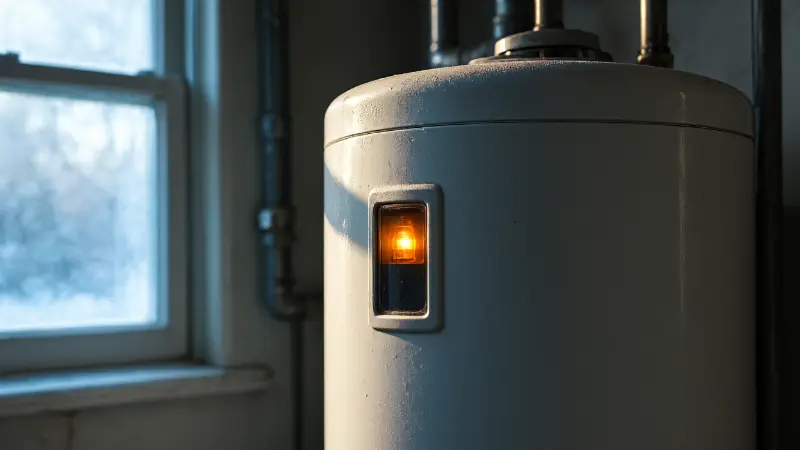
On a gas water heater, a dirty burner or a weak flame can reduce heat output without stopping the appliance entirely. Soot, debris, or a partially blocked burner can produce a lazy flame that heats slowly. A gas water heater that rumbles, smells unusual, or produces inconsistent heat deserves professional attention rather than a DIY adjustment.
Testing an electric element requires a multimeter and access to the element terminals, and it involves working with 240-volt components. If you are not trained to work safely around that voltage, call a technician. A simple check of the upper thermostat and element can often identify the fault, but the repair should be done with the power verified off.
A heating element that has failed is usually replaced rather than repaired. On an older tank, the cost of the part and labor should be weighed against the remaining life of the unit. A tank near the end of its expected service life may be a candidate for replacement rather than another repair.
Watch for a tripped high-limit switch
Electric water heaters have a high-limit switch that cuts power if the tank overheats. A tripped switch leaves the heater completely without heat until it is reset. The reset button is usually behind an access panel, and the procedure is described in the manual. If the switch trips repeatedly, stop resetting it and find the cause.
Cause Four: Thermostat Problems and Incorrect Settings
The thermostat tells the heater when to turn on and off. A thermostat that is set too low, that has drifted, or that has failed can leave the water lukewarm or cause the heater to shut off before reaching the set point. On a gas heater, the control knob can become worn or stuck, and on an electric heater the thermostat can lose calibration over time.
Check the setting first. Some heaters have a vacation mode or a low setting that was selected and never changed. Confirm that the thermostat is set to the normal operating range and that no one has adjusted it for a trip or a seasonal change. A simple adjustment can resolve a surprising number of complaints.
If the setting is correct but the water is still not hot enough, the thermostat may be failing. On an electric heater, a thermostat that does not open or close properly can cause the water to cycle between hot and cold or to stay lukewarm. On a gas heater, a failing gas control valve or thermostat is a professional repair.
Some tanks have two thermostats, an upper and a lower. A failure in either one can affect capacity in ways that are not obvious from the tap temperature alone. A technician can test both and confirm which one is responsible.
Cause Five: Demand Outpacing Capacity
Sometimes the heater is working correctly and the household is simply asking too much of it. A tank sized for two people may struggle with six guests, especially when showers, laundry, and the dishwasher overlap. The heater recovers between draws, but not fast enough to keep up with back-to-back use.
Staggering hot water use helps. Run the dishwasher after showers rather than during them, and spread laundry loads across the day. A low-flow showerhead reduces the volume used per shower, which extends the available hot water without changing the equipment. These are scheduling and fixture changes rather than repairs, but they can make a real difference during a busy holiday.
If the household has grown or the demand has increased permanently, the tank may be undersized. A larger tank or a tankless unit can solve the problem, but the decision should be based on the number of fixtures, the peak demand, and the fuel type. A comparison of tankless vs traditional water heater costs helps weigh the upfront price against long-term operating costs before committing to a change.
Expansion tank and pressure issues can also affect performance in winter. As cold water heats and expands, system pressure rises, and a failed or undersized expansion tank can cause the temperature and pressure relief valve to weep or the system to behave erratically. A plumber can check the expansion tank pre-charge and the system pressure if you notice dripping from the relief valve or fluctuating pressure at the fixtures.
Seasonal Maintenance That Prevents the Problem
Most winter capacity problems are easier to prevent than to fix. Flush the tank annually to remove sediment, test the temperature and pressure relief valve according to the manufacturer’s instructions, and check the anode rod if the tank is accessible. The anode rod sacrifices itself to protect the tank from corrosion, and a depleted rod shortens the life of the unit. Owners of that brand can find model-specific maintenance guidance in these AO Smith water heater savings tips.
Insulate the hot water pipes and, if the tank is in an unheated space, insulate the tank itself according to the manufacturer’s guidance. Do not cover the thermostat, the burner, or the relief valve. Insulation reduces standby heat loss and helps the hot water arrive at the fixture closer to the tank temperature.
If the water heater is a high-efficiency condensing model, the condensate line needs freeze protection in winter. A frozen condensate line can shut down the heater, and the same measures that protect a furnace condensate line apply. Check the line for ice, confirm that it drains freely, and insulate or heat the exposed sections as the manufacturer specifies.
For homes with a gas water heater, keep the area around the appliance clear and confirm that the combustion air openings are not blocked. A water heater that is starved for air can produce incomplete combustion and carbon monoxide. Working carbon monoxide alarms on each level are a baseline safety measure, regardless of the water heater type.
If you are preparing for guests or a cold snap, a broader checklist helps. Tips on keeping pipes from freezing when hosting guests cover the fixtures and cabinet doors that affect hot water delivery. And if you use a portable heater in a cold utility room, a guide to propane heater not staying lit in cold covers the fuel and ventilation issues that can affect any unvented appliance.
When to Call a Technician
Call a qualified technician if you smell gas, see soot or scorching around a gas burner, if the relief valve discharges continuously, if the breaker trips when the heater runs, or if the tank leaks from the body. These are safety issues rather than performance complaints, and they need prompt attention.
Call for service if the water never gets hot, if the heater trips the high-limit switch repeatedly, if you hear rumbling that does not stop after a flush, or if a repair involves the gas valve, the heating elements, or the thermostats. A technician can test the components safely and advise whether a repair or replacement is the better value.
A water heater that is old and has multiple problems may be a candidate for replacement rather than repair. The decision should consider the age of the tank, the cost of the repair, the warranty, and the efficiency of a new unit. A professional assessment is the reliable way to make that call.
Quick Reference: Symptoms and Likely Causes
The table below matches common winter hot water complaints with the conditions that most often produce them. Use it to organize your checks, and stop if a step involves gas components, live voltage, or a part you are not trained to service.
| Symptom | Likely Cause | Safe First Step | When to Call a Pro |
|---|---|---|---|
| Hot water runs out sooner in winter | Colder inlet water and seasonal temperature rise | Check thermostat setting; insulate hot pipes | No improvement after a modest set point increase |
| Water is lukewarm from the start | Thermostat set too low or failing | Confirm the setting; check for vacation mode | Setting is correct but temperature stays low |
| Short hot showers with a full tank | Broken dip tube mixing cold water at the top | Note the pattern; check for plastic debris at aerators | Dip tube replacement needed |
| Rumbling or popping during heating | Sediment buildup on the tank bottom | Flush the tank per the manual | Noise persists after flushing or valve is stuck |
| Hot water recovers very slowly | Failed heating element or dirty burner | Note whether it is electric or gas; check the manual | Element or burner diagnosis and repair |
| Breaker trips when the heater runs | Electrical fault or failing element | Reset once; stop if it trips again | Repeated trips require electrical diagnosis |
| Relief valve drips or discharges | Thermal expansion or high system pressure | Stop using; note the discharge | Always, for a continuous discharge |
| Gas smell or soot near the burner | Combustion problem | Leave the area; do not operate switches | Contact gas utility or a technician |
Use the table to narrow the likely cause, but remember that more than one condition can be present. A tank with sediment and a low thermostat setting will underperform for two reasons, and fixing only one will leave the complaint partly unresolved. Work through the simplest and safest checks first.
FAQ
Why does my water heater struggle more in winter?
Incoming water is colder in winter, so the heater has to raise the temperature further to reach the set point. That increases the energy and time required for each gallon, which reduces recovery speed and available capacity. Sediment or a marginal component can make the seasonal effect much more noticeable.
Will raising the thermostat help my water heater keep up?
A modest increase can restore useful capacity because hotter stored water requires less volume when mixed at the fixture. Do not set it to the maximum, and be aware of scalding risk for children and older adults. If a small adjustment does not help, the cause is likely sediment, a failing component, or a capacity issue.
How do I know if my dip tube is broken?
A broken dip tube often produces lukewarm water early in a draw and a shorter hot shower than expected. Plastic debris at faucet aerators is another clue. The symptoms overlap with a thermostat or sediment problem, so a technician may need to confirm the diagnosis before replacing the part.
Should I flush my water heater before winter?
Annual flushing is a common recommendation, especially in areas with hard water. Removing sediment restores heat transfer and reduces rumbling. If the tank has never been flushed or the drain valve is brittle, have a plumber perform the service to avoid damaging the valve.
Conclusion
A water heater that is not keeping up in winter usually comes down to one of five causes: colder inlet water, sediment buildup, a failing heating element or burner, a thermostat problem, or demand that exceeds the tank’s capacity. Start with the thermostat setting and the seasonal temperature rise, then rule out sediment and a broken dip tube before assuming the appliance has failed.
Flush the tank annually, insulate the hot water pipes, and stagger heavy hot water use during busy periods. If a modest set point adjustment does not help, or if you hear rumbling, see a tripping breaker, or smell gas, call a qualified technician. Those symptoms point to a repair that is not a homeowner task.
A methodical approach protects both the equipment and the household. Check the simple causes first, respect the safety limits of gas and electrical components, and bring in professional help when the fault points beyond a setting or a flush. That way the hot water can keep up through the coldest weeks of the season.