A boiler that will not fire in cold weather is one of the most stressful home failures you can face. The house cools quickly, pipes become vulnerable, and the cause is not always obvious. The good news is that cold-weather boiler failures tend to follow a predictable pattern, and a handful of safe checks can identify the problem before you call an engineer.
This guide walks through the causes that appear most often when temperatures drop, starting with the simplest and safest checks and moving toward the faults that require a Gas Safe registered professional. It also explains the boiler’s firing sequence so you can understand where the process is stopping and what that means for your next step.
Start With the Thermostat, Timer, and Power Supply
Before you suspect the boiler itself, confirm that it is actually being asked to fire. A boiler that receives no call for heat will sit silently, and the problem may be as simple as a thermostat setting. Check that the room thermostat is set above the current room temperature and that the timer or programmer is in a heating mode rather than a hot-water-only setting. In summer mode, many combi boilers will only produce domestic hot water and will not fire for central heating at all.
Battery-powered and wireless thermostats are a frequent culprit. Flat batteries mean the boiler never receives the signal to fire, even though the thermostat display may look normal or blank. Replace the batteries and give the system a few minutes to reconnect. If the thermostat is hardwired, confirm that the batteries are not the issue and that the setpoint is genuinely above room temperature.
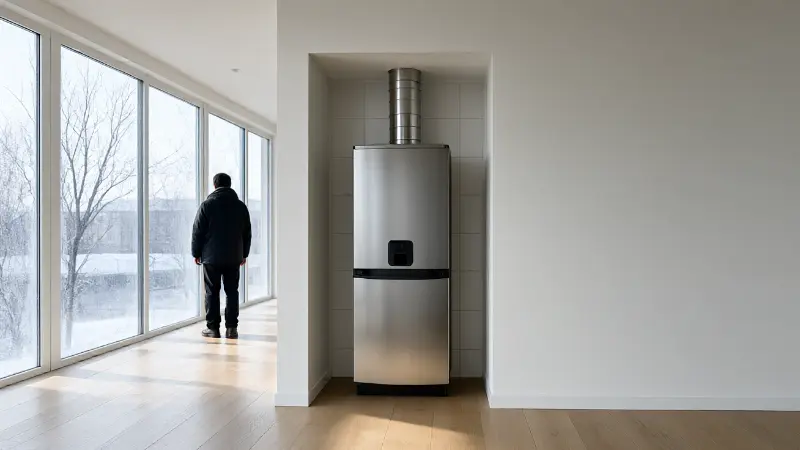
Next, verify power at the boiler. Look at the display or power indicator. If the boiler appears dead, check the fused spur or wall switch next to the appliance and confirm it is on. Then check the circuit breaker at the consumer unit or panel. A tripped breaker is a straightforward reset, but if it trips again immediately, stop and call an electrician or a heating engineer. Repeated tripping indicates a fault, not a nuisance.
Also check the gas supply itself. If other gas appliances such as a hob or fire are also failing, the issue may be at the meter or supply rather than the boiler. A prepayment meter with no credit is an easy thing to overlook during a busy cold snap. Confirming that gas is reaching the property is a sensible early step before diagnosing the appliance.
Check the Boiler Pressure and Reset Once
Low system pressure is a common reason a boiler refuses to fire. Most sealed heating systems operate at a pressure that should be checked on the boiler’s gauge when the system is cold. If the needle sits below the manufacturer’s recommended cold-fill range, the boiler’s low-pressure switch may prevent firing as a safety measure. The owner’s manual gives the correct figure for your model, and topping up via the filling loop is a routine task when the pressure has slowly dropped.
Do not keep topping up pressure without investigating why it dropped. A small loss over a season can be normal, but a rapid or repeated drop often points to a leak or a failed expansion vessel. If you need to refill more than occasionally, book a service rather than treating the filling loop as a routine fix.
If the boiler has locked out, the reset button or reset procedure is worth one attempt. Press reset according to the manual, wait for the boiler to run its start-up sequence, and see whether it fires and stays running. Reset only once. If the lockout returns immediately, the boiler is detecting a genuine fault, and repeated resetting will not solve it and may obscure the cause. A lockout after a cold start is particularly common when the condensate pipe has frozen, which is the next check.
Inspect the Condensate Pipe for Freezing
Modern condensing boilers produce acidic condensate water as a by-product of combustion. That water travels out through a plastic pipe, often to an internal drain or an external discharge point. In freezing weather, any section of that pipe that runs through an unheated space or outside can freeze solid, blocking the flow. When the condensate cannot drain, the boiler senses a fault and locks out, which is why a frozen condensate pipe often presents as an ignition failure or a specific error code.
Look for the white or grey plastic pipe leaving the boiler. Trace it to where it exits the building and check for ice at the terminal or along any exposed run. Gurgling noises from the boiler, a visible lockout code, and temperatures that have been below freezing for a sustained period all point toward this cause. External pipes with a horizontal or slow-falling run are especially vulnerable because water can sit and freeze in layers.
To thaw a frozen condensate pipe, use warm water from a watering can or jug, a hot water bottle, or a microwaveable heat pack. Apply the warmth gradually along the frozen section, starting at the end nearest the boiler and working outward. Do not use boiling water, which can soften or crack plastic pipe, and do not use a naked flame or a heat gun on high setting. Once the pipe is clear, reset the boiler once and confirm that it fires and runs.
Prevention matters as much as the thaw. Insulating external condensate pipe runs with foam lagging reduces the chance of repeat freezing, and increasing the pipe diameter or reducing horizontal runs are permanent fixes an engineer can advise on. If the pipe freezes repeatedly, ask for the route and insulation to be reviewed rather than thawing it every cold snap.
Understand the Firing Sequence and Ignition Faults
When a boiler receives a call for heat, it runs through a fixed sequence: fan starts, spark ignites the gas, the flame sensor proves combustion, and the main burner stays on. A failure at any stage stops the sequence and produces a lockout. Understanding this order helps you interpret what the boiler is doing and what it is not doing.
If the fan runs but there is no spark, the ignition electrode or ignition lead may be dirty, worn, or damaged. If the spark is present and gas is supplied but the burner does not light, the gas valve may not be opening. If the burner lights briefly and then goes out, the flame sensor may not be detecting the flame even though it exists. These are all component-level faults that require a Gas Safe registered engineer to diagnose and repair safely. Electrodes and flame sensors are routine service parts and are often identified during an annual service.
Do not attempt to open the combustion chamber, adjust the gas valve, or clean the ignition electrodes yourself. Gas appliance work is regulated for good reason, and the risks include carbon monoxide exposure as well as fire. Your role is to observe the symptoms, note any error code, and pass that information to the engineer.
Consider Circulation, Pumps, and Cold-Related Pipe Issues
Sometimes the boiler fires but the house does not heat, or the boiler fires briefly and then shuts down because heat is not being carried away. A seized circulator pump, a closed valve, or a blocked cold feed can cause the boiler to cycle on its high-limit thermostat rather than run continuously. If the boiler seems to fire but the radiators stay cold, the problem may be circulation rather than ignition. A guide to hot water not circulating through baseboard covers the diagnostic sequence for cold zones in a hydronic system.
Frozen external pipework or valves are another cold-weather risk, particularly on older systems with exposed runs in lofts, garages, or outbuildings. A frozen pipe can interrupt flow and trigger a safety shutdown, and it can also burst when it thaws. If you suspect a frozen pipe, isolate the affected section if you can do so safely and call a professional rather than applying heat indiscriminately.
Noise from the boiler’s fan or inducer area is also worth noting. A fan that is noisy on cold starts may be struggling, and a failing inducer can prevent the boiler from proving airflow and proceeding to ignition. This guide to inducer motor noise in cold weather explains the sounds that warrant attention and the checks that are safe to perform.
Compare Causes, Symptoms, and Safe Actions
The table below summarizes the most common cold-weather boiler failures, the symptoms that point to each, and the safe homeowner response.
| Cause | Typical symptom | Safe homeowner action | When to call an engineer |
|---|---|---|---|
| Thermostat or timer setting | Boiler silent, no call for heat, display normal | Raise setpoint, replace thermostat batteries, check mode | Settings are correct but no call reaches the boiler |
| Power supply fault | Boiler display dead, no lights | Check fused spur, switch, and breaker once | Breaker trips again or boiler remains dead |
| Low system pressure | Pressure gauge below cold-fill range, lockout | Top up via filling loop to the manual’s figure | Pressure drops repeatedly or will not hold |
| Frozen condensate pipe | Lockout in freezing weather, gurgling, error code | Thaw with warm water or heat pack, reset once | Pipe refreezes repeatedly or cannot be accessed safely |
| Ignition or flame sensor fault | Fan runs, no spark or flame, repeated lockout | Note the error code and reset once | Lockout returns after one reset |
| Circulation or pump issue | Boiler fires but radiators stay cold, short cycling | Check that valves are open and thermostat calls for heat | Pump is silent or system will not circulate |
One related fault deserves a separate mention because it is model-specific and common in older boilers. If you have a standing-pilot boiler and the pilot will not stay lit, the thermocouple or pilot assembly is the usual suspect. This guide to a Peerless boiler pilot light problem walks through the safe checks and the point at which service is required.
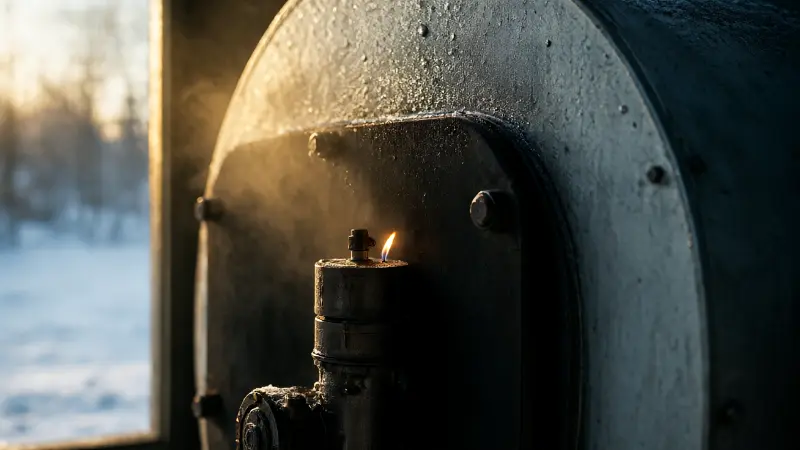
After any thaw, reset, or pressure top-up, monitor the boiler through a full heating cycle. A boiler that fires and runs for several minutes, reaches temperature, and then shuts down normally is behaving correctly. A boiler that fires, runs briefly, and locks out again has not been fixed, even if it started this time. Note the error code, the time to lockout, and any noises, because that information shortens the engineer’s diagnostic work.
When to Stop and Call a Gas Safe Engineer
Call a Gas Safe registered engineer for any work inside the combustion chamber, any adjustment to the gas valve, any smell of gas, any sign of soot or scorching, and any lockout that returns after a single reset. Also call if the boiler fires but the house does not heat, if pressure will not hold, or if you cannot safely access the condensate pipe to thaw it. Gas work is not a DIY category, and the consequences of getting it wrong extend beyond the appliance.
If you smell gas, do not operate electrical switches or use a phone inside the property. Open windows, turn off the gas at the meter if it is safe to do so, leave the building, and call the gas emergency line from outside. This is a separate emergency from a simple boiler lockout and should be treated with urgency.
Book a service before the cold season if possible. An annual service checks the ignition components, the flame sensor, the condensate route, the pressure, and the safety devices, and it catches the wear that turns into a cold-weather breakdown. A boiler that has been serviced is not immune to freezing condensate, but it is less likely to fail for the preventable reasons covered here.
FAQ
Why does my boiler lock out only in cold weather?
Cold weather introduces two specific failure modes: a frozen condensate pipe that blocks drainage and triggers a safety lockout, and increased demand that exposes borderline pressure or circulation problems. If the lockout coincides with freezing temperatures, check the condensate route first.
Can I reset my boiler more than once?
Reset once and observe. If the lockout returns immediately, stop resetting and call an engineer. Repeated resets do not fix the underlying fault and can mask the error code that would help diagnosis.
Is it safe to thaw a frozen condensate pipe myself?
Thawing an accessible external condensate pipe with warm water, a hot water bottle, or a heat pack is a reasonable homeowner task. Do not use boiling water, open flame, or high-setting heat guns, and call an engineer if the pipe is inaccessible or refreezes repeatedly.
What pressure should my boiler be at when cold?
The correct cold-fill pressure is model-specific and is stated in your boiler manual. Use that figure rather than a general number, and investigate repeated pressure loss rather than topping up indefinitely.
Conclusion
A boiler that will not fire in cold weather usually fails for one of a small number of reasons. Thermostat settings, flat batteries, a tripped breaker, low pressure, a frozen condensate pipe, and ignition component faults account for most cold-weather lockouts. Working through the checks in that order, with a single reset where appropriate, resolves many cases without an emergency call.
Know where your limits are. Thawing an accessible condensate pipe and replacing thermostat batteries are safe homeowner tasks. Opening the combustion chamber, adjusting the gas valve, and diagnosing flame-sensor faults belong to a Gas Safe registered engineer. A boiler that locks out again after one reset is telling you that professional help is the next step, not another reset.
Prevention is the quieter half of the job. Insulate exposed condensate runs, keep the system pressure in range, service the boiler before winter, and check the thermostat batteries at the start of the heating season. Those habits reduce the chance that the first cold snap becomes the night the heating fails.