Choosing between quartz and granite often comes down to more than looks. Both are durable, both are popular, and both can transform a kitchen. The real deciding factor for many homeowners is the cost breakdown, which is rarely as simple as a single price per square foot.
This guide walks through how each material is priced, where the money actually goes, and which costs tend to appear late in a project. You will also find practical guidance on comparing quotes so you can judge whether a bid is reasonable or quietly padded.
Why Quartz and Granite Cost What They Cost
Quartz and granite reach your kitchen through very different supply chains, and that shapes pricing. Understanding those paths helps you see why two slabs that look similar can differ sharply in price.
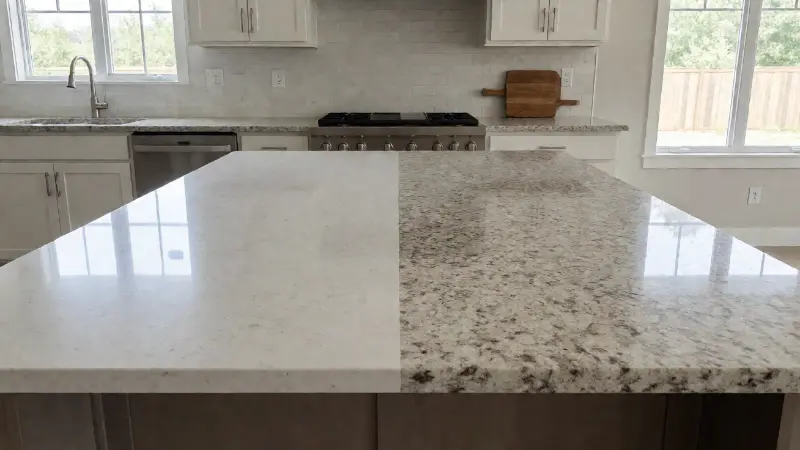
Quartz is an engineered stone. Manufacturers combine crushed quartz with polymer resin, pigments, and sometimes recycled glass or other aggregates, then press and cure the mix into slabs. Because the process is controlled, colour and pattern are consistent from slab to slab. That consistency is convenient for large kitchens, but it also means you are paying for a branded, factory-made product with marketing and distribution layers built in.
Granite is a natural igneous rock, quarried in blocks and sawn into slabs. No two slabs are alike, and availability depends on what a quarry happens to be producing. Rarity, transport distance, and the size of the block all influence the price. A common grey granite may cost far less than an exotic stone with dramatic movement and limited supply.
The Five Cost Buckets in Every Countertop Quote
Whether you choose quartz or granite, a countertop estimate usually breaks into five parts. Knowing these categories makes it much easier to compare bids line by line instead of staring at one lump sum.
1. Material
This is the slab or slabs themselves, priced per square foot or per slab. Material is often the most visible number in a quote, but it is frequently not the largest one. Slab size matters here, because a jumbo slab can cover more counter with fewer seams and less waste.
2. Templating and Fabrication
Someone has to measure your kitchen, often with a digital template, and translate that into cutting instructions. Fabrication covers cutting, polishing, edge shaping, and cutouts for sinks and faucets. Complex edge profiles and waterfall ends add labour and can push this portion of the bill up considerably.
3. Installation
Installation includes delivery, carrying slabs into the home, setting them on cabinets, seaming, and levelling. Access is a major variable. A ground-floor kitchen with a wide doorway is straightforward, while a third-floor walk-up or a tight galley may require more people and more time.
4. Edge Profiles, Cutouts, and Sink Mounts
Many fabricators include a basic edge in the base price and charge extra for anything beyond it. Undermount sink cutouts, farmhouse sink openings, and multiple faucet holes are common add-ons. Some shops also charge more for polishing exposed edges on an island.
5. Removal, Disposal, and Reconnection
Taking out the old countertop, hauling it away, and reconnecting plumbing or wiring is often quoted separately. This is where surprises live. If the old surface is tile over a thick mortar bed, removal can take longer than expected.
Quartz vs Granite Cost Breakdown at a Glance
The table below compares typical cost categories rather than absolute prices. Regional labour rates, local competition, and slab availability can shift these figures noticeably, so treat the ranges as planning guidance and confirm everything with local quotes.
| Cost Category | Quartz | Granite | What Drives the Difference |
|---|---|---|---|
| Material (per square foot) | Entry-level engineered stone sits in a moderate band; premium branded lines and marble-look patterns climb higher | Common domestic granites can be lower than most quartz; exotics and rare colours can exceed premium quartz | Quartz pricing reflects brand, resin content, and pattern complexity. Granite pricing reflects rarity, quarry yield, and shipping distance. |
| Slab consistency | Highly consistent between slabs | Unique per slab, even within the same bundle | Consistency lets quartz fabricators plan layouts with less risk of a mismatch. |
| Templating and fabrication | Generally comparable to granite | Generally comparable to quartz | Both are hard stone and cut with similar equipment. Labour rates matter more than the material here. |
| Edge profiles | Often similar pricing; mitred edges cost more | Often similar pricing; chipped edges may need extra repair work | Complex profiles add shop time regardless of material. |
| Sink and faucet cutouts | Similar add-on pricing | Similar add-on pricing | Undermount and farmhouse sinks require more finishing work in both cases. |
| Installation | Comparable, though some quartz slabs are heavier | Comparable, with variable weight depending on density | Access, stair carries, and crew size drive this number more than the stone type. |
| Sealing requirement | No routine sealing needed | Periodic sealing recommended for many granites | Adds a small recurring cost and some upkeep to granite. |
| Repair and chip repair | Can often be filled and blended by a specialist | Can often be filled, though matching natural pattern is harder | Natural variation makes invisible repairs trickier on granite. |
| Heat tolerance | Resin binder can be damaged by sustained high heat | Generally tolerant of hot cookware | Quartz users are often advised to use trivets and heat pads. |
| UV stability | Some colours can fade with prolonged direct sun | Colour is natural and generally stable | Matters most for outdoor kitchens and sun-drenched rooms. |
Quartz Pricing Factors in Detail
Quartz is sold under many brand names, and the brand on the slab often matters more than the colour family. Entry-level engineered stone from a regional supplier typically undercuts the big international brands. Premium lines charge more for tighter quality control, wider slab formats, and distinctive veined patterns that mimic marble.
Pattern complexity adds cost. A subtle speckled design is easier to produce than a dramatic sweeping vein that has to be engineered and bookmatched across a run. Colours with translucent minerals or metallic accents also tend to sit at the higher end.
Thickness is another lever. Two-centimetre slabs are common and often need a built-up edge to look substantial, while three-centimetre slabs cost more up front but can reduce edge build-up labour. Some fabricators pass those savings back, and some do not, so ask.
Resin content and finish matter too. A higher resin proportion can allow more intricate patterns but may reduce heat resistance. Matte and honed finishes are increasingly popular and sometimes carry a premium over standard polished surfaces.
If you have been quoted what feels like an unusually high number for a specific brand, it helps to understand where that money goes. Our breakdown of why Cambria quartz carries such a premium and the hidden costs behind it explains the brand, logistics, and fabrication factors that inflate certain quotes.
Granite Pricing Factors in Detail
Granite pricing is driven by geology and logistics rather than manufacturing. A quarry that produces large, sound blocks of a popular grey stone can supply the market cheaply. A quarry yielding limited quantities of a dramatic blue or gold material cannot.
Slab size is a practical cost factor. Larger slabs cover more counter area with fewer seams, which saves fabrication time and can reduce waste. However, oversized slabs are harder to transport and handle, so the savings are not automatic.
Natural defects affect cost in both directions. A slab with fissures, pits, or resin-filled areas may be discounted, but it can also require extra shop work to stabilise. Ask whether a lower-priced slab has been resined or repaired, and whether that affects the warranty.
Remnants are a genuine money-saver for small projects such as a bathroom vanity or a laundry counter. Many fabricators sell leftover pieces from larger jobs at a fraction of full-slab pricing, though choice is limited to what happens to be in the yard.
Fabrication and Installation: Where the Real Money Goes
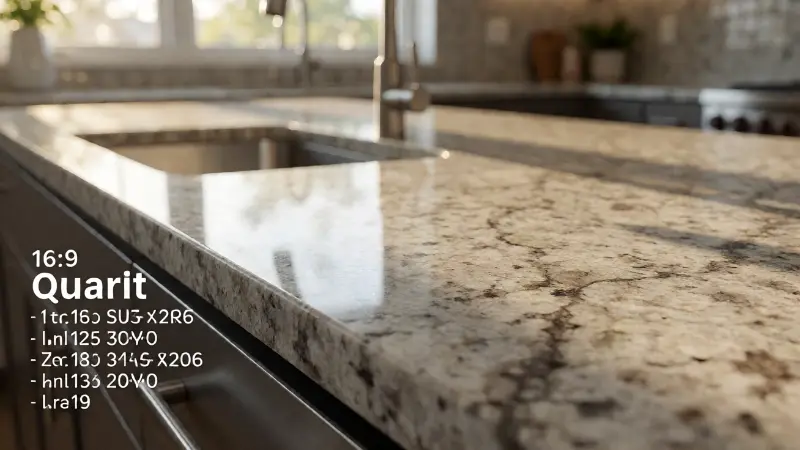
Homeowners often focus on the slab price, then feel blindsided by the fabrication and install total. In practice, a large share of a countertop invoice covers skilled labour, equipment, and risk.
Cutting engineered and natural stone requires diamond tooling, water-fed saws, and often CNC or waterjet equipment. Edge polishing is done by hand on many profiles, and that time is billed. Every extra cutout, whether for a soap dispenser or a pop-up outlet, adds a step.
Support and overhang are structural concerns, not cosmetic ones. A countertop that overhangs too far without corbels or a steel support can crack under load. The same principle governs deck framing, where span limits determine how far a joist can run. If you are planning outdoor cooking or bar seating as part of the project, the logic behind composite decking joist spacing at 24 inches on center and the mistakes it causes is a useful parallel for thinking about unsupported spans and deflection.
Seams deserve a conversation before you sign. Fewer seams usually mean a cleaner look, but they can require larger slabs and more careful layout. Ask your fabricator where the seams will fall and how they will be colour-matched.
Hidden Costs Homeowners Overlook
- Plumbing disconnect and reconnect: Sinks, dishwashers, and disposals often need a plumber, which may not be in the countertop quote.
- Electrical work: Adding outlets to an island or relocating a circuit can require an electrician.
- Cabinet levelling and repair: Old cabinets may need shimming or reinforcement before stone goes on top.
- Backsplash material: The countertop price usually excludes tile, slab splash, and its installation.
- Access challenges: Stairs, narrow doorways, and upper floors can add labour or require a crane.
- Old countertop removal: Tile over mortar is far more labour-intensive to strip than laminate.
- Disposal fees: Hauling away stone or tile carries a tipping cost in many areas.
- Sales tax and delivery: Often quoted separately from the material and labour total.
- Template errors and recuts: Ask who absorbs the cost if a cutout is wrong, and get it in writing.
A kitchen project also rarely happens in a vacuum. If you are addressing moisture elsewhere in the home at the same time, it helps to budget for those repairs alongside the cosmetic work. Homeowners weighing priorities sometimes compare countertop upgrades against foundation expenses such as the basement parging cost and what it takes to stop foundation decay, because both compete for the same renovation fund.
Maintenance and Long-Term Cost of Ownership
Upfront price is only part of the picture. The cost of keeping a countertop looking good over ten or fifteen years varies between the two materials.
Granite is porous and many varieties benefit from periodic sealing, typically on a schedule of months to a few years depending on the stone and the sealer. Sealing is inexpensive as a DIY task and modest as a service call, but it is a recurring commitment. Some denser granites absorb very little and need less attention.
Quartz does not need sealing because the resin binder closes the surface. That said, the resin can be damaged by sustained heat from a hot pan, and prolonged direct sunlight can affect some colours. Repairs to chips are possible but depend on the pattern and the skill of the technician.
Both materials resist scratches and stains well in normal kitchen use, though neither is impervious. A cutting board is still a good habit, and a trivet costs far less than a repair.
How to Compare Quotes Fairly
The fastest way to get burned is to compare two bids that cover different scopes. One quote may include removal, disposal, and a sink cutout while another lists them as extras.
Ask each fabricator for an itemised estimate covering material, templating, fabrication, edge profile, cutouts, installation, removal, disposal, and any access charges. Confirm whether tax and delivery are included. Ask about the warranty, what it covers, and whether it transfers if you sell the home.
Request the slab yard name and lot number so you can view the actual slabs. For granite especially, the slab you approve should be the slab that arrives. For quartz, confirm the exact colour name and manufacturer, since similar names exist across brands.
Finally, check lead times and payment schedules. Deposits are normal, but a request for full payment before templating is a warning sign.
When Each Material Makes Financial Sense
If your priority is a predictable, uniform look across a large kitchen with minimal maintenance, quartz often justifies its price. Consistent slabs reduce layout risk and the resin surface simplifies upkeep.
If your priority is a one-of-a-kind surface and you are willing to shop around, granite can deliver more visual drama per dollar. Common granites can undercut comparable quartz, particularly for smaller kitchens where a remnant may fit.
For rental properties or budget-conscious flips, both materials may be overkill. Laminate or butcher block can leave more budget for the repairs that actually affect habitability.
FAQ
Is quartz more expensive than granite?
Not universally. Entry-level and mid-range quartz often costs more than common granite, but exotic granite can exceed most quartz lines. The gap narrows or reverses depending on brand, colour, slab size, and local availability, so get quotes for both before deciding.
Why do quotes for the same stone vary so much between fabricators?
Differences usually come from scope, not from the stone. One shop may include removal, disposal, and a sink cutout, while another lists them separately. Shop overhead, crew size, and how much waste they build into the estimate also affect the total.
Can I save money by buying the slab myself?
Sometimes, but it introduces risk. If you supply the slab and it chips during fabrication, the fabricator may not replace it. Many shops also charge a higher labour rate for customer-supplied material, which can erase the savings.
Does granite sealing add significant long-term cost?
Usually not. Sealer is inexpensive, and application is a straightforward DIY task. The main cost is the time and the discipline to reapply it periodically. Some denser granites need it less often than others.
Are remnants a good way to cut costs?
For small surfaces like bathroom vanities, laundry counters, and bar tops, remnants can offer substantial savings. Selection is limited to what the fabricator has on hand, and you may need to be flexible on colour and dimensions.
Which material holds up better to heat?
Granite generally tolerates hot cookware better because it is natural stone without a resin binder. Quartz can be damaged by sustained high heat, so using trivets and heat pads is a sensible habit. Sudden temperature changes are worth avoiding with either material.
Both quartz and granite can be worth the investment, provided the quote you accept reflects the full scope of work. Get itemised bids, view the actual slabs, and budget for the plumbing, electrical, and removal costs that sit outside the stone itself. A clear cost breakdown now is what keeps the project on track later.