
A holiday dinner can leave more than happy memories behind. Candles drip, wax spills, and a favourite tablecloth ends up with hardened patches that look permanent. The good news is that wax removal is a manageable task when you approach it in the right order. Rushing to scrape or iron the fabric can push wax deeper into the fibres or set an oil stain that becomes much harder to lift.
This guide explains how to remove wax from a tablecloth after a holiday dinner without damaging the fabric. It covers hardening, freezing, gentle heat, oil stain treatment, washing, and fabric-specific cautions. It also explains which methods to avoid, when to call a professional cleaner, and how to handle wax that lands on other surfaces during the cleanup.
Why Wax Removal Needs a Gentle, Methodical Approach
Paraffin, soy, and beeswax all behave in a similar way when they land on fabric. The wax cools quickly and bonds to the fibres, and it carries dye or fragrance that can leave a coloured or oily mark. If you apply high heat too soon, the wax melts and spreads deeper into the weave. If you scrape aggressively, you can distort the fabric or pull threads, especially on linen and loosely woven cotton.
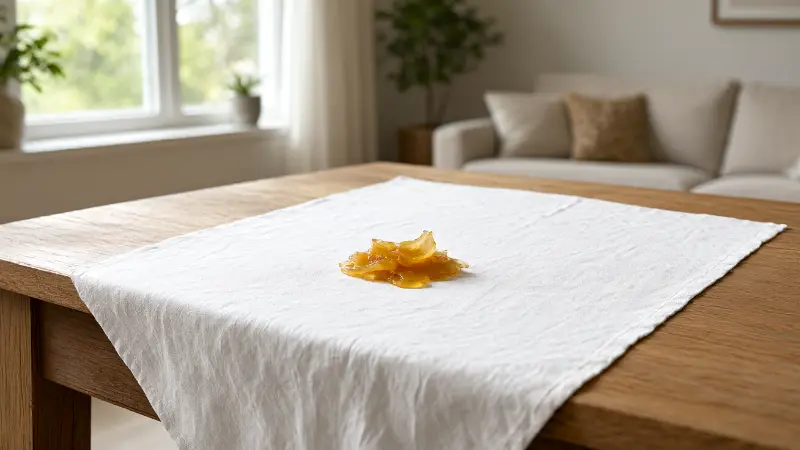
The most reliable approach is to remove as much solid wax as possible before applying any heat or solvent. Once the bulk is gone, gentle heat can lift the remaining wax into an absorbent material, and a grease-fighting treatment can address the oil residue. Washing comes last, after the wax and oil have been lifted. Following this sequence reduces the chance of spreading the stain or setting it permanently.
Check the tablecloth care label before you begin. The label tells you whether the fabric can be washed, whether bleach is safe, and whether tumble drying is appropriate. If the label says dry clean only, or if the tablecloth is vintage, hand-embroidered, or made from a delicate fibre, a professional cleaner is the safer choice. Home methods can work well on many washable fabrics, but they are not suitable for every material.
Step 1: Let the Wax Harden and Remove the Bulk
Resist the urge to wipe warm wax. Let the wax cool completely until it is hard and brittle. If the tablecloth has already been folded or stored, place it flat and allow it to reach room temperature. Once the wax is hard, you can work on removing the bulk without smearing it into the fabric.
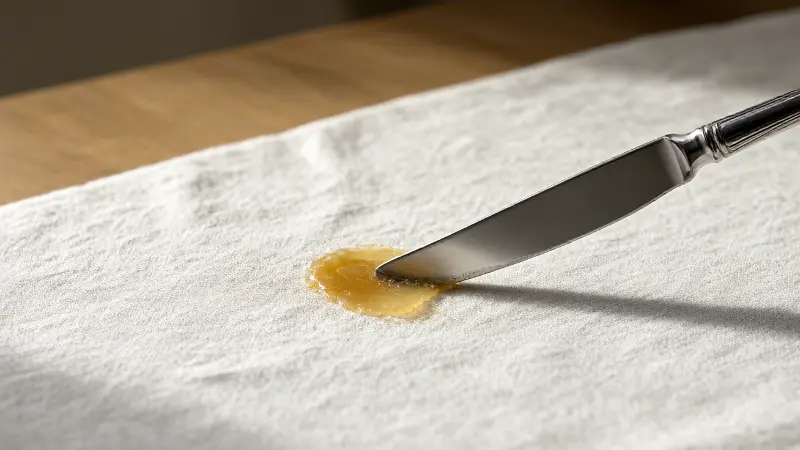
Use a dull tool to lift the wax. A plastic scraper, the back of a butter knife, or a credit card you no longer use can work. Work from the outside of the patch toward the centre and lift the wax away in small pieces. Avoid sharp knives, scissors, or anything that can cut the fibres. If the wax is thick, you can break it gently with your fingers first, but keep the fabric supported so it does not stretch.
Hold the tablecloth up to a light after the bulk removal. You may see a translucent shadow where the wax has penetrated the weave. That remaining wax is what the next steps address. Do not try to scrape it all away with the dull tool, because you risk abrading the fabric. The goal at this stage is to remove the raised wax, not to scrub the stain out.
Step 2: Freeze the Remaining Wax
Freezing makes the remaining wax brittle so that it can be flaked away more easily. Place the tablecloth in a plastic bag and put it in the freezer for a period that allows the wax to harden fully. The exact time depends on the thickness of the wax and the size of the tablecloth, so check after a while and return it to the freezer if the wax still feels soft.
Alternatively, you can place ice cubes in a sealed plastic bag and hold the bag against the wax patch. This localised chilling is useful for a small spot or for a tablecloth that is too large to fit in the freezer. Keep the ice bag moving so that the fabric does not become soaked, and dry the area afterward. Once the wax is brittle, flex the fabric gently and pick away the flakes with your fingers or a dull tool.
Do not use a hammer or a heavy object to break the frozen wax. A sharp impact can damage the fibres or leave a crease. Gentle flexing and picking are sufficient for most patches. If the wax is deeply embedded, freezing may lift only the surface layer, and the heat step that follows will handle the rest.
Step 3: Use Gentle Heat to Lift Wax from the Fabric
Gentle heat transfers the remaining wax from the tablecloth into an absorbent material. Place the tablecloth on an ironing board with a clean paper towel, a plain brown paper bag, or a piece of blotting paper beneath the wax patch. Place another absorbent layer on top of the patch. Set an iron to a low setting with no steam, and press briefly over the absorbent material.
Lift the iron and check the paper. As the wax melts, it transfers into the paper. Replace the paper with a clean section as soon as it becomes saturated, and continue until no more wax transfers. Keep the iron moving and avoid holding it in one place, because prolonged heat can scorch the fabric or set the oil stain. If the tablecloth is delicate, use a lower setting and test on an inconspicuous area first.
A hair dryer on a low heat setting can be an alternative for fabrics that cannot tolerate an iron. Hold the dryer at a distance and move it continuously while blotting with absorbent paper. A warm iron is generally more controlled than a hair dryer, but the dryer can be useful for a small spot or for a fabric with a pile. Do not use a heat gun or a hot air tool designed for paint stripping, because the temperature is too high for fabric.
If the wax patch is on a coloured tablecloth, watch for dye transfer. Some waxes contain dye, and the heat can move that dye into the fabric. If you see colour spreading, stop and consider a professional cleaner. A colour run is more difficult to reverse than a plain wax stain, and it can affect a larger area of the tablecloth.
Step 4: Treat the Oil Stain Left Behind
Wax often leaves an oily residue even after the solid material has been lifted. That residue can attract dirt and can become more visible over time. Treat it with a small amount of grease-fighting dish liquid or a suitable laundry pre-treatment product. Apply a dilute solution to the stain, work it in gently with your fingers or a soft brush, and allow it to sit for a short time according to the product instructions.
Blot the area with a clean white cloth or paper towel. Avoid rubbing vigorously, because that can spread the oil or damage the fibres. If the stain is stubborn, a second application may help, but test any product on an inconspicuous area first. For delicate fabrics, use a gentler product or leave the treatment to a professional cleaner.
Some guides suggest solvents such as rubbing alcohol or dry-cleaning fluid. These can be effective on certain fabrics, but they can also damage dyes, synthetics, or specialty finishes. If you choose to use a solvent, test it on a hidden area and follow the product instructions carefully. Work in a ventilated space, keep solvents away from heat sources, and dispose of used materials according to local guidance.
Step 5: Wash and Rinse According to the Care Label
Once the wax and oil have been lifted, wash the tablecloth according to its care label. Use a detergent suitable for the fabric and a water temperature that the label permits. For many washable tablecloths, a warm wash is appropriate, but delicate fabrics may require cool water and a gentle cycle. Avoid overloading the machine, because the tablecloth needs room to move and rinse properly.
Check the tablecloth after washing and before drying. If any wax or oil remains, repeat the heat and pre-treatment steps rather than drying the fabric. Heat from a tumble dryer can set a remaining stain, making it much harder to remove. Air drying is a sensible choice for the first wash after a wax spill, because it gives you a chance to inspect the fabric before applying more heat.
If the tablecloth is large or heavily stained, a second wash may be needed. Follow the care label and avoid using chlorine bleach on fabrics that are not colourfast. Oxygen-based bleach can be an option for some fabrics, but test it first. When in doubt, a professional cleaner can assess the fabric and choose a suitable treatment.
Fabric-Specific Cautions
Linen and cotton are generally durable and respond well to the heat-and-blot method, but they can scorch if the iron is too hot. Use a low to medium setting with no steam, and keep the iron moving. Linen can also shrink with high heat, so follow the care label and avoid prolonged pressing. Vintage or hand-embroidered linen deserves extra caution, and a professional cleaner is often the safer choice.
Polyester and synthetic blends can be sensitive to heat. A low iron setting and a pressing cloth are advisable, and some synthetics can melt under a hot iron. Test on a hidden area and use the lowest effective temperature. If the fabric has a sheen or a special finish, heat can alter the appearance, so consider the hair dryer method or a professional clean instead.
Delicate fabrics such as silk, velvet, and some rayons require specialist care. Water and heat can cause shrinkage, colour loss, or texture changes. Do not attempt the iron-and-paper method on these fabrics without professional advice. A dry cleaner who understands the fibre and the dye can choose a suitable solvent and method. The same caution applies to tablecloths with beading, embroidery, or metallic threads.
Comparison Table: Wax Removal Methods and Suitability
| Method | Best for | Cautions |
|---|---|---|
| Freezing and flaking | Hard wax on washable fabrics | Do not use sharp tools; dry the fabric afterward |
| Low iron and absorbent paper | Cotton, linen, and sturdy blends | No steam; keep the iron moving; replace paper often |
| Hair dryer on low heat | Delicate fabrics or small spots | Keep the dryer moving; avoid overheating the fabric |
| Dish liquid pre-treatment | Oil residue after wax removal | Test first; blot rather than rub |
| Solvent spot treatment | Stubborn oil on suitable fabrics | Test for colourfastness; ventilate the area |
| Professional dry cleaning | Delicate, vintage, or dry-clean-only fabrics | Point out the stain and the fabric type |
What Not to Do
Avoid scraping wax with a sharp knife or a metal tool. Sharp edges can cut threads, distort the weave, and create a hole that is more visible than the original stain. Avoid applying high heat directly to the wax without an absorbent layer, because the wax will spread and the fabric may scorch. Avoid using a steam iron, because steam can push wax deeper into the fibres.
Do not rub the stain vigorously with a cloth. Rubbing can spread the oil, abrade the fabric, and push the wax further into the weave. Do not put the tablecloth in a tumble dryer before you are confident the wax and oil are gone. Do not use chlorine bleach on coloured or delicate fabrics without checking the care label and testing first.
Do not use a heat gun, a blowtorch, or a hot plate to melt the wax. These tools reach temperatures that are unsafe for fabric and can cause a fire. Keep all heat sources away from solvents and from any material that could ignite. If you are using a solvent, work in a well-ventilated area and follow the product instructions.
When to Use a Professional Cleaner
A professional cleaner is the safer choice for dry-clean-only tablecloths, vintage linens, heavily beaded or embroidered pieces, and fabrics with uncertain fibre content. A cleaner can identify the fibre, choose a suitable solvent, and assess whether the dye is likely to bleed. They can also treat a large wax patch or a stain that has already been set by heat.
Point out the stain when you drop off the tablecloth and explain what you have already tried. That information helps the cleaner choose the right process. If the tablecloth has sentimental value, ask about the risks before authorising treatment. A professional cannot guarantee a perfect result on every stain, but they can often improve the appearance without causing further damage.
If the tablecloth is part of a set and only one piece is stained, consider having the whole set cleaned to keep the colour and finish consistent. A single cleaned piece can look different from the others, especially if the fabric has faded or the finish has changed over time. A cleaner can advise on the best approach for the set.
Wax on Other Surfaces After the Holiday Dinner
Wax does not always land only on the tablecloth. It can drip onto a wooden table, a chair seat, a drawer front, or a floor. On hard surfaces, allow the wax to harden and lift it with a plastic scraper. Avoid using a metal tool on wood, because it can gouge the finish. A warm cloth and a small amount of suitable cleaner can remove the residue, but test on a hidden area first.
If wax has run into a drawer front and the front needs to be removed for cleaning or repair, follow safe methods for removing glued drawer fronts rather than prying blindly. The same caution applies to other fixed components around the table. Forcing a part can cause damage that is more expensive than the original spill.
Post-holiday cleanup often reveals other tasks that need attention. If cooking fats and food scraps have clogged the drain, a guide to unclogging a kitchen sink after holiday cooking can help you clear the blockage safely. If the cleanup involves electrical work, such as replacing a damaged outlet near the dining area, use safe practices for removing backstab wires safely and isolate the circuit before touching any wiring.
FAQ
Can I remove wax from a tablecloth with boiling water?
Boiling water is not a good choice for most tablecloths. The high temperature can shrink or distort the fabric and can spread the wax. Gentle heat with an iron and absorbent paper is more controlled. Follow the care label and test any method on a hidden area first.
What if the wax is coloured and leaves a dye stain?
A coloured wax can leave a dye stain in addition to the oil residue. Treat the oil as described and watch for colour spreading during heat treatment. If the dye has transferred, a professional cleaner may be able to reduce it, but colour removal is not always possible.
How do I remove wax from a tablecloth that is dry clean only?
For a dry-clean-only tablecloth, avoid home heat and water treatments. Remove loose wax gently if it is safe to do so, then take the tablecloth to a professional cleaner. Point out the stain and explain the fabric type and any treatments already attempted.
Conclusion
Removing wax from a tablecloth after a holiday dinner is most successful when you work in stages: harden and remove the bulk, freeze the remaining wax, use gentle heat to transfer it into absorbent paper, treat the oil residue, and then wash according to the care label. Rushing to scrape or iron can push wax deeper into the fabric or set an oil stain that becomes harder to remove.
Fabric type matters. Cotton and linen can often tolerate the iron-and-paper method with care, while synthetics and delicate fabrics need lower heat or professional attention. Dry-clean-only, vintage, and heavily embellished tablecloths are safer with a professional cleaner. Avoid sharp tools, high heat, steam, and vigorous rubbing, and do not tumble dry until you are confident the stain is gone.
With patience and the right sequence, many wax spills can be lifted without permanent damage. Check the care label, test any product on a hidden area, and call a professional when the fabric or the stain is outside your comfort zone. A little care after the holiday dinner can save a tablecloth that would otherwise be retired.