A crawl space is one of the most vulnerable places in a home for plumbing, and it is also one of the easiest to overlook. The space under the floor is often vented to the outside, exposed to wind, and separated from the heated part of the house by insulation that may be missing, sagging, or installed on the wrong side of the pipes. When the temperature drops, the water lines running through that space can freeze within hours.
Preventing a freeze is far cheaper than repairing a burst pipe and the water damage that follows. The work involves controlling cold air, protecting the pipes themselves, and keeping a reliable source of warmth in the space. This guide covers the measures that make the biggest difference, explains how to prioritize them, and notes the situations where a professional assessment is the better choice.
Understand Why Crawl Space Pipes Freeze
A crawl space sits between the ground and the living area, and it is usually ventilated to control moisture. Those foundation vents allow outside air to move through the space, which is helpful in summer but can turn the crawl space into a cold, windy box in winter. Cold air entering through the vents chills the pipes, the floor joists, and the subfloor above.

Insulation placement matters as much as insulation quantity. Floor insulation is often installed with the vapor barrier facing the heated side, which is correct for the floor above but does not protect a pipe that hangs below the joists. A pipe on the cold side of the insulation is essentially outdoors, and it loses heat to the crawl space air rather than gaining it from the house.
Wind is a major factor that homeowners underestimate. A pipe that survives still air at 20°F can freeze when a 15 mph wind drives cold air through the vents and along the pipe. Wind also strips heat from the pipe surface faster than still air, which is why a windy night can cause a freeze that a colder, calmer night would not.
Small pipes and slow-moving water freeze first. An ice maker line, a humidifier supply, or a line to a rarely used hose bib has little thermal mass and little flow. A main supply line carrying water to a busy bathroom resists freezing longer, but it is not immune if the crawl space stays cold for days.
Seal the Crawl Space Against Cold Air
Air sealing is the highest-value first step because it addresses the source of the problem. Start with the foundation vents. In many climates, closing or blocking the vents for the winter is standard practice, and some building codes allow seasonal closure. Check local guidance before you seal, because venting requirements vary by region and by the moisture conditions in the space.
Inspect the rim joist area, where the floor framing meets the foundation. Gaps around pipes, wiring, and ducts that penetrate the rim joist let cold air pour into the crawl space. Seal those penetrations with a material appropriate for the surface, such as caulk, foam sealant, or rigid blocking plus sealant. Do not seal combustion air openings or vents that must remain open for a furnace or water heater.
Look for open foundation cracks, missing blocks, and gaps around a crawl space access door. A warped or uninsulated access hatch is a common cold-air path. Weatherstrip the door and insulate the back of it. If the access is through an exterior wall, treat it like any other exterior door.
Seal around the pipes themselves where they pass through the foundation and the subfloor. A surprising amount of cold air moves through a hole that looks small. Use a sealant that remains flexible and is compatible with the pipe material, and avoid sealing so tightly that the pipe cannot move slightly with temperature changes.
Encapsulation as a longer-term option
A full crawl space encapsulation seals the vents, covers the ground with a vapor barrier, and conditions the space with a small supply of air or a dehumidifier. That approach eliminates most cold-air infiltration and protects the pipes, the joists, and the subfloor. It is a larger project with a real cost, and it should be designed for the climate and the home rather than improvised.
Insulate the Pipes Correctly
Pipe insulation slows heat loss, and in a crawl space that is the difference between a pipe that stays above freezing and one that does not. Foam sleeves sized to the pipe diameter are the most common product, and they should be installed with the seams sealed and the ends closed. A sleeve that is too large leaves an air gap that reduces performance.
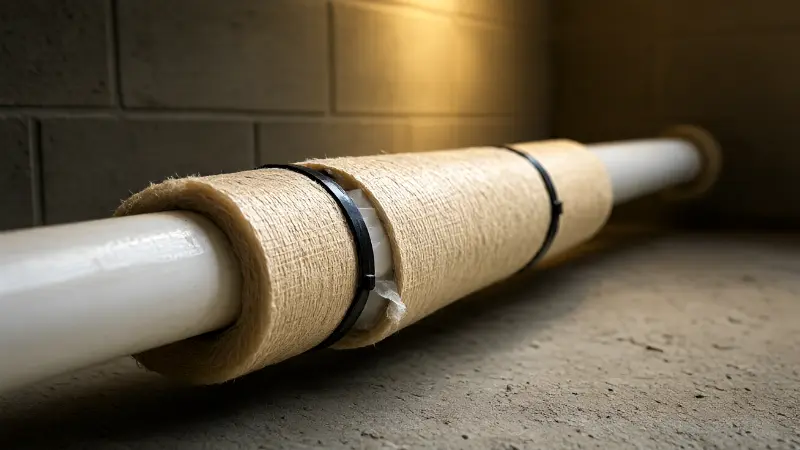
Pay attention to the fittings. Insulation is often skipped at elbows, tees, and valves, and those are exactly the places where freeze damage tends to occur. Pre-formed fitting covers or carefully cut and taped sleeve sections keep the protection continuous. Leave the valve handle accessible so you can still shut off the water in an emergency.
Do not compress fiberglass insulation around a pipe in a way that leaves the pipe exposed to the crawl space air. Insulation works by trapping air, and crushing it reduces its value. If you use batt insulation, keep it dry and supported so it does not sag away from the pipe over time.
Consider the insulation on the floor above. If the floor joist bays are insulated, the pipes should ideally be on the warm side of that insulation. In many crawl spaces, moving a pipe up into the insulated cavity is a better solution than adding more insulation around a pipe that remains in the cold zone. That is a job for a plumber and an insulation contractor working together.
When you are choosing insulation for the floor or the rim joist, space constraints sometimes push homeowners toward thinner high-performance products. A review of thin R30 insulation options explains how higher R-values can fit in tight assemblies, which is useful in a shallow crawl space where headroom is limited.
Keep a Heat Source in the Space
Insulation and air sealing slow heat loss, but a crawl space still needs some warmth in severe cold. One traditional approach is a small thermostatically controlled heater, such as a unit designed for crawl spaces or a heat lamp in a protected enclosure. Whatever the source, it must be rated for the environment and installed with proper clearance from combustible materials.
Do not place an open flame or an unvented combustion heater in a crawl space. Carbon monoxide can migrate into the living area, and an open flame near insulation, wood framing, or stored materials is a fire risk. Electric heaters with tip-over protection and a thermostat are a safer choice, and they should be on a circuit that can handle the load without overloading other equipment.
Some homes have a furnace or water heater in or adjacent to the crawl space, and waste heat from those appliances can help. That is not a plan you should rely on, but it explains why some crawl spaces stay warmer than others. If the furnace is being replaced, discuss with the contractor whether the new equipment will change the heat in the space.
Heat tape, also called pipe heating cable, is a targeted solution for a specific vulnerable run. Choose a product listed for the pipe and the application, install it according to the manufacturer’s instructions, and plug it into a GFCI-protected outlet. Self-regulating cable adjusts its output to the pipe temperature, which reduces the risk of overheating. Heat tape is not a substitute for insulation and air sealing, and it should not be wrapped over itself.
Manage Water Flow and Pressure
Moving water freezes more slowly than still water. During severe cold, letting a pencil-thin trickle run from the farthest fixture on a vulnerable branch keeps water moving and relieves pressure if ice begins to form. The small amount of water used is usually cheaper than a repair, and the open faucet gives melting ice somewhere to go.
Open cabinet doors under sinks that sit against exterior walls or above a cold crawl space. Warm room air can reach the supply lines and the wall cavity. If the sink is in a guest bathroom or a wet bar that is rarely used, make a habit of running the faucet briefly each day during cold spells to confirm flow and to move water through the branch.
Disconnect garden hoses and drain outdoor spigots before the first freeze. If the home has an interior shutoff for the hose bib, close it and open the outdoor faucet to drain the line. A split sillcock is one of the most common freeze repairs, and it is entirely preventable.
If you are hosting guests during cold weather, the extra showers, laundry, and open doors change the moisture and airflow patterns in the house. Tips on how to keep pipes from freezing when hosting guests cover cabinet doors, thermostat settings, and the fixtures that are easiest to forget. The same habits protect a crawl space line that serves a guest bathroom.
Monitor Temperature and Catch Problems Early
A cheap remote thermometer with a probe placed in the crawl space gives you information you would otherwise not have. Check it during cold snaps and note how the temperature responds to wind, thermostat changes, and vent status. A crawl space that drops below freezing is a warning that the pipes are at risk.
Water leak sensors and smart shutoff valves add another layer of protection. A sensor placed near the water heater, the main line, or a known low point can alert you to a leak before it spreads. A smart shutoff valve can close the main automatically when a sensor detects water, which limits damage if a pipe does burst.
Watch the water pressure and flow in the house. A sudden drop in pressure at the faucets, a toilet that fills slowly, or a fixture that sputters can indicate a partial freeze somewhere in the system. Catching a partial freeze early gives you time to thaw the line safely instead of discovering a burst pipe later.
If a pipe does freeze, the response matters. The steps for thawing frozen pipes under a sink cover opening the faucet, protecting the cabinet, and using gentle heat rather than a flame. The same principles apply to a crawl space line, with the added caution that you must be able to reach the pipe safely and see it clearly before applying heat.
Plan for Vacations and Cold Snaps
If you leave during the winter, do not set the thermostat so low that the house loses its ability to protect the plumbing. A temperature that keeps the living space above freezing and allows some warmth to reach the crawl space is the safer choice. Ask a neighbor or friend to check the house, or use a monitored sensor that alerts you to a temperature drop or a water leak.
Shutting off the main water valve before a trip reduces the amount of water available to leak if a pipe fails. It does not drain the system by itself, and a plumber can advise on whether draining is appropriate for your plumbing. If you shut off the water, open a few faucets to relieve pressure and consider draining the water heater according to the manufacturer’s instructions.
Before the first cold snap of the season, walk the crawl space with a flashlight and check the pipes, insulation, and vents. Look for sagging insulation, missing pipe sleeves, open penetrations, and signs of previous freezing such as split insulation or mineral staining at a joint. A fall inspection is far more pleasant than a January emergency.
Quick Reference: Crawl Space Freeze Protection
The table below summarizes the main measures, what each one accomplishes, and where the limits are. Use it to plan the work in a sensible order, starting with the steps that address cold air before the steps that add heat.
| Measure | What It Does | Best Applied To | Limitations |
|---|---|---|---|
| Close or block foundation vents for winter | Stops wind-driven cold air from entering | Vented crawl spaces in cold climates | Check local code and moisture conditions first |
| Seal rim joist and penetration gaps | Eliminates the largest air leaks | Where pipes, wires, and ducts pass through framing | Do not seal required combustion air openings |
| Insulate pipes and fittings | Slows heat loss from the pipe surface | All accessible supply lines in the crawl space | Does not add heat; gaps at fittings reduce value |
| Move pipes to the warm side of floor insulation | Puts the pipe inside the heated envelope | Pipes hanging below insulated joist bays | Requires plumbing and insulation work |
| Install a thermostatically controlled heater | Adds a small amount of warmth in severe cold | Small crawl spaces with vulnerable runs | Electric cost; must be rated for the environment |
| Install self-regulating heat cable | Warms a specific vulnerable pipe run | Short exposed sections that cannot be relocated | Requires GFCI outlet and correct installation |
| Let a trickle run during cold snaps | Keeps water moving and relieves pressure | The farthest fixture on the vulnerable branch | Uses water; not a substitute for insulation |
| Add temperature and leak monitoring | Provides early warning of a problem | Crawl space, water heater area, main line | Requires power and a network connection for alerts |
Use the table to sequence the work rather than to pick a single fix. Air sealing and pipe insulation handle most situations, and heat tape or a small heater covers the remaining vulnerable run. Monitoring tells you whether the plan is actually working when the weather turns severe.
When to Bring In a Professional
Call a professional if the crawl space is difficult or unsafe to enter, if it contains standing water, if there are signs of a pest infestation, or if the space has limited headroom and poor access. Encapsulation, duct sealing, and moving plumbing are also better handled by contractors who can assess the whole assembly rather than one pipe.
Call a plumber if a pipe has already frozen and you cannot reach it, if you find a leak, or if the same line has frozen repeatedly. A repeated freeze usually means the pipe is in the wrong place, and the durable fix is to move it or to change the insulation and air sealing around it. A plumber and an insulation contractor can often solve in a day what repeated thawing cannot solve at all.
Call an electrician before installing a crawl space heater or heat cable on a new circuit. The load, the GFCI protection, and the routing all need to be correct, and a crawl space is not a place to improvise electrical work. A proper installation protects the equipment and the house.
FAQ
Should I close crawl space vents in winter?
In many cold climates, closing or blocking foundation vents for the winter is standard practice and helps protect pipes. Requirements vary by region, and some homes need venting to control moisture even in winter. Check local building guidance and watch for condensation in the space before sealing it completely.
Is pipe insulation enough to stop a crawl space pipe from freezing?
Insulation slows heat loss but does not add heat. It helps most when combined with air sealing, a warmer crawl space, and moving the pipe to the warm side of the floor insulation. A pipe in a windy, unsealed crawl space may still freeze even with insulation installed.
Can I use a space heater in a crawl space?
Only an electric heater rated for the environment, with tip-over protection and proper clearance from combustibles. Never use an open flame or an unvented combustion heater in a crawl space, because carbon monoxide can enter the home. Have an electrician confirm the circuit can handle the load.
What should I do if a crawl space pipe freezes anyway?
Open the nearest faucet, protect the area from water, and warm the pipe gradually with a hair dryer or warm towels if you can reach it safely. Do not use a flame or boiling water. If the pipe is unreachable, if you find a leak, or if flow does not return, call a plumber.
Conclusion
Preventing pipes from freezing in a crawl space comes down to three layers of defense: keep cold air out, insulate the pipes and fittings properly, and provide a controlled source of warmth for the runs that remain vulnerable. Sealing the vents, rim joist, and penetrations addresses the source, while pipe sleeves and moving lines to the warm side of the floor insulation protect the plumbing itself.
Manage water flow during cold snaps by opening cabinet doors and letting a trickle run from the farthest fixture. Disconnect hoses, drain outdoor spigots, and keep the thermostat at a level that protects the structure even when the house is empty. Monitoring temperature and adding a leak sensor gives you early warning before a small problem becomes a flood.
A fall walkthrough of the crawl space is the habit that makes all of this work. Check the pipes, insulation, and vents before the first hard freeze, fix what you find, and note what still needs attention. That preparation protects the plumbing, the floors above, and the budget through the coldest months of the year.