A furnace that lights, runs for a few seconds, and then shuts down into a lockout condition often has a dirty flame sensor. The flame sensor is a small but critical safety component. It confirms that a flame is actually present before the control board allows the gas valve to stay open. When the sensor cannot detect the flame reliably, the furnace shuts down as a safety precaution, even though the burners may have lit normally.
This guide explains how the flame sensor works, why contamination causes lockouts, and how a technician or a confident homeowner can clean it safely. It covers the symptoms to watch for, the correct cleaning method, when replacement is the better choice, and the other faults that can mimic a dirty sensor. It also explains the safety precautions that apply whenever the furnace cabinet is opened.
How a Flame Sensor Works and Why Dirt Causes Lockout
Most modern furnaces use flame rectification to prove that ignition has occurred. The flame sensor is a metal rod positioned in the burner flame. The control board applies a small voltage to the rod, and the flame conducts a tiny current back to the board through the burner and the furnace chassis. The board measures that current, often in microamps, and uses it to confirm that a flame is present.
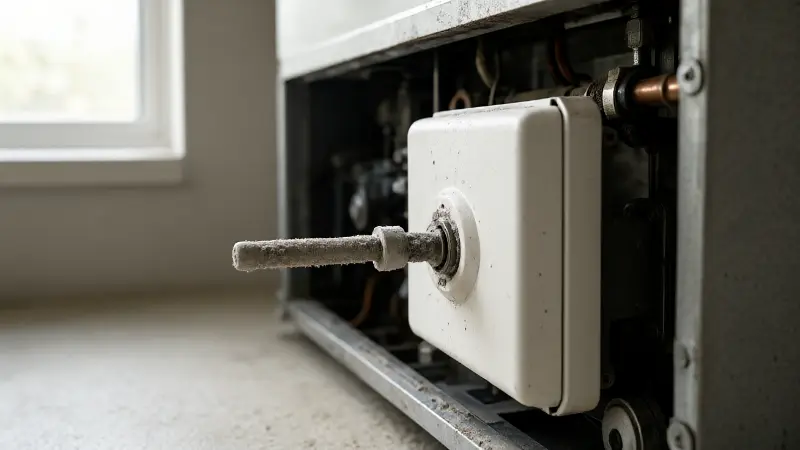
Over time, the sensor rod collects a thin coating of oxide, dust, and combustion byproducts. That coating acts as an insulator, reducing the current the board can measure. The board may see a weak signal, an intermittent signal, or no signal at all. If the signal is not strong enough during the ignition sequence, the board closes the gas valve and may enter a lockout condition after a set number of failed attempts.
The result is a frustrating pattern. The igniter glows, the burners light, and the flame may look healthy through the sight glass. A few seconds later, the burners shut off and the blower may continue to run. The furnace may retry ignition once or twice and then lock out. Some control boards display a diagnostic code that points to flame sensing, while others simply blink a status light. Recording that code is useful because it narrows the diagnosis before any tools are used.
Symptoms of a Dirty Flame Sensor
The classic symptom is a furnace that fires and then shuts down after a short run time. The flame may burn for several seconds before the board loses the signal and closes the gas valve. In some cases, the furnace short-cycles repeatedly. In others, it locks out and will not attempt ignition again until the power is cycled or the control board resets.
Another symptom is a furnace that works intermittently. The sensor may be marginal, so the signal is strong enough on some attempts and too weak on others. That pattern can be mistaken for a thermostat problem or a gas supply issue. If the furnace works more reliably after a service call but the problem returns weeks later, a marginal flame sensor is a reasonable suspect.
A diagnostic code is a strong clue. Many control boards use a specific blink pattern or an LED code for flame sensing faults. Consult the appliance label or the owner’s manual to interpret the code. If the code points to flame sensing, the sensor and its wiring are the first items to inspect. Do not replace the control board before checking the sensor, because a dirty sensor is far more common than a failed board.
Safety Before Cleaning a Flame Sensor
Cleaning a flame sensor requires access to the burner compartment, and that means working around gas and electrical components. Before opening the furnace, turn off the power at the service switch or the circuit breaker that supplies the furnace. Turn off the gas at the manual shut-off valve near the appliance. Allow the furnace to cool completely before touching any components.
Wear gloves and avoid touching the hot surface igniter. The igniter is fragile and can crack if it is handled roughly or contaminated with skin oils. Keep the burner compartment clean and free of debris while it is open. Do not use a vacuum with a metal nozzle near the control board, and do not spray cleaning products into the cabinet.
If you are not comfortable working inside the furnace, or if the appliance is under warranty, stop and call a qualified technician. Warranty terms often require professional service, and DIY work can complicate a claim. A technician has the tools to test the flame signal directly and confirm whether cleaning has restored a reliable microamp reading.
How to Clean a Flame Sensor Safely
Locate the flame sensor. It is usually a single rod mounted on a ceramic insulator near the burners, with a single wire connected to it. It is often positioned opposite the igniter. Consult the appliance diagram if the component is not obvious. Take a photo of the wiring before disconnecting anything, so that reassembly is straightforward.
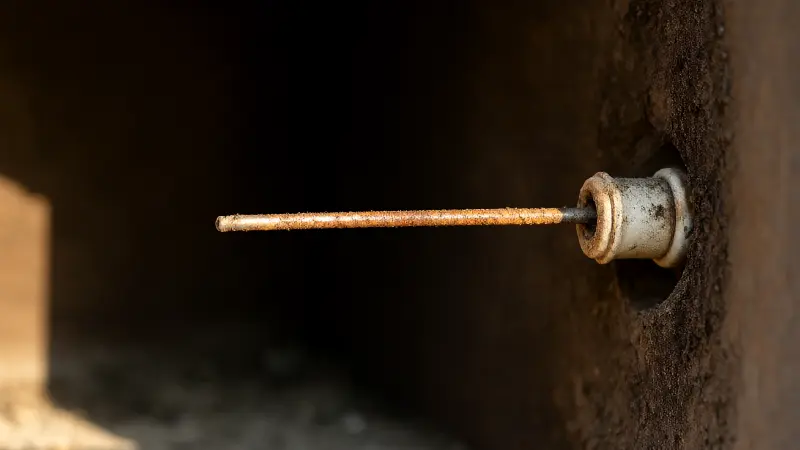
Disconnect the wire from the sensor and remove the mounting screw if the design allows. Handle the sensor by the ceramic insulator, not the rod. Clean the metal rod gently with a fine abrasive pad or fine steel wool. Work along the rod rather than across it, and avoid bending it. Do not use sandpaper with coarse grit, and do not file the rod. The goal is to remove the oxide coating without removing metal or changing the shape of the rod.
Wipe the rod with a clean, dry cloth after cleaning. Reinstall the sensor in the same position and reconnect the wire. Confirm that the sensor is not touching the burner or the igniter and that the ceramic insulator is not cracked. Restore the gas and power, then observe a full ignition cycle. The furnace should light and stay lit through the call for heat. If it still shuts down, turn it off and call a technician.
Do not use emery cloth with a heavy grit, and do not use a wire brush that can scratch the rod. Do not apply contact cleaner or lubricant to the sensor. Do not bend the rod to make it reach the flame. If the rod is badly worn, pitted, or bent, replacement is the correct repair. A sensor with a cracked ceramic insulator should also be replaced, because the crack can allow the signal to leak to ground.
When Cleaning Is Not Enough
Cleaning restores function in many cases, but it is not a permanent fix if the sensor is worn. Over time, the rod can erode or become pitted, and the insulator can crack. A sensor that has been cleaned repeatedly and still causes lockouts should be replaced. Replacement is usually a straightforward part swap, but the correct part number must match the furnace model.
If a new sensor does not solve the problem, the fault may be elsewhere in the flame-sensing circuit. The wiring between the sensor and the control board can be loose, corroded, or damaged. The burner ground path can be compromised by rust, dirt, or a poor chassis connection. The control board itself can fail to measure the flame signal correctly. A technician can test the microamp reading and the ground path to isolate the fault.
Do not bypass a flame sensor or wire it permanently to the chassis. The sensor is a safety device, and defeating it allows gas to flow without proof of ignition. That creates a serious risk of unburned gas accumulating in the furnace or the home. If the furnace will not stay lit, the correct response is diagnosis and repair, not a workaround.
Other Causes of Furnace Lockout That Mimic a Dirty Sensor
Several other faults can produce a similar pattern of lighting and then shutting down. A weak hot surface igniter may glow but not reach the temperature needed to light the gas promptly. A dirty or clogged burner can delay ignition. A pressure switch that cannot close, a blocked condensate drain, or a faulty draft inducer can prevent the furnace from completing its ignition sequence. A gas supply problem can also cause repeated failed ignition attempts.
Electrical issues can mimic flame-sensing faults. A loose connection, a failing control board, or reversed polarity at the furnace can disrupt the flame signal. Polarity problems are worth understanding because they can cause a furnace to behave erratically without an obvious mechanical fault. A guide to a polarity reversed on furnace explains how to recognize that condition and why it affects operation.
Other heating appliances can also show flame-related symptoms. A gas fireplace that will not stay lit may have a dirty flame sensor, a weak thermopile, or a venting problem. An article on gas fireplace flame adjustment can help you understand normal flame behaviour and when a professional should be called. The common thread is that flame-proving devices are safety components, and they should be diagnosed rather than bypassed.
Comparison Table: Lockout Symptoms and Likely Causes
| Symptom | Likely cause | Safe first check |
|---|---|---|
| Burners light, then shut off after a few seconds | Dirty or worn flame sensor | Record diagnostic code; inspect and clean the sensor |
| Furnace retries ignition and then locks out | Weak flame signal or loose sensor wire | Check the sensor wire connection; test flame signal |
| Igniter glows but burners do not light | Weak igniter, gas supply, or burner obstruction | Confirm gas valve is open; call for ignition diagnosis |
| Furnace starts, then shuts down with a pressure code | Pressure switch or blocked condensate drain | Check for a frozen drain line if accessible; call technician |
| Intermittent lockouts with no clear pattern | Loose wiring, ground fault, or control board fault | Inspect visible wiring; call for electrical testing |
| Furnace behaves erratically after service or wiring work | Reversed polarity or poor ground | Call a technician to verify polarity and grounding |
Preventing Repeat Flame Sensor Lockouts
Annual furnace maintenance is the most reliable prevention. A technician will clean the flame sensor, inspect the burners, test the igniter, and verify the flame signal. Regular service also catches a worn sensor before it causes a lockout during cold weather. Schedule the service before the heating season rather than after the first no-heat call.
A clean filter and clear return air help the furnace run as designed. Restricted airflow can affect combustion and cause the burners to run rich or dirty, which accelerates sensor contamination. Keep the furnace area free of dust, pet hair, and stored items. If you have pets or a dusty environment, check the filter more often.
Simple preparation can prevent a cold-weather emergency. These Thanksgiving furnace check tips cover filter changes, thermostat checks, and other tasks that reduce the chance of a holiday breakdown. A few minutes of prevention is easier than an emergency service call when the house is full of guests.
When to Call a Technician
Call a qualified HVAC technician if the furnace still locks out after the sensor has been cleaned, if the sensor is damaged or the insulator is cracked, or if you are not comfortable working inside the cabinet. A technician can measure the flame signal in microamps, test the ground path, and confirm whether the control board is interpreting the signal correctly. Those tests are more reliable than visual inspection alone.
Call immediately if you smell gas, see soot or scorch marks, or notice a yellow or lifting flame. These signs can indicate incomplete combustion or a gas leak. Turn off the furnace at the thermostat, follow the gas safety instructions from your utility, and do not operate the appliance until it has been inspected. If a carbon monoxide alarm sounds, evacuate the home and call emergency services from outside.
Do not replace the control board as a first step. A dirty sensor, a loose wire, or a poor ground is more common and far less expensive to correct. A technician will test the circuit before recommending a board, which helps you avoid paying for a part that was not the cause of the fault.
FAQ
How often should a flame sensor be cleaned?
Cleaning is usually part of annual furnace maintenance, but the interval depends on the appliance and the environment. A furnace in a dusty home or with pets may need more frequent attention. If the furnace locks out between services, the sensor and its signal should be checked.
Can I clean a flame sensor with sandpaper?
Use a fine abrasive pad or fine steel wool rather than coarse sandpaper. Coarse abrasives can remove metal and change the shape of the rod. Follow the manufacturer’s guidance, handle the sensor by the ceramic insulator, and avoid bending the rod.
Why does the furnace light and then go out after cleaning the sensor?
A furnace that still shuts down after cleaning may have a worn sensor, a loose wire, a poor ground path, or a control board fault. It may also have a gas supply, igniter, or pressure switch problem. Call a technician to measure the flame signal and isolate the fault.
Conclusion
A flame sensor dirty enough to weaken the flame signal is a common cause of furnace lockout. The furnace lights, the board fails to confirm a stable flame, and the gas valve closes as a safety measure. Cleaning the sensor with a fine abrasive and restoring a clean connection often resolves the problem, but the work must be done with the power and gas off and with care around the fragile igniter.
If cleaning does not restore reliable operation, the sensor may be worn, the wiring or ground path may be faulty, or another component may be causing the lockout. Do not bypass the sensor or replace the control board without testing the circuit. A technician can measure the flame signal and confirm the correct repair.
Annual maintenance, a clean filter, and prompt attention to lockout codes reduce the chance of a no-heat emergency. Treat the flame sensor as a safety device, and call a professional when the diagnosis moves beyond cleaning and inspection.