
A downspout that freezes and backs up is one of winter’s quiet troublemakers. The gutter may look clear, the roof may look fine, and yet water spills over the front edge, ice climbs the downspout, and meltwater ends up at the foundation instead of draining away. The blockage is often in the downspout itself or at the outlet, where a small amount of ice is enough to stop the entire drainage path.
The good news is that most frozen downspouts can be cleared safely from the ground, and the repairs that follow are usually straightforward. The bad news is that the wrong approach, such as climbing a ladder in icy conditions or chipping at the ice with a tool, can turn a drainage problem into an injury or a damaged gutter. This guide explains why downspouts freeze, how to recognize the signs, the safe clearing methods, the repairs that follow, and the prevention steps that keep the system working through the coldest weeks.
Why a Downspout Freezes and Backs Up
A downspout carries water from the gutter to the ground or to an underground drain. It is a narrow vertical channel, and it holds water whenever the flow is slow or the outlet is blocked. In freezing weather, that standing water turns to ice, and the ice grows until the downspout can no longer pass water at all.
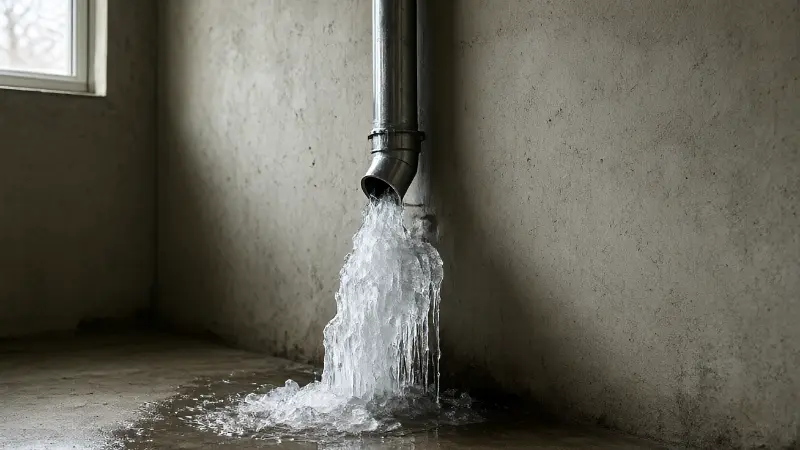
The most common cause is debris at the bottom of the downspout or in the underground drain. Leaves, shingle granules, and twigs collect at the outlet, and once water is trapped behind the debris, it freezes. Snow piled against the bottom of the downspout produces the same result by blocking the discharge path. A downspout that empties into a buried line can freeze at the point where it meets the ground, especially if the line is shallow or the ground is saturated.
Another cause is a slow flow that freezes on the way down. A downspout that is partly blocked higher up, or that has a crimped section or a sharp bend, can hold water long enough for it to freeze. Ice can also form on the outside of the downspout and bridge across the outlet, even when the inside is clear. A gutter that is full of ice can send water over the front edge, which then freezes on the downspout and on the ground below.
Heat loss from the house contributes to the problem as well. Warm air escaping into the attic melts snow on the roof, and that meltwater reaches the gutter and the downspout in a steady flow. When the air temperature drops, the water refreezes in the downspout and at the outlet. The same heat loss that produces ice dams at the eave feeds the ice in the downspout.
Signs the Downspout Is Frozen and Backing Up
The most visible sign is ice on the downspout itself. A thick coating of ice on the outside, or a column of ice visible inside the outlet, suggests that water is not moving. Water spilling over the front edge of the gutter during a thaw is another sign that the downspout is blocked somewhere along the run.
Look at the ground where the downspout discharges. A puddle that refreezes, a mound of ice at the base, or a snowbank that has turned to ice at the outlet all point to a blocked discharge. If the downspout empties into an underground drain, the ice may form at the point where the downspout meets the buried line, and the blockage may not be visible from the surface.
Water staining on the fascia or the siding near the downspout is a sign that water has been backing up and running behind the gutter. Soft wood, peeling paint, or a gap between the gutter and the fascia suggests that the blockage has been there for a while. Inside the house, watch for dampness at the foundation or in the basement near the downspout location.
A downspout that is frozen can also pull away from the gutter. Ice is heavy, and the weight can separate the elbow joint or the fasteners that hold the downspout to the wall. A loose downspout is a repair item even after the ice melts, because the next rain will run behind it rather than through it.
Safety First: Work From the Ground
Clearing a frozen downspout is not worth a fall. Work from the ground whenever possible, and avoid climbing a ladder when the ground is icy or the gutter is covered with snow. A ladder that shifts on ice is a serious hazard, and a fall from gutter height can cause lasting injury.
Do not chip at the ice with a hammer, a chisel, a screwdriver, or an axe. Metal tools damage the downspout, crack the elbows, and can puncture the fascia behind the gutter. They also send ice and debris falling, which is a hazard to anyone below. Do not use a blowtorch or a heat gun on the downspout, because the metal will distort and the adjacent siding or fascia can be damaged.
Keep electrical cords, outlets, and extension cords away from any water or ice at the base of the downspout. If the discharge is near an outdoor outlet, check that the outlet is GFCI-protected and dry. If water has reached an electrical component, turn off the circuit before you investigate.
Safe Ways to Thaw and Clear a Frozen Downspout
Start at the bottom. Clear snow and ice from the outlet with a plastic shovel or a gloved hand, and check whether water can drain. If the outlet is buried under a snowbank, removing the snow may be enough to restore flow once the ice inside begins to melt. Do not stand under the downspout while you work, because melting ice can fall unexpectedly.
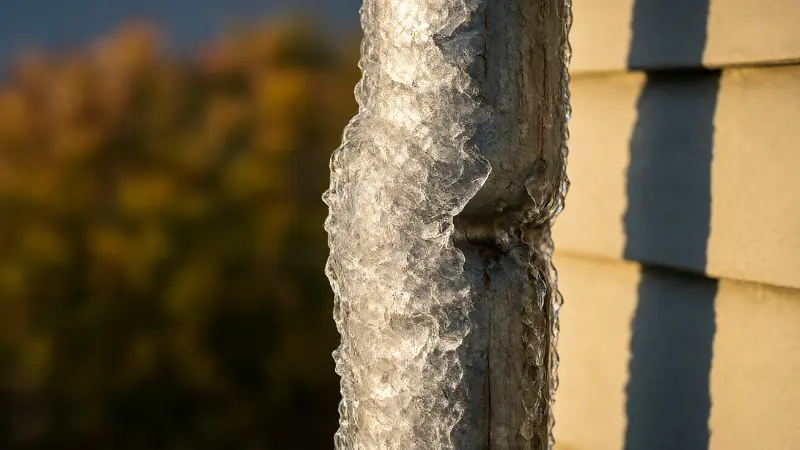
Warm water can help if the outlet is reachable from a stable position. Pour warm, not boiling, water into the bottom of the downspout and watch for it to drain. Boiling water can crack the downspout and the gutter through thermal shock, and it can refreeze quickly in cold air. If the water does not drain, the blockage is higher up or the underground line is frozen.
For a blockage higher in the downspout, a flexible drain brush or a plumber’s snake used from the bottom can break up the ice and debris. Work gently and do not force the tool if it meets solid resistance. A metal rod inserted from the top while standing on a ladder is a poor choice in winter conditions, because the rod can jam and the ladder can shift.
If the downspout empties into an underground drain, check whether the line is frozen at the connection. A buried line that has frozen will back water up into the downspout no matter how clear the vertical section is. In cold climates, a temporary above-ground extension that discharges onto a splash block away from the foundation may be more reliable during winter than a buried line.
Use gentle heat only where it is safe
A hair dryer on a low setting can warm a metal downspout, but it is slow and should be used only on a section you can reach safely from the ground. Do not use a heat gun on high, and do not direct heat at vinyl siding or at the foam behind the gutter. Heat that is too concentrated can warp the siding and damage the gutter seal.
Check for Blockages, Slope, and Damage
Once the ice is cleared, check the inside of the downspout for debris. A garden hose run at low pressure from the top can reveal whether the line is clear, but only do this when the weather is above freezing and you can reach the top safely. If water backs up, the blockage is still present and needs to be cleared with a brush or a snake.
Check the elbows and the joints. A downspout that has separated at an elbow will leak water against the wall instead of carrying it down. Reconnect the sections and secure them with the proper fasteners. If the elbow is cracked, replace it rather than taping it, because a taped joint will fail again in the next freeze.
Check the slope of the gutter that feeds the downspout. A gutter that is level or that sags away from the outlet will hold water, and that water freezes in the downspout. Tighten the hangers and adjust the pitch so water moves toward the outlet. If the fascia is soft from previous ice damage, repair it before the new fasteners go in.
Look at the discharge point. If the downspout empties onto flat ground, the water pools and refreezes. A splash block, a gravel bed, or a downspout extension that carries water several feet away from the foundation reduces the chance of ice at the outlet. If the downspout empties into a buried line, confirm that the line is clear and that the discharge point is below the frost line or otherwise protected.
Prevent the Next Freeze
Prevention starts with clean gutters and clear downspouts before winter. Remove leaves and debris from the channel and flush the downspouts with a hose while the weather is still mild. Confirm that water flows freely from the high end to the outlet. That single step prevents most winter downspout freezes.
Keep the outlet clear during winter. After each storm, clear snow from the base of the downspout and check that the discharge path is open. If the downspout empties into a splash block, make sure the block is not buried. If it empties into a buried line, check the surface above the line for ice and consider a temporary above-ground extension during the coldest weeks.
Address the attic heat loss that feeds the meltwater. Air seal the ceiling plane, insulate to the recommended depth, and keep the soffit-to-ridge ventilation clear. A cold roof produces less meltwater, which means less water in the gutter and downspout and fewer ice dams at the eave. The same work reduces the risk of roof leaks during a thaw.
Consider the downspout size and the number of outlets. A single small downspout on a long roof run can be overwhelmed by a rapid melt. Adding a second outlet or increasing the downspout size improves drainage and reduces the chance of a freeze. That is a job for a gutter contractor, but it is worth discussing if the same downspout freezes every year.
Other winter water problems follow similar logic and often appear at the same time. An outdoor faucet frozen and leaking inside the wall needs immediate isolation, and a supply line that has frozen under a sink needs careful thawing. The steps for thawing frozen pipes under sink cover the safe warming technique. If the gutter itself is also frozen and not draining, a guide to gutter frozen and not draining covers the channel-side checks and the warning signs to watch inside the house.
When to Call a Professional
Call a gutter contractor if the downspout is pulling away from the wall, if the fascia is soft, if the gutter has separated at a seam, or if the downspout cannot be cleared safely from the ground. A professional can assess the hangers, the slope, the downspout size, and the roof edge as one system and recommend the right repair.
Call an ice dam removal service if the ice at the eave is thick and water is backing up under the shingles. Steam removal clears the ice without damaging the gutter or the downspout. Do not hire anyone who offers to chip the ice out with hand tools or a torch.
Call a plumber if the downspout discharges into a buried drain that has frozen and cannot be cleared, or if water is entering the basement at the foundation. A buried line may need to be re-routed, insulated, or replaced with an above-ground discharge. Those are larger projects than a simple thaw.
Quick Reference: Downspout Symptoms and Actions
The table below matches common frozen downspout situations with the likely cause and the safest first step. Use it to decide what to do now and what to schedule for the first safe weather window.
| Symptom | Likely Cause | Safe First Step | When to Call a Pro |
|---|---|---|---|
| Ice visible on the downspout and water spilling over the gutter | Blocked outlet or debris in the downspout | Clear snow and ice from the bottom outlet | Downspout is loose or the fascia is soft |
| Ice mound at the base of the downspout | Discharge pooling and refreezing | Clear the outlet and add a splash block or extension | Water is reaching the foundation |
| Downspout separated at an elbow | Ice weight pulling the joint apart | Do not climb; plan a reconnect and fastener repair | Always, for a loose downspout |
| Water backing up into the gutter during a thaw | Underground drain frozen or blocked | Check the surface above the line; consider a temporary above-ground extension | Buried line cannot be cleared |
| Water staining on the siding or fascia near the downspout | Water running behind the downspout | Note the location; check for soft wood | Fascia is soft or water is reaching the wall |
| Downspout freezes every winter in the same spot | Poor slope, undersized outlet, or attic heat loss | Clean, re-pitch, and air seal the attic | Repeat freeze after corrections |
| Water at the foundation after a melt | Discharge not carrying water away | Extend the discharge away from the wall if safe | Basement moisture persists |
| Ice on the downspout with a clear gutter | Slow flow or a crimped section | Check for kinks and debris; clear from the bottom | Downspout is damaged or crushed |
FAQ
Why does my downspout freeze and back up every winter?
A repeat freeze usually points to a blocked outlet, debris in the downspout, a shallow slope in the gutter, or a buried drain that freezes. It can also be fed by attic heat loss that melts snow on the roof. Cleaning the system, correcting the slope, and addressing the attic are the durable fixes.
Can I pour hot water down a frozen downspout?
Warm, not boiling, water is safer. Boiling water can crack the downspout and the gutter through thermal shock and can refreeze quickly. Pour warm water into the bottom outlet and watch for drainage. If it does not drain, the blockage is higher up or the underground line is frozen.
Should I climb on the roof to clear the downspout?
Working from the roof or a ladder in winter is a serious fall hazard. Clear the outlet from the ground, use a flexible brush or snake from the bottom, and hire a professional if the blockage cannot be reached safely. Do not lean a ladder against a snowy gutter.
What should I do if the downspout discharges into a buried line that is frozen?
Disconnect the downspout from the buried line if the connection allows, and route the discharge onto a splash block or a temporary above-ground extension away from the foundation. A buried line that freezes repeatedly may need to be re-routed, insulated, or replaced with an above-ground discharge.
Conclusion
A downspout that is frozen and backing up is usually blocked at the outlet, clogged with debris, or overwhelmed by meltwater from a warm roof. The safe response is to work from the ground, clear the outlet, use warm water carefully, and avoid climbing or chipping at the ice. A flexible brush or a snake used from the bottom can clear a blockage that is higher in the run.
After the ice melts, check the elbows, the fasteners, the gutter slope, and the discharge point. Reconnect or replace damaged sections, correct the pitch, and move the discharge away from the foundation. Addressing the attic heat loss reduces the meltwater that feeds the freeze and protects the roof edge at the same time.
Call a professional for a loose downspout, soft fascia, a buried line that will not clear, or any situation that cannot be handled safely from the ground. A downspout is a small part of the drainage system, but when it fails, the water ends up exactly where you do not want it.