A dishwasher supply line that freezes in winter can leave the appliance unable to fill, even though the rest of the kitchen plumbing seems fine. The line is small, often tucked into a cabinet against an exterior wall, and it carries water only when the dishwasher calls for a fill. That slow, intermittent flow gives it plenty of time to cool, and a cold draft through the cabinet can turn the remaining water into ice.
The symptoms can be confusing because the dishwasher may run part of its cycle, display an error code, or stop with water sitting in the bottom of the tub. This guide explains why the supply line freezes, how to recognize the problem, the safe way to thaw the line without damaging the valve or the appliance, and the prevention steps that keep it working through the coldest weeks. Safety comes first: a dishwasher combines water and electricity, so the power and the supply valve need attention before any tools come out.
Why Dishwasher Supply Lines Freeze
A dishwasher supply line is usually a small-diameter tube that branches off the hot water pipe under the kitchen sink. It runs from a shutoff valve to the dishwasher inlet, often through a cabinet that sits against an exterior wall. The line holds very little water, and it sits idle for hours between cycles. In a cold cabinet, that small volume of water loses heat quickly.
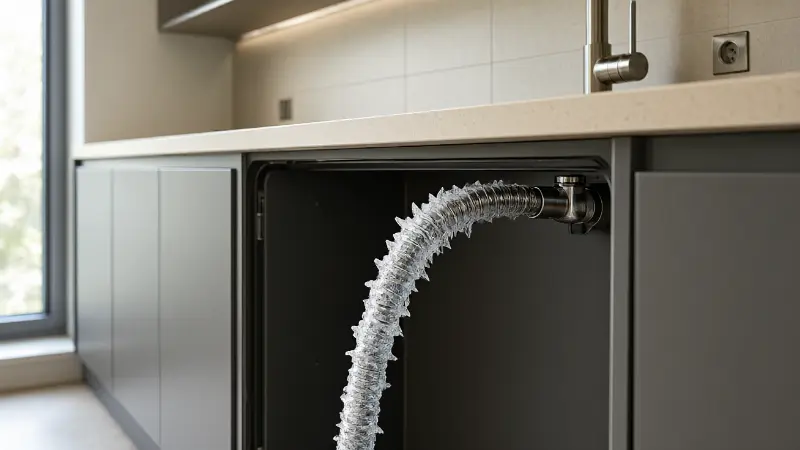
Cold air is the main cause. A cabinet on an exterior wall can be significantly colder than the kitchen itself, especially when the doors stay closed. Gaps around the pipe where it enters the cabinet, a missing toe-kick seal, or a draft from a nearby exterior door can chill the line below freezing. A dishwasher that is used infrequently is more vulnerable because the water in the line has more time to cool.
Installation details matter too. A supply line that is looped, kinked, or routed through an uninsulated section of cabinet holds water in low spots where ice can form. A line that runs along the exterior sheathing rather than through the warmer interior of the cabinet is exposed to the coldest surface. In some homes, the supply line passes through a hole drilled in an exterior wall, and that short section can freeze while the rest of the line stays clear.
The supply line is different from the drain line. The drain hose carries water only during the drain cycle, and it can also freeze, but a frozen supply line prevents the dishwasher from filling at all. Recognizing which line is affected changes the repair, so check both if the appliance is not working normally.
Signs the Supply Line Is Frozen
The most direct sign is that the dishwasher does not fill. You may hear the control board click, the cycle may start, and then the machine stops with an error code or a pause. Some models display a specific code for a low water level or a fill fault, while others simply sit without progressing. The owner’s manual will explain what the code means for your model.
Check the hot water at the kitchen faucet. If the faucet runs normally but the dishwasher does not fill, the freeze is likely in the branch line or the dishwasher inlet. If the faucet also has no hot water, the freeze may be in the main hot water line or the supply to the kitchen, which is a larger problem.
Look and listen at the supply valve and the line. A frozen line may show frost or condensation, and the valve may feel cold or stiff. You may hear a faint hiss or nothing at all when the dishwasher tries to fill. Do not assume the valve is open until you have confirmed it, because a closed valve produces the same symptom as a frozen line.
After the line thaws, watch for water where it should not be. A frozen line can crack, and a braided stainless hose can develop a pinhole leak at a crimp. A plastic supply tube can split at a fitting. Any leak after thawing means the line needs replacement rather than another thaw.
Safety First: Shut Off Power and Water
Before you open the cabinet or touch the supply line, turn off the dishwasher at the circuit breaker. The appliance has a control board, a heating element, and a fill valve, and water near those components is a shock hazard. If the breaker is not labeled, turn off the main breaker or call an electrician rather than guessing.
Shut off the supply valve under the sink. The valve is usually a small quarter-turn or multi-turn valve on the hot water branch that feeds the dishwasher. Turn it clockwise until it stops. If the valve is stiff or will not turn, do not force it; a broken valve can release water into the cabinet. Call a plumber if the valve is seized.
Keep electrical cords and outlets out of the cabinet area. If water has already leaked onto the floor or the cabinet base, dry it before you restore power. If water has reached an outlet or the dishwasher junction box, leave the power off and call an electrician or an appliance technician.
Do not use a blowtorch, a heat gun on a high setting, or boiling water on the supply line. Plastic tubing and braided hoses can deform or burst under concentrated heat, and a flame inside a cabinet is a fire risk. Warm air, warm towels, and a hair dryer on a low setting are the safe tools.
How to Thaw the Supply Line Safely
Start by opening the cabinet doors and raising the kitchen temperature a few degrees. Warm room air can reach the line slowly, and that gentle warming is often enough if the freeze is minor. Remove stored items from the cabinet so air can circulate around the valve and the line.
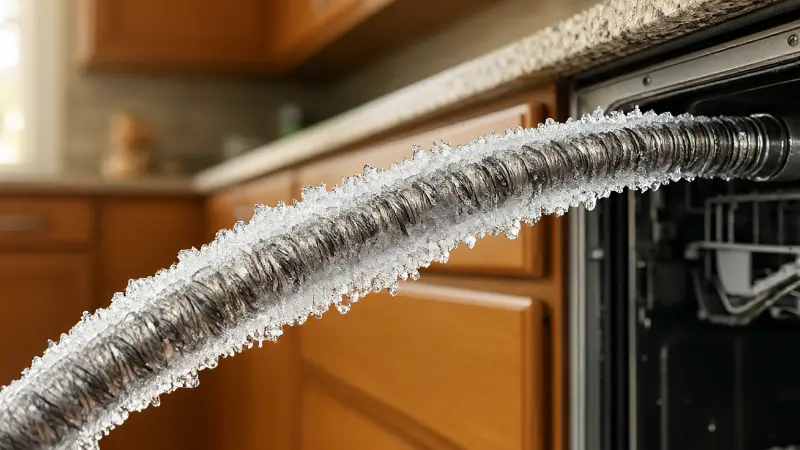
Use a hair dryer on a low or medium setting, held several inches from the line and kept moving. Work from the valve end toward the dishwasher, or from the dishwasher end toward the valve if that section is more accessible. Do not concentrate heat on one spot, because the tubing can soften or the braid can trap heat against the inner tube.
Warm, damp towels wrapped around the frozen section are another safe option. Refresh them as they cool. If the line runs behind a cabinet panel or through a wall, do not cut into the wall unless you are certain what is behind it. A small inspection opening may be justified, but a hidden line is often a job for a plumber.
Once water begins to flow, let it run briefly at the sink to confirm that the branch is clear. Then close the sink faucet and restore power to the dishwasher. Run a short rinse or fill cycle and watch for leaks at the valve, the line, and the dishwasher inlet. If the machine fills normally and no water appears, the thaw was successful.
What not to do
Do not pour antifreeze or chemical de-icer into the supply line. Those products are not intended for potable water lines and can damage the appliance. Do not use a hammer or a screwdriver to break ice inside the line, because the tubing can crack. Do not leave a space heater unattended inside a cabinet.
Check the Supply Valve and Line for Damage
After the line thaws, inspect the valve and the hose. A valve that was frozen can crack at the bonnet or the body, and a cracked valve may not leak until the water is turned back on. Dry the valve and the line with a towel, then open the valve slowly and watch for drips at the packing nut and the outlet.
Look at the supply line along its full length. A braided stainless hose may show a bulge, a rust spot, or a frayed section. A plastic tube may show a white stress mark or a split at the fitting. Any of those conditions means the line should be replaced before the dishwasher is used again. A new supply line is inexpensive compared with water damage under a cabinet.
Check the dishwasher inlet fitting as well. The fitting can crack if water froze inside it, and a cracked inlet can spray water onto the control board. If the inlet is damaged, the repair is usually an appliance technician job rather than a homeowner task.
Restore Water and Test the Dishwasher
Open the supply valve slowly rather than snapping it open. A gradual restoration of pressure is gentler on a line that was recently frozen, and it gives you time to watch for a leak. Listen for water moving through the line and check the valve and the hose with a dry paper towel.
Restore power at the breaker and run a short cycle. Stay in the kitchen for the first few minutes so you can hear any unusual noise or see water on the cabinet floor. A dishwasher that fills and drains normally is a good sign. If the machine still does not fill, the problem may be the fill valve, the control board, or a clogged inlet screen rather than a freeze.
If the dishwasher fills but the water is not hot, the issue may be the hot water supply rather than the dishwasher itself. A frozen or restricted hot water line upstream of the valve can affect both the sink and the appliance. Check the hot water at the sink and confirm that the water heater is working before assuming the dishwasher has failed.
Prevent the Next Freeze
Insulate the supply line with foam pipe insulation sized to the hose, and seal the seams and ends. Pay attention to the section where the line enters the cabinet and the wall, because those are common freeze points. Insulation slows heat loss but does not add heat, so combine it with air sealing and a warmer cabinet.
Seal the drafts around the cabinet and the wall penetrations. Cold air entering through a gap around the pipe can freeze the line even when the kitchen itself is warm. Use caulk or foam sealant appropriate for the surface, and avoid sealing any opening that is needed for ventilation or combustion air.
Leave the cabinet doors open during cold snaps so warm room air can reach the valve and the line. This is a simple habit that makes a real difference on an exterior wall. If the cabinet is crowded, clear a space around the valve so air can circulate.
Run the hot water at the kitchen sink briefly each day during severe cold. That keeps warm water moving through the branch and reduces the chance that the line sits cold long enough to freeze. If you will be away, keep the thermostat at a temperature that protects the kitchen plumbing, or shut off the supply valve and drain the line according to the manufacturer’s guidance.
Other winter drain and supply problems follow similar logic. A frozen sump pump discharge line can back water into a basement, and a guide to a sump pump discharge line frozen covers the slope and insulation fixes for that system. A frozen HVAC condensate line can shut down a furnace, and a guide to a frozen HVAC condensate line explains the thawing and prevention steps for that equipment.
When to Call a Plumber or Appliance Technician
Call a plumber if the supply valve is seized or damaged, if the line is frozen behind a wall or cabinet panel you cannot access safely, if you find a leak after thawing, or if the hot water supply to the kitchen is affected. A plumber can replace the valve and the line and confirm that the branch is properly installed and insulated.
Call an appliance technician if the dishwasher still will not fill after the supply line is clear and the valve is open. A failed fill valve, a clogged inlet screen, a pressure sensor, or a control board fault can produce the same symptom as a freeze. Those repairs require parts and diagnostic tools.
If the line has cracked and water has reached the dishwasher’s electrical components, leave the power off and call for service. Water inside a control board or a junction box is a shock hazard and can damage the appliance beyond a simple repair. A technician can dry, test, and replace the affected parts.
Other frozen lines in the home need professional handling for the same reasons. A septic line that freezes should be thawed by a septic professional rather than with chemicals or a flame, and a guide to a septic line frozen how to thaw explains the safe methods and the risks of DIY attempts.
Quick Reference: Symptoms and Fixes
The table below matches common dishwasher supply line symptoms with the likely cause and the safest first step. Use it to organize your checks, and stop if a step involves live voltage, a seized valve, or a line you cannot reach safely.
| Symptom | Likely Cause | Safe First Step | When to Call a Pro |
|---|---|---|---|
| Dishwasher will not fill, error code displayed | Frozen supply line or closed valve | Turn off power; confirm the valve is open; warm the cabinet | Still will not fill after thawing |
| Kitchen faucet hot water works, dishwasher does not fill | Frozen branch line or dishwasher inlet | Thaw the line gently from the valve end | Line is behind a wall or inlet is cracked |
| Frost or condensation on the supply line | Cold cabinet on an exterior wall | Open cabinet doors; use a hair dryer on low | Freeze recurs after insulation |
| Valve feels stiff or will not turn | Frozen or seized valve | Do not force it; warm gently with a hair dryer | Valve is damaged or leaking |
| Water appears under the cabinet after thawing | Cracked line or fitting | Shut off the valve; dry and inspect | Leak confirmed; line needs replacement |
| Dishwasher fills but water is cold | Hot water supply issue upstream | Check the sink hot water and the water heater | Heater or main line fault suspected |
| Breaker trips when the dishwasher starts | Water in electrical components | Leave power off; do not reset repeatedly | Technician or electrician needed |
FAQ
How do I know if my dishwasher supply line is frozen or the valve is closed?
Check the valve under the sink first; a closed valve produces the same no-fill symptom as a frozen line. If the valve is open and the kitchen faucet has hot water but the dishwasher does not fill, a frozen branch line is likely. Frost or condensation on the line supports the diagnosis.
Can I thaw a dishwasher supply line with hot water?
Boiling water can damage plastic tubing and braided hoses through thermal shock. Use a hair dryer on a low setting, warm towels, or warm room air instead. Do not use a torch or a heat gun on high near the line or the cabinet.
Why does my dishwasher supply line freeze every winter?
A recurring freeze usually points to a cold cabinet on an exterior wall, a draft around the pipe penetration, or a line that is not insulated. Sealing the drafts, adding foam insulation, and leaving the cabinet doors open during cold snaps address most repeat cases. If the freeze continues, a plumber can assess the line routing.
Should I replace the supply line after it freezes?
Inspect the line carefully after thawing. A braided hose with a bulge, rust spot, or frayed section, or a plastic tube with a split or stress mark, should be replaced. Even a line that looks fine can have a weakened crimp, so replacement is a reasonable precaution on an older hose.
Conclusion
A dishwasher supply line that freezes in winter usually means the small branch line in an exterior-wall cabinet has cooled below freezing. The symptom is a dishwasher that will not fill, sometimes with an error code, while the kitchen faucet may still work normally. Turn off the power and the supply valve, warm the cabinet and the line gently, and watch for leaks as the ice melts.
Do not use a flame, boiling water, or a high-setting heat gun on the line. Plastic tubing and braided hoses can be damaged by concentrated heat, and water near the appliance’s electrical components is a shock hazard. If the valve is seized, the line is behind a wall, or the dishwasher still will not fill after thawing, call a plumber or an appliance technician.
Prevention is the durable fix. Insulate the line, seal the drafts, leave the cabinet doors open during cold snaps, and run hot water at the sink regularly. Those habits keep the supply line clear and protect the cabinet, the floor, and the appliance through the coldest part of the season.