Cold water pipe sweating in winter is one of the most misunderstood plumbing complaints. Homeowners often assume a pipe has sprung a leak, but in most cases the moisture is condensation, not a plumbing failure. The pipe itself is dry on the inside and wet on the outside because humid indoor air is meeting a surface that is colder than the dew point.
That distinction matters because the fix is different. A leak requires a plumber and a repair, while condensation requires control of humidity, temperature, and insulation. This guide explains why cold pipes sweat in winter, how to tell condensation from a real leak, and the five causes that most often produce the problem, along with the steps that resolve each one.
Why Cold Water Pipes Sweat in Winter
Condensation forms when warm, moist air contacts a surface that is at or below the dew point temperature. In winter, cold water entering the home from the municipal supply or a well can be significantly colder than the indoor air. A pipe carrying water at 45°F in a basement at 68°F with moderate humidity is a perfect condensation surface.
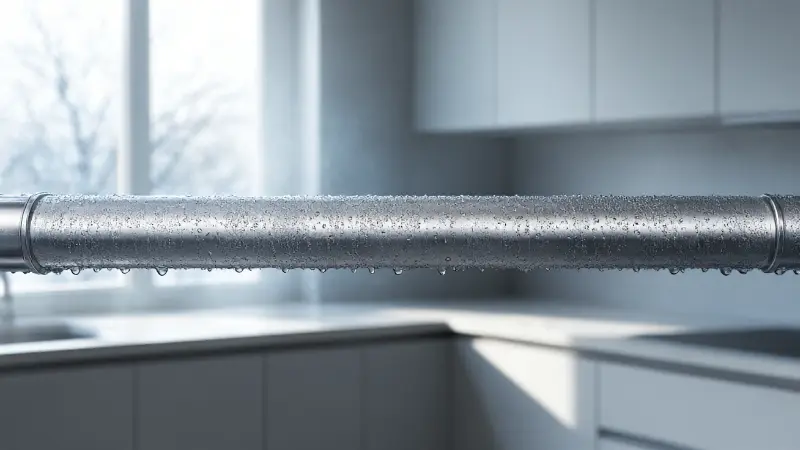
Winter conditions can actually make sweating worse in some homes because the house is closed up. Windows stay shut, exhaust fans run less, and moisture from cooking, showers, laundry, and breathing accumulates indoors. The indoor relative humidity rises, the dew point rises with it, and more surfaces fall below that threshold.
Cold snaps also cool the pipes themselves. A supply line that runs through an unheated crawl space, along an exterior wall, or through a basement that is colder than the living space will carry water at a lower temperature. The colder the pipe, the more likely it is to drop below the dew point of the surrounding air.
Newer homes with tight envelopes and continuous bathroom fans may still have humidity problems if the fans are undersized or run intermittently. Older homes with leaky foundations and damp crawl spaces add ground moisture to the air. In both cases, the cold water pipe becomes the visible symptom of a humidity problem rather than the cause.
How to Tell Sweating From a Leak
Before you call a plumber, confirm what you are looking at. Condensation tends to appear as a uniform film of moisture along the length of a cold pipe, often with droplets forming on the underside and dripping onto the floor. It is usually worse on the coldest sections and may disappear when the humidity drops.
A leak, by contrast, is often localized to a joint, a fitting, or a valve. You may see a drip that continues even when the humidity is low, mineral deposits or white crust at the source, or water staining on nearby materials. A pinhole leak in copper can spray a fine mist that looks like condensation until you look closely.
Wipe the pipe dry with a paper towel and watch it for several minutes. If moisture returns evenly across the surface, condensation is the likely cause. If water reappears at a specific fitting or runs down from a joint, a leak is more likely. A dry paper towel wrapped around a suspect joint will show a leak as a damp spot.
Check the humidity level in the space. A hygrometer is inexpensive and takes the guesswork out of the diagnosis. If relative humidity is above roughly 50 to 60 percent in a basement or crawl space, condensation becomes much more likely on cold surfaces. If the humidity is low and the pipe still sweats, the pipe temperature or a hidden moisture source deserves a closer look.
Cause One: High Indoor Humidity
The most common cause of sweating cold pipes is elevated indoor humidity. Winter humidity comes from several sources: showers, cooking, laundry, humidifiers, firewood stored indoors, and moisture migrating up from a damp crawl space or basement floor. In a well-sealed home, that moisture has nowhere to go.
Run exhaust fans in bathrooms and the kitchen for long enough to clear the moisture. Many fans are wired to a timer or a humidistat for a reason, and a fan that runs for five minutes after a shower is often not enough. Check that the fan is venting outdoors rather than into the attic or a crawl space, because a fan that dumps moist air into the building makes the problem worse.
A dehumidifier in the basement or crawl space is a practical solution when ventilation alone is not enough. Choose a unit sized for the square footage and the moisture level, and plumb it to a floor drain or a condensate pump so you do not have to empty it daily. Keep the space closed while the dehumidifier runs so it is not trying to dry the entire neighborhood.
If your water heater is also struggling to keep up in winter, that can add to the moisture load and the general discomfort in the space. A guide to a water heater not keeping up in winter covers the causes and the checks that separate a capacity issue from a mechanical fault.
Cause Two: Uninsulated Cold Water Pipes
Insulating a cold water pipe does not warm the water, but it does raise the surface temperature of the pipe by separating it from the humid air. That separation is often enough to keep the pipe above the dew point and stop condensation. Foam pipe insulation is inexpensive and easy to install on accessible runs.
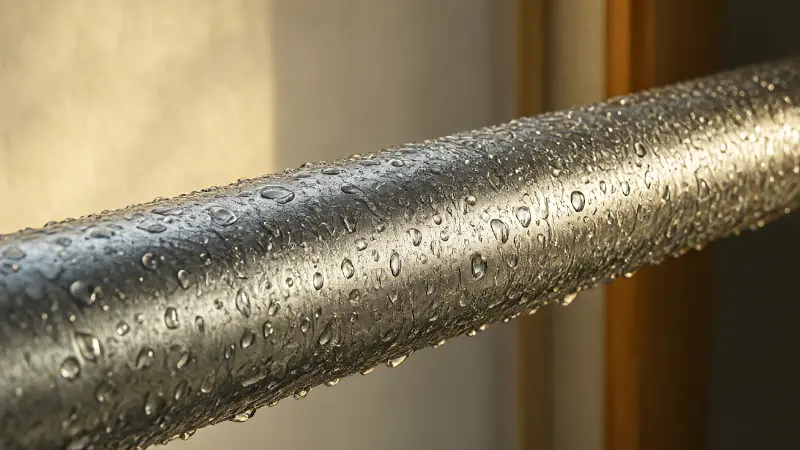
Choose insulation sized to the pipe diameter and slide it over the pipe, sealing the seams with the adhesive backing or with tape rated for the material. Pay attention to elbows, tees, and valves, because those are common condensation points and are often skipped. Pre-formed fitting covers or carefully cut sleeve sections keep the protection continuous.
Do not compress the insulation or leave gaps at the ends. A sleeve that is too large or loosely fitted allows humid air to contact the pipe and reduces the benefit. If the pipe runs through a space that stays very cold, insulation alone may not stop condensation, and the humidity in that space becomes the priority.
Insulating hot water pipes has a different benefit: it reduces standby heat loss and helps hot water arrive at the fixture at a higher temperature. If you are insulating one set of pipes, consider doing both while you have the materials and access. A water heater that cannot keep up in winter may benefit from that added efficiency.
Cause Three: Cold Air Reaching the Pipe
A cold water pipe that runs through an unheated crawl space, a garage, or along an exterior wall can be chilled by the surrounding air even when the water inside is not especially cold. Sealing the drafts that let cold air reach the pipe raises the local temperature and reduces condensation.
Look for gaps around foundation penetrations, rim joists, and the point where the pipe enters the house. Cold air entering through a small hole can chill a surprising length of pipe. Seal those gaps with caulk, foam, or weatherstripping appropriate for the surface, and avoid sealing combustion air openings or vents that must remain open.
Keep the space heated to a reasonable temperature if it contains plumbing. A crawl space that stays above freezing but below the dew point of the air above can still produce condensation, so a small thermostatically controlled heater or better connection to the conditioned space may help. Do not use an unvented combustion heater in a confined space.
If the home has a hydronic heating system, a circulator pump not running in winter can leave rooms cold and change how moisture condenses on cold surfaces. The diagnostic steps in a circulator pump not running in winter guide cover the power, control, and mechanical checks for that system.
Cause Four: Plumbing Leaks and Drips
A small leak can look like condensation, especially on a cold pipe. A dripping valve, a weeping supply connection, or a pinhole in copper can keep a section of pipe wet and make the whole run appear to sweat. Fixing the leak removes the moisture source and often resolves the complaint.
Inspect the visible plumbing in the basement, under sinks, and around the water heater. Look for mineral crust, corrosion, and water stains. Dry the pipe and the fittings thoroughly, then check again after a few hours. A dry paper towel wrapped around a joint will show a weep that is too small to see.
Check the fixtures as well. A toilet that runs intermittently, a faucet that drips, or a shower valve that seeps can add moisture to the air and keep the space humid. Repairing those small leaks reduces the humidity load and the condensation on cold surfaces.
If the leak is inside a wall or ceiling, the evidence may be a stain, a soft spot, or a musty smell rather than visible water. A moisture meter can confirm a hidden leak before it causes structural damage. Persistent moisture in a wall cavity is a mold risk, and it should be addressed rather than painted over.
Cause Five: Damp Basement or Crawl Space
Ground moisture is a major contributor to indoor humidity in winter. A basement with a damp floor, exposed soil in a crawl space, or a missing vapor barrier releases water vapor into the air continuously. That vapor raises the dew point and condenses on the coldest surfaces, including cold water pipes.
Install or repair the vapor barrier in a crawl space. A continuous plastic sheet over the soil, sealed at the edges and around piers, reduces evaporation significantly. Keep the barrier intact and avoid storing items on top of it in a way that tears it. In a basement, seal the floor and walls if moisture is coming through the concrete, and address gutter and grading issues that send water toward the foundation.
Confirm that the sump pit and any floor drains are working and that the discharge line is clear. A sump pump that runs during a thaw moves water out, but a pit that stays full can add humidity to the space. A frozen HVAC condensate line can create similar water problems in winter, so check that too with a guide to a frozen HVAC condensate line if you notice water near the furnace.
Prevention and When to Call a Professional
Most cold pipe sweating can be managed with humidity control, insulation, and air sealing. Monitor the humidity with a hygrometer, run exhaust fans consistently, use a dehumidifier where needed, and insulate the accessible cold lines. Those steps address the cause rather than the symptom.
Call a professional if you cannot find the source of the moisture, if the humidity stays high despite ventilation and a dehumidifier, if you see mold growth, or if a leak is hidden inside a wall or ceiling. A plumber can confirm whether a fitting is leaking, and a moisture or building specialist can assess a persistent damp problem in a basement or crawl space.
Mold is a health and structural concern, not just a cosmetic one. If you see dark staining, smell a musty odor, or notice soft drywall or peeling paint near a cold pipe, address the moisture source before cleaning or repainting. Cleaning mold without fixing the humidity will lead to a repeat.
Quick Reference: Symptoms and Likely Causes
The table below matches common cold-pipe moisture patterns with the causes that most often produce them. Use it to organize your checks, and stop if a step involves a hidden leak or a space you cannot access safely.
| Pattern | Likely Cause | Safe First Step | When to Call a Pro |
|---|---|---|---|
| Even moisture along a cold pipe | Condensation from high indoor humidity | Check humidity with a hygrometer; run exhaust fans | Humidity stays high after ventilation |
| Water droplets on the underside of a pipe | Pipe below the dew point of the air | Insulate the accessible pipe runs | Condensation continues after insulation |
| Moisture at a joint or fitting | Small leak or weeping connection | Dry and watch with a paper towel | Leak confirmed or hidden in a wall |
| Wet pipe in a cold crawl space | Cold air reaching the pipe | Seal foundation and rim joist gaps | Space stays damp and cold |
| Damp floor and high humidity in a basement | Ground moisture and missing vapor barrier | Repair the vapor barrier; run a dehumidifier | Mold or structural damage appears |
| Musty odor near a cold pipe | Persistent moisture and early mold growth | Find and fix the moisture source | Mold is visible or widespread |
| Moisture only in winter | Closed house and cold pipes | Ventilate and insulate; monitor humidity | The pattern repeats every season |
FAQ
Is it normal for cold water pipes to sweat in winter?
Some condensation is common when the indoor humidity is high and the pipe is cold, but heavy sweating is a sign that the humidity or the pipe temperature needs attention. It is not a plumbing failure by itself, but it can lead to mold and water damage if it is ignored. Reducing humidity and insulating the pipe addresses the cause.
Can sweating pipes cause mold?
Yes. Constant moisture on a pipe, the floor beneath it, or nearby framing creates the conditions mold needs. The risk is higher in a closed basement or crawl space with limited airflow. Fixing the humidity and the cold surface is the durable solution, and any existing mold should be cleaned after the moisture source is corrected.
Should I insulate hot water pipes too?
Insulating hot water pipes reduces standby heat loss and improves hot water delivery, so it is worth doing while you have the materials and access. It does not stop condensation on cold pipes, but it improves the overall efficiency of the system and complements the work on the cold side.
Why does my pipe sweat only in winter?
Winter often means a closed house, higher indoor humidity from showers and cooking, and colder water entering the home. The combination pushes the pipe below the dew point of the surrounding air. Warmer months with open windows and lower humidity usually reduce the problem.
Conclusion
Cold water pipe sweating in winter is usually condensation rather than a leak. The pipe surface is colder than the dew point of the surrounding air, and the moisture you see is the result of humidity meeting that cold surface. Confirming the difference with a dry paper towel and a hygrometer is the first step.
The five causes worth checking are high indoor humidity, uninsulated cold pipes, cold air reaching the pipe, small plumbing leaks, and a damp basement or crawl space. Address humidity with ventilation and a dehumidifier, insulate the accessible runs, seal the drafts, and repair any actual leaks. Those steps resolve most cases without major work.
If the moisture persists, if you find mold, or if a leak is hidden inside a wall, call a professional. A dry, well-ventilated space and insulated pipes protect the structure and keep the plumbing from looking like it has a problem it does not have.