An extension cord for holiday lights getting hot is a warning sign that should not be ignored. Heat usually means the cord is carrying more current than it can handle comfortably, or that a connection is loose, damaged, or exposed to moisture. Holiday displays often combine many strands, long runs, and outdoor conditions, and those factors can push a marginal cord beyond its safe working range.
This guide explains why cords heat up, how to check the load and cord rating, and what to do when you find a warm cord. It also covers wire gauge, length, connections, outdoor protection, and the point at which replacement is the only sensible option. Safety comes first: unplug a hot cord before you inspect it.
Why an Extension Cord Gets Hot
Electrical current flowing through a wire meets resistance, and resistance produces heat. A cord that is too thin for the load, too long for its gauge, or damaged in a way that narrows the conductive path will heat up more than a properly matched cord. Heat is not always a sign of immediate failure, but it is a sign that the cord is working harder than it should.
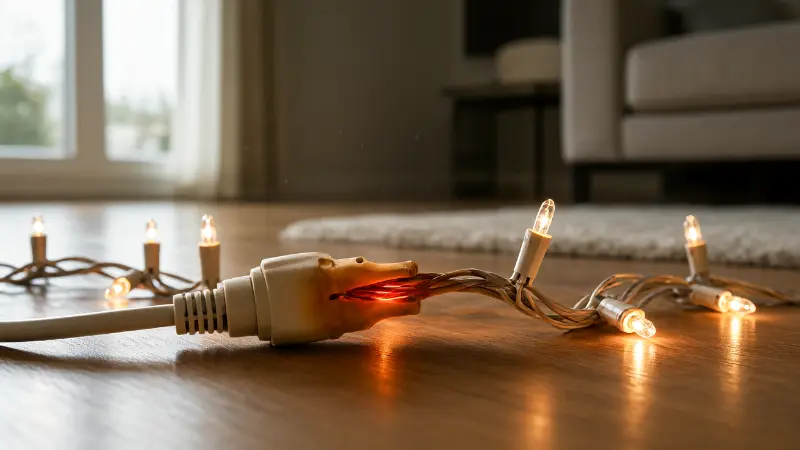
holiday lights add up quickly. A single strand may draw little power, but several strands connected together, plus a long extension cord, can create a load that exceeds what the cord was designed to carry. Incandescent mini lights and larger bulbs draw more current than many LED sets, so the same cord setup may be fine with LEDs and marginal with older lights.
Connections are another common source of heat. A plug that is not fully seated, a socket with corroded contacts, or a cord end that has been stepped on can create resistance at the connection point. That localized resistance can make the plug or receptacle end noticeably warm even when the cord itself is adequately sized.
Immediate Safety Steps When a Cord Feels Hot
If a cord is hot to the touch, unplug it from the power source before doing anything else. Do not wiggle the plug, touch the warm section, or try to reposition the cord while it is energized. If the plug or outlet is hot, turn off the circuit breaker that feeds the outlet if you can do so safely.
Let the cord cool completely before inspecting it. Look for discoloration, melted insulation, a burnt smell, or a plug that is deformed. A cord that shows any of these signs should be removed from service and replaced rather than repaired with tape or a new end unless you are qualified to make a proper repair.
If the outlet itself is warm, discolored, or buzzing, stop using that receptacle and have an electrician inspect it. Heat at the outlet can indicate a loose connection behind the cover plate or a worn receptacle. This is a different problem from an undersized cord, and it needs professional attention.
Check the Load and the Cord Rating
Add up the wattage of the lights connected to the cord and compare that load with the cord’s rating. Extension cords are typically rated for a certain amperage or wattage, and that rating assumes a specific use and length. The label on the cord and the packaging are the best sources for the manufacturer’s limits.
Do not assume that a cord with a thick jacket is automatically suitable for a heavy load. Some decorative or lightweight cords have thin conductors inside a bulky jacket. Check the wire gauge printed on the cord, and confirm that the cord is listed for the environment where it is used, especially outdoors.
If the load is close to the cord’s limit, split the display across more than one circuit or use a shorter, heavier cord. A cord that runs at its maximum rating for hours may feel warm even when it is technically within spec. Leaving some margin is a sensible practice for holiday lighting that runs for long periods.
Understand watts, amps, and cord length
Longer cords have more resistance, which can increase voltage drop and heat. A cord that works well at a short length may be marginal when stretched across a yard or along a roofline. If you need a long run, choose a cord with a larger conductor size rather than chaining several thinner cords together.
Match Wire Gauge to the Job
Wire gauge describes the thickness of the conductors inside the cord. Lower gauge numbers mean thicker wire, which can carry more current with less heat. Common outdoor extension cords are available in several gauges, and the right choice depends on the load and the length of the run.
A lightweight cord may be fine for a single LED strand near the outlet, but it is a poor choice for multiple incandescent strands or a long run to the far end of the yard. When in doubt, choose a cord with thicker conductors and a rating that exceeds the expected load. The small extra cost is usually worth the reduced risk.
Do not rely on the cord’s appearance alone. Read the printing on the jacket and the tag that came with the cord. If the markings are worn off and you cannot confirm the gauge or rating, treat the cord as unknown and replace it for holiday use.
Inspect Cords, Plugs, and Connections
Before each season, inspect every extension cord for cuts, crushed sections, exposed wire, and loose plug bodies. Pay attention to the ends, where cords are bent and pulled most often. A plug that pulls apart from the cord or feels loose should be replaced.
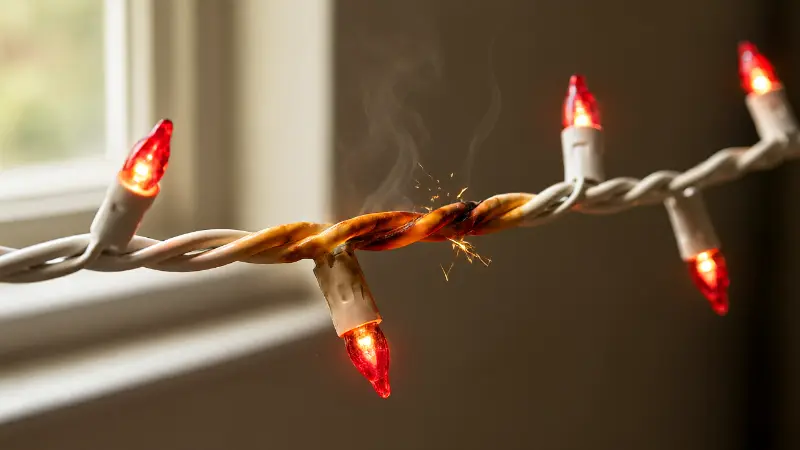
Check the connection between the extension cord and the light string. A plug that does not seat firmly can arc and heat up. If the connection feels loose, try a different cord end or use a proper adapter rather than forcing it. Do not use tape to hold a loose connection together under load.
Corrosion on the prongs or inside the socket adds resistance. If the metal looks green, pitted, or darkened, replace the cord or the affected light string. Cleaning corroded contacts may help temporarily, but corrosion often returns in outdoor conditions. A compromised connection is not worth the risk.
Keep connections dry and supported
Outdoor connections should be raised off the ground and protected from standing water. Use cord hooks or clips designed for the purpose, and avoid leaving plugs in puddles or low spots. An in-use outlet cover can protect the connection at the house, but it does not protect a connection lying in the yard.
Outdoor Conditions That Increase Heat Risk
Outdoor cords face sun, rain, snow, and temperature swings. Ultraviolet light can degrade the jacket over time, making it brittle and more likely to crack. Moisture can enter a damaged jacket or a loose connection and create a leakage path that trips a GFCI or causes corrosion.
Cold weather can make some cord jackets stiff and prone to cracking when bent. Avoid sharply bending a cold cord, and store cords loosely rather than in tight coils. A cord that has been damaged by cold or UV exposure may heat up at the damaged point even if the rest of the cord is fine.
Use cords listed for outdoor use and plug them into a GFCI-protected outlet where required. A GFCI does not prevent a cord from overheating, but it provides shock protection if moisture creates a fault. If the GFCI trips repeatedly, stop using the cord and investigate rather than resetting it over and over.
Rain-related failures can be confusing because the lights may work intermittently. A guide to outdoor lights failing after rain can help you separate a moisture problem from a cord that is overheating. Fix the cause rather than simply replacing fuses or resetting the GFCI.
Do Not Daisy-Chain More Than the Manufacturer Allows
Light strands often have a limit on how many sets can be connected end to end. That limit exists for a reason: the wire in the light string and the plugs are rated for a certain current. Exceeding the limit can overheat the light string itself as well as the extension cord feeding it.
Follow the manufacturer’s instructions for the number of strands that can be connected. If you need more length, use a separate extension cord run from the power source rather than adding more strands to the end of the chain. Distributing the load reduces heat at every connection.
Be careful with adapters and splitters. A multi-outlet adapter can make it easy to plug in more lights than a circuit or cord should carry. Add up the load and compare it with the rating of the adapter and the cord. If the total is close to the limit, split the display across another circuit.
When to Replace Rather Than Repair
Replace a cord that is hot, discolored, melted, or visibly damaged. Repairing a damaged extension cord with tape is not a reliable fix, and replacing the end requires the right plug, the correct polarity, and a secure strain relief. Unless you have the tools and experience to make a proper repair, replacement is the safer choice.
Replace cords with brittle jackets, exposed conductors, or plugs that no longer grip firmly. Also replace cords that have been pinched in a door, run over repeatedly, or chewed by pets. These conditions can create internal damage that is not visible from the outside.
If you are splicing or repairing light strings rather than extension cords, use methods appropriate for the wire and the environment. A guide to safe holiday light splicing explains why weatherproofing and proper connections matter. Do not apply the same approach to a damaged extension cord under load.
Plan the Display to Reduce Cord Stress
Place the power source as close to the display as practical so you can use shorter cords. Shorter runs reduce voltage drop and heat, and they are easier to keep dry and supported. If the outlet is far from the display, consider whether another outdoor outlet or a properly installed circuit can be added by an electrician.
Use separate cords for separate sections of the display rather than one long chain. This distributes the load and makes it easier to isolate a problem if one section fails. Label cords and connections so you know which run feeds which area when you troubleshoot next season.
Keep cords away from walkways, driveways, and areas where snow will be piled. A cord buried under snow or ice can be damaged by shovels or foot traffic. Route cords along walls or fences where they are less likely to be crushed or pulled.
When hanging lights on the roof, plan the cord route before you climb. A guide to hanging lights without roof damage can help you avoid clips and fasteners that damage shingles or gutters. Keep cords secured so wind does not pull on connections.
Quick Reference: Heat Symptoms and Sensible Actions
The table below summarizes common heat-related symptoms and safe first steps. Always unplug the cord before inspecting it, and replace any cord that shows signs of damage or overheating. The guidance is general, so follow the manufacturer’s ratings and local electrical requirements.
| Symptom | Likely Cause | Safe First Step | When to Replace or Call a Pro |
|---|---|---|---|
| Entire cord feels warm along its length | Cord may be undersized for the load or too long for its gauge | Unplug; add up the load; check the cord’s gauge and rating | Replace with a thicker, shorter cord rated above the load |
| Plug end is hot or discolored | Loose connection, corrosion, or worn contacts | Unplug; inspect plug and outlet; do not reuse the cord | Replace the cord; have the outlet inspected if it is warm |
| Heat at one spot along the cord | Internal damage, crush point, or broken conductor | Unplug; remove the cord from service | Replace the cord; do not tape over damage |
| Cord is warm only near a splitter | Too many lights on one adapter or connection | Unplug; redistribute the load across separate runs | Replace the splitter if it is damaged or discolored |
| GFCI trips when the cord is connected | Moisture or a fault in the cord or lights | Unplug; dry and inspect connections | Call an electrician if the GFCI trips after drying |
| Cord jacket is brittle or cracked | UV exposure, cold damage, or age | Unplug; replace the cord | Replace immediately; do not use outdoors |
| Outlet itself is warm or buzzing | Loose wiring or worn receptacle | Turn off the circuit if safe; stop using the outlet | Call a qualified electrician |
Use the table to narrow down the cause, but do not skip the power shutoff. A warm cord can become a fire risk if it is left in service, and a damaged plug can cause a shock. If you are unsure about a cord’s condition, replace it.
FAQ
Is it normal for an extension cord to feel slightly warm?
A cord may feel mildly warm under load, but it should not be hot to the touch. Noticeable heat suggests the cord is undersized, too long, damaged, or carrying more load than intended. Unplug it and check the rating and connections before using it again.
Can I use an indoor extension cord for holiday lights outside?
Indoor cords may lack the jacket and weather resistance needed outdoors. Use a cord listed for outdoor use, and protect connections from moisture. If the cord will be exposed to rain or snow, choose a product intended for that environment.
Why does my extension cord get hot only at the plug?
Heat at the plug usually points to a poor connection, corrosion, or a worn plug body. A loose connection creates resistance, which produces heat. Replace the cord rather than taping the plug, and have the outlet inspected if it is also warm or discolored.
Conclusion
An extension cord for holiday lights getting hot is a signal to stop and check the load, the cord rating, and the connections. Thin cords, long runs, damaged plugs, and too many strands on one circuit can all produce heat. Unplug the cord first, let it cool, and inspect it for damage before deciding whether to reuse it.
Match the cord to the job, keep outdoor connections dry and supported, and replace any cord that is discolored, melted, or damaged. Do not exceed the manufacturer’s limits for connected light strands, and split the display across separate runs when the load adds up. If an outlet is warm or a GFCI trips repeatedly, call an electrician.
Replacing a marginal cord is a small cost compared with the risk of a fire or shock. Plan the display with safety margin, inspect cords each season, and choose thicker cords for longer runs. That approach keeps the lights bright and the holiday safer.