A garbage disposal jammed after a holiday meal is a common and frustrating problem. The sink fills with bits of peel, stuffing, and grease, the disposal hums or goes silent, and the dirty dishes keep stacking up. The good news is that many jams can be cleared safely with a few basic tools, provided you shut off power first and keep your hands out of the grinding chamber.
This guide explains how to diagnose a jammed disposal, reset the motor, free the flywheel, remove obstructions, and decide when a repair is beyond a DIY fix. It also covers prevention so the next holiday meal does not end with a sink full of standing water and a humming motor.
Safety First: Shut Off Power Before You Touch Anything
Before you reach for a wrench or a flashlight, cut the power to the disposal. Unplug the unit if it has a cord, or switch off the dedicated circuit breaker that feeds the disposal. Never rely on the wall switch alone, because someone could flip it while your hand is near the grinding chamber.
Keep your hands and fingers out of the disposal opening at all times. Use long-handled tools such as pliers, tongs, or a disposal wrench to reach into the chamber. Even a disposal that appears off can hold stored energy, and the flywheel may turn unexpectedly when you free a jam.
Wear eye protection if you are working under the sink, and keep a bucket and towels handy for water that may spill from the drain or the disposal housing. If you smell gas or see smoke, stop and call a qualified appliance technician or an electrician.
Identify the Symptoms: Humming, Silent, or Tripped
A disposal that hums but does not turn usually has a mechanical jam. The motor is receiving power, but the flywheel or impellers are blocked by food or a foreign object. A disposal that is completely silent may have tripped its internal overload, lost power, or failed entirely.
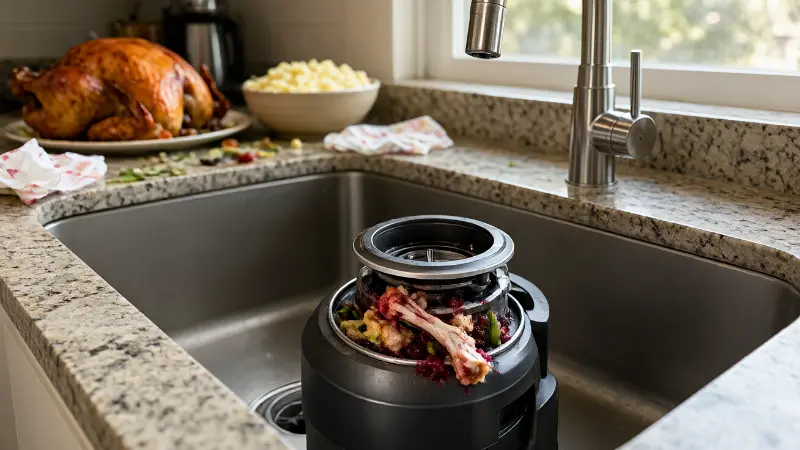
Listen for a click when you press the reset button on the bottom or side of the disposal. If the button pops out and the unit still does not run, the motor may be overheated or the circuit may be open. Check the breaker panel and any GFCI outlet that serves the disposal before assuming the unit is dead.
Look for standing water in the sink. Water that will not drain can indicate a clog in the drain line as well as a disposal jam. A disposal that spins freely but drains slowly may have a separate clog downstream, and clearing the jam alone will not fix the drainage.
Try the Reset Button and Breaker First
Most disposals have a red or black reset button on the bottom or lower side of the housing. With the power switch off, press the button firmly. If it clicks and stays in, restore power and test the disposal briefly. If the button pops out again immediately, stop and investigate the jam rather than repeatedly resetting.
Check the circuit breaker that supplies the disposal. A tripped breaker may indicate an overload, a short circuit, or a motor problem. Reset the breaker once, then test the disposal. If it trips again, leave it off and call an electrician or appliance technician.
Confirm that the disposal is actually receiving power. A switched outlet under the sink, a loose plug, or a failed switch can mimic a dead disposal. Test the outlet with a lamp or a voltage tester if you are comfortable doing so, and replace a faulty switch only after shutting off the circuit.
Free the Flywheel With a Disposal Wrench
Many disposals ship with a hex wrench designed to fit the center hole on the bottom of the unit. With the power off, insert the wrench and turn it back and forth to rock the flywheel free. You may feel resistance at first, then a slight give as the obstruction shifts.
If you do not have the original wrench, a suitable hex key of the correct size may work, but check the disposal manufacturer’s instructions first. Do not force the wrench beyond reasonable resistance, because you can damage the flywheel or the motor shaft. Work the wrench in both directions rather than cranking in one direction.
After freeing the flywheel, remove the wrench and restore power for a brief test. If the disposal hums and then trips again, the obstruction is still present. Turn the power off again and move to the next step: removing the blockage from the sink side.
Use the wrench with the power off
The wrench method is safe only when the disposal cannot start. Unplug the unit or lock the breaker off and tag it so no one restores power while you work. If the disposal is hardwired, switching off the breaker is essential, and a helper should stay nearby to prevent accidental switching.
Remove the Obstruction From the Sink Side
With the power off, shine a flashlight into the disposal opening. Look for bones, fruit pits, silverware, bottle caps, or fibrous food that has wrapped around the impellers. Use long-handled pliers or tongs to pull the material out, and place it in a bucket or trash bag rather than the sink.
Do not use a screwdriver or a knife to pry inside the disposal. Metal tools can damage the grinding components or slip and cause injury. If the object is wedged tightly, use the wrench from the bottom to rock the flywheel while gently pulling with pliers from above.
Once the visible obstruction is removed, turn the flywheel again with the wrench to confirm it moves freely. Reconnect power and run cold water before switching on the disposal. If it still jams, there may be material trapped deeper in the chamber or in the discharge outlet.
Check the Drain Trap and Drain Line
A disposal can spin freely while the sink still drains slowly because the clog is in the P-trap or the drain line. Place a bucket under the trap, loosen the slip nuts by hand or with channel-lock pliers, and remove the trap. Clean out food debris and grease, then reassemble the trap and test the flow.
If the trap is clear but the sink still drains slowly, the clog may be farther down the line. A drain snake can clear a blockage in the branch drain, but avoid chemical drain cleaners in a disposal-equipped sink. Harsh chemicals can damage seals and are dangerous if they splash back.
For stubborn sink clogs, a guide on unclogging a kitchen sink after holiday cooking can help you choose between a plunger, a snake, and a call to a plumber. Keep the disposal off while you work on the drain, and never pour drain cleaner into a disposal that is not running freely.
What Not to Put Down a Garbage Disposal
Prevention starts with knowing what belongs in the trash rather than the sink. Grease, oil, and fat can coat the drain line and solidify, creating clogs that a disposal cannot clear. Coffee grounds, eggshells in large amounts, fibrous vegetables, and starchy foods can also contribute to jams and slow drains.
Bones, fruit pits, seafood shells, and large seeds are hard enough to damage the grinding components or jam the flywheel. Stringy foods such as celery and artichoke leaves can wrap around the impellers. Never put glass, metal, plastic, or paper into a disposal, even in small pieces.
Run cold water before, during, and after grinding food. Cold water helps keep grease from melting and coating the drain line. Feed food into the disposal gradually rather than pushing a large load in at once, and give the unit time to clear between handfuls.
Holiday-specific disposal mistakes
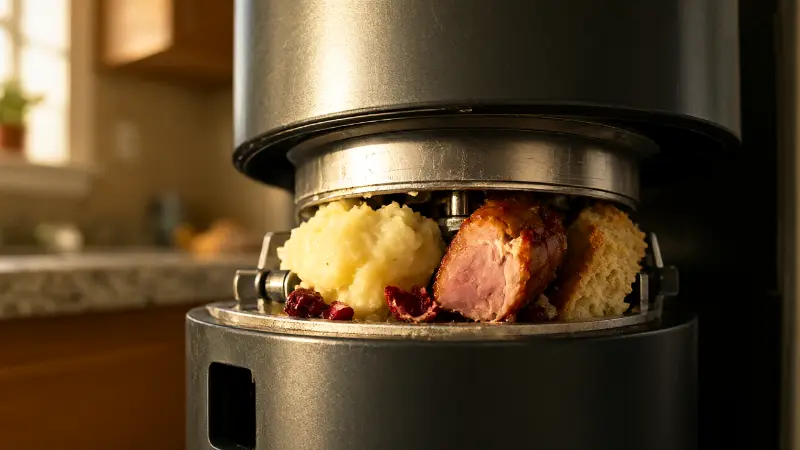
Holiday meals bring potato peels, onion skins, and large volumes of scraps. Potato peels can form a sticky paste that clogs the drain, and onion skins are thin and fibrous. Put these in the trash or compost, and scrape plates into the bin before rinsing them in the sink.
When to Call a Technician or Plumber
Call a qualified technician if the disposal trips the breaker repeatedly, smells like burning, leaks from the housing, or refuses to turn after the flywheel has been freed. These symptoms can indicate a failing motor, damaged windings, or a compromised seal that may need replacement rather than repair.
A persistent leak from the sink flange, the discharge pipe, or the bottom of the disposal may require new gaskets or a new unit. If the disposal is old and has been jammed repeatedly, replacement may be more cost-effective than repeated repairs. Compare the repair cost with the price of a comparable new disposal before deciding.
Call a plumber if the drain remains clogged after the trap and visible drain line are cleared, or if water backs up into other fixtures. A main line clog is not a disposal problem, and attempting to clear it with a disposal wrench will not help. For broader holiday preparation, a holiday hosting home repair checklist can help you spot related plumbing and appliance issues before guests arrive.
Prevent the Next Holiday Jam
Keep a small strainer in the sink to catch food particles before they reach the disposal. Empty the strainer into the trash rather than pushing the contents down the drain. Scrape plates thoroughly and wipe greasy pans with a paper towel before washing them.
Run the disposal regularly with cold water rather than letting food sit in the chamber. A disposal that is used briefly but often tends to stay cleaner than one that sits idle for weeks. Avoid grinding large volumes at once, and give the motor a rest between loads.
If you are hosting guests, a quick reminder about what not to put down the sink can prevent a post-meal jam. A prepped guest bathroom for holiday visitors and a clear kitchen routine both contribute to a smoother visit. Put a small sign or a note near the sink if helpful, and keep the trash can easy to reach.
Flush the disposal periodically with cold water and a disposal cleaner recommended by the manufacturer. Avoid pouring bleach or harsh chemicals into the unit, because they can damage seals and rubber components. A clean, freely turning disposal is less likely to jam during heavy use.
Quick Reference: Symptoms and Fixes
The table below summarizes common disposal problems and the corresponding first steps. Use it as a guide, not a substitute for the manufacturer’s instructions or professional advice. Always shut off power before reaching into or working on the disposal.
| Symptom | Likely Cause | First Step | When to Call a Pro |
|---|---|---|---|
| Humming but not turning | Mechanical jam in the flywheel or impellers | Shut off power; use hex wrench on bottom; remove obstruction | Jam returns or motor smells burned |
| Completely silent | Tripped overload, breaker, or failed motor | Press reset button; check breaker and outlet | No power after reset and breaker check |
| Reset button pops repeatedly | Persistent jam or failing motor | Clear obstruction; test briefly | Repeated trips or burning smell |
| Water drains slowly | Clog in trap or drain line | Clear P-trap; snake branch drain | Clog returns or affects other fixtures |
| Leak under the sink | Loose connection, worn gasket, or cracked housing | Dry area; tighten accessible connections | Leak persists or housing is cracked |
| Loud metallic noise | Foreign object or damaged components | Shut off power; inspect with flashlight and pliers | Object cannot be removed or parts are damaged |
| Foul odor | Food residue or buildup in chamber or drain | Clean with recommended disposal cleaner; flush with cold water | Odor persists after cleaning |
Use the table to narrow down the cause, but do not skip the power shutoff. A disposal that starts unexpectedly while you are reaching into the chamber can cause serious injury. If a step feels beyond your comfort level, stop and call for help.
FAQ
Can I use a plunger on a jammed garbage disposal?
A plunger can help with a drain clog, but it will not clear a mechanical jam in the disposal. Shut off power and free the flywheel first. If the sink still drains slowly, clear the trap and drain line before plunging.
Why does my disposal hum but not spin?
A hum usually means the motor has power but the flywheel is blocked. Turn off the breaker or unplug the unit, then use the hex wrench on the bottom to rock the flywheel free. Remove any visible obstruction with pliers before testing again.
Is it safe to pour drain cleaner into a disposal?
Chemical drain cleaners can damage disposal components and seals, and they are hazardous if they splash back. Mechanical clearing with a wrench, pliers, or a snake is generally safer. Follow the disposal manufacturer’s guidance and avoid mixing chemicals.
Conclusion
A garbage disposal jammed after a holiday meal is usually a mechanical problem, not a reason to replace the unit immediately. Shut off power, try the reset button, free the flywheel with a wrench, and remove obstructions with long-handled tools. Check the trap and drain line if water still drains slowly.
Know when to stop. Repeated breaker trips, burning smells, leaks from the housing, and persistent clogs are signs that a technician or plumber should take over. Prevention matters just as much: scrape plates, avoid grease and fibrous scraps, and run cold water whenever the disposal is on.
A calm, safety-first approach can clear many holiday jams and protect both the disposal and your plumbing. Keep your hands out of the chamber, use the right tools, and call for help when the symptoms point beyond a simple fix. That way the kitchen can get back to the dishes and the holiday can get back on track.