You push a lamp cord into the wall outlet and it stops halfway. You shine a light into the slots and see something plastic sitting behind the openings, or a plug that will not seat no matter how hard you push. This is a common source of confusion, and the answer usually falls into one of a few categories: a tamper-resistant receptacle with internal shutters, a child-safety cap left behind, a broken plug or adapter, or debris that has found its way into the slots.
None of these situations requires panic, but each one calls for a different response. Some are completely normal and just need the right technique. Others are genuine safety concerns that should be addressed before the outlet is used again. This guide explains what the plastic parts inside an outlet actually are, why they block a plug, and how to deal with each scenario safely.
What the Plastic Inside an Outlet Actually Is
A standard residential receptacle is not just metal contacts floating in a plastic face. The faceplate and the receptacle body are made of a tough, non-conductive plastic such as nylon or a thermoset material, and inside the body there are additional plastic components that hold the contacts in position and guide the prongs of a plug toward them.
On newer outlets, there is a specific plastic mechanism behind the slots called a shutter, which is the defining feature of a tamper-resistant receptacle. The shutters sit in front of the live contacts and are pushed aside only when a proper two-prong or three-prong plug is inserted. A single object pushed into one slot, such as a key, a paperclip, or a single prong, should not be able to open the shutter. That is the safety feature working as designed.
Other plastic pieces you might see include the small rectangular tab or “break-off” tab on the sides of the receptacle, the plastic mounting ears, and the internal barriers that separate the hot, neutral, and ground compartments. None of these should protrude into the slot openings on a healthy outlet. If something plastic is visibly blocking a slot, it is either a normal shutter, a foreign object, or a damaged component.
The Most Likely Answer: A Tamper-Resistant Receptacle
If your outlet is relatively new, or if it was installed to meet current code requirements in areas accessible to children, it is probably a tamper-resistant (TR) receptacle. These outlets have spring-loaded plastic shutters that require simultaneous pressure on both slots to open. When you insert a proper plug, the two prongs press the shutters at the same time, and the mechanism releases.
The shutters can feel stiff when the outlet is new, and they can feel even stiffer in cold weather or after the outlet has sat unused for a long time. A plug that goes in easily at one outlet may require a firmer, more even push at a TR outlet. That resistance is not a defect; it is the shutter doing its job. If you insert a plug at a slight angle or push one prong ahead of the other, the shutter may not release, and the plug will feel blocked.
The correct technique is to align the plug squarely with the slots and push straight in with steady, even pressure. Do not wiggle or force it. If the plug still will not go in, try a different plug or a different outlet to determine whether the issue is the plug or the receptacle. A TR outlet that refuses every properly aligned plug may have a stuck shutter or a manufacturing defect, and it should be evaluated by a qualified person.
Child-Safety Caps and Plastic Inserts Left Behind
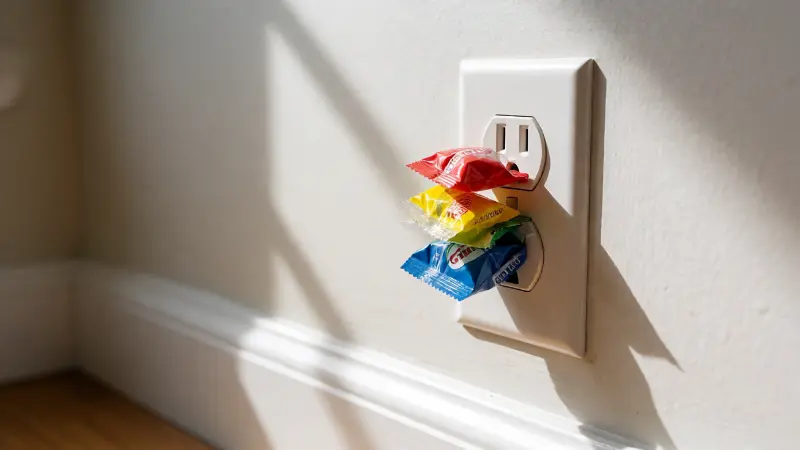
Plastic outlet caps, sometimes called child-safety plugs or outlet covers, are inserted into the slots to prevent children from poking objects into the receptacle. They are designed to be difficult for small hands to remove, and some styles fit snugly enough that an adult may struggle to pull them out, especially if they have been in place for years.
If you see a flat plastic piece filling one or both slots, it may be a safety cap that was never removed. Some caps are a single piece that covers both slots, while others are individual plugs for each slot. A cap that has been painted over, cracked, or jammed can look almost like part of the outlet. Do not pry at it with a metal tool while the circuit is energized. Turn off the breaker first, then use a plastic tool or a proper cap removal tool to work it out.
There is also a category of plastic insert that is not a safety cap at all. Shipping inserts, paint shields, and protective covers are sometimes left in place by painters or installers. These should be removed before the outlet is used. If you are unsure whether a plastic piece is part of the outlet or a foreign object, compare it with a nearby outlet of the same type. A healthy outlet should have clear, unobstructed slots with only the shutter mechanism visible deep inside.
Damaged Plugs, Adapters, and Prongs
Sometimes the blockage is not in the outlet at all. A plug with a bent prong, a cracked body, or a piece of plastic flashing left from manufacturing can refuse to enter the slot. Look closely at the plug you are trying to insert. The prongs should be straight, clean, and free of plastic burrs. If a prong is bent, do not force it into the outlet; straighten it carefully with pliers with the device unplugged, or replace the cord end.
Cheap plug adapters and cube taps are another common culprit. Some are molded poorly, and the plastic around the prongs can be slightly oversized. That extra plastic catches on the outlet face or the shutter and prevents the plug from seating fully. Try a different adapter or plug the device in directly to see whether the problem follows the adapter.
A plug that goes in partway and then stops can also indicate that the prongs are too short to reach the contacts. This happens with some low-profile plugs and with certain European-style plugs used with adapters. If the plug does not seat fully, do not leave it hanging halfway out of the outlet. A loose connection can arc, overheat, and damage both the plug and the receptacle.
Paint, Drywall Dust, and Construction Debris
After a renovation or a paint job, it is common to find debris inside outlet slots. Paint can bridge across the slot openings, dry hard, and effectively seal the outlet. Drywall dust and plaster can pack into the slots and harden. Small pieces of plastic from a cut faceplate or from packaging can also lodge in the openings.
Paint bridging is a particular problem because it can look like a plastic film blocking the slot. If the outlet was painted without being removed or properly masked, the paint may have filled the slot and the surrounding face. Never chip paint out of an energized outlet with a metal tool. Turn off the breaker, verify the power is off with a tester, and then clean the slot carefully with a non-conductive tool or replace the receptacle.
Debris can also come from the wall cavity itself. If the box is not sealed well, insulation fibers, mouse nesting material, or bits of plastic vapor barrier can work their way into the slots. This is more common in older homes and in exterior walls. If you find fibrous material in the slots, turn off the power and clean the outlet, then consider sealing the box against air infiltration to prevent a repeat.
Outlets that have been painted over or filled with debris should be inspected for heat damage as well. Discoloration, a burning smell, or a face that feels warm to the touch are signs of a loose connection or arcing. In that case, stop using the outlet and have it replaced. The article on duplex versus regular outlet differences explains how the internal layout of a standard receptacle works and why debris in one half can affect performance.
Broken Shutters and Damaged Receptacle Components
Tamper-resistant shutters can break. A shutter that has cracked or come off its pivot can jam in the closed position, blocking both slots permanently. This can happen after a plug is forced, after the outlet takes a hard impact, or simply from age and wear. A jammed shutter is not a safety feature anymore; it is a defect.
Other plastic components can fail too. The face of the receptacle can crack around the slot, and a piece of the cracked face can fold inward and obstruct the opening. The internal barriers that separate the contact chambers can deform if the outlet has overheated. A receptacle that has been overloaded or subjected to a loose plug may show melted or distorted plastic around the slots.
Any of these conditions calls for replacement rather than repair. Receptacles are inexpensive, and the internal components are not designed to be serviced in the field. Turn off the breaker, verify the power is off, and replace the receptacle with a new one of the same type and rating. If the outlet is in a kitchen, bathroom, garage, or outdoors, make sure the replacement is the correct GFCI or weather-resistant type for the location.
Comparison Table: Causes of Plastic Blockage and What to Do
| Cause | What you will notice | Safe next step | When to replace the outlet |
|---|---|---|---|
| Tamper-resistant shutters | Plug needs firm, even pressure; both slots resist | Align plug squarely and push straight in | Only if a properly aligned plug never seats |
| Child-safety cap left in place | Flat plastic piece visible in one or both slots | Turn off breaker, remove with non-metal tool | Not usually necessary |
| Bent or oversized plug prongs | Same plug fails at multiple outlets | Straighten or replace the plug | No |
| Paint or drywall debris | Hard film or grit inside the slot | Turn off power, clean carefully or replace | Yes, if paint penetrated the contacts |
| Broken shutter or cracked face | Slot permanently blocked or visibly cracked | Stop using the outlet | Yes |
| Melted or heat-damaged plastic | Discoloration, burning smell, warm face | Turn off breaker and stop using it | Yes, immediately |
Why Outlet Orientation and Cover Plates Matter
Some homeowners notice that one outlet in the house accepts a plug more easily than another, even though both look identical. Orientation is one reason. A receptacle installed with the ground pin up versus down does not change the shutter mechanism, but it can change how a right-angle plug or a bulky adapter approaches the slots. A plug with a molded right-angle body may collide with the faceplate or the wall, making it feel as though the outlet is blocked when the real issue is clearance.
Cover plates and box extenders can also interfere. A decorative cover plate with a thick rim or a poorly fitting oversized plate can sit proud of the receptacle face and prevent a plug from seating fully. A plastic cover that has warped from heat or sunlight can bow inward and press against the plug body. If a plug seats fine at one outlet and not at another with a different cover plate, the plate may be the problem.
For appliances that need to sit close to the wall, a recessed outlet can solve clearance problems that a standard receptacle cannot. The guide on recessed stove outlet flush fit explains how recessed designs allow a plug to sit behind the appliance instead of protruding into the room.
Slot Shapes, Polarized Plugs, and Forced Insertion
Standard North American receptacles have a specific slot geometry. The neutral slot is wider than the hot slot, and grounded receptacles add a round or D-shaped ground hole. A polarized plug has one wide prong and one narrow prong, and it will only fit one way. If you try to force a polarized plug in backward, it will feel blocked even though the outlet is fine.
Some receptacles also have a T-shaped neutral slot, which indicates a 20-amp rating and accepts both 15-amp and 20-amp plugs. The T-shape is not plastic blockage; it is a slot designed to accept a wider prong. If you are unfamiliar with that feature, it can look like a malformed opening. A related feature is the sideways slot found on some outlets, which serves a specific purpose and is sometimes mistaken for damage. The article on the sideways outlet slot safety feature explains what that opening is for and why it is not a defect.
Forcing a plug is never the answer. If a plug does not go in with moderate, even pressure, stop and identify why. Forcing can bend the internal contacts, break a shutter, or crack the receptacle face, turning a minor inconvenience into a repair job. It can also create a loose connection that overheats later.
Step-by-Step: Diagnosing a Blocked Outlet Safely
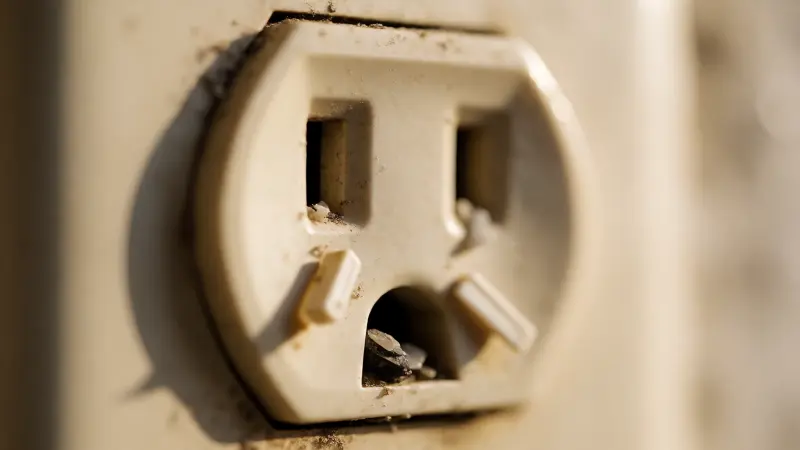
Start by confirming which part is blocked. Try a known-good lamp or cord in the outlet. Try the suspect plug in a different outlet. If the plug fails everywhere, the plug is the problem. If the outlet fails with every plug, the outlet is the problem. If only one half of a duplex receptacle is affected, the issue is likely localized to that half.
Next, inspect the slot visually with a flashlight. Look for paint film, plastic caps, debris, or a damaged face. Do not insert metal tools, and do not use a vacuum with a metal wand near an energized outlet. If you need to clean or probe the slot, turn off the circuit breaker first and verify with a non-contact tester that the power is off.
If the outlet is a TR type and the shutter seems stuck, try a different plug with slightly thicker prongs. Some very thin or worn prongs do not engage the shutter mechanism reliably. If a proper plug still will not seat, the shutter may be broken, and replacement is the practical fix. If the outlet shows any sign of heat, discoloration, or a burning smell, stop and replace it rather than cleaning it.
When replacing a receptacle, match the amperage and voltage rating, use the correct wire connections, and follow local code requirements for GFCI protection in wet or outdoor locations. If you are not comfortable working inside an electrical box, hire a licensed electrician. The cost of a receptacle replacement is modest compared with the risk of an improper connection.
When to Call an Electrician
Some outlet problems are beyond a DIY fix. Call a qualified electrician if the outlet is warm to the touch, if you smell burning or see scorch marks, if the breaker trips repeatedly, or if the outlet is not grounded as expected. Also call if the box is damaged, if the wiring insulation is brittle or cracked, or if you find aluminum wiring in the box.
An electrician should also evaluate any outlet that has been painted over, filled with debris, or damaged by water. These conditions can hide corrosion or arcing behind the faceplate. A professional can test the circuit, replace the receptacle with the correct type, and confirm that the box and wiring are sound.
If the blockage turns out to be a normal tamper-resistant shutter, no repair is needed. Understanding how the shutter works can save you a service call and prevent you from damaging a perfectly good outlet by forcing a plug. That is the most common outcome, and it is a reassuring one: the plastic is there to protect you, not to defeat you.
FAQ
Why won’t my plug go into a new outlet?
New outlets are often tamper-resistant models with spring-loaded shutters. The shutters require both prongs to press evenly at the same time, so the plug must be aligned squarely and pushed straight in with steady pressure. A slight angle or a single-prong push can make the shutter feel blocked.
Is there supposed to be plastic inside the outlet slots?
On a tamper-resistant receptacle, yes. The plastic shutters sit behind the slots and open only when a proper plug is inserted. On a standard receptacle, you should see clear slots and the metal contacts, not loose plastic pieces. Visible loose plastic is usually a safety cap, debris, or a damaged component.
Can I remove a child-safety cap that is stuck?
Yes, but turn off the circuit breaker first and verify the power is off. Use a non-conductive tool or a proper cap removal tool, and avoid prying with metal. If the cap is cracked or jammed, the receptacle may need to be replaced rather than risking damage to the contacts.
Why does one slot look different from the other?
The neutral slot is wider than the hot slot, and some 20-amp receptacles have a T-shaped neutral opening. These differences are intentional and relate to plug polarization and amperage rating. They are not damage or blockage.
Should I replace an outlet with a broken shutter?
Yes. A shutter that is stuck or broken no longer functions as a safety feature and may block plugs permanently. Receptacles are inexpensive and are not designed to be repaired in the field. Turn off the breaker and replace the receptacle with the correct type for the location.
Is it safe to clean an outlet with the power on?
No. Cleaning or probing an outlet while it is energized risks shock and can damage the contacts. Turn off the breaker, verify the power is off with a tester, and use non-conductive tools. If the outlet shows heat damage or a burning smell, replace it instead of cleaning it.