Searching for a Toro red paint equivalent usually starts the same way: you have a stone chip on a snowblower auger housing, a scratched mower deck, or a faded frame, and the dealer wants more for a small aerosol can than you expected to spend. The obvious question is whether an off-the-shelf red from a hardware or auto parts store will match closely enough to be worth the savings. The honest answer is that it depends on which era of Toro red your machine wears, because Toro has used more than one red over the decades.
This guide breaks down the genuine Toro part numbers, the aftermarket colors that owners and small-engine shops report as close matches, and the practical steps that make a touch-up blend rather than stand out. It also covers the traps that make a “perfect match” claim misleading, including the difference between a paint chip on a screen and a color on a real machine under daylight.
Why There Is No Single Toro Red
Toro has changed its equipment red at least once in a way that matters to anyone touching up paint. The older shade is commonly called Apple Red, and the newer shade is usually called New Red. The two are close enough that a casual observer might not notice, but side by side on the same machine they read differently, and a patch of the wrong one can look like a repair rather than a blend.
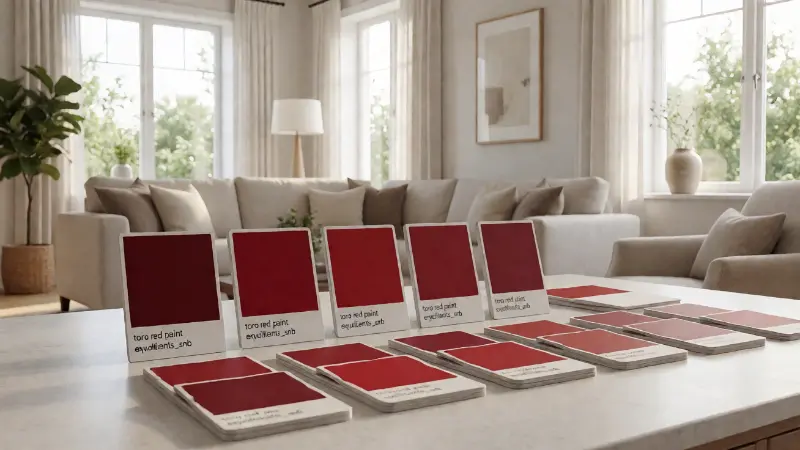
The cutover date is not something you should trust from a single forum post. Owners report different transition years depending on the product line, and some sources point to a change around 1990 while others describe a later shift. Toro also sells equipment across mowers, snowblowers, and handheld tools, and the paint on a commercial mower deck may not follow the same schedule as a residential snowblower. The practical approach is to identify the shade on your specific machine rather than rely on a model-year rule.
There is also a separate source of confusion. Color databases list an automotive color called Toro Red with a hex value, and paint reference sites list Hudson and Aston Martin colors with the same name. Those are car colors that happen to share a name with the equipment brand. They are not the same as Toro equipment red, and using an automotive formula because the name matches is a reliable way to end up with the wrong shade.
The Genuine Toro Part Numbers
The most dependable starting point is the OEM touch-up line. Toro sells aerosol cans, brush-in pens, and larger containers under specific part numbers, and those numbers are tied to the old and new shades. Buying genuine paint removes the guesswork, though it costs more per ounce than a general-purpose hardware store can.
The two core numbers are 361-1 for Apple Red, the older shade, and 361-10 for New Red in an aerosol can. A gallon version of the newer red is sold under 361-11. Toro also lists a red touch-up pen under 112-0177 and an aerosol under 131-6581, and these appear in current parts listings alongside the older numbers. Availability shifts over time, and some part numbers get superseded, so confirm the number against your machine’s parts diagram before ordering.
One practical note from owner reports: the genuine aerosol can have a reputation for being fussy about recoat windows. At least one reviewer described the label instructing a recoat within an hour or after a long wait, and applying a second coat outside that window caused wrinkling. Read the can before you start, and plan to apply your coats in one session rather than coming back the next day.
Old vs New Toro Red: Identifying What You Have
Before buying anything, figure out which shade is on your machine. The most reliable method is to find an area of original paint that has been protected from sunlight, such as under a belt cover, inside the frame, or behind a panel. Clean it gently and compare it with a known sample. Sun-faded exterior paint is a poor reference because red pigments are particularly prone to fading, and a match to a faded panel will look too dark once applied elsewhere.
If you cannot find protected paint, look at the machine’s age and model. Older equipment is more likely to carry Apple Red, and newer equipment is more likely to carry New Red. Treat that as a starting hypothesis rather than a fact, especially for machines near the transition period. Ordering one small can of each shade is a reasonable way to settle the question if you have a large repair ahead, and the leftover can becomes useful for future chips.
Color chips printed on a screen are not a reliable identification tool. Monitors, phone cameras, and indoor lighting all shift red hues, and a shade that looks correct in a photo can look orange or maroon on the machine. Use the screen only to narrow the field, then confirm with real paint on a hidden test area.
Aftermarket Equivalents Owners Report as Close
Off-the-shelf options are where most people end up, and the owner community has produced a short list of colors that come close. None of these is a guaranteed factory match, and the results depend on the shade on your machine and on the product’s finish, but they are reasonable starting points for a working machine where absolute color accuracy is not the goal.
Rust-Oleum Sunrise Red is the most frequently mentioned substitute for New Red. Rust-Oleum Regal Red, listed by number as 7765 in some references, has been described as a strong match for newer Toro red, with one owner noting it matched a newer commercial mower whose red is the same as the newer Toro equipment red. Rust-Oleum Apple Red also comes up for older machines, which makes sense given the shade name.
POR-15 Chevrolet Red engine enamel is described by owners as almost a dead ringer for Toro Apple Red, with the added advantage of being a durable, fuel-resistant coating. That durability matters on a snowblower or mower, where the paint sees fuel spills, abrasion, and weather. Valspar’s IH Red from a tractor supply store is another old-shade favorite, and owners have used the Restoration Series version with a hardener for a more durable finish.
For a professional-looking result, an automotive paint shop can mix a color to match a sample part. A good shop can scan a clean section of original paint and mix a formula in a single-stage enamel or a basecoat and clear. This costs more than a spray can but gives the closest match and lets you choose the sheen, which is useful if the original finish is a satin rather than a gloss.
Comparing Toro Red Paint Options
The table below summarizes the main options, what they are best suited to, and the caveats to expect. Prices vary by retailer and container size, so treat the cost column as relative rather than exact.
| Option | Type and size | Best for | Relative cost | Caveats |
|---|---|---|---|---|
| Toro 361-1 (Apple Red) | OEM aerosol or brush-in | Older machines with the original shade | High per ounce | May be discontinued or hard to source; confirm part number |
| Toro 361-10 (New Red) | OEM 12 oz aerosol | Newer machines and general touch-up | High per ounce | Recoat window is strict; wrinkling if applied outside it |
| Rust-Oleum Sunrise Red | General-purpose aerosol | New Red machines on a budget | Low | Close but not exact; sheen may differ from factory |
| Rust-Oleum Regal Red 7765 | Oil-based enamel | Newer reds; brushed repairs | Low to moderate | Brush marks on large areas; longer cure |
| POR-15 Chevrolet Red | Engine enamel | Apple Red machines needing durability | Moderate to high | Two-part or specialty application; limited color tuning |
| Valspar IH Red (tractor supply) | Implement enamel, with or without hardener | Old-shade machines and larger repaints | Moderate | Hardener changes handling; confirm the correct product |
| Custom-mixed automotive enamel | Shop-mixed, any size | Best color match and sheen control | Highest | Requires a sample part and a willing shop |
Spray Can, Brush-In, or Spray Gun
The application method matters as much as the color. A spray can is convenient for small chips and curved surfaces, and it lays down an even coat without brush marks. The downside is overspray, which means masking surrounding areas carefully and working outdoors or in a well-ventilated space. Spray cans also produce a thinner film than a gun, so durability on a high-wear area like an auger housing is limited.
Brush-in paint and pens are ideal for tiny chips and scratches where masking would be more work than the repair. They are less suitable for larger areas because brush marks and uneven film thickness show, especially on a gloss finish. If you use a brush, apply thin coats and let each one level before adding the next.
A spray gun gives the best control over film thickness and sheen, and it is the right choice for a panel repaint or a large area. It requires more setup, including masking, a compressor, and appropriate safety gear. For a machine you plan to keep, a properly sprayed panel with a compatible primer will outlast any aerosol touch-up.
Surface preparation is the step that most often determines whether the paint stays put. Clean the area thoroughly to remove grease, fuel residue, and dirt, then sand the edges of the chip to feather them. A small amount of surface profile helps the paint bond, and a primer designed for metal is worth using on bare steel. On plastic or powder-coated surfaces, check that the paint you choose is compatible, since some general-purpose enamels will not adhere well.
Matching Sheen and Dealing With Faded Paint
Color is only part of the match. Toro equipment finishes vary between gloss and satin depending on the part and the era, and a perfect color in the wrong sheen can look worse than a slightly off color in the right sheen. Compare the sheen of your test area with the product before committing. A gloss aerosol on a satin frame will stand out under direct light even if the hue is right.
Faded original paint is the other common problem. Red pigments fade in sunlight, so a machine that has lived outdoors will have panels that are noticeably lighter or more orange than the protected paint. Painting a chip with the correct factory shade can therefore look darker than the surrounding faded panel. Some owners deliberately choose a slightly lighter or more orange substitute to blend with the faded surface rather than match the original formula.
If the fading is widespread, spot repairs will never look uniform. In that case, a panel repaint or a full repaint is the more honest solution. A full repaint also lets you address rust and failing paint properly, which is often the real reason a machine looks tired.
Practical Tips for a Convincing Repair
Work in good light and test the color on a hidden area first. A test patch on the underside of a housing or inside a frame member tells you how the paint behaves and how close the color is before you commit to a visible surface. Let the test patch cure fully, since some paints shift slightly as they dry.
Mask more than you think you need to. Overspray travels farther than expected, and red paint on black rubber, chrome, or concrete is difficult to remove. Use tape and paper rather than relying on a steady hand, and protect nearby surfaces from drift. Remove masking while the paint is still slightly soft if the product instructions allow it, which gives a cleaner edge than cutting through fully cured paint.
Keep a record of the color and product you used. Future touch-ups are easier when you know exactly which shade matched, and a note inside the manual or on the machine saves guesswork years later. If you custom-mix a formula, ask the shop for the mix code and keep it with the machine’s paperwork.
For engine and exhaust parts, standard equipment paint may not handle the heat. A high-temperature coating is the better choice there, and the considerations are different from body paint. A guide to high temperature spray paint for engine parts covers the temperature ratings and application differences worth knowing before you paint a muffler or engine tin.
When a Touch-Up Is Not Enough
Paint cannot fix rust that is coming from behind the surface. If you see bubbling or flaking around a chip, the metal underneath is likely corroded, and painting over it will trap the problem rather than solve it. Grind or sand back to sound metal, treat the rust, and prime before painting. On a snowblower, the auger housing and chute are common rust sites because snow and salt sit against the metal.
Large areas of failed paint, deep gouges, or cracked powder coating call for a more thorough repair. In those cases, stripping and repainting the panel gives a better result than layering touch-up paint over a failing substrate. It is also worth checking whether the part is available as a replacement, since a new housing or chute may cost less than the labor and materials to restore a badly corroded one.
If the machine is due for other work, combine the paint repair with mechanical maintenance so you are not disassembling the same area twice. Belt replacement, bearing service, and auger inspection all involve access that overlaps with painting the housing. Planning the jobs together saves time and produces a cleaner result.
Beyond Paint: Choosing the Right Machine to Maintain
Paint matching is a small part of long-term equipment ownership, but it reflects a broader point: the machines that are worth maintaining are the ones with good parts support and a design that holds up. If you are comparing models or deciding whether to invest in a repaint, a comparison like Ariens Deluxe 24 vs Toro 824 helps frame the trade-offs in build, controls, and serviceability that matter more than color.
The same principle applies to any surface you refinish. Preparation and compatibility determine how a coating performs, whether you are painting equipment or a wall. A guide to painting over textured drywall wallpaper illustrates how substrate and adhesion issues follow the same logic indoors, even though the materials are completely different.
FAQ
What color is Toro red?
Toro has used more than one red. The older shade is called Apple Red and the newer shade is called New Red. They are close but not identical, and the correct one depends on your machine’s age and product line. Identify the shade from a protected area of original paint rather than a model-year rule.
What is the Toro red paint part number?
The traditional OEM numbers are 361-1 for Apple Red and 361-10 for New Red in an aerosol can, with 361-11 used for a gallon of the newer red. Toro also lists a red touch-up pen under 112-0177 and an aerosol under 131-6581. Confirm the current number against your machine’s parts diagram before ordering.
Is Rust-Oleum Sunrise Red a good match for Toro red?
Owners frequently report Sunrise Red as a close match for New Red. It is not an exact factory match, and the sheen may differ, but it is a reasonable and inexpensive option for a working machine. Test it on a hidden area before applying it to a visible panel.
Can I use automotive touch-up paint on a Toro snowblower?
You can, and a custom-mixed automotive enamel can give the closest color and sheen match. Avoid choosing a product just because the color name includes “Toro,” since automotive colors with that name are unrelated to the equipment brand. Match the paint to a physical sample instead.
Why does my touch-up paint look darker than the rest of the machine?
Faded original paint is the usual reason. Red pigments fade in sunlight, so the correct factory shade can look darker next to a faded panel. If the fading is widespread, a panel repaint will look more uniform than spot repairs.