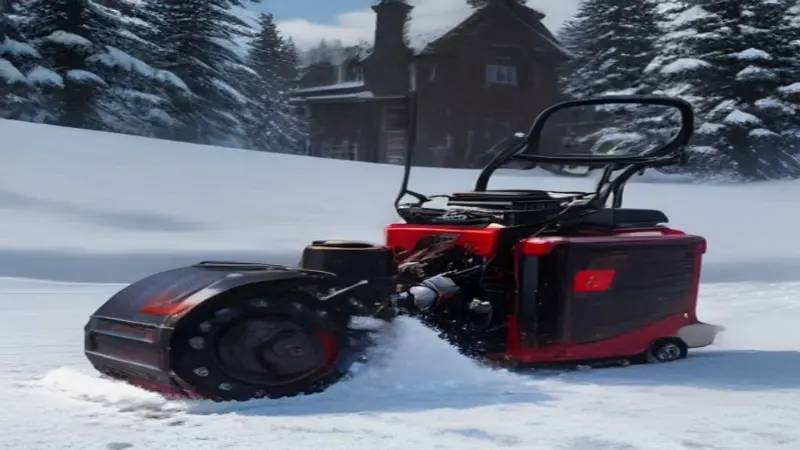
A Toro snowblower is a vital tool for tackling winter’s heaviest snowfalls, providing reliable power to clear driveways and pathways. When your machine isn’t performing optimally, often manifesting as erratic engine speeds or a lack of consistent power, the governor system is a prime suspect. Understanding and correctly performing a Toro snowblower governor adjustment is crucial for restoring your equipment’s efficiency and longevity.
This comprehensive guide delves deep into the intricacies of your snowblower’s governor, equipping you with the knowledge to diagnose common issues and execute precise adjustments. You will learn how to identify symptoms, differentiate governor problems from other engine troubles, and perform the necessary steps to ensure your Toro runs smoothly and powerfully through every storm.
The Silent Maestro: Understanding Your Snowblower’s Governor
Before diving into adjustments, it is essential to grasp what the governor does. The governor is a sophisticated mechanical system designed to maintain a consistent engine speed (RPM) under varying loads. Whether your snowblower is idling or churning through heavy, wet snow, the governor works tirelessly to keep the engine operating at its factory-recommended RPM, ensuring optimal power delivery and preventing damage from over-revving.
How the Governor System Functions
Most Toro snowblowers utilize a mechanical governor system. This system consists of internal flyweights that respond to engine speed, an external governor arm, linkage rods, and a governor spring. As the engine RPM increases, the flyweights move outward, which in turn manipulates the governor arm. This movement then partially closes the carburetor’s throttle plate, reducing fuel intake and slowing the engine.
Conversely, when the engine encounters a heavy load, like deep snow, its RPM naturally wants to decrease. The flyweights retract, causing the governor arm to open the throttle plate further. This allows more fuel into the engine, bringing the RPM back up to the desired operating speed. The governor spring plays a crucial role by providing tension that counteracts the flyweights, pulling the throttle open.
Symptoms of a Misbehaving Governor: Diagnosing the Problem
Recognizing the signs of a faulty or misadjusted governor is the first step toward a solution. These symptoms often mimic other engine problems, making accurate diagnosis critical. Pay close attention to how your snowblower’s engine behaves during operation.
Common Governor-Related Issues:
- Engine Surging or “Hunting”: This is perhaps the most common symptom. The engine RPM will fluctuate rapidly, revving high then dropping low, even under a consistent load or at idle. This indicates the governor is constantly over-correcting.
- Inconsistent Engine Speed Under Load: If your snowblower bogs down significantly when hitting dense snow and struggles to recover its speed, or conversely, over-revs excessively, the governor isn’t effectively compensating for changes in load.
- Engine Running Too Fast (High RPMs): An engine that consistently runs at an excessively high RPM, even when the throttle is set to a lower speed, suggests the governor isn’t adequately closing the throttle. This can lead to premature wear and potential engine damage.
- Engine Running Too Slow (Low RPMs): If the engine consistently operates below its optimal speed, resulting in reduced power and throwing distance, the governor might be holding the throttle too closed or the spring tension is too weak.
- Lack of Throttle Control: If moving the throttle lever has little to no effect on engine speed, there might be a disconnected or improperly linked governor component.
It is important to note that surging or inconsistent RPMs can also be caused by fuel system issues, particularly a clogged carburetor. A dirty carburetor can lead to a lean fuel mixture, causing the engine to surge as it starves for fuel. Always consider cleaning your carburetor as part of a thorough troubleshooting process if governor adjustment alone does not resolve the issue. For more general engine troubleshooting, similar principles apply as in diagnosing issues with other fuel-burning equipment like a Carlin gas conversion burner.
Safety First: Preparing for Governor Adjustment
Working on any small engine requires adherence to strict safety protocols. Neglecting these steps can lead to serious injury or damage to your equipment. Always prioritize your safety before beginning any maintenance or adjustment procedures.
Essential Safety Precautions:
- Disconnect the Spark Plug: This is paramount. Remove the spark plug wire from the spark plug to prevent accidental engine startup.
- Ensure a Cooled Engine: Allow the engine to cool completely before touching any components. Hot engine parts can cause severe burns.
- Work in a Well-Ventilated Area: If the engine still has fuel, fumes can be dangerous.
- Stabilize the Snowblower: Place the snowblower on a flat, stable surface. If tilting is required, ensure it is securely propped to prevent it from falling.
- Remove Fuel (if extensive disassembly is needed): For major work, draining the fuel tank is recommended to prevent spills.
- Wear Appropriate Personal Protective Equipment (PPE): Gloves and eye protection are always advisable.
Tools You Will Need:
Having the right tools on hand will make the adjustment process smoother and more efficient. Most of these are standard items found in a home mechanic’s toolbox.
- Socket Wrench Set (8mm, 10mm, 3/8-inch, 1/2-inch are common sizes for Toro models)
- Flat-head Screwdriver
- Pliers (needle-nose and regular)
- Tachometer (inductive type recommended for accurate RPM measurement)
- Owner’s Manual (crucial for specific RPM settings and diagrams)
- Carburetor Cleaner (for initial cleaning, if necessary)
- Wire Brush (for cleaning linkages)
- Clean Rags
Step-by-Step Toro Snowblower Governor Adjustment
Governor adjustment typically involves two main types: static adjustment (setting the initial position) and dynamic adjustment (fine-tuning the spring tension). Always consult your specific Toro snowblower’s owner’s manual for exact procedures and recommended RPMs, as models can vary.
1. Locating the Governor Components:
The governor system is usually visible on the side of the engine, connected to the carburetor’s throttle lever. You will typically find the governor arm, linkage rods, and the governor spring. The governor shaft protrudes from the engine block, with the governor arm clamped to it.
2. Initial Inspection and Cleaning:
Before any adjustments, carefully inspect all governor linkages and springs. Look for any signs of wear, damage, or corrosion. Ensure all moving parts are free from debris and move smoothly. Clean any grime or rust from the governor arm, shaft, and springs using a wire brush and carburetor cleaner. Sticking linkages can often be mistaken for governor issues.
3. Performing a Static Governor Adjustment (Zero Point Setting):
This adjustment sets the fundamental relationship between the governor shaft and the throttle plate. It is crucial if the governor arm has been removed or loosened.
- Loosen the Governor Arm Clamp: Locate the nut or bolt that clamps the governor arm to the governor shaft protruding from the engine block. Loosen it just enough to allow the arm to rotate freely on the shaft.
- Open Throttle to Full: Manually push the carburetor’s throttle lever to its wide-open throttle (WOT) position. This is typically the direction that pulls the throttle plate open.
- Rotate Governor Shaft: While holding the throttle lever in the WOT position, use a flat-head screwdriver or pliers to rotate the governor shaft (the metal rod coming out of the engine block) in the direction that also tries to open the throttle further. This usually means turning it clockwise until it stops. The goal is to take all slack out of the system.
- Tighten the Clamp: With both the throttle lever held at WOT and the governor shaft rotated as far as it will go in the “open throttle” direction, tighten the governor arm clamping nut or bolt securely.
- Verify Movement: Release the throttle lever. The governor arm and throttle linkage should now move smoothly without binding.
4. Dynamic Governor Adjustment (Fine-Tuning RPMs):
Once the static adjustment is set, you may need to fine-tune the engine’s operating RPMs, especially if it’s running too fast or too slow. This often involves adjusting the tension of the governor spring.
- Start the Engine and Warm Up: Reconnect the spark plug wire. Start the snowblower and allow it to warm up for several minutes.
- Measure RPM: Use an inductive tachometer to measure the engine’s RPM at both idle and full throttle. Attach the tachometer lead around the spark plug wire. Compare these readings to the manufacturer’s specifications (often found in your owner’s manual or on an engine decal). A common maximum RPM for snowblowers is around 3500 RPM.
- Adjust Governor Spring Tension:
- To Increase RPM: Increase the tension on the governor spring. On many Toro models, this involves bending a small metal tab or bracket where the governor spring attaches, moving it closer to the spring to effectively shorten the spring and increase tension. Some models may have multiple holes on the governor arm or speed control lever where the spring can be attached to increase or decrease tension.
- To Decrease RPM: Decrease the tension on the governor spring. This means bending the tab away from the spring or moving the spring to a hole that provides less tension.
- Adjusting the Throttle Linkage/Spring Holes: Some engines allow for minor adjustments by moving the governor spring to a different hole on the governor arm or speed control lever. A tighter spring generally means higher RPMs, while a looser spring results in lower RPMs.
- Re-check RPM: After each small adjustment, re-check the RPM with the tachometer. Make small, incremental changes. Do not overspeed the engine by changing governor settings beyond manufacturer specifications.
Remember that the governor’s primary function is to maintain a *set* RPM, not to act as a direct throttle. The throttle lever typically sets the desired RPM range, and the governor then works to hold it there against varying loads. If your engine is still surging after these adjustments, consider inspecting the carburetor more closely.
Troubleshooting Advanced Governor and Engine Issues
Sometimes, a simple adjustment isn’t enough. Deeper problems can lead to persistent erratic engine behavior. Identifying these underlying causes is key to a lasting repair.
When Adjustment Isn’t Enough:
- Worn Governor Parts: Over time, the internal flyweights or the governor arm and linkage can wear out. This wear introduces excessive play, making precise RPM control impossible. If the governor shaft itself feels loose or has significant play, internal wear might be present.
- Damaged Governor Spring: A stretched, broken, or weakened governor spring will not provide the correct tension, leading to improper RPM regulation. Replacing the spring is a common fix for surging issues.
- Carburetor Problems: As mentioned, a dirty or faulty carburetor often presents symptoms similar to a bad governor. Clogged jets, a sticking float, or a worn needle valve can cause surging, rough running, or an inability to hold a steady RPM. A thorough carburetor cleaning or rebuilding might be necessary.
- Fuel Quality Issues: Stale gasoline, especially fuel containing ethanol, can degrade and clog fuel lines and carburetor passages. Always use fresh, stabilized fuel, especially for seasonal equipment.
- Throttle Linkage Binding: Ensure all throttle linkages move freely. Rust, bent rods, or improper connection can cause the throttle plate to stick or not respond correctly to governor input.
- Engine Compression Issues: Low compression due to worn piston rings, damaged valves, or a blown head gasket can also lead to poor engine performance and difficulty maintaining RPMs. This is a more serious repair requiring advanced diagnostic steps.
For persistent fuel delivery issues, the problem might extend beyond simple cleaning. Just as with complex electrical systems like a switched GFCI where proper wiring is critical, the fuel system relies on an unobstructed flow. If a carburetor rebuild kit doesn’t solve surging, consider whether the issue is a deeper blockage or even a vacuum leak.
Table: Governor vs. Carburetor Symptoms
Distinguishing between governor and carburetor issues can be challenging, as their symptoms often overlap. This table helps clarify the typical indicators for each problem.
| Symptom Description | Likely Governor Issue | Likely Carburetor Issue |
|---|---|---|
| Engine surges (RPMs fluctuate rapidly) | Yes (over-correcting, worn parts, weak spring) | Yes (clogged jets, lean mixture, dirty bowl) |
| Engine runs consistently too fast | Yes (spring tension too high, linkage issues, static adjustment off) | No (carburetor typically causes stalling or rough running if too rich) |
| Engine runs consistently too slow | Yes (spring tension too low, governor arm sticking, static adjustment off) | Less likely (unless severely clogged, leading to stalling) |
| Engine bogs down heavily under load, struggles to recover | Yes (governor not opening throttle enough) | Yes (not enough fuel delivery under load) |
| Engine dies immediately after starting | No | Yes (severe fuel starvation, clogged main jet) |
| Throttle lever has no effect on engine speed | Yes (disconnected linkage, seized governor shaft) | No (carburetor responds to throttle plate position) |
When dealing with complex engine systems, sometimes the solution requires looking at the entire system. For instance, understanding how to convert an R22 evaporator coil to R410a involves intricate knowledge of HVAC systems, much like a small engine repair requires a holistic view of the interconnected components.
Preventative Maintenance for Optimal Governor Performance
Regular maintenance can prevent many governor-related issues and extend the life of your Toro snowblower. A proactive approach saves time and frustration during unexpected snowstorms.
- Use Fresh, Stabilized Fuel: Always use fresh, high-quality gasoline. Add a fuel stabilizer, especially when storing the snowblower for more than 30 days or during the off-season.
- Regular Carburetor Cleaning: Even with fuel stabilizer, it’s good practice to clean the carburetor periodically, especially if the unit is stored for long periods.
- Inspect Linkages and Springs: Before each season, and periodically during heavy use, visually inspect all governor linkages and springs. Look for rust, bends, or wear. Lubricate pivot points if recommended by your manual.
- Check Engine Oil: Ensure the engine oil is at the proper level and changed according to Toro’s recommendations. Low or old oil can affect overall engine performance.
- Keep it Clean: Regularly clean your snowblower, removing dirt, debris, and ice, especially around the engine and control linkages.
- Store Properly: When storing your snowblower, ensure the fuel tank is empty or filled with stabilized fuel. Store it in a dry, protected area.
When to Call a Professional
While many governor adjustments and basic troubleshooting steps can be performed by a homeowner, there are times when professional assistance is warranted. Knowing your limits can prevent further damage and ensure your snowblower is repaired correctly.
- Persistent Issues: If you have performed all recommended adjustments and troubleshooting steps, but the problem persists, a deeper internal engine issue or complex carburetor problem might be at play.
- Internal Governor Damage: Diagnosing and repairing internal governor components (like flyweights) requires disassembling the engine, which is best left to experienced technicians.
- Lack of Specialized Tools: Some advanced diagnostics or repairs may require specialized tools, such as compression testers or specific carburetor jet tools, that most homeowners do not possess.
- Uncertainty: If you are unsure about any step or feel uncomfortable working on the engine, it is always safer to consult an authorized Toro service dealer. Improper adjustments can lead to engine damage or unsafe operation.
Conclusion: Empowering Your Snow-Clearing Efforts
A properly functioning governor is the heart of your Toro snowblower’s engine, ensuring consistent power and efficient operation. By understanding its role, recognizing common symptoms of malfunction, and confidently performing the necessary Toro snowblower governor adjustment steps, you can significantly enhance your machine’s performance and prolong its lifespan.
Taking a proactive approach to maintenance and addressing issues promptly will keep your snowblower ready for whatever winter brings. Remember, precision and patience are key when working with small engines. With this guide, you are now well-equipped to master your machine and conquer even the toughest snowfalls with ease and reliability.