The phase-out of R22 (Freon) has left many homeowners in a difficult position. Your outdoor condenser unit fails, and you are forced to buy a new one. The new units run on R410a (Puron), but your indoor evaporator coil is still an older R22 model. The question inevitably arises: can you just swap the outdoor unit and keep the old indoor coil to save money?
The direct answer is no, you generally cannot safely convert an R22 evaporator coil to use R410a refrigerant due to significant pressure differences and oil incompatibility. While there are rare exceptions for “dual-rated” coils manufactured during the transition era, attempting this conversion on a standard R22 coil invites catastrophic failure, compressor burnout, and potential safety hazards.
The Core Problem: Why R22 Coils Don’t Like R410a
To understand why this conversion is so problematic, you have to look beyond the simple idea of “cooling.” An air conditioning system is a finely tuned hydraulic loop. Changing the fluid inside changes the physics of the entire system.
The Pressure Gap (The 60% Increase)
The most critical issue is operating pressure. R410a operates at pressures approximately 1.6 times higher than R22. For example, on a typical 75°F day, the low-side (suction) pressure of an R22 system might be around 68-70 PSI. An R410a system under the same conditions will run at 118-130 PSI.
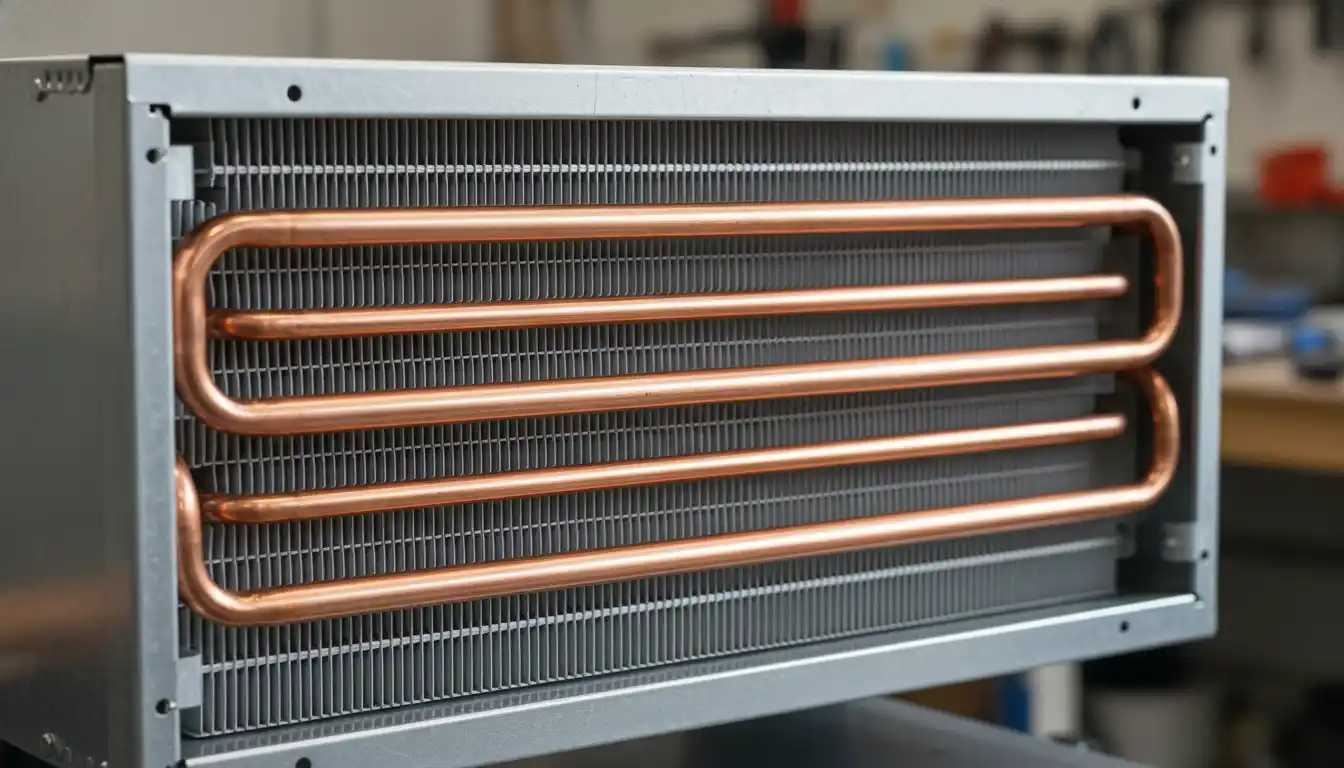
Evaporator coils are pressure vessels. An older R22 coil was designed and tested to withstand R22 pressures. Subjecting thin-walled copper tubing to the significantly higher pressures of R410a is like over-inflating a balloon; it might hold for a while, but the structural integrity is compromised. The risk of the coil bursting—literally rupturing a refrigerant line inside your home—is a real and dangerous possibility.
Oil Incompatibility (The Sludge Factor)
Refrigerant doesn’t just cool the air; it also carries oil to lubricate the compressor. R22 systems use mineral oil, while R410a systems use polyolester (POE) oil. These two oils are chemically incompatible.
If you connect a new R410a condenser to an old R22 coil, the residual mineral oil coating the inside of the old coil will not mix with the new POE oil. Instead, it will form a thick, wax-like sludge. This sludge clogs the fine metering devices and coats the inner walls of the tubing, destroying heat transfer efficiency and eventually causing the new compressor to seize.
The “Flushing” Myth
Many questionable technicians might tell you, “We’ll just flush the coil.” While it is standard practice to flush the line set (the copper pipes connecting the indoor and outdoor units), flushing an evaporator coil is nearly impossible to do effectively.
Evaporator coils are designed with multiple parallel circuits to maximize efficiency. When you inject a flushing solvent, it follows the path of least resistance, cleaning only one or two circuits while leaving pockets of mineral oil trapped in the others. You can never guarantee an old coil is 100% free of mineral oil.
The “Exceptions”: Identifying a Dual-Rated Coil
Is there ever a scenario where this works? Yes, but it requires specific hardware. During the industry’s transition period (roughly 2005-2010), manufacturers began producing “dual-rated” or “R410a-ready” coils. These were robust coils capable of handling high pressure but shipped with R22 metering devices.
Reading the Data Plate
You cannot guess based on age; you must look at the data plate on the cased coil. You are looking for the “Design Pressure” or “Test Pressure.”
If the label states a low-side design pressure of 400 PSI or higher, the copper is likely thick enough to handle R410a. If the rating is 150 PSI or 300 PSI, the coil is strictly for R22 and must be replaced. This is a non-negotiable safety check.
The Role of the Metering Device
Even if the coil is physically strong enough, the device that regulates refrigerant flow—the Thermal Expansion Valve (TXV) or piston—will be wrong. An R22 TXV is calibrated for lower pressures and will not open or close correctly with R410a, causing the system to flood the compressor or starve the coil. You would absolutely need to replace the TXV with one rated for R410a.
Steps to Convert (If Safe to Do So)
If you have confirmed your coil is dual-rated and you are determined to proceed, this is not a DIY job. It requires professional tools and EPA certification. However, understanding the steps will help you oversee the work.
Step 1: Replace the Metering Device
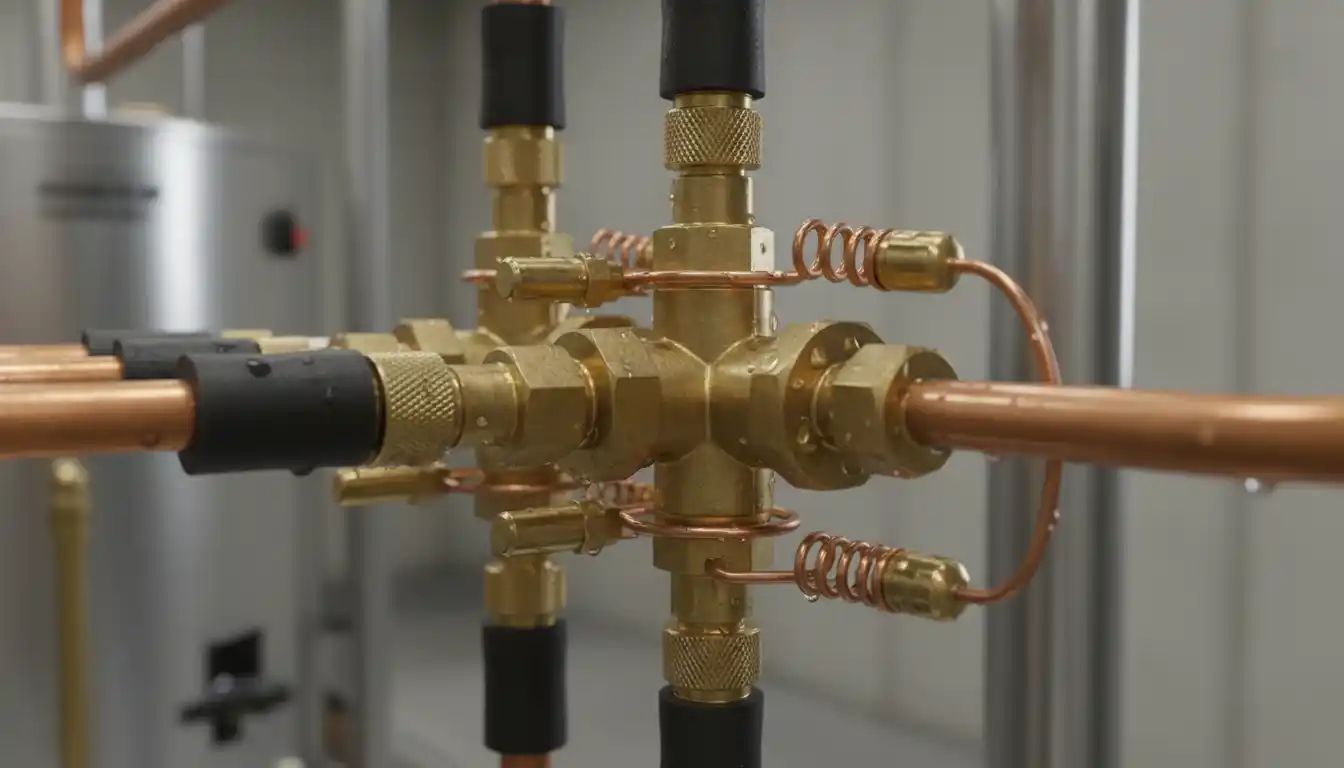
You must physically remove the R22 metering device. If it is a piston, it must be swapped for the correct size R410a piston. If it is a TXV, it must be unbrazed and replaced. This is often difficult as the access is tight, and overheating the surrounding components is a risk.
Step 2: Electrical and Structural Checks
When upgrading the outdoor unit, you often need to verify that your indoor air handler’s control board is compatible. You may need to consult a furnace transformer wiring diagram to ensure the 24V control voltage is correctly routed to the new condenser contactor.
Additionally, ensure the physical spacing is correct. Just as you need precise measurements when calculating the minimum space between two windows during a renovation, you must ensure the new coil or existing plenum connections don’t restrict airflow. Restricted airflow on a high-pressure R410a system causes head pressure to skyrocket, stressing the system further.
Step 3: Deep Vacuum and Leak Test
Because you are mixing old and new components, leak testing is vital. The system should be pressurized with nitrogen to at least 400 PSI to ensure the old coil brazing joints can hold the new pressure. Afterward, a deep vacuum (below 500 microns) is essential to remove any moisture, which reacts with POE oil to form acid.
Comparison: R22 vs. R410a Properties
The following table illustrates why these two refrigerants are not interchangeable without major hardware changes.
| Feature | R22 (Freon) | R410a (Puron) |
|---|---|---|
| Oil Type | Mineral Oil | Synthetic (POE) Oil |
| Operating Pressure (Low Side) | 68 – 72 PSI | 118 – 130 PSI |
| Operating Pressure (High Side) | 250 – 275 PSI | 375 – 450 PSI |
| Coil Test Pressure Req. | ~300 PSI | ~600 PSI |
| Environmental Impact | Ozone Depleting (Phased Out) | High GWP (Being Phased Down) |
The Risks of Improper Conversion
Trying to save $500-$800 by reusing an old coil often leads to thousands of dollars in damages later. Here is what typically goes wrong.
Catastrophic Coil Failure
The most immediate risk is a burst coil. R410a pressures fluctuate with outdoor temperatures. On a 95°F day, if your condenser coil gets dirty, pressures can spike well above normal limits. An old R22 coil, weakened by years of internal corrosion (formicary corrosion), becomes the “fuse” in the system. When it blows, it releases the entire refrigerant charge instantly.
Electrical Safety Considerations
When installing the new outdoor unit, you are also touching high-voltage electrical systems. Modern codes often require a service outlet near the A/C unit for technician use. If you are upgrading your electrical disconnect, you might be required to install a switched GFCI outlet to meet current NEC safety standards. Ignoring the electrical side of the installation while focusing on the refrigerant conversion is a common oversight.
Voided Manufacturer Warranty
This is the deal-breaker for most homeowners. Almost every major manufacturer (Carrier, Trane, Lennox, Goodman) states clearly that their condenser units must be matched with an AHRI-certified evaporator coil. Connecting a new 14-SEER R410a condenser to an unrated, unmatched R22 coil immediately voids the 10-year parts warranty on your new compressor. If that compressor dies in year two because of oil sludge, you are paying for the replacement out of pocket.
Convert R22 Evaporator Coil to R410a: A Dangerous Gamble?
1. Can I use my existing R22 evaporator coil with a new R410a outdoor unit?
Technically, it is physically possible to connect them, but industry experts strongly advise against it. R22 and R410a refrigerants have fundamentally different chemical properties and operating requirements. Mixing these components creates a mismatched system that often leads to catastrophic failure, poor efficiency, and significant safety hazards.
2. Why is the pressure difference between R22 and R410a a major safety risk?
R410a operates at pressures approximately 60% to 80% higher than R22. An older evaporator coil designed strictly for R22 was likely pressure-tested to around 300 PSI, whereas R410a systems can reach pressures exceeding 500 PSI. Subjecting an older coil to this intense pressure can cause the copper tubing or brazed joints to burst, leading to a rapid refrigerant leak and potential injury.
3. Will the oil types in the two refrigerants cause compressor failure?
Yes, this is a critical issue. R22 systems use mineral oil for lubrication, while R410a systems use synthetic Polyolester (POE) oil. These two oils are incompatible. If residual mineral oil remains in the old coil and mixes with the POE oil, it can form a thick, sludge-like substance that clogs the system and causes the new compressor to seize, ruining your expensive new outdoor unit.
4. Does keeping the old R22 coil void the warranty on my new R410a unit?
Almost certainly. Manufacturers of HVAC equipment require that the condenser (outdoor unit) and evaporator coil (indoor unit) be a “AHRI matched system” to guarantee performance and longevity. Installing a new R410a condenser with an incompatible or unapproved R22 coil is considered an improper installation, which typically voids the manufacturer’s warranty immediately.
5. How does a mismatched coil affect energy efficiency?
Even if the coil doesn’t burst immediately, your energy bills will likely increase. R410a requires a specifically sized coil surface area to transfer heat effectively. An R22 coil is often smaller and less efficient than what an R410a system demands. This mismatch forces the compressor to work harder and run longer to cool your home, negating the high-efficiency benefits of the new unit you just purchased.
6. Can I just flush the old coil to remove the mineral oil?
Flushing is possible but risky and often ineffective for old coils. While line sets can be flushed, the complex geometry of an evaporator coil makes it nearly impossible to remove 100% of the old mineral oil and contaminants. Any remaining residue poses a threat to the new compressor. Furthermore, flushing does not solve the structural weakness regarding the pressure differences.
7. Are there any exceptions where an R22 coil can handle R410a?
The only exception is if your existing coil is a relatively modern “dual-rated” coil. Some manufacturers in the late R22 era built coils rated for both refrigerants to ease the transition. You must check the data plate on the coil for a high-side test pressure of at least 600 PSI or explicit language stating it is R410a compatible. If this documentation is missing, you must assume it is unsafe.
8. What is the “Metering Device” problem in this conversion?
The metering device (piston or TXV) regulates the flow of refrigerant into the coil. R22 metering devices are calibrated for lower pressures and will not function correctly with R410a. Using an R22 thermal expansion valve (TXV) with R410a will cause the system to operate erratically, likely freezing up the coil or flooding the compressor with liquid refrigerant, leading to mechanical failure.
9. Is it cost-effective to keep the old coil to save money?
No, it is a false economy. While you might save a few hundred dollars upfront, you face a high probability of paying for a new compressor (costing over $1,000) or a new coil shortly after. Additionally, the increased electricity usage from the inefficient mismatch will slowly drain your wallet. Doing the job right the first time is significantly cheaper in the long run.
10. What is the expert recommendation for homeowners in this situation?
The unanimous recommendation from HVAC professionals and engineers is to replace the evaporator coil when upgrading to an R410a outdoor unit. If cost is a major concern, look for entry-level “builder grade” matched systems or financing options. Treating an HVAC system as a Frankenstein experiment risks your safety, comfort, and financial investment.
Conclusion: Is It Worth It?
While it is technically possible to convert a “dual-rated” evaporator
coil from R22 to R410a by changing the TXV and thoroughly flushing the
lines, it is rarely the smart choice. For the vast majority of older R22
coils, the conversion is unsafe due to pressure limitations and oil
incompatibility.
The “savings” you gain today are often wiped out by higher energy
bills (due to mismatched efficiency) and the high probability of future
repairs. If your R22 coil is more than 10 years old, it has already
lived its expected life. The safest and most financially sound path is
to bite the bullet and replace the evaporator coil when you replace the
outdoor unit, ensuring a matched, warranted, and efficient system for
your home.