When the baseboard heat in one room fails while the rest of the house stays warm, the problem is almost always local to that room or that zone. A central boiler that has failed will leave every room cold, so a single chilly room points to a restricted flow of hot water, a closed damper, a failed thermostat, or an electrical fault specific to that unit. Identifying whether you have a hydronic or electric system is the first step, because the two use completely different components and require different diagnostic paths.
Hydronic baseboard heaters circulate hot water from a boiler through copper tubing and aluminum fins, while electric baseboard units use a resistance element controlled by a line-voltage thermostat. The covers look similar, but a hydronic unit has two copper pipes entering the floor and may have a hinged damper along the top, while an electric unit has a 240-volt feed and no plumbing connections. Knowing which one you have will save time and keep you away from components you should not touch.
Start With the Thermostat and Simple Checks
Before you investigate the heater itself, confirm that the thermostat for that room is actually calling for heat. Turn it well above the current room temperature and listen for a click or a whirring sound from the zone valve or the heater. A thermostat with dead batteries, a blank display, or a schedule that is holding the temperature down will never start the sequence, and that is a common reason a single room stays cold while the rest of the house is comfortable.
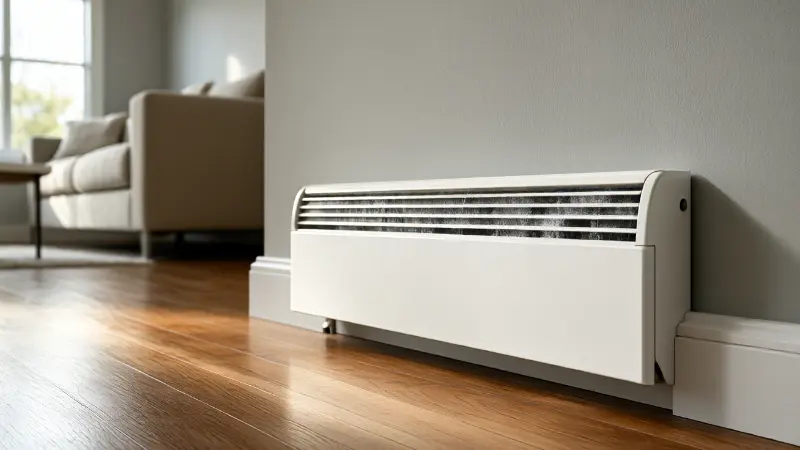
Check that the heater is not blocked by furniture, heavy drapes, or a rug. Air must be able to rise through the fins and exit the top of the cover, and a blocked unit can overheat and trip a safety cutout, especially on electric models. A clear path of airflow is essential for both hydronic and electric baseboards, and this is one of the simplest things to overlook.
Confirm that the circuit breaker dedicated to that room has not tripped. Electric baseboard heaters often sit on their own 240-volt circuit, and a tripped breaker is the most common reason a single unit goes dead while others continue to work. Reset it once, and if it trips again immediately, stop and call an electrician, because a repeat trip points to a wiring or element fault rather than a nuisance trip.
Identify the System Before You Go Further
Look for copper pipes entering the floor at each end of the heater, and for a damper flap along the top of the cover. If you find pipes and a boiler somewhere in the house, you have a hydronic system. If you find only an electrical cable and a thermostat on the wall nearby, you have an electric unit. This distinction determines whether you will be bleeding air and checking boiler pressure or testing a heating element and thermostat.
Hydronic Systems: Air Locks and Zone Valves
A single cold hydronic baseboard usually means hot water is not reaching that loop. The most common cause is an air lock, where a bubble of air trapped in the copper tubing acts like a plug and stops circulation. The heater may be hot at one end and cold at the other, and you may hear gurgling, rushing, or trickling sounds when the system runs. Trapped air is responsible for the majority of water-related noises in hydronic systems and is a frequent cause of a cold zone.
Bleeding a baseboard is different from bleeding a radiator. Most baseboards do not have a bleed key, and the correct procedure is to purge the loop using a purge valve and a hose, driving fresh water through the zone until it runs solid without sputtering. This is safe homeowner work, but it requires access to the boiler area and a clear understanding of the valves. If your system has a traditional bleed valve at one end of the baseboard, open it slowly until water emerges in a steady stream without air hissing, then close it firmly.
If bleeding does not restore heat, check the zone valve. A zone valve is a motorized valve that opens when the thermostat calls for heat, allowing water to flow into that loop. If the motor head has failed or the valve is stuck closed, the thermostat will call and nothing will open. Listen for a quiet whirring sound at the valve head when the thermostat clicks, and feel the pipe on both sides of the valve. If one side is hot and the other is cold, the valve is not opening.
Some zone valves have a manual lever that can be moved to open the valve for testing. If moving the lever restores heat, the valve head or the linkage is the problem. A failed motor head can often be replaced without draining the system, but the repair requires the correct part for the valve body and a comfort level with basic plumbing.
Check the Damper and the Fins
A hydronic baseboard has a hinged damper along the top of the cover that controls how much heat escapes into the room. If the damper has been painted shut, bent, or left closed after cleaning, the pipe can be hot while the room stays cold. Open the damper fully and confirm that it moves freely through its range.
Dust and pet hair matted on the aluminum fins act as insulation and block airflow. A thick layer of dust can reduce heating capacity significantly, and a blocked cover can make a working heater feel ineffective. Turn the system off and let the unit cool, then vacuum the fins with a brush attachment and straighten any crushed fins with a fin comb. Avoid compressed air, which can drive debris deeper into the fins.
Hydronic Systems: Boiler Pressure and Circulation
If every baseboard on one thermostat is cold while other zones heat, the problem may be a zone valve or an air-bound loop rather than the boiler itself. But if the whole house is struggling and one room is simply the coldest, check the boiler pressure and the circulator. A boiler that is low on water or has a waterlogged expansion tank may not circulate properly, and the farthest zone or the last room on a series loop will suffer first.
Check the boiler pressure gauge when the system is cold. Many residential hydronic systems operate in the range of roughly 12 to 15 psi cold, but the correct figure depends on the boiler and the system design. If the pressure is low, the automatic fill valve may be stuck or the expansion tank may be waterlogged. A boiler that needs frequent topping up is losing water somewhere, and that leak should be found rather than masked by repeated filling.
Listen to the circulator pump. A pump that runs but does not move water may have a seized rotor or a failed coupling, and a pump that is silent may not be receiving power. If the boiler is hot and the pipes near it are hot but the baseboards stay cold, circulation is the likely issue. A circulator that has failed is a technician repair on most systems, because it involves electrical connections and system draining.
Older homes are sometimes piped as a single series loop, where water passes through room one, then two, then three, losing heat at each stop. The last room on the loop always receives the coolest water, and that is a design characteristic rather than a defect. Balancing the system by adjusting dampers or adding zoning can improve the coldest room, but it is a larger project than a simple repair.
Electric Baseboard Heaters: Breaker, Thermostat, and Element
If you have confirmed that the unit is electric, the diagnostic path starts at the breaker and ends at the heating element. A tripped breaker is the most common cause of a single dead unit, and a thermostat set too low or a line-voltage thermostat that has failed is the next most likely culprit. Electric baseboards draw heavy current, and the thermostat and element are the components that fail most often.
Line-voltage thermostats on electric baseboards fail differently from the low-voltage thermostats used on central systems. They switch the full 240-volt load, and the contacts can wear out or weld shut over time. If the heater does not respond when you turn the thermostat up, and the breaker is on, the thermostat is a prime suspect. A technician can test for voltage at the heater and confirm whether the thermostat is passing power.
Many electric baseboard heaters include a high-limit thermal cutout that trips if the unit overheats, often because airflow is blocked. The reset button is usually small and located near one end of the heater, behind the cover. Turn off the power at the breaker before removing the cover, locate the reset button, and press it firmly. If the unit then works, the cause was overheating from blocked airflow, and you should clear the obstruction before returning the heater to service.
If the reset does not solve the problem, the heating element may be open. Testing an element requires a multimeter and access to the terminals, and it involves working with 240-volt components. If you are not comfortable with that voltage, call an electrician. A failed element is replaced rather than repaired, and on an older unit the cost should be weighed against the price of a new heater.
Check the Wiring Connections
Loose or burnt wire connections inside the baseboard junction box can interrupt current without tripping the breaker, and a similar resistance problem can make an extension cord getting hot under load. With the power off and the cover removed, look for discolored wire nuts, scorched insulation, or a terminal that has worked loose. Do not tighten or reconnect anything unless you are comfortable working safely around line voltage. A burning smell that persists after a few minutes of operation is a reason to turn the heater off and call an electrician rather than investigating further.
When the Problem Is Demand or Zoning
Sometimes the heater is working correctly and the room is still cold because the system is not zoned well or the demand has changed. A room with large windows, a drafty door, or a recent addition may lose heat faster than the baseboard can replace it. A heater that is undersized for the room will run continuously and still leave the space cool on a cold night, and that is a sizing issue rather than a repair.
Check for drafts around windows and doors, and seal them before assuming the heater is at fault. A cold room with a working baseboard may simply be a room with an air leak. If the heater is hot to the touch along its full length and the room remains cool, the problem is more likely heat loss or undersizing than a mechanical fault.
Zoning problems can also mimic a heater failure. If the room is on a zone with other rooms and the thermostat is in a warm location, the zone may satisfy before the cold room gets enough heat. A thermostat moved to the cold room, or a zone valve adjusted to balance the flow, can improve the situation. These are adjustments rather than repairs, and they often make a bigger difference than replacing parts.
Safety and When to Call a Professional
Hydronic boiler work, gas piping, venting, and electrical panel work are licensed trades, and they carry risks that go beyond a cold room. If the boiler is not firing, if you smell gas, if the pressure relief valve is discharging continuously, or if the circulator or zone valve requires electrical diagnosis, call a qualified technician. On electric baseboards, do not remove covers or test elements unless you are trained to work safely with 240-volt circuits.
A baseboard heater that leaks, that shows green crust at a soldered elbow, or that has split from freezing should be isolated and repaired rather than run. Freeze damage can split copper tubing, and a leaking hydronic loop will lose pressure and eventually stop heating altogether. A section that has frozen and split is replaced, not patched.
Other heating problems follow their own logic. A heat pump that cannot keep up in cold weather may have an auxiliary heat issue rather than a baseboard fault, and a guide to heat pump auxiliary heat not coming on covers the staging and thermostat checks for that system. A thermostat that clicks but produces no heat is a different symptom with its own diagnostic path, covered in thermostat clicking but heat not coming on.
Quick Reference: Symptoms and Likely Causes
The table below matches common single-room baseboard failures with the likely cause and the safest first step. Use it to organize your checks, and stop if a step involves gas components, live voltage, or a repair you are not trained to perform.
| Symptom | System Type | Likely Cause | Safe First Step |
|---|---|---|---|
| Heater cold, other rooms warm, thermostat calls | Hydronic | Air lock or stuck zone valve | Check zone valve operation; bleed or purge the loop |
| Heater hot at one end, cold at the other | Hydronic | Trapped air in the fin tube | Bleed the baseboard if a valve is present; otherwise purge the zone |
| Pipe hot, room stays cool | Hydronic | Closed damper or clogged fins | Open the damper; vacuum and straighten the fins |
| All rooms on one thermostat are cold | Hydronic | Zone valve or air-bound loop | Check the zone valve head and the boiler pressure |
| Heater completely dead, no sound | Electric | Tripped breaker or failed thermostat | Reset the breaker once; confirm the thermostat setting |
| Heater trips the breaker again immediately | Electric | Wiring fault or failed element | Stop resetting; call an electrician |
| Heater runs but produces little heat | Electric | Dust on the element or blocked airflow | Turn off and vacuum the interior; clear obstructions |
| Heater shuts off after a few minutes | Electric | High-limit cutout from overheating | Reset the cutout after clearing airflow; call a pro if it repeats |
FAQ
Why is only one baseboard heater cold while the rest of the house is warm?
A single cold unit points to a localized problem: on a hydronic system, an air lock or a stuck zone valve; on an electric system, a tripped breaker, a failed thermostat, or a tripped high-limit cutout. Start by confirming which system you have, then check the thermostat and breaker before moving to the heater itself.
How do I know if my baseboard heat is hydronic or electric?
Look for copper pipes entering the floor at each end of the heater and a boiler somewhere in the house; that indicates a hydronic system. If the unit has only an electrical cable and a thermostat on the wall nearby, and no pipes, it is electric. Hydronic units often have a damper flap along the top of the cover.
Can I bleed a baseboard heater myself?
Bleeding a hydronic baseboard is safe homeowner work when the system has a bleed valve, but many baseboards require purging the loop at the boiler rather than bleeding at the unit. If you are not comfortable with the valves or the boiler area, a technician can purge the zone and check the pressure.
Why does my electric baseboard heater smell like burning dust?
A light dusty smell on first use after a long idle period is common as dust burns off the element. If the smell is sharp, persistent, or accompanied by smoke or a burning plastic odor, turn the heater off and call an electrician. A persistent smell can indicate a failing component or blocked airflow causing overheating.
Conclusion
Baseboard heat that is not getting hot in one room usually comes down to a local restriction rather than a whole-house failure. On a hydronic system, air locks, a stuck zone valve, a closed damper, or clogged fins are the leading causes, and bleeding or purging the loop plus a thorough cleaning resolves many cases. On an electric system, a tripped breaker, a failed thermostat, a tripped high-limit cutout, or a dusty element are the first things to check.
Start with the thermostat and the breaker, confirm which system you have, and work through the simplest checks before assuming the heater has failed. Clear airflow, open dampers, and reset cutouts are inexpensive fixes that often restore heat without any parts. If the repair requires gas work, boiler components, or live 240-volt testing, call a qualified technician.
A methodical approach protects both the equipment and the household. Check the local components first, respect the limits of what you can safely service, and bring in professional help when the fault points beyond a thermostat, a damper, or a blocked fin. That way one cold room does not become a cold house.