When your air conditioner dies in the middle of a heatwave, the quote for a premium system like Trane or Carrier can induce serious sticker shock. Suddenly, names like Airtemp and Goodman start looking very attractive. Both brands promise cool air for thousands of dollars less than the “big guys,” but are they actually reliable, or are you just buying a future headache?
Most homeowners assume these budget brands are all the same metal boxes with different stickers. That is a dangerous misconception. While both target the value market, they utilize fundamentally different engineering philosophies and supply chains that will directly impact your wallet five years down the road.
The core difference lies in serviceability and design: Goodman utilizes robust, traditional components backed by Daikin’s massive global supply chain, ensuring parts are available almost anywhere, whereas Airtemp employs specialized micro-channel coils that are highly efficient but notoriously difficult to repair and relies on an exclusive distribution network that can delay fixes during emergencies.
The Parent Company Power Struggle: Daikin vs. Nortek
To understand the quality of the machine sitting outside your house, you have to look at who is actually building it. Neither of these brands is a standalone entity; they are the budget-friendly arms of massive industrial conglomerates.
Goodman: The Giant’s Value Brand
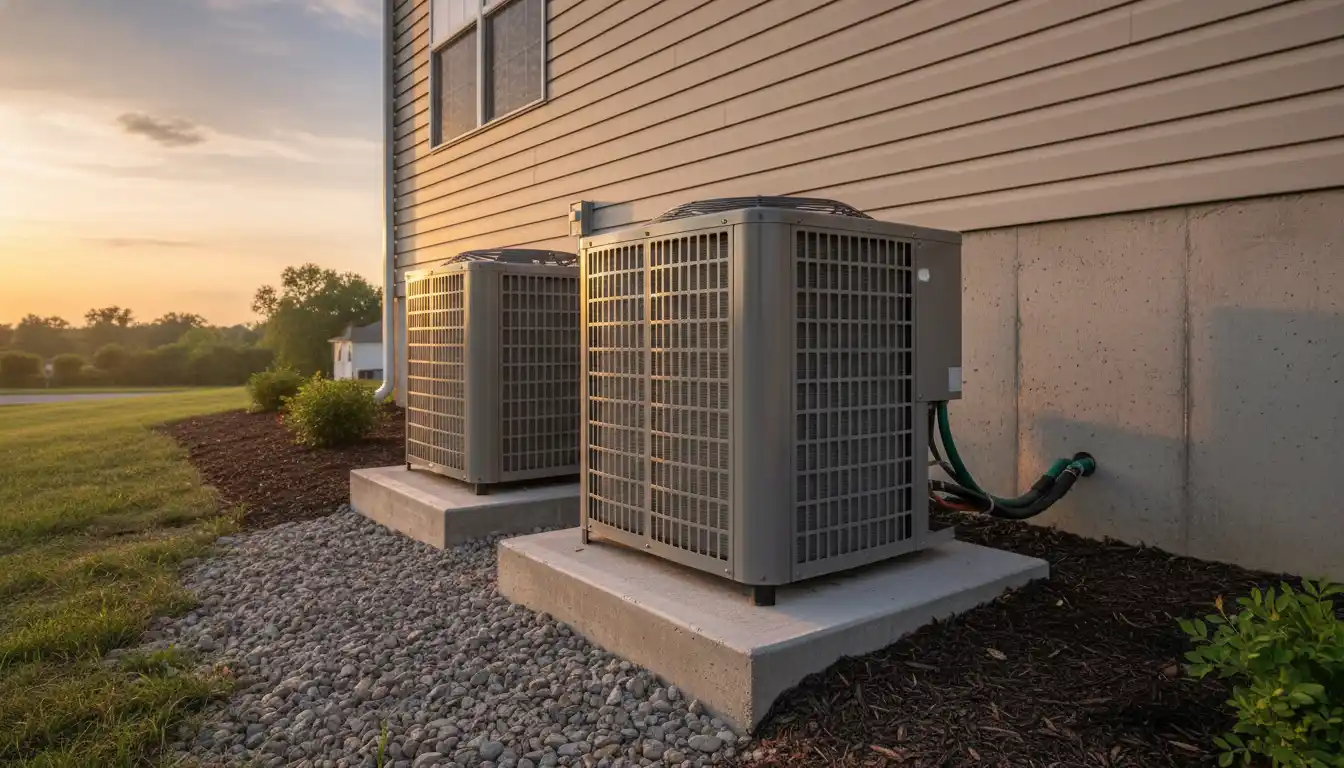
Goodman was purchased by Daikin Industries in 2012. Daikin is a Japanese manufacturing titan and the largest HVAC company in the world. This ownership is critical because it means Goodman equipment—even the entry-level models—benefits from Daikin’s massive research and development budget and quality control processes. They are manufactured in a colossal, state-of-the-art facility in Texas. When you buy Goodman, you are essentially buying a “Toyota Corolla” version of a Daikin system: proven, mass-produced, and reliable.
Airtemp: The Private Label Challenger
Airtemp is a different beast entirely. It is a “private label” brand owned by R.E. Michel Company, one of the largest HVAC distributors in the United States. However, R.E. Michel doesn’t manufacture them. The units are built by Nortek Global HVAC (formerly Nordyne). Nortek is known for manufacturing “stencils”—the same basic unit sold under names like Maytag, Frigidaire, and Gibson. Airtemp is Nortek’s play for the value segment, distributed exclusively through R.E. Michel. This exclusivity is a double-edged sword we will discuss later.
The Technical Divide: Coils and Compressors
This is where the comparison gets technical and where most generic reviews fail you. The physical construction of these two units differs in a way that matters to your repair technician.
The Coil Controversy: Tube-and-Fin vs. Micro-Channel
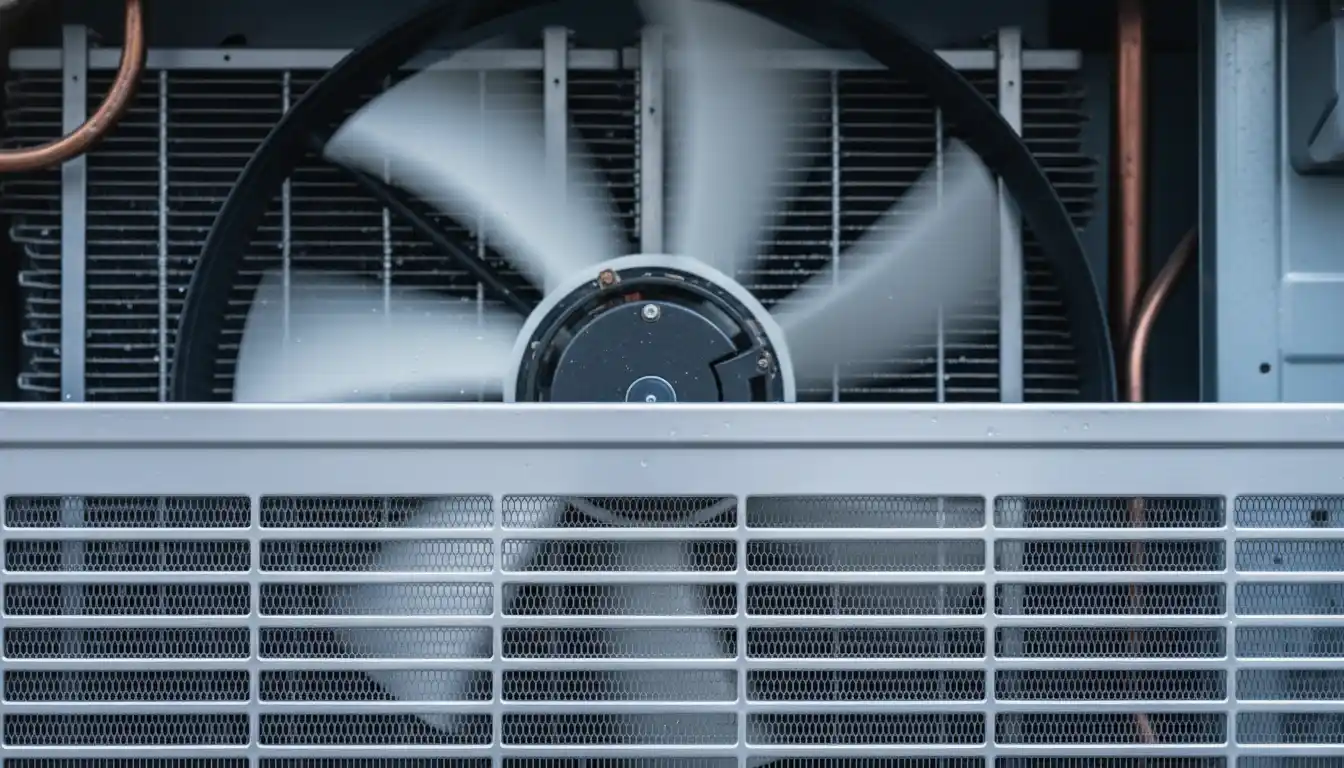
Goodman traditionally uses tube-and-fin coils. These are the industry standard: copper or aluminum tubes running through metal fins. They are robust, easy to clean, and if they develop a leak, a skilled technician can often braze (weld) them to fix the issue. Recently, Goodman moved to “AlumaFin7” technology, which is an all-aluminum version of this traditional design to prevent rust.
Airtemp (Nortek) heavily utilizes micro-channel coils. These look like car radiators—flat aluminum tubes with zigzagging fins between them. On paper, they are brilliant: they are lighter, use less refrigerant, and transfer heat very efficiently. However, in the real world, they have a reputation for being fragile. They are incredibly difficult to clean without bending the fins, and if they leak, they are almost impossible to repair. You usually have to replace the entire coil, which is an expensive labor cost even if the part is under warranty.
Compressor Quality
Both brands tend to use Copeland Scroll compressors in their mid-to-high-tier units. Copeland is the gold standard for durability. However, in entry-level models, you might find LG or generic rotary compressors in both brands to cut costs. Ideally, you want to ensure the specific model number you are quoted includes a Copeland scroll compressor, as this is the heart of the system.
The “Sunday Night” Test: Parts Availability
Imagine your AC breaks on a Sunday evening in July. This is where the battle between Goodman and Airtemp is won or lost.
Goodman wins this category effortlessly. Because Goodman is the most installed brand in America, their parts are generic and ubiquitous. Almost every HVAC supply house stocks Goodman capacitors, motors, and control boards. Many technicians even carry Goodman-compatible parts on their trucks. If a Goodman unit breaks, you are likely up and running within 24 hours.
Airtemp has a supply chain bottleneck. Because Airtemp is the private label of R.E. Michel, you generally can only get proprietary parts (like control boards or specific body panels) from R.E. Michel locations. If the local branch is closed for the weekend or doesn’t have the part in stock, you are waiting. You cannot just run to a generic supplier and pick up a part for a proprietary Nortek system.
Comparison Table: At a Glance
Here is a breakdown of how these two value champions stack up against each other.
| Feature | Goodman | Airtemp |
|---|---|---|
| Parent Manufacturer | Daikin (Texas, USA) | Nortek Global HVAC (Mexico/USA) |
| Coil Technology | AlumaFin7 (Tube & Fin) | Micro-Channel (All Aluminum) |
| Parts Availability | High (Universal availability) | Low (Exclusive to R.E. Michel) |
| Standard Warranty | 10-Year Parts (Requires Registration) | 10-Year All Parts (Requires Registration) |
| Unit Replacement Policy | Lifetime Compressor (Select Models) | 1-Year Unit Replacement (Select Models) |
| Noise Level | Moderate to Loud (Entry models) | Moderate (Generally quieter) |
Installation: The Elephant in the Room
You cannot discuss Goodman without addressing the “bad reputation” elephant in the room. If you search online, you will find countless complaints about Goodman units failing. This is rarely the fault of the equipment.
Goodman has historically sold their units to almost anyone—not just licensed dealers. This means many Goodman units are installed by handy-andys, uncertified laborers, or DIY enthusiasts who don’t understand airflow dynamics. A poorly installed AC will fail in three years, regardless of the brand. Because Goodman is the cheapest and most accessible, it suffers from the highest rate of bad installations.
Airtemp, being sold through a stricter distributor network (R.E. Michel), is generally only sold to contractors with an account. This provides a slight natural filter against complete amateur installations, but it doesn’t guarantee quality.
If you have a plumbing vent on your exterior wall or tight clearance issues, the physical footprint of the unit matters. Airtemp’s micro-channel units are often physically smaller and slimmer than Goodman’s tube-and-fin units, making them a potentially better fit for tight lot lines or crowded utility areas.
Warranty Comparisons
Both companies offer the industry-standard 10-year limited parts warranty, but there is a catch: you must register the product online within 60 days of installation. If you forget, that warranty shrinks to 5 years. Do not rely on your contractor to do this; do it yourself.
Goodman shines with its “Unit Replacement Limited Warranty” on higher-efficiency models. If the compressor fails within a certain timeframe (sometimes 10 years, sometimes lifetime depending on the tier), they will replace the entire outdoor condensing unit, not just the broken part. Airtemp offers a similar “Replacement Pledge,” usually for 1 year on entry models and up to 10 years on premium ones, where they replace the unit if the compressor fails.
Efficiency and Operating Costs
When looking at SEER2 (Seasonal Energy Efficiency Ratio) ratings, both brands offer units ranging from the legally required minimum (13.4 or 14.3 depending on your region) up to high-efficiency 18+ SEER2 models.
However, pure efficiency ratings don’t tell the whole story. Real-world efficiency depends on maintenance. For example, homeowners often ask, can you run a washing machine with just cold water to save energy? The answer is yes, but saving energy on HVAC is harder if the unit gets dirty. Because Airtemp’s micro-channel coils are harder to clean deeply, they can lose efficiency faster in dusty or pollen-heavy environments compared to Goodman’s wider-spaced fins.
Additionally, if you are installing the unit in a damp environment, such as near a waterproofed wall on a concrete slab, Goodman’s new paint finish and coil design have shown excellent resistance to salt spray and moisture corrosion, a common killer of budget units.
Final Verdict: Which One Should You Buy?
The choice between Airtemp and Goodman ultimately comes down to your priorities regarding long-term service versus upfront footprint.
Choose Goodman If:
You want the safe, “Toyota Camry” bet. You plan to live in the house for 10+ years and want to ensure that any technician, anywhere, can fix your system quickly and cheaply. You value a robust manufacturer warranty backed by a global giant. You have plenty of space for the outdoor unit.
Choose Airtemp If:
You are working with a trusted contractor who specifically recommends and services them. You have limited space for the outdoor unit and need the slimmer profile provided by micro-channel technology. You are looking for a unit that might be slightly quieter than the base-model Goodman.
Expert Tip: Ignore the logo on the box. Focus 90% of your energy on finding the best installer. A mediocre Airtemp installed perfectly will outlast a top-tier Goodman installed poorly. Ask for a Manual J load calculation and ensure they purge the lines with nitrogen during brazing. That is the secret to longevity, not the brand name.