If you have accidentally cut a freon line, the very first thing you must do is shut off the air conditioner at the thermostat and the breaker immediately. Leaving the system running will damage the compressor beyond repair.
Hearing that sudden hiss and seeing a white cloud of gas erupt from your air conditioner or refrigerator is terrifying. Whether you were trimming hedges, moving the unit, or doing a renovation, a severed refrigerant line is a serious issue. It transforms a working appliance into a giant paperweight in seconds.
This guide will walk you through the immediate safety steps, the legal realities of refrigerant, and the hard truth about repair costs. We will also cover why “quick fixes” like duct tape or epoxy often lead to total system failure.
Immediate Emergency Steps: Safety First
Before worrying about the repair bill, you need to secure the area. Refrigerant is under high pressure and can be hazardous if mishandled. Follow these protocols instantly.
Evacuate and Ventilate the Area
Refrigerant gas is heavier than air. If the cut happened indoors, such as with a mini-fridge or an indoor evaporator coil, the gas will displace oxygen near the floor. Open all windows and doors immediately to create a cross-draft. If the leak is in a small, enclosed room, leave the room until the hissing stops and the air clears.
Avoid Contact with the Mist
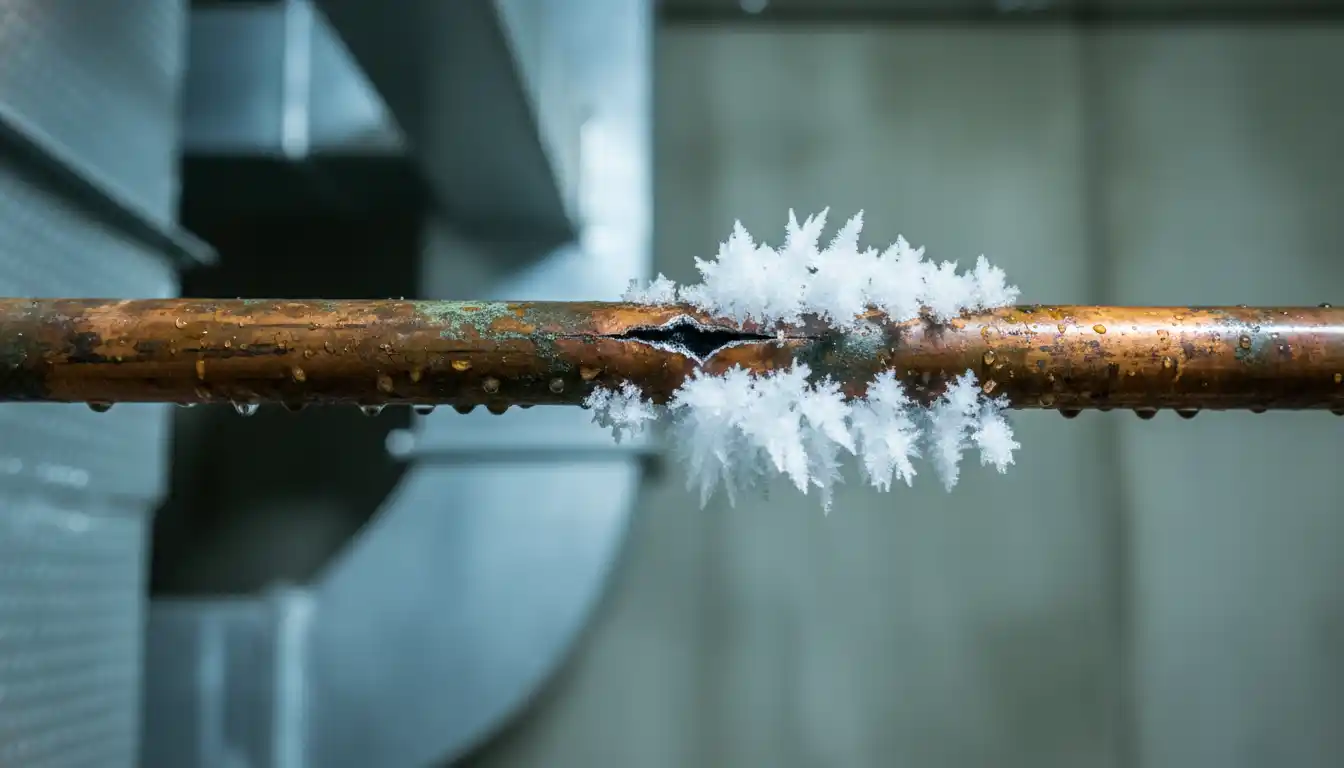
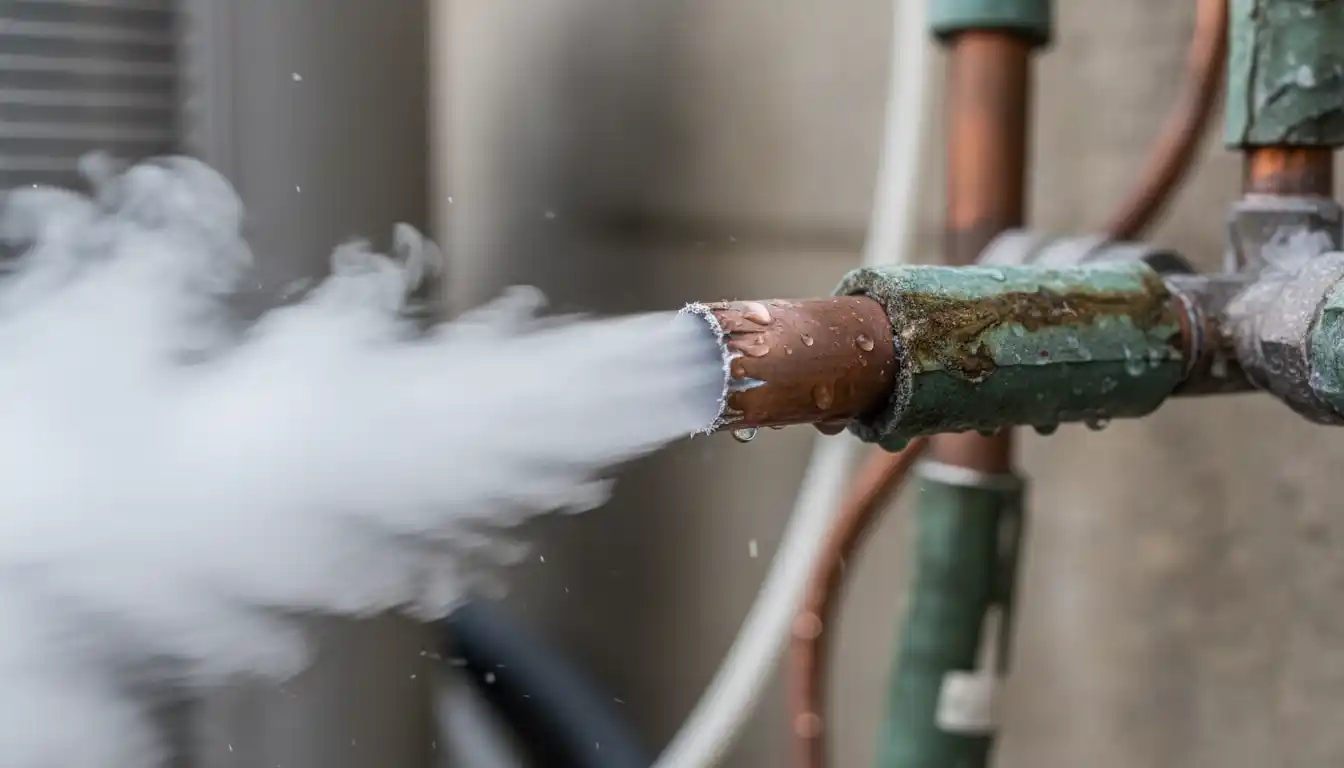
The white cloud you see is not smoke; it is vaporizing refrigerant. Do not touch this mist. Refrigerant boils at extremely low temperatures (R-410A boils at -55°F). Direct contact with your skin can cause severe, instant frostbite. If you get refrigerant on your skin, treat it like a burn and seek medical attention if blistering occurs.
Shut Down the Power
Go to your electrical panel and flip the breaker for the AC unit to “OFF”. If you accidentally cut the line while the system was running, the compressor is now trying to pump a vacuum. This will suck air, moisture, and dirt directly into the heart of your system. Shutting it off stops this contamination and might save your compressor.
For outdoor repairs, you might also have a disconnect box near the unit. If you are unfamiliar with electrical safety or how switched GFCI outlets work, stick to the main breaker panel to be safe.
The “Hidden” Damage: It’s Not Just About the Gas
Most homeowners assume the only problem is the lost freon. Unfortunately, the damage goes much deeper. Understanding this will help you decide if a repair is even worth it.
The Oil Loss Factor
Refrigerant doesn’t travel alone. It carries a specific oil (mineral, alkylbenzene, or POE) that lubricates the compressor. When you cut the line, that high-pressure spray ejects a significant amount of this oil. If you simply patch the hole and refill the gas without replacing the oil, your compressor will seize up shortly after.
The Moisture Death Clock
The moment the copper line is severed, atmospheric air rushes in. The moisture in the air reacts with the remaining refrigerant oil to form acid. This acid eats away at the compressor windings and internal components.
This is why professional repair is not just “patch and fill.” It requires a filter drier replacement and a deep vacuum to boil off that moisture. If you skip this, the unit might run for a month, but it is doomed to fail.
Visual & Auditory Clues: Liquid vs. Suction Line
Your air conditioner has two copper lines connecting the indoor and outdoor units. Identifying which one you cut can give you a clue about the severity of the leak and the potential oil loss.
The Smaller “Liquid” Line
This copper pipe is usually warm to the touch and about the width of a pencil. It carries high-pressure liquid refrigerant to your house. If you cut this, the leak will be violent and fast, often emptying the system in seconds. You will likely see a significant amount of oil splattered around the cut.
The Larger “Suction” Line
This pipe is insulated (wrapped in black foam) and cold to the touch. It carries low-pressure gas back to the compressor. A cut here might hiss longer and slower. While still serious, it sometimes results in less immediate oil loss than a liquid line breach. However, because it is under lower pressure, it is more prone to sucking in contaminants if the unit is running.
Can You Repair a Cut Freon Line Yourself?
The short answer is no. While you might be handy with projects like installing lattice under a deck, refrigerant lines are a different beast entirely.
The “Epoxy Patch” Myth
You will find YouTube videos suggesting you can use JB Weld or epoxy to seal the hole. Do not do this. An AC system operates at pressures ranging from 150 to 450+ PSI. Epoxy cannot withstand the thermal expansion and vibration of the copper pipe. It will eventually blow out, releasing another cloud of expensive refrigerant.
EPA Regulations and Legality
Under EPA Section 608 of the Clean Air Act, it is illegal for anyone without a certification to handle or purchase ozone-depleting refrigerants (like R-22) or their substitutes (like R-410A). While you won’t be arrested for an *accidental* cut, you cannot legally buy the gas to refill it yourself. No reputable shop will sell it to you without a license.
Repair vs. Replacement: Making the Right Call
Once the line is cut, you face a financial decision. Is it worth paying for a professional repair, or should you buy a new unit? This depends heavily on the type of refrigerant your system uses.
The R-22 Trap
If your AC unit was manufactured before 2010, it likely uses R-22 (Freon). The production of R-22 has been banned in the US. The remaining supply is incredibly expensive. Refilling an R-22 system can cost nearly as much as a down payment on a new unit.
The R-410A Scenario
Newer systems use R-410A (Puron). This refrigerant is still available and cheaper, though prices are rising as regulations change. Repairing a cut line on an R-410A system is often financially viable if the unit is under 10 years old.
Use the table below to estimate your potential costs and make a decision.
| Expense Category | Estimated Cost | Notes |
|---|---|---|
| Service Call / Diagnostic | $75 – $150 | Basic fee to get a tech to your house. |
| Leak Repair (Brazing) | $200 – $500 | Includes cutting out damage, brazing, and new filter drier. |
| Refrigerant Recharge (R-410A) | $50 – $80 per lb | Most residential units hold 6-12 lbs. |
| Refrigerant Recharge (R-22) | $150 – $300+ per lb | Extremely expensive. Often makes repair unviable. |
| Total Estimated Repair Bill | $600 – $1,800+ | Varies by location and system size. |
Preventing Future Accidents
Accidents happen, usually when we are rushing or distracted. Landscaping tools are the number one enemy of AC lines. Hedge trimmers, weed whackers, and lawnmowers can slice through copper in a blink.
Protect Your Line Set
Consider installing a line set cover or a protective conduit over the exposed pipes near the unit. If you are doing major renovation work, such as moving heavy materials, mark the lines clearly. Even carrying 16-foot lumber on a roof rack nearby can be risky if you swing a board too wide and hit the condenser coils.
What About Mini-Fridges and Window Units?
If you punctured the freezer of a mini-fridge while defrosting it with a knife, the unit is likely a total loss. These systems are “hermetically sealed,” meaning they don’t have service ports to add more gas. A technician would have to install a piercing valve, fix the hole, vacuum, and recharge it.
The cost of labor for this usually exceeds the $150 price tag of a new mini-fridge. In this case, proper disposal is your only option. Contact your local waste management facility to find out how to dispose of an appliance with a breached refrigerant line.
Final Thoughts
Cutting a freon line is a stressful, expensive mistake, but it is fixable if handled correctly. Speed is key—shut the power off now to save the compressor. Do not attempt a DIY patch; you will only waste time and money. Call a licensed professional, tell them exactly what happened, and check your unit’s label to see which refrigerant it uses so you are prepared for the quote.
Accidentally Cut Freon Line? Stop! Do This Before You Ruin Your AC
1. I just accidentally cut my AC refrigerant line—what is the very first thing I should do?
Turn off your air conditioner immediately at the thermostat and the breaker. Running the system with a cut line will cause the compressor to pump out its remaining oil and suck in moisture and dirt from the air. This can turn a repairable leak into a total system failure requiring a complete replacement. Once the unit is off, move away from the area to avoid inhaling the escaping gas.
2. Is the leaking gas (Freon) dangerous to my health?
For most residential outdoor leaks, the immediate health risk is low if you are in a well-ventilated area. However, refrigerant can displace oxygen, so do not stand directly over the leak or in a low-lying confined space where the gas might settle. Avoid touching the escaping gas or liquid, as it is extremely cold and can cause instant frostbite. If you feel dizzy or lightheaded, move to fresh air immediately.
3. Can I put duct tape or sealant on the cut to stop the leak?
No, duct tape, electrical tape, or epoxy putty will not stop a refrigerant leak. The system operates under high pressure (often exceeding 300 psi), which will blow through standard consumer tapes and glues instantly. Additionally, applying sealants can introduce contaminants into the copper lines, making the professional repair more difficult and expensive later.
4. Can I run my AC fan or unit while waiting for a repair?
No. You must keep the system completely off. Running the compressor without refrigerant will cause it to overheat and seize up (burn out) within minutes. Even running just the fan can pull moisture and humidity into the open lines, which ruins the specialized oil inside the system and can corrode the internal components.
5. How much will it cost to repair a cut refrigerant line?
Repair costs typically range from $200 to over $1,500. This price varies wildly depending on the type of refrigerant your system uses. If you have an older R-22 (Freon) unit, the refrigerant itself is incredibly expensive and may make the repair cost-prohibitive compared to buying a new unit. Newer R-410A systems are generally cheaper to refill. The repair involves brazing the line, replacing the filter drier, pressure testing, vacuuming the system, and adding new refrigerant.
6. Can I fix this myself if I buy a recharge kit?
No. This is not a DIY repair. Unlike a car AC recharge, a home AC system is a sealed loop that requires brazing (welding) with nitrogen to fix the copper line. You also need a specialized vacuum pump to remove all air and moisture before recharging. Furthermore, handling and purchasing bulk refrigerant typically requires an EPA Section 608 certification by law.
7. Will my homeowners insurance cover the repair?
It depends on your specific policy, but often the answer is no. Standard policies usually cover damage from “perils” like falling trees, fire, or vandalism. Accidental damage caused by the homeowner (like cutting the line with a weed whacker or hedge trimmer) is frequently considered negligence or a maintenance issue and is excluded. However, it is worth checking your specific policy for “accidental damage” riders.
8. I see an oily substance leaking along with the gas—is that normal?
Yes, but it is a sign of a significant problem. Refrigerant carries oil through the system to lubricate the compressor. If you see oil spraying out or pooling on the ground, your compressor is losing its lubrication. You must inform your HVAC technician about the oil loss so they can measure and add the correct amount of specific oil back into the system to prevent future compressor failure.
9. Did I break the law by venting Freon into the atmosphere?
The EPA prohibits knowingly venting refrigerant into the atmosphere. However, accidental cuts by a homeowner during yard work are generally treated as accidents rather than criminal violations. You are not likely to face fines for a genuine accident, but you are ethically and legally obligated to have a certified professional repair the leak properly rather than continuing to let it leak or trying to “top it off” repeatedly.
10. Is it better to repair the line or replace the entire AC unit?
If your system is less than 10 years old and uses R-410A refrigerant, repairing the line is usually the most cost-effective option. However, if your system is over 15 years old or uses the obsolete R-22 refrigerant, the cost of the refrigerant and repair labor may approach the down payment for a new, more efficient system. Ask your technician for a quote on both options before proceeding.