A furnace that reports polarity reversed is not giving a random error. It usually means the incoming 120-volt hot wire and neutral wire have been swapped somewhere in the circuit.
This condition can stop the furnace from heating, trigger repeated lockouts, and create a shock hazard. It deserves prompt attention, not a reset-and-forget fix.
This home and garden guide explains what reversed polarity means, how to test for it, and how to correct it safely. It also covers when a licensed HVAC technician or electrician should take over.
What “Polarity Reversed on Furnace” Actually Means
In a standard North American home circuit, the black wire is hot, the white wire is neutral, and the green or bare wire is ground.
Reversed polarity means the hot and neutral roles are swapped. The white wire may be carrying voltage while the black wire acts as the return path.
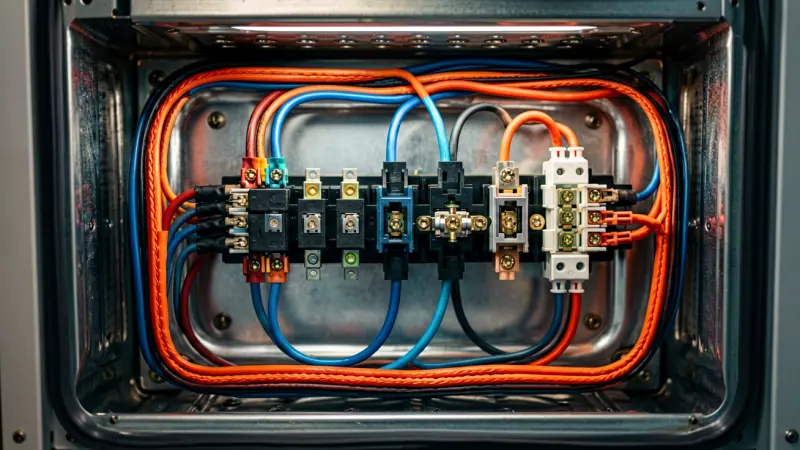
Many modern furnaces monitor this condition through the control board. If the board sees the wrong voltage pattern, it may refuse to start the burners.
Why a Furnace Cares About Polarity
Control Board Protection
The furnace control board expects a stable 120-volt supply with correct hot, neutral, and ground relationships. It uses that supply to power the blower, igniter, gas valve, and safety circuits.
When polarity is reversed, the board may detect an unsafe condition. It can lock out the furnace to prevent damage or electric shock.
Some boards flash a specific code, while others simply refuse to power the thermostat or inducer motor.
Flame Rectification and Polarity
A flame sensor does more than detect heat. It uses a principle called flame rectification, where the flame acts like a one-way valve for electrical current.
Correct polarity helps the board read a steady microamp signal. Reversed polarity can weaken or invert that signal, making the board think the flame is absent.
The result is often a furnace that ignites, runs for a few seconds, and then shuts down. It may retry several times before locking out.
Safety and Electrical Code
Reversed polarity can energize parts of an appliance that should remain neutral. That creates a shock risk for anyone touching the furnace cabinet, a switch, or a connected water pipe.
Electrical codes require correct polarity and grounding for fixed appliances. A furnace is not a place to ignore those rules.
It can also stress motors, boards, and ignition components over time. The furnace may fail earlier than it should.
Common Symptoms of Reversed Furnace Polarity
The most obvious symptom is a furnace that will not produce heat. The thermostat may call for heat, but the burners never stay lit.
Some furnaces show a polarity error code on the control board LED. Others show a flame sensor lockout, ignition lockout, or open neutral code.
In milder cases, the furnace may run but short cycle. The blower might start, the igniter might glow, and the flame may appear before shutting off.
A plug-in outlet tester may reveal the root cause before any furnace panel is opened. That simple check can save time and reduce risk.
What Causes Furnace Polarity to Reverse?
Reversed Outlet Wiring
The most common cause is a wall outlet with hot and neutral swapped. This often happens after a DIY outlet replacement or a loose receptacle repair.
If the furnace is plugged into that outlet, the control board sees reversed polarity immediately. An outlet tester will show “reverse polarity” or “hot/neutral reversed.”
Wrong Connections at the Furnace Disconnect
Many furnaces have a service switch or disconnect near the unit. If that switch is wired backward, polarity can reverse before power reaches the furnace.
The black wire should remain hot through the switch, and the white wire should remain neutral. A switch that breaks the neutral instead of the hot can also create confusing readings.
Reversed Furnace Cord or Plug
If the furnace uses a cord and plug, a replaced plug or cord can be wired incorrectly. Someone may connect black to the silver terminal and white to the brass terminal.
This is easy to miss because the furnace may still receive power. The board, however, detects the wrong polarity and locks out.
Bad DIY Repairs and Old Wiring
Previous homeowner repairs are a frequent source of polarity problems. A junction box may have white wires connected to black wires without regard for function.
Old wiring can also have faded or painted wire insulation. That makes it harder to identify hot and neutral conductors correctly.
Shared Neutral or Multiwire Branch Circuit
A furnace should have a dedicated circuit. If it shares a neutral with another circuit, voltage can appear on the neutral in unexpected ways.
This can mimic reversed polarity or cause intermittent errors. It also makes troubleshooting harder because readings change when other loads turn on.
Loose Neutral Connections
A loose neutral can cause flickering lights, erratic furnace behavior, and voltage fluctuations. In some cases, the control board may report a polarity fault.
Loose connections can overheat and start a fire. Any sign of discolored wire nuts or burnt insulation requires an electrician.
How to Test for Reversed Polarity Safely
Safety must come first. Turn off the furnace at the thermostat, then switch off the circuit breaker that feeds the furnace.
Use a non-contact voltage tester and a multimeter to confirm power is off. Never assume a switch or breaker has de-energized the circuit.
Step 1: Check the Furnace Outlet
If the furnace plugs into a standard outlet, plug in a three-light outlet tester. A “reverse polarity” reading points to the outlet or the wiring feeding it.
This is the least invasive test and should be done before removing any furnace panels.
Step 2: Inspect the Service Switch
With power off, inspect the furnace service switch. Confirm that the black hot wire is switched and the white neutral wire is not interrupted improperly.
If the switch is wired backward, correct it only if qualified. Otherwise, call an electrician.
Step 3: Test at the Furnace Control Board
With power on and using proper safety gear, measure voltage between the board’s L1 and neutral terminals. It should read approximately 120 volts.
Then measure neutral to ground. It should read close to 0 volts. If neutral to ground reads 120 volts, the hot and neutral are likely reversed.
Hot to ground should also read about 120 volts. Any unexpected reading means the circuit needs professional review.
Step 4: Check the Breaker Panel
Open the panel only if comfortable and qualified. The furnace’s black wire should land on the circuit breaker.
The white wire should land on the neutral bar, and the ground wire should land on the ground bar. If the white wire is on the breaker, polarity is reversed at the panel.
Step-by-Step Fix for Reversed Furnace Polarity
Turn Off and Lock Out Power
Shut off the breaker and use a lockout tag if available. Confirm zero voltage at the furnace before touching any wires.
This protects against shock and prevents the furnace from starting while work is in progress.
Correct the Outlet or Disconnect
If an outlet is reversed, move the black wire to the brass screw and the white wire to the silver screw. The ground wire goes to the green screw.
For a disconnect, maintain black as the hot conductor and white as the neutral conductor. Never swap them to make a furnace start.
Repair the Furnace Cord or Plug
If the cord or plug is damaged or miswired, replace it with a proper three-wire grounding cord. Match black to brass, white to silver, and green to ground.
Do not use a cheater plug or adapter to bypass the ground. That defeats an important safety feature.
Check the Circuit Breaker and Neutral Bar
If the panel wiring is reversed, an electrician should correct it. This may involve moving the furnace circuit to the proper breaker and neutral bar positions.
While the panel is open, the electrician can check for loose neutral connections, double-tapped breakers, and undersized wiring.
Reset and Test the Furnace
After the repair, restore power and observe the furnace control board. The polarity error should clear if the wiring is correct.
Run a full heat cycle and confirm the flame stays lit. A technician can measure flame sensor microamps to verify a strong signal.
When to Call a Professional
Call an HVAC technician or licensed electrician if the error returns, if the panel is involved, or if there is no ground connection.
Also call for help if there is burning smell, scorched wiring, aluminum branch wiring, or any uncertainty about the repair.
Polarity Reversed vs. Other Furnace Errors
Not every no-heat call is a polarity problem. The table below compares common furnace errors and how they differ from reversed polarity.
| Error or Symptom | Likely Cause | Simple Test | Typical Fix | Urgency |
|---|---|---|---|---|
| Polarity reversed | Hot and neutral swapped at outlet, switch, cord, or panel | Outlet tester or multimeter at L1 and neutral | Correct wiring at source | High |
| Open neutral | Broken or loose neutral connection | Voltage readings fluctuate; lights dim | Tighten or repair neutral | High |
| Flame sensor lockout | Dirty or failing flame sensor; weak flame signal | Clean sensor; measure microamps | Clean or replace sensor | Medium |
| Pressure switch error | Blocked vent, drain, or inducer issue | Check vent and condensate lines | Clear blockage or replace switch | Medium |
| Limit switch trip | Overheating due to airflow restriction | Check filter and blower | Replace filter; inspect blower | High |
| Ignition lockout | Weak igniter, gas valve, or flame issue | Observe igniter and flame | Repair ignition components | Medium |
How to Prevent Future Polarity Problems
Prevention starts with careful electrical work. Take a photo of wiring before disconnecting anything, and label the breaker clearly.
After any outlet, switch, or panel work, test the circuit with an outlet tester. This small habit can catch reversed polarity before the furnace locks out.
Keep the furnace on a dedicated circuit and avoid extension cords or cheater plugs. Those shortcuts create heat, voltage drop, and safety issues.
If a basement or utility room is being remodeled, plan for service access. A multi-level drop ceiling can make future wiring and furnace maintenance easier without tearing into drywall.
Condensate drains also deserve attention. A clogged drain can trigger furnace shutdowns that look electrical, so learn how to clean a stinky drain with vinegar and baking soda as part of routine maintenance.
When moving equipment near an air conditioning coil, never cut refrigerant lines. An accidentally cut freon line can turn a simple repair into an expensive environmental and mechanical problem.
Flame Sensing, Polarity, and Microamps Explained
Flame rectification depends on a stable electrical reference. The flame sensor rod and burner ground create a tiny current path through the flame.
The control board reads that current in microamps. A strong reading is often between 2 and 6 microamps, though specifications vary by furnace.
If polarity is reversed, the flame signal may fall below the board’s threshold. The board then shuts the gas valve even though a flame is visible.
Cleaning the flame sensor with steel wool can help, but it will not fix reversed polarity. The wiring fault must be corrected first.
Furnace Polarity vs. Thermostat Wiring Problems
Thermostat wiring is low voltage, usually 24 volts. The wires are R, W, G, Y, and C, and they do not carry the same line voltage as the furnace power supply.
A smart thermostat may report a power issue if R and C are miswired. That is different from a furnace board reporting reversed line polarity.
Communicating thermostats can be sensitive to data wire polarity. If the thermostat display is blank or offline, check the furnace door switch and breaker first.
Do not confuse a low-voltage thermostat issue with a dangerous 120-volt polarity problem. The testing methods and safety risks are different.
What a Qualified Technician Will Check
A qualified technician begins with a voltage check at the furnace disconnect. This confirms whether the problem is upstream in the home wiring or inside the furnace.
The technician may use a multimeter to measure hot-to-neutral, hot-to-ground, and neutral-to-ground voltages. These readings reveal reversed polarity, open neutral, or poor grounding.
Next, the technician inspects the control board for error codes and burnt terminals. A board that has been stressed by reversed polarity may need replacement even after the wiring is corrected.
Finally, the technician tests the flame sensor microamp reading during a heat cycle. A strong signal confirms that polarity and flame sensing are working together correctly.
Furnace Polarity in Older Homes and Renovations
Older homes often have wiring that has been modified many times. A furnace circuit may have been extended, spliced, or moved without proper labeling.
Renovations can make this worse when walls are closed before wiring is tested. A reversed outlet behind a furnace or near a condensate pump can go unnoticed for years.
During any remodel, test every circuit that serves heating equipment. This includes the furnace outlet, service switch, and any nearby convenience outlet.
If a basement ceiling is being finished, leave access panels for wiring and shutoffs. This reduces the chance that future repairs will require destructive demolition.
Repair or Replace the Furnace Control Board?
Reversed polarity does not always damage the control board. If the error clears after wiring correction, the board may continue to work normally.
However, repeated polarity errors can shorten board life. Signs of board damage include burnt traces, swollen capacitors, and persistent error codes after correct wiring.
A technician can test board outputs before recommending replacement. Replacing a board without fixing the polarity issue will only repeat the failure.
Whenever a board is replaced, the electrical supply should be verified again. This ensures the new board starts with a clean, correct power source.
Safety Warnings for Furnace Electrical Work
A gas furnace combines gas, electricity, and moving parts. A mistake can cause shock, fire, carbon monoxide, or an expensive control board failure.
Never bypass a safety switch to force the furnace to run. Never swap wires just to clear an error code.
If gas is smelled, leave the home and call the gas utility from a safe location. If wiring is burnt or melted, call an electrician before restoring power.
Homeowners can safely check an outlet with a plug-in tester. Beyond that, panel and furnace wiring work should be handled by qualified professionals.
Frequently Asked Questions
Can a furnace run with reversed polarity?
Some older furnaces may run, but modern furnaces often lock out. If it does run, the flame signal may be weak and the furnace may short cycle.
Running with reversed polarity is unsafe and should not be ignored.
Will reversed polarity damage a furnace?
It can stress the control board, blower motor, igniter, and flame sensing circuit. It also creates a shock hazard for anyone touching the furnace cabinet.
The longer the condition exists, the greater the chance of expensive damage.
Is reversed polarity the same as reversed thermostat wires?
No. Furnace polarity usually refers to the 120-volt line voltage supply. Thermostat wires carry low-voltage control signals.
A thermostat issue may stop heating, but it will not create the same electrical shock risk.
Can flipping the breaker fix reversed polarity?
No. A breaker reset may clear a temporary lockout, but it cannot correct swapped hot and neutral wires.
The error will return until the wiring is fixed at the outlet, switch, cord, or panel.
How much does it cost to fix reversed furnace polarity?
If the problem is a single reversed outlet, an electrician may correct it quickly at a modest service cost. Panel repairs and new circuits cost more.
An HVAC diagnostic fee may also apply if the furnace board or flame sensor was affected.
Final Thoughts on Polarity Reversed on Furnace
A polarity reversed on furnace warning is a sign that the home’s electrical supply is not wired correctly. It is not a furnace quirk or a code to ignore.
Start by testing the outlet, then check the service switch, cord, and panel if qualified. Correct the wiring at the source so the furnace can operate safely and reliably.
When in doubt, call a licensed professional. Proper polarity protects the furnace, the home, and the people who live there.