A stinky drain can make a clean kitchen or bathroom feel dirty. The smell often comes from biofilm, not just the drain opening.
Vinegar and baking soda can help with mild odors and loose gunk. They cannot fix every clog or sewer problem.
This home and garden guide explains why drains smell and how to use this natural pair safely.
Why a Drain Smells Like Rot, Sewer, or Sulfur
Every drain has a P-trap that holds water. That water seal blocks sewer gas from entering the room.
If the trap dries out, sewer gas moves upward. Floor drains and guest bathroom sinks are common offenders.
Organic matter also coats pipe walls. This slimy layer is called biofilm, and it feeds odor-causing bacteria.
Food, soap, hair, and grease add to the biofilm. The mix breaks down slowly and releases a rotten smell.
A partial clog makes the problem worse. Water drains slowly, so debris sits longer inside the pipe.
What Vinegar and Baking Soda Actually Do
Baking soda is a mild alkali and a gentle abrasive. It can help break up light grease and neutralize acids.
Vinegar is acetic acid. It can dissolve some mineral deposits and kill certain surface microbes.
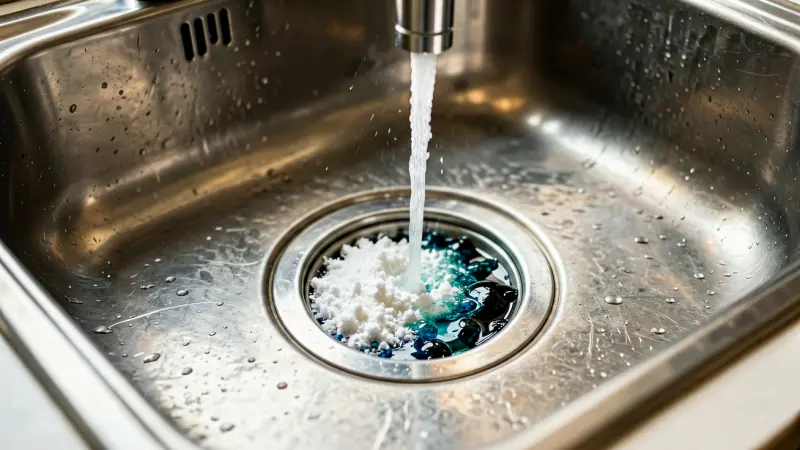
When the two meet, they fizz and create carbon dioxide. The bubbles lift loose debris from pipe walls.
This reaction is useful for maintenance and mild odors. It is not a strong clog remover.
Vinegar and baking soda work best as a freshener and loosener, not as a miracle drain opener.
Signs Your Drain Needs More Than a Home Remedy
Standing water means the clog is solid. Vinegar and baking soda may bubble, but water still will not flow.
Multiple slow drains point to a main line issue. A single sink treatment cannot clear a shared pipe.
Sewage backup or a strong sewer smell needs a plumber. Do not wait for the mess to get worse.
If chemical drain cleaner was already used, avoid vinegar and baking soda. The mixture can create dangerous fumes.
Tools and Safety Before You Start
Wear rubber gloves and open a window. Good ventilation keeps fumes and odors manageable.
Protect stone counters and wood floors. Vinegar can etch some natural stone surfaces.
Never mix vinegar, baking soda, bleach, or commercial drain cleaner in the same drain.
Use a funnel to direct powder and liquid into the drain. This reduces mess and improves contact.
For outdoor drains near pumps, check basic electrical safety. A guide like 10-4 vs 10-3 wire can help with wiring questions.
The 5-Step Vinegar and Baking Soda Drain Cleaning Method
Step 1: Remove Visible Debris
Pull out the stopper and look inside. Hair, food, and soap scum often sit just below the opening.
Use tweezers, a wire hook, or a zip tool. Never force a tool that could scratch the drain.
Throw debris in the trash, not back into the sink. This simple step improves every later step.
Step 2: Flush with Hot Water
Heat water until hot but not boiling. Very hot water can soften some PVC pipes and seals.
Pour it slowly down the drain. This warms the pipe and loosens soap scum and grease.
If the drain is fully blocked, stop. A full clog needs mechanical removal first.
Step 3: Add Baking Soda
Pour about half a cup of baking soda into the drain. A funnel helps it reach the pipe walls.
Let the powder sit for a few minutes. This coats the slimy surfaces where odor lives.
For a bathroom drain, use a little less. Too much powder can pack into hair and make a paste.
Step 4: Add Vinegar and Cover
Pour one cup of white vinegar after the baking soda. The fizz will start right away.
Cover the drain opening with a stopper or cloth. This keeps the bubbles in the pipe longer.
Wait 15 to 30 minutes for mild odors. Use 30 minutes for a slow drain with light buildup.
Step 5: Flush with Hot Water
Remove the cover and pour hot water down the drain. This rinses away loosened debris.
Repeat the process once if the smell remains. More repeats are not always better.
If the drain still smells after two treatments, the problem is deeper than surface gunk.
How to Clean a Kitchen Sink Drain Without Damage
Kitchen drains collect grease, food bits, and dish soap. These create a thick, sticky biofilm.
Start with hot water and a few drops of grease-cutting dish soap. This breaks down oils first.
Then use the vinegar and baking soda method. Finish with a hot water flush.
Run the garbage disposal with cold water after use. Cold water helps push food waste through the pipe.
How to Clean a Bathroom Sink and Tub Drain
Bathroom drains are often blocked by hair and soap scum. Vinegar and baking soda cannot dissolve hair.
Use a zip tool or drain snake to pull hair out. This is the most important step.
After removing hair, treat the drain with baking soda and vinegar. Then flush with hot water.
Use an enzyme cleaner weekly to eat the remaining biofilm. That keeps odors from returning.
How to Treat a Smelly Outdoor or Garden Drain
Outdoor drains collect leaves, dirt, and plant matter. These materials decay and create a swampy smell.
Remove visible debris with a gloved hand or small rake. Then flush the drain with a garden hose.
Use vinegar and baking soda for a mild freshening treatment. It will not clear roots or heavy mud.
Keep a drain screen over the opening. Routine fixes like a screen door that slams last few inches also reduce outdoor wear.
When Vinegar and Baking Soda Fail
Hard grease, mineral scale, and tree roots do not vanish with fizz. They need mechanical action.
Repeated treatments may mask the smell for a day. Then the biofilm regrows and odor returns.
Use a drain snake for solid clogs. Use an enzyme cleaner for organic slime.
Call a plumber when water backs up or multiple fixtures drain slowly. That points to the main line.
The Biofilm Problem Most Guides Skip
Odor does not only live in the P-trap. Biofilm grows along the entire tailpiece and branch pipe.
Vinegar and baking soda touch the surface they reach. Thick slime protects the bacteria underneath.
That is why brushing or snaking matters. Physical removal breaks the slime layer apart.
Enzymes then digest the leftovers. This two-part approach works better than fizz alone.
A Maintenance Routine That Prevents Stinky Drains
Once a week, flush each drain with hot water. This keeps soap scum and food particles moving.
Once a month, use the vinegar and baking soda method. Follow with hot water after 15 minutes.
Once a season, remove stoppers and clean the hair and gunk. This prevents hidden buildup.
Pour water into floor drains monthly. This refills the trap and blocks sewer gas.
Use enzyme tablets or liquid in problem drains. They are gentle on pipes and septic systems.
Table: Match the Odor to the Right Fix
| Odor Source | Warning Sign | Best First Step |
|---|---|---|
| Kitchen grease | Musty food smell | Hot water and dish soap |
| Bathroom hair | Slow drain with soap scum | Remove hair with zip tool |
| Dry P-trap | Sewer smell after vacation | Pour water into floor drain |
| Biofilm | Smell returns weekly | Enzyme cleaner and brushing |
| Main line clog | Multiple drains gurgle | Call a plumber |
Natural Drain Fresheners That Work With Vinegar and Baking Soda
Coarse salt can add scrubbing power. Use it with baking soda for a gentle abrasive paste.
Lemon peels add a fresh scent, but they can clog a disposal. Use small pieces only.
Essential oils do not clean pipes. They only mask odor for a short time.
Hot water is the best natural rinse. It carries loosened debris out of the pipe.
Mistakes to Avoid
Do not mix vinegar and bleach. This can release toxic chlorine gas.
Do not use boiling water on thin PVC or old seals. Hot tap water is usually safer.
Do not pour grease down the drain. It cools and coats the pipe like candle wax.
Do not rely on vinegar alone for clogs. Acid can corrode some metal pipes over time.
Natural cleaners are safest when used for maintenance, not as a replacement for plumbing repairs.
Drain Flies and Bugs in the Drain
Drain flies look like tiny moths near the sink. Their larvae feed on the same biofilm that causes odor.
Clean the slime layer with a brush and enzyme cleaner. Vinegar and baking soda may reduce adults temporarily.
If you see brown rice-shaped bug eggs near a drain, identify the pest before treating it.
Keep drains dry between uses when possible. Moisture supports both biofilm and insects.
How to Keep Garden Sink Drains Fresh
Garden sinks collect soil, leaves, and plant debris. These organic bits decay quickly and smell earthy or sour.
Install a mesh strainer to catch leaves and grit. Empty it after every use.
Flush the drain with a hose after heavy gardening. Then use vinegar and baking soda monthly.
Avoid washing muddy tools in the sink. Rinse them outside first to reduce sediment.
When to Call a Professional
Call a plumber if sewage smells come from several drains. This can signal a broken vent or main line issue.
Call if water backs up in the shower when the toilet flushes. That means a shared line is blocked.
Call if a drain gurgles constantly. Venting problems can pull sewer gas into the home.
Do not keep pouring home remedies into a failing system. It can add moisture and delay the real fix.
Frequently Asked Questions
Does vinegar and baking soda unclog drains?
It can loosen light gunk and improve odor. It rarely clears a solid clog made of hair or grease.
How often can this treatment be used?
Once a month is enough for most drains. More frequent acid use may damage old metal pipes.
Is it safe for septic systems?
Small amounts are generally safe. Avoid pouring large batches of vinegar into a septic tank.
Why does the smell come back?
The biofilm was not fully removed. Snake or brush the drain, then use enzymes.
Can it be used with a garbage disposal?
Yes, after removing food debris. Run the disposal with cold water before and after.
Final Thoughts
Vinegar and baking soda are useful for mild drain odors. They freshen, loosen light buildup, and cost very little.
They are not a cure for every smelly drain. Biofilm, hair, grease, and main line clogs need deeper action.
Combine the fizz with hot water, enzyme cleaner, and physical cleaning. That routine keeps drains fresh longer.
If the smell persists, stop guessing and inspect the pipe. A plumber can find the real source fast.