You’ve just been handed a quote for a new AC or furnace, and the price tag for the “big name” brands (Carrier, Trane, Lennox) made your stomach turn. Then, your contractor offers a lifeline: “I can install a Goodman or an Airtemp for thousands less.”
Suddenly, you have a choice. Do you save the money and risk buying a “cheap” unit, or do you pay up for peace of mind? Here is the direct answer: Choose Goodman if you want a system any technician can fix with parts available in every city; choose Airtemp if you want the specific “Replacement Pledge” safety net during the first year of ownership.
But the decision isn’t that simple. These two brands represent the battle of the “value” tier, yet they come from completely different manufacturing philosophies. One is backed by the largest HVAC company in the world (Daikin), while the other is a niche rugged brand controlled by Nortek. Making the wrong choice could leave you sweating in July waiting for a proprietary part that isn’t in stock.
The Brand Pedigree: Who Actually Makes Them?
To understand reliability, you have to look at the parent companies. Neither Airtemp nor Goodman is a standalone “mom and pop” shop; they are massive industrial operations.
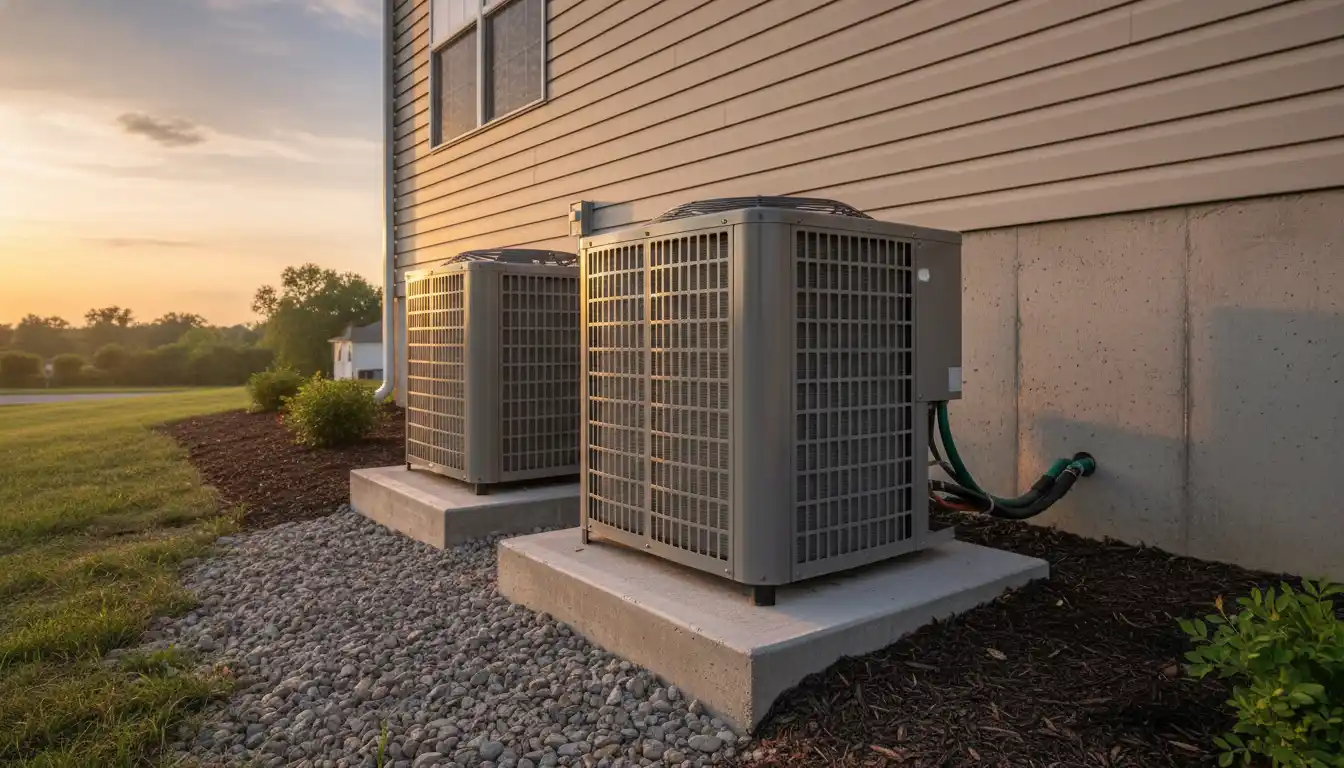
Goodman (The Daikin Giant)
Goodman was purchased by Daikin Industries, a Japanese manufacturing behemoth, in 2012. This is critical because it means Goodman technology is now infused with Daikin’s engineering. While they are still assembled in the USA (mostly in Texas), they benefit from the R&D budget of the world’s largest HVAC manufacturer.
Goodman’s reputation was historically rocky because they sold equipment to anyone—even unqualified installers. This led to high failure rates, not because the machines were bad, but because they were installed poorly. Today, the equipment itself is robust, using industry-standard Copeland scroll compressors and all-aluminum coils to prevent corrosion.
Airtemp (The Nortek Contender)
Airtemp is a brand under Nortek Global HVAC. If you’ve heard of Maytag, Frigidaire, or Broan HVAC units, you’ve essentially met Airtemp’s siblings. They are often manufactured on the same lines with similar internal components.
The unique twist with Airtemp is its distribution. It is marketed almost exclusively through R.E. Michel Company, a massive wholesale distributor. This creates a “closed loop.” If you buy an Airtemp, you are effectively marrying the R.E. Michel supply chain. This is great for quality control but can be a headache if your local repair technician doesn’t have an account with them.
The Technical Showdown: Coils and Compressors
This is the section most “review” sites skip, but it is where your system will live or die.
The Coil Controversy
For years, the HVAC industry was plagued by “formicary corrosion”—tiny leaks in copper coils caused by household chemicals. Goodman tackled this aggressively by switching to All-Aluminum evaporator coils. Aluminum resists this corrosion far better than copper. If you live in a humid climate, this is a massive point in Goodman’s favor.
Airtemp (Nortek) has experimented heavily with Micro-Channel coils in their outdoor units. These look like car radiators rather than the traditional tube-and-fin style. Warning: While micro-channel coils are efficient and lightweight, they are notoriously difficult to clean. If they get clogged with cottonwood or dirt, they are almost impossible to wash out completely without damaging the fins, and they are difficult to repair if they leak. You usually have to replace the whole coil.
Sound Levels
If your AC unit sits right outside your bedroom window, pay attention. Budget brands are generally louder than premium ones because they use less sound-dampening insulation.
Goodman units are known for being somewhat noisy, often clocking in around 70–75 decibels. However, their newer GSXC models with variable-speed fans are significantly quieter. Airtemp units are generally comparable, but their “jacket” design (the metal cabinet) is often praised for being sturdy and reducing vibration rattle, a common issue with cheaper units.
Warranty Wars: The “Replacement Pledge” Factor
This is the single biggest differentiator between the two brands.
Goodman’s Warranty
Goodman offers a strong standard warranty: 10-year limited parts warranty on almost all units, provided you register the equipment within 60 days. If you don’t register, it drops to 5 years. On high-efficiency models, they offer a Lifetime Compressor Limited Warranty to the original owner. If the compressor dies, they give you a new one (labor not included).
Airtemp’s “Replacement Pledge”
Airtemp offers the standard 10-year parts warranty (with registration), but they add a sweetener called the Replacement Pledge. For select reliable models, if the compressor (in an AC) or the heat exchanger (in a furnace) fails within the first year, they don’t just give you a new part—they will replace the entire outdoor unit or furnace.
Why this matters: A compressor failure in year one is almost always a manufacturing defect (“lemon”). Goodman would swap the part, leaving you with a repaired “new” unit. Airtemp gives you a brand-new unit. It’s a compelling offer for homeowners terrified of getting a lemon.
| Feature | Goodman | Airtemp |
|---|---|---|
| Parent Company | Daikin (Global Giant) | Nortek Global HVAC |
| Primary Distributor | Universal (Many suppliers) | R.E. Michel (Exclusive) |
| Coil Technology | All-Aluminum Tube & Fin | Micro-Channel (often) |
| Unique Warranty | Lifetime Compressor (Select Models) | 1-Year Unit Replacement Pledge |
| Part Availability | High (Generic parts fit well) | Medium (Proprietary distribution) |
| Price Tier | Budget / Low-Mid | Budget / Value |
Reliability and The “Installer Factor”
You cannot discuss “Airtemp vs Goodman” without addressing the elephant in the room: Installation Quality.
Because Goodman equipment is cheaper and easier to buy, many unlicensed or inexperienced handymen install it. When these units fail, the brand gets blamed. In reality, a Goodman unit installed by a master technician will outlast a Carrier unit installed by a rookie. It is similar to home repairs; if you have a drywall patch not flush with the wall, it isn’t the drywall’s fault—it’s the person who applied it. The same logic applies to brazing HVAC lines.
Airtemp, being sold through R.E. Michel, often ends up in the hands of slightly more established contractors because you need an account to buy it. This artificially inflates Airtemp’s reliability statistics simply because fewer “trunk slammers” are installing them.
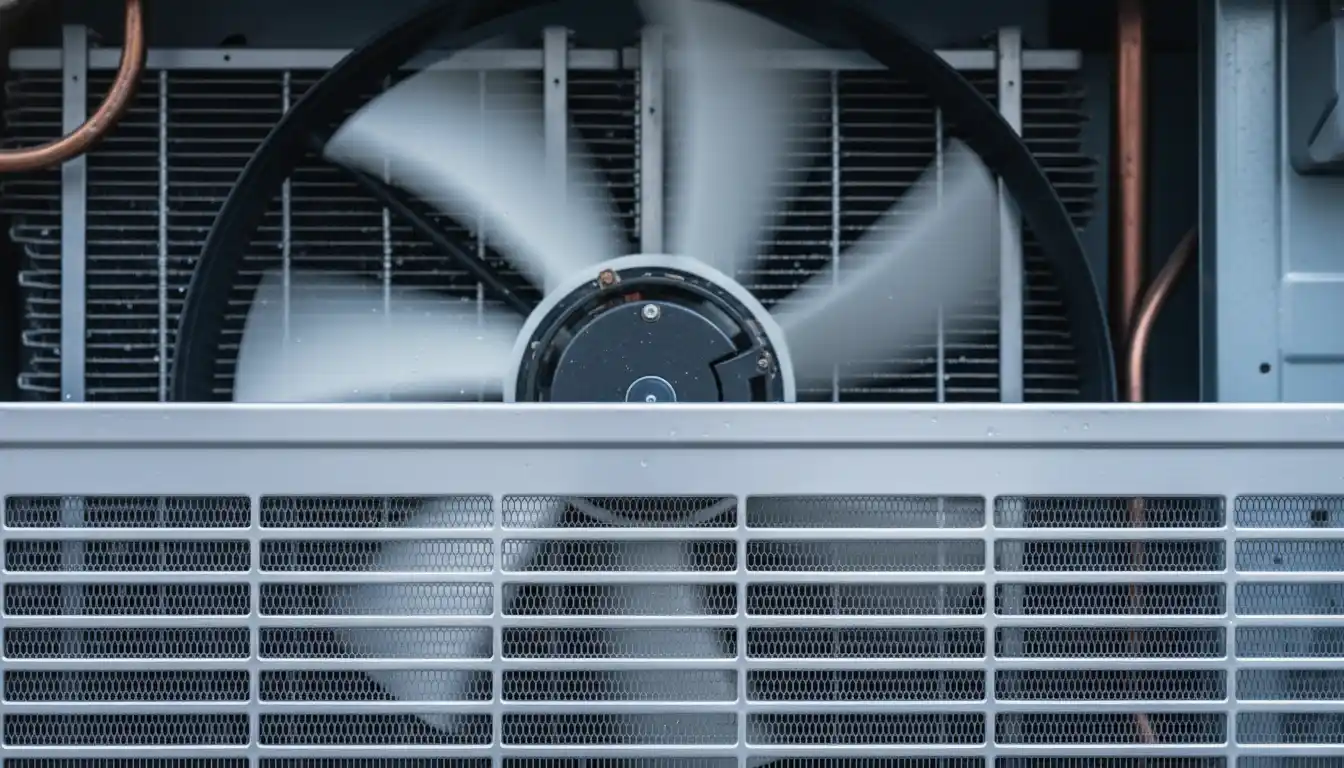
Common Problems and Troubleshooting
Even the best systems have hiccups. Here is what you are likely to face with each brand 5 to 10 years down the road.
Goodman Issues
The most common complaint with older Goodman units was refrigerant leaks in the evaporator coil. The move to all-aluminum coils has largely fixed this. However, capacitor failures and contactor issues are still common (as they are with all brands). The good news? Every HVAC truck in America carries a spare capacitor that fits a Goodman.
Airtemp Issues
With Airtemp, the micro-channel coils (if equipped) are the weak point. If you live near the ocean (salt air) or in an area with heavy pollution, these coils can degrade faster. Furthermore, if you encounter a system lockout, diagnosing it can sometimes be trickier if the control board is proprietary. For example, similar to a Carrier furnace limit circuit lockout, Airtemp furnaces have specific error codes that might require a tech who is familiar with Nortek equipment to decipher quickly.
Cost Comparison: What Are You Paying For?
Both brands are significantly cheaper than the premium tier. A full Goodman system (AC + Furnace) might cost you $6,000–$9,000 installed, whereas a Trane or Carrier could run $10,000–$14,000 for similar specs.
Airtemp is aggressively priced to compete with Goodman. Often, the price difference between the two will come down to the contractor’s markup rather than the equipment cost. If your contractor gets a great rebate from R.E. Michel that month, Airtemp might be $500 cheaper. If they buy Goodman in bulk, Goodman wins.
Pro Tip: Do not just look at the sticker price. Ask about the cost of labor warranties. Since parts are covered for 10 years by both, you are really paying for the labor when things break. Think of it like cooking; just as there are tricks on how to make water boil faster on gas stove by managing the lid and flame, you can manage your HVAC costs by investing in a labor warranty upfront rather than bleeding cash on service calls later.
The Final Verdict: Which Should You Choose?
The choice between Airtemp and Goodman ultimately comes down to your local support system.
Choose Goodman If:
- You plan to stay in the home for 15+ years (Lifetime Compressor warranty on high-end models is valuable).
- You want a system that any technician, anywhere, can fix on a Sunday afternoon.
- You live in a humid climate where the all-aluminum coil is a major reliability asset.
Choose Airtemp If:
- Your trusted contractor is an Airtemp/R.E. Michel dealer and swears by them.
- You are terrified of “lemon” units and want the 1-Year Replacement Pledge for peace of mind.
- You want a rugged, no-nonsense unit that offers high value for the price.
In the budget category, Goodman edges out Airtemp slightly on long-term serviceability simply because of market saturation. Knowing that parts will be available 15 years from now is a luxury that niche brands sometimes struggle to guarantee. However, if you have a great installer who prefers Airtemp, trust the installer over the sticker on the box.