A snow blower that will not start in cold weather is one of winter’s most frustrating failures, because it always happens when you need the machine most. The engine may crank and sputter without catching, it may turn over slowly, or it may do nothing at all when you pull the cord. Cold temperatures make every part of the starting system work harder, from the battery and the spark plug to the fuel and the carburetor.
The good news is that most cold-start failures fall into a small number of predictable categories, and many can be fixed in the driveway with basic tools. This guide explains why cold weather makes starting difficult, the five causes worth checking first, the safe diagnostic order, and the maintenance that prevents the problem from returning next season. Safety comes first: gasoline, spark, and moving parts all deserve respect.
Why Cold Weather Makes Starting Harder
An engine needs three things to start: fuel, spark, and compression, delivered in the right proportions at the right time. Cold weather changes all three. Fuel vaporizes less readily, so the air-fuel mixture that reaches the cylinder is leaner than the engine needs. The battery, if the machine has one, delivers less current because cold slows the chemical reaction inside it. Oil thickens, which makes the engine harder to turn over.
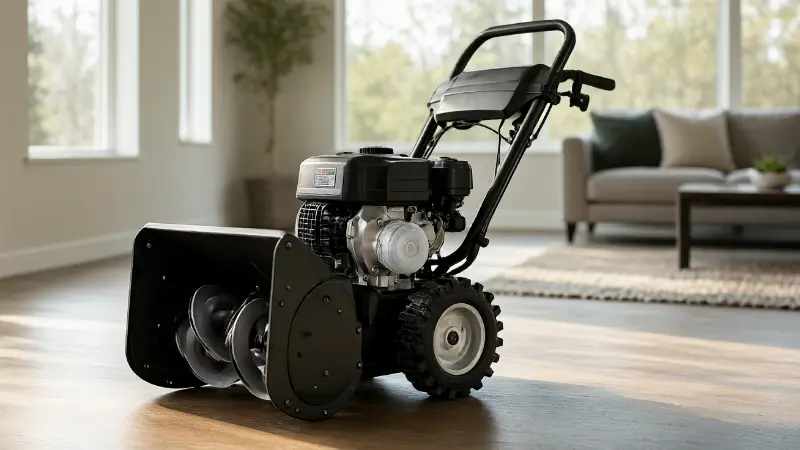
The carburetor is designed to compensate for some of that with a choke, which restricts air and richens the mixture for a cold start. If the choke is not working, not fully engaged, or not adjusted correctly, the engine will crank without firing. A primer bulb, if the machine has one, serves a similar purpose by pushing fuel into the intake.
Small engines are also sensitive to fuel quality. Gasoline that has sat in the tank since last winter can lose its volatile compounds and absorb moisture, which makes it harder to ignite. Ethanol-blended fuel can attract water and degrade carburetor components over time. Stale fuel is one of the most common reasons a machine that ran fine in March refuses to start in December.
Safety First Before You Troubleshoot
Work outdoors or in a well-ventilated space, never in a closed garage. Gasoline vapors are flammable and toxic, and a running engine produces carbon monoxide. Keep the machine away from open flames, water heaters, and pilot lights. Do not smoke while fueling or working near the fuel system.
Disconnect the spark plug wire before you inspect the plug, the auger, or any moving part. The engine can start unexpectedly if the blade or the auger control is engaged, and the spark plug wire is the simplest way to prevent that. Let the engine cool before you remove the fuel cap or work near the exhaust.
Wear gloves and eye protection when you handle fuel, check the spark plug, or work around the auger housing. Never use your hands to clear a clogged chute or housing, even with the engine off, because the impeller can store energy and rotate. Use a clearing tool instead.
Cause One: Stale or Contaminated Fuel
Stale fuel is the single most common reason a snow blower will not start after a summer in storage. Gasoline begins to degrade within weeks, and the volatile compounds that help it ignite evaporate first. The remaining fuel can leave varnish and gum deposits in the carburetor, which restrict the tiny passages that meter fuel into the engine.
Drain the old fuel from the tank and the carburetor bowl, and replace it with fresh gasoline from a station with good turnover. If the fuel smells sour or looks cloudy, do not try to run the engine on it. Dispose of the old fuel according to local rules rather than pouring it on the ground or into a drain.
Use a fuel stabilizer if you keep fuel on hand for more than a few weeks. For seasonal equipment, the best practice is to run the engine dry at the end of the season, or to fill the tank with stabilized fuel and run it long enough for the treated fuel to reach the carburetor. Either method reduces the chance of varnish forming over the summer.
If the machine has a fuel shut-off valve, confirm that it is open. A closed valve is a simple cause that is easy to overlook, and it produces a no-start condition that looks like a fuel problem. Check the valve position before you drain anything.
Cause Two: A Fouled or Wet Spark Plug
The spark plug delivers the spark that ignites the fuel. A plug that is fouled with carbon, wet with fuel, or worn at the electrode will not produce a strong spark, especially in cold weather when the mixture is already hard to ignite. A plug that has been in the engine for several seasons is a likely candidate.
Remove the plug with the correct socket, inspect the electrode, and check the gap against the specification in the manual. A plug that is black and sooty is running rich or has been flooded. A plug that is wet with fuel will not spark reliably. A plug with a rounded or eroded electrode should be replaced rather than cleaned.
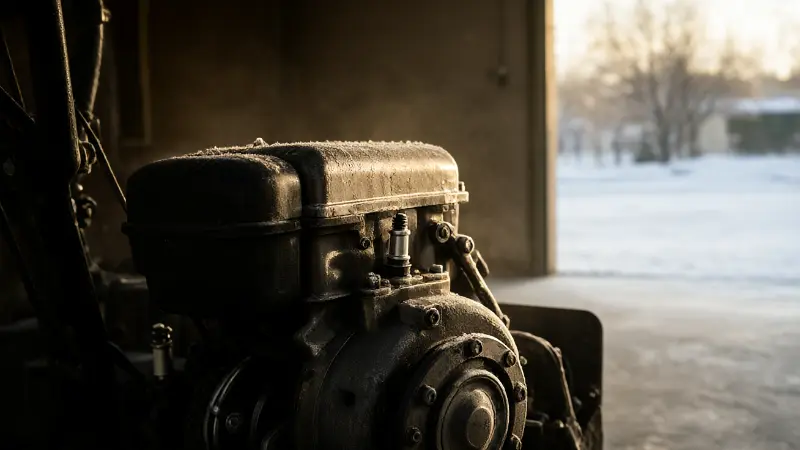
While the plug is out, check for spark. Reconnect the plug to the wire, ground the plug body against the engine block, and pull the starter cord or turn the key. A strong blue spark at the electrode is a good sign. A weak yellow spark or no spark points to the plug, the ignition coil, or the wiring. Keep your hands away from the plug and the wire while cranking.
If the engine is flooded, remove the plug, dry it, and crank the engine a few times with the plug out to clear the excess fuel. Let the cylinder air out, reinstall the plug, and try again with the choke in the correct position. Flooding is common when the choke is left on too long or the primer is pumped too many times.
Cause Three: Choke, Primer, and Carburetor Problems
The choke and primer are the engine’s cold-start aids, and a fault in either one produces a no-start condition that can be mistaken for a fuel or spark problem. If the choke cable is loose or disconnected, the choke plate may not close fully, and the engine will not get the rich mixture it needs. If the primer bulb is cracked or the primer line is blocked, fuel will not reach the intake.
Check that the choke control moves freely and that the linkage opens and closes the choke plate on the carburetor. With the engine cold, the plate should close almost completely when the choke is engaged. A cable that is stretched or a linkage that has come off is a common cause of a no-start in cold weather.
Press the primer bulb and watch for fuel moving through the line. A bulb that does not fill, or that stays collapsed, indicates a blocked line or a failed bulb. Replace a cracked bulb rather than taping it. On some machines, the primer is a simple plunger that pushes fuel directly into the carburetor, and a worn plunger can leak or fail to deliver fuel.
If the carburetor is dirty, the engine may start and then stall, or it may not start at all. Varnish and gum from stale fuel restrict the main jet and the idle passages. A carburetor cleaning or rebuild is a common repair, and it is within reach for a homeowner with basic tools and patience. If the carburetor is leaking fuel, a guide to a Ariens carburetor leaking gas covers the fuel-side checks for that brand.
Cause Four: Weak Battery or Starter System
An electric-start snow blower depends on a battery that delivers enough current to spin the engine in cold weather. Cold reduces battery capacity, and a battery that is marginal in summer may not have enough power for a cold start. A battery that has been sitting since last winter may be discharged or permanently degraded.
Charge the battery fully before you try to start the machine. If the charger indicates a fault or the battery does not hold a charge, replace it. Check the terminals for corrosion and tighten the connections. A loose or corroded connection can prevent the starter from receiving full current even when the battery is good.
On a machine with a pull cord, a hard-to-pull cord or a cord that will not retract points to a different problem. A cord that is very difficult to pull may indicate a compression issue, a seized bearing, or a broken recoil mechanism. A cord that pulls easily but does not turn the engine may indicate a broken recoil spring or a sheared key on the flywheel.
Electric starters have their own failure points. The starter solenoid, the ignition switch, and the safety switches can all prevent the starter from turning. If the engine cranks slowly, the battery or the starter is the likely cause. If nothing happens when you turn the key, check the safety switches and the solenoid before replacing the starter.
Cause Five: Cold-Related Mechanical Issues
Cold weather can make mechanical parts stiff and difficult to move. Thick oil increases the resistance the starter or the pull cord has to overcome. A throttle or choke linkage that is frozen or stiff may not move through its full range. A fuel line that has hardened in the cold may not seal properly.
Store the machine in a sheltered space, and allow it to warm up if it has been sitting in a cold shed. Even a few hours in a warmer area can make starting easier, because the oil thins and the fuel vaporizes more readily. Do not bring a machine with fuel inside the living space; use a garage or a shed instead.
Check the oil level and the oil viscosity. The manual specifies the correct oil for the operating temperature, and using the right oil makes cold starting easier and protects the engine. If the oil looks milky or smells like fuel, change it before you run the engine.
Check for a frozen or blocked fuel line, especially if the machine has been stored in an unheated shed. A line that has ice in it will prevent fuel from reaching the carburetor. Warm the line gently, or replace the fuel line if it is hardened or cracked.
Diagnostic Order for a No-Start
Work through the basics in a logical order rather than guessing. Start with the fuel: is there fresh fuel in the tank, is the shut-off valve open, and does the primer deliver fuel? Then check the spark: is the plug clean and dry, and does it spark when grounded? Then check the air: does the choke close fully, and is the air filter clean? Finally, check the mechanical: does the engine turn over freely, and does the starter or the pull cord operate normally?
That order moves from the simplest and most common causes to the more involved ones. Most no-start problems are solved at the fuel and spark stages. If the engine has fuel, spark, and air, and it still will not start, the problem is likely compression, timing, or a mechanical fault that needs a service center.
Keep a simple log of what you checked and what you found. If you end up taking the machine to a technician, that record helps the diagnosis and may save you the cost of repeating the same checks. Note the date, the temperature, the fuel age, and the symptoms.
Prevention for Next Season
Prevention is simpler than repair. At the end of the snow season, drain the fuel tank and run the engine until it stops, or fill the tank with stabilized fuel and run it long enough for the treated fuel to reach the carburetor. Change the oil, replace the spark plug, and clean or replace the air filter. Store the machine in a dry, sheltered space with the battery removed or on a maintainer.
Before the first snow, check the fuel, the plug, the choke, and the battery. Start the engine in the driveway while the weather is mild, so you find a problem before you need the machine in a storm. A few minutes of testing in the fall prevents a cold, dark, frustrating morning in January.
Other snow blower problems often appear alongside starting trouble. A machine that starts but will not throw snow may have a clogged chute or a worn impeller, and a guide to a snow blower not throwing snow covers those checks. A machine that breaks shear pins repeatedly has a separate cause, explained in a guide to a snow blower shear pin keeps breaking situation.
Quick Reference: No-Start Symptoms and Likely Causes
The table below matches common cold-start symptoms with the cause that most often produces them and the safest first step. Use it to narrow the diagnosis before you remove any parts.
| Symptom | Likely Cause | Safe First Step | When to Call a Pro |
|---|---|---|---|
| Engine cranks but does not fire | Stale fuel, fouled plug, or choke not closing | Drain old fuel; check the plug; verify the choke | No spark after a new plug |
| Engine fires briefly, then dies | Fuel restriction or a dirty carburetor | Check the fuel line and the primer; clean the carburetor | Carburetor rebuild needed |
| Pull cord is very hard to pull | Thick oil, compression issue, or a seized bearing | Warm the machine; check the oil viscosity | Cord still hard after warming |
| Pull cord pulls easily with no resistance | Broken recoil spring or sheared flywheel key | Stop; inspect the recoil and the flywheel key | Always, for a sheared key |
| Electric start does nothing | Dead battery, safety switch, or solenoid | Charge the battery; check the switches | Starter or solenoid replacement |
| Engine starts and then floods | Choke left on too long or a sticking float | Dry the plug; restart with the correct choke setting | Flooding continues after the plug dries |
| Fuel smell with no start | Flooded engine or a leaking carburetor | Ventilate; dry the plug; check for leaks | Any confirmed fuel leak |
| Engine runs only with the choke on | Clogged carburetor jet or a vacuum leak | Clean the carburetor; check the intake gaskets | Cleaning does not fix the symptom |
FAQ
Why does my snow blower start in warm weather but not in the cold?
Cold weather makes fuel harder to vaporize, reduces battery output, and thickens oil, all of which make starting more difficult. A machine that is marginal in these areas may start in a warm garage and fail in a cold driveway. Fresh fuel, a good spark plug, a working choke, and a charged battery address most of these factors.
How do I know if my snow blower is flooded?
A flooded engine usually smells strongly of fuel and will not fire even though the spark is good. Remove the spark plug, dry it, and crank the engine a few times with the plug out to clear the excess fuel. Reinstall the plug and try again with the choke in the correct position and fewer primer presses.
Can I use starting fluid on a snow blower?
Starting fluid can help diagnose a fuel problem, but it should be used sparingly and with caution. Too much can damage the engine, and it does not fix the underlying cause. If the engine runs on starting fluid and then dies, the problem is in the fuel system, not the ignition.
Should I leave fuel in the snow blower over the summer?
Either drain the tank and run the engine dry, or fill the tank with stabilized fuel and run it long enough for the treated fuel to reach the carburetor. Leaving untreated fuel in the system for months is the most common cause of a no-start at the beginning of the next season.
Conclusion
A snow blower that will not start in cold weather usually comes down to stale fuel, a fouled spark plug, a choke or primer problem, a weak battery, or a cold-related mechanical issue. Work through fuel, spark, air, and mechanical operation in that order, and most no-start problems will be solved before you need to remove the carburetor.
Use fresh fuel, replace the plug at the start of the season, and charge or replace the battery before the first snow. Store the machine with stabilized fuel or run it dry, and test it in the fall while the weather is still mild. Those habits prevent the frustration of a machine that refuses to start when the driveway is already covered.
If the engine has fuel, spark, and air and still will not start, or if you find a fuel leak, a sheared flywheel key, or a mechanical fault, take the machine to a service center. A proper diagnosis protects the engine and gets you back to clearing snow without another cold morning spent pulling a cord.