A snow blower that runs but will not throw snow is one of the most frustrating winter failures. The engine starts, the machine moves forward, and the augers may even turn, yet the snow dribbles out of the chute or piles up in front of the machine. In many cases the cause is simple and inexpensive to fix, but in others it points to a worn belt, a broken shear pin, or a clog that needs careful handling.
This guide explains why a snow blower stops throwing snow, how to diagnose the five most common causes in a logical order, and the safety rules that apply before you reach into the auger housing or the chute. It also covers the maintenance that prevents the problem from returning and the point at which a service center should take over.
Why a Snow Blower Stops Throwing Snow
A snow blower moves snow in two stages. The auger, a rotating spiral or paddle assembly at the front, gathers snow and pulls it toward the center. The impeller, a high-speed fan inside the housing, picks up that snow and throws it up and out through the discharge chute. If either stage stops working, or if the path between them is blocked, snow stops leaving the machine.
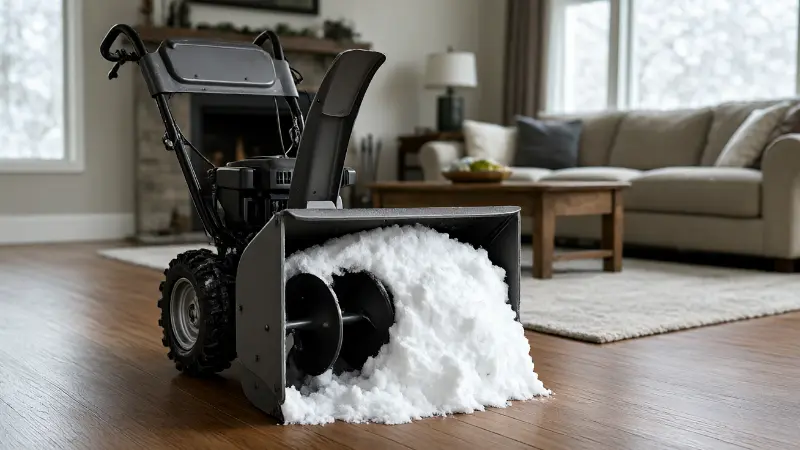
The failure can be mechanical, such as a broken shear pin or a worn belt, or it can be a blockage, such as wet snow packed into the chute. It can also be a power problem, where the engine runs but does not deliver enough torque to the auger. The pattern of the symptom tells you which stage is failing, so the first step is to observe carefully before you touch anything.
If the augers turn but no snow comes out, the problem is usually in the impeller, the chute, or the connection between them. If the augers do not turn at all, the problem is usually in the shear pins, the auger belt, the cable adjustment, or the gearbox. If the engine bogs down and stalls when you engage the auger, the problem may be an overload, stale fuel, or a worn belt that is slipping under load.
Safety First: Shut Down Before You Inspect
Before you open the chute, reach into the auger housing, or check a belt, shut off the engine and remove the key. Wait at least ten seconds for the auger and impeller to stop completely. Disconnect the spark plug wire and keep it away from the plug so the engine cannot start unexpectedly.
Never use your hands or feet to clear a clogged chute or auger. The impeller can store energy and rotate after the engine stops, and the blades are sharp. Use a clearing tool, a wooden stick, or the tool supplied with the machine. Keep your hands out of the housing even when the machine appears stopped.
Wear gloves and eye protection when you work around the auger and chute. Snow and ice can hide sharp edges and debris. If the machine is on a slope, block the wheels before you work underneath it, and never leave a running machine unattended.
Cause One: Broken or Missing Shear Pins
Shear pins, also called shear bolts, are designed to break when the auger hits a rock, a chunk of ice, or a piece of debris. That sacrifice protects the gearbox and the engine from sudden shock. When a shear pin breaks, the auger on that side stops turning, and the machine stops gathering snow even though the engine runs normally.
Inspect both augers. A broken pin is usually obvious: the auger will spin freely on the shaft, or the pin will be missing entirely. On many machines, one pin serves each auger, while others use two or more. Replace a broken pin with the exact replacement specified for your model, and do not substitute a hardened bolt, because that defeats the protection and can damage the gearbox.
A stuck or seized shear pin is a related problem. If the pin will not come out, the auger cannot be removed for service, and forcing it can damage the shaft. A guide to a snow blower shear pin stuck covers the safe removal methods and the tools that help without damaging the housing.
After replacing a shear pin, turn the auger by hand to confirm that it rotates freely and that the pin is fully seated. If the auger still does not turn with a new pin, the problem may be in the auger belt, the cable, or the gearbox rather than the pin itself.
Cause Two: Worn or Slipping Auger Drive Belt
The auger belt transfers power from the engine to the auger pulley. Over time, the belt stretches, glazes, cracks, or wears thin. A worn belt can slip under load, which means the augers turn slowly or stop entirely when they meet resistance. A broken belt means the augers do not turn at all.
Remove the belt cover according to the manual and inspect the belt. Look for glazing, cracks, fraying, or a belt that has come off the pulley. A belt that is loose enough to slip by hand is a candidate for replacement or adjustment. Some machines have a belt tensioner or an adjustable idler that can restore tension, while others require a new belt.
Check the pulleys for rust, debris, or a worn groove. A rusty pulley can chew through a new belt quickly. Clean the pulley surfaces and confirm that the belt sits fully in the groove rather than riding on the edges. If the belt is oily or contaminated, replace it rather than cleaning it, because the contamination will cause slipping again.
On many two-stage machines, the auger belt and the drive belt are separate. The drive belt moves the wheels, while the auger belt turns the augers. If the machine moves but does not throw snow, the auger belt is the one to inspect. If the machine neither moves nor throws snow, both belts may be involved.
Check the belt routing
A belt that is installed on the wrong side of a guide or a tensioner will slip or rub. Compare the routing with the diagram in the manual before you assume the belt is worn. A misrouted belt can look fine and still fail under load.
Cause Three: Clogged or Frozen Discharge Chute
A clogged chute is the most common cause of a sudden loss of snow throwing, especially in wet, heavy snow. The chute narrows the flow, and wet snow can pack against the sides and bridge across the opening. Ice that has formed in the chute or around the deflector can block the flow even when the snow is dry.
Shut off the engine, remove the key, and disconnect the spark plug wire before you clear the chute. Use a clearing tool or a wooden stick to break up the blockage. Do not reach into the chute with your hand, even if the machine is off, because the impeller can still rotate.
Inspect the chute for ice buildup, debris, and damage. A chute that is cracked or has a rough interior surface will clog more easily. Clean the interior and apply a non-stick spray or a silicone lubricant designed for snow blower chutes to reduce sticking. Some owners wax the chute, but check the manufacturer’s guidance before applying any product.
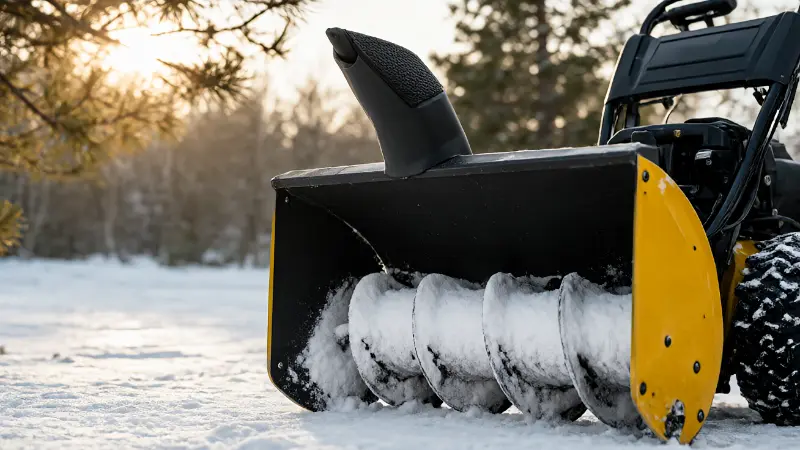
Adjust the deflector and the chute control to match the snow conditions. Wet snow needs a higher engine speed and a slower travel speed so the impeller can clear the chute faster than the snow arrives. Dry, powdery snow can be thrown farther with a higher deflector setting. If the chute clogs repeatedly, slow down and take a narrower swath.
Prevent chute freeze-up
At the end of each use, run the machine for a minute with the auger engaged to clear residual snow from the chute and the housing. Store the machine under cover so snow and ice do not accumulate in the chute. A cover also keeps the controls and the belt area dry.
Cause Four: Worn Impeller or Auger Paddles
The impeller is the fan that throws snow through the chute. Over time, the impeller blades wear down, bend, or lose clearance against the housing. When the clearance is too large, snow slips past the impeller instead of being thrown, and the machine dribbles snow rather than discharging it.
On a single-stage snow blower, the rubber paddles at the front do both jobs: they gather snow and throw it. Worn paddles leave a gap between the paddle and the housing, and the machine stops clearing effectively. Replacement paddles are available for most models and are a routine maintenance item.
On a two-stage machine, inspect the impeller blades for wear and for clearance against the housing. Some impellers have adjustable or replaceable wear plates. A impeller that is bent or cracked should be replaced rather than straightened. If the impeller turns freely by hand and the belt is tight, but snow still dribbles out, worn clearance is a likely cause.
Check the auger blades as well. Bent or worn auger blades do not gather snow efficiently, and the machine may push snow forward rather than pulling it into the housing. Replace worn auger blades or paddles according to the manual, and confirm that the new parts clear the housing correctly.
Cause Five: Cable Adjustment, Gearbox, or Engine Power
The auger control cable engages the auger when you squeeze the handle. If the cable is loose, stretched, or out of adjustment, the auger may not fully engage, and it will slip or stop under load. Check the cable at the handle and at the engagement mechanism, and adjust it according to the manual so the auger engages firmly when the handle is squeezed.
A gearbox failure is less common but more serious. If the augers turn freely by hand with the engine off, the shear pins are intact, the belt is good, and the cable is adjusted, but the augers still do not turn when engaged, the gearbox may be damaged. A grinding noise or a metal-on-metal sound is a warning sign. Gearbox repair is a service-center job on most machines.
Engine power problems can also look like a snow-throwing problem. Stale fuel, a dirty carburetor, a fouled spark plug, or a clogged air filter can cause the engine to bog down when the auger engages. If the engine surges, stalls, or loses power under load, address the fuel and ignition system first. A guide to a Ariens carburetor leaking gas covers the fuel-side checks for that brand, and the same principles apply to many other models.
Electric snow blowers have their own failure points. A dead outlet, a tripped GFCI, a damaged cord, or a safety switch that is not engaged can stop the auger. A guide to a Snow Joe snow blower stopped working covers the electrical checks for that brand, including the power supply, the switches, and the motor.
Quick Reference: Symptoms and Likely Causes
The table below matches common snow blower symptoms with the cause that most often produces them and the safest first step. Use it to narrow the diagnosis before you remove any parts.
| Symptom | Likely Cause | Safe First Step | When to Call a Pro |
|---|---|---|---|
| Engine runs, augers do not turn | Broken shear pin, broken auger belt, or loose cable | Shut off; check the shear pins and the belt | Gearbox noise or no fix after belt and pins |
| Augers turn but snow dribbles out | Clogged chute or worn impeller clearance | Shut off; clear the chute with a tool | Impeller is bent, cracked, or badly worn |
| Snow throws a short distance only | Worn impeller, worn paddles, or wet snow | Slow down; check the chute and the paddles | Paddles or impeller need replacement |
| Machine bogs down and stalls under load | Wet snow, stale fuel, or a slipping belt | Reduce speed; check the fuel and the belt | Engine loses power after fuel service |
| Chute clogs repeatedly in wet snow | Wet snow packing, ice in the chute, or slow travel speed | Clear the chute; apply non-stick spray; slow down | Chute is damaged or the impeller is worn |
| Auger turns by hand but not when engaged | Cable out of adjustment or a slipping belt | Check the cable tension and the belt | Gearbox or engagement mechanism is damaged |
| Electric model runs but auger does not | Safety switch, cord, or motor fault | Check the outlet, the GFCI, and the switches | Motor or switch replacement needed |
Prevention and Seasonal Maintenance
Most snow-throwing failures can be prevented with a simple routine. Before the season, inspect the shear pins, the belts, the paddles, and the chute. Replace worn parts while the machine is in the garage rather than in a driveway during a storm. Check the cable adjustment and confirm that the auger engages firmly.
Use fresh fuel and a fuel stabilizer, and run the machine dry at the end of the season if the manufacturer recommends it. A dirty carburetor is a common cause of power loss under load, and fresh fuel prevents many of those problems. Replace the spark plug at the start of the season if it looks fouled or worn.
After each use, clear the chute and the housing with a tool, and run the auger briefly to discharge residual snow. Store the machine under cover so ice does not form in the chute or around the controls. Lubricate the chute and the auger according to the manual to reduce sticking.
Match the machine to the snow. Wet, heavy snow requires a slower travel speed and a narrower swath than dry, powdery snow. If the machine clogs repeatedly, reduce the speed and take a partial pass rather than forcing it through a full width. That simple change prevents many chute blockages and reduces wear on the belt and the impeller.
When to Take the Machine to a Service Center
Take the machine to a service center if the gearbox is noisy or damaged, if the auger shaft is bent, if the engine loses power after fuel and ignition service, or if the repair requires splitting the machine to reach an internal belt. Those jobs require tools and experience that most homeowners do not have, and an incorrect repair can damage the machine further.
Also seek service if the machine is under warranty. Opening the gearbox or replacing internal components may void the coverage. A service center can confirm the diagnosis and perform the repair with the correct parts.
FAQ
Why does my snow blower run but not throw snow?
The most common causes are broken shear pins, a worn or slipping auger belt, a clogged discharge chute, worn impeller clearance, or an out-of-adjustment auger cable. Start by checking the shear pins and the chute, because those are the simplest and most common fixes.
How do I know if a shear pin is broken?
With the engine off and the key removed, try to turn the auger by hand. If it spins freely on the shaft or the pin is missing, the shear pin is broken. Replace it with the exact replacement specified for your model and do not substitute a hardened bolt.
Can I clear a clogged chute with my hand?
No. The impeller can rotate after the engine stops, and the blades are sharp. Shut off the engine, remove the key, disconnect the spark plug wire, and use a clearing tool or a wooden stick. Never reach into the chute or the auger housing.
Why does my snow blower clog only in wet snow?
Wet snow is denser and heavier, and it packs against the chute walls. Slow the travel speed, take a narrower swath, and run the engine at full speed so the impeller can clear the chute faster than the snow arrives. A non-stick spray on the chute also helps.
Conclusion
A snow blower that will not throw snow is usually dealing with a broken shear pin, a worn or slipping auger belt, a clogged chute, worn impeller or paddle clearance, or a cable that is out of adjustment. Start with the simplest checks: the shear pins, the chute, and the belt. Shut off the engine and remove the key before you inspect anything, and never use your hands to clear a blockage.
If the basic fixes do not restore snow throwing, check the cable adjustment and the engine power. A machine that bogs down under load may have a fuel or ignition problem rather than a mechanical failure. If the gearbox is noisy or the repair requires splitting the machine, take it to a service center.
Prevention is straightforward. Inspect the wear parts before the season, use fresh fuel, clear the chute after each use, and match the travel speed to the snow conditions. A little maintenance in the fall keeps the machine throwing snow through the heaviest storms of the winter.