A main water shutoff that will not turn is one of the worst discoveries you can make on the day you planned to winterize the house. You are standing at the valve with a trip coming up, the forecast is dropping below freezing, and the handle that is supposed to stop the water will not budge. Forcing it is the instinct, but that is also how a stuck valve becomes a broken valve and a flooded basement.
This guide explains why main shutoffs seize, how to identify which valve you are actually dealing with, the safe techniques for freeing a stubborn valve, the alternatives when the valve simply will not close, and the point at which the utility or a plumber should take over. The goal is to get the water off without turning a winterizing task into an emergency repair.
Why a Stuck Main Shutoff Is a Winter Emergency
Winterizing depends on stopping the water and draining the lines. If the main shutoff will not close, you cannot safely drain the system, and any water left in the pipes is exposed to freezing temperatures. A pipe that freezes can split, and a split pipe can release hundreds of gallons once the water is turned back on.
The stakes are higher than a single fixture. The main valve controls the entire supply, so a valve that fails while you are forcing it can release water at full pressure with no easy way to stop it. That is why the correct approach is patient and methodical rather than forceful. A valve that is freed gradually is a success; a valve that is forced is a repair bill.
There is also a timing problem. A stuck valve discovered in October gives you options. The same valve discovered the night before a freeze warning does not. If you are reading this in a hurry, the short version is this: do not force the handle, identify the valve type, apply penetrating oil, and if it still will not move, call the utility or a plumber rather than improvising.
First Rule: Do Not Force the Handle
Most stuck valves fail because someone applied too much leverage. A gate valve with a round wheel can snap the stem if it is turned against a seized gate. A ball valve handle can shear at the stem or bend the stem itself. Either failure can leave the valve stuck in the open position with no way to close it.
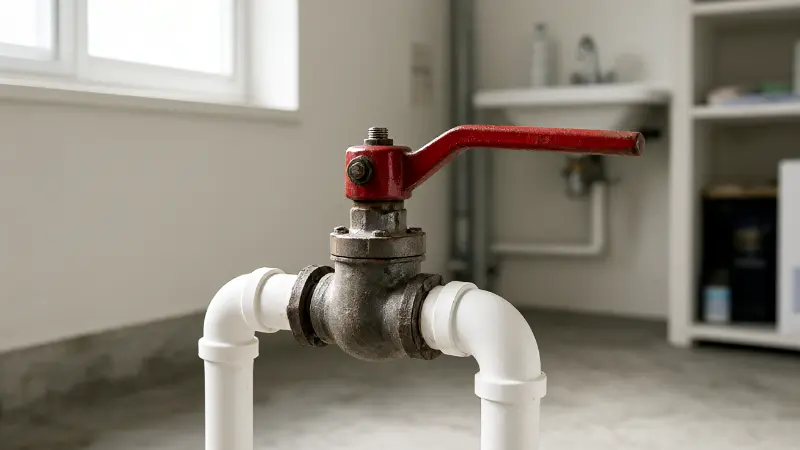
Use only hand pressure at first, and use the handle as it was designed to be used. Do not add a cheater bar, a pipe wrench, or a hammer to increase leverage until you have tried the gentler methods described below. A valve that is merely stiff will often free with patience; a valve that is corroded solid will not, and force only makes the eventual repair larger.
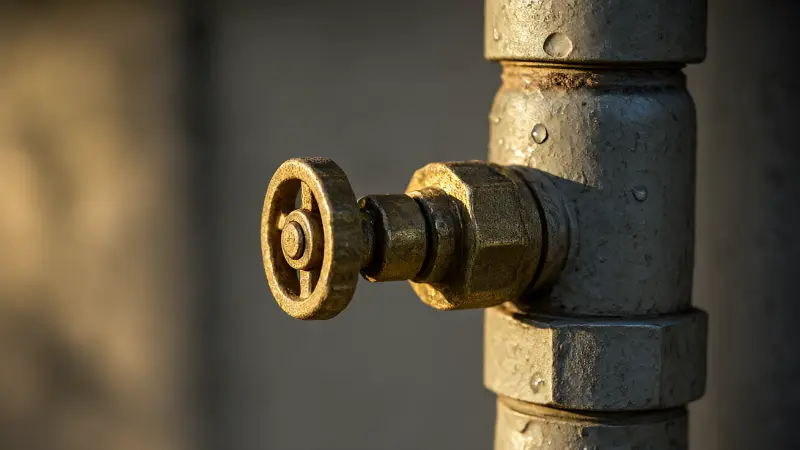
If the valve is a gate valve and the wheel turns but nothing happens, the stem may be broken or the gate may be detached. That is not a stuck valve; it is a failed valve, and it needs replacement rather than freeing. If the wheel does not turn at all, the gate or the stem threads are seized, and the freeing techniques apply.
Identify Which Valve You Are Dealing With
Not every main shutoff is the homeowner’s to repair. The valve inside the house is usually the homeowner’s responsibility. The valve at the meter or at the curb may belong to the water utility, and tampering with it can violate local rules and create liability.
Start by locating the valve you are trying to turn. There is often a valve immediately inside the foundation where the service line enters, and another at the meter. Some homes also have a valve in a crawl space or a utility closet. The valve you should use for winterizing is normally the one inside the house, downstream of the meter.
Identify the type. A gate valve has a round wheel and a stem that rises as it opens. A ball valve has a lever handle that turns a quarter turn. A curb stop at the property line is usually a specialized valve that requires a long key, and it is often the utility’s. Knowing the type tells you which freeing method is appropriate and which parts are likely to fail.
Gate valves and ball valves fail differently
A gate valve that sits open for years can seize at the stem packing or at the gate itself. A ball valve can seize because the ball is scaled in place, or because the stem packing has hardened. Ball valves are generally easier to free with a gentle quarter-turn motion, while gate valves often respond to penetrating oil and a slow back-and-forth rocking.
Safe Techniques to Free a Stuck Valve
Start with penetrating oil. Apply it at the stem where it enters the valve body and at the packing nut, and give it time to work. A few hours is better than a few minutes, and overnight is better still. Reapply once or twice during that period so the oil has a chance to migrate into the threads and the packing.
Try a gentle back-and-forth motion rather than a single hard turn in one direction. Rock the handle a few degrees in each direction, gradually increasing the range as it frees. That motion helps break the bond at the gate or the ball without applying the full torque that snaps a stem. If the valve moves a little, keep working it rather than opening it all the way at once.
A small amount of warmth can help if the valve is in a cold space, but keep the heat gentle and keep it away from plastic components and from any gas piping. A hair dryer on a low setting directed at the valve body is safer than a torch. Never use an open flame on a valve, especially near insulation, wood framing, or a water meter.
If the valve is a ball valve with a lever, check that the lever is not blocked by debris or corrosion at its pivot. Sometimes the lever is stuck rather than the ball, and freeing the lever is enough. If the valve is a gate valve with a wheel, check that the packing nut is not over-tightened; loosening it slightly can free a stem that is binding.
What not to do
Do not use a hammer to shock the valve free. Do not put a pipe wrench on a valve stem. Do not pour boiling water on a valve body to thaw it, because thermal shock can crack the casting. Do not remove the packing nut on a valve that is under pressure unless you are prepared to deal with a leak at the stem.
When the Valve Belongs to the Utility
The valve at the meter or at the curb stop may be owned by the water utility. If the indoor valve is stuck and you need the water off, the utility can usually shut off service at the meter or the curb stop and may be able to free or replace their valve. Call before you attempt to operate a curb stop with a key, because a broken curb stop can leave the property without water until the utility excavates.
Utility response times vary, and a winterizing deadline may not move the schedule. Call as early as possible and explain that you need the water off for winterizing. Some utilities will provide a temporary shutoff at the meter and advise on the repair of the private valve.
Winterizing Alternatives When the Valve Will Not Close
If the indoor valve will not close and the utility cannot respond quickly, there are limited alternatives. The goal is to reduce the risk of freezing while you wait. These are not substitutes for a functioning shutoff, and they should be used with realistic expectations.
Keep the heat on. A house that stays above freezing does not need to be drained. If you are leaving, set the thermostat to a temperature that protects the plumbing rather than shutting the heat off entirely. That is the simplest protection when the main valve cannot be closed.
Open the fixtures and let them drip. Moving water freezes more slowly than still water, and an open faucet relieves pressure if ice begins to form. This is a mitigation, not a winterizing method, and it does not protect a vacant house for an extended period.
Isolate what you can. If the main valve is stuck but fixture valves work, close the valves at the toilets, the sinks, and the appliances. Those steps reduce the volume of water at risk and make a partial drain possible. A plumber can also install an isolation valve at a convenient point if the main cannot be freed.
What to Do If the Valve Breaks
If the stem snaps or the valve body cracks while you are working on it, the water is still on and the valve may no longer control it. Do not attempt to remove the valve under pressure. Call the utility immediately for a shutoff at the meter or the curb, and call a plumber for the repair.
If water is spraying, contain what you can and keep the area clear of electrical hazards. Turn off circuits that serve wet locations if you can do so safely. Do not stand in standing water while working on anything electrical, and do not use a shop vacuum or a portable heater in a flooded area.
A broken valve is a repair, not a disaster, provided the water is shut off at the meter. The plumber will replace the valve, and the utility will restore service. The important thing is to stop the water before attempting any further work on the valve body.
Preventing the Next Stuck Valve
The best prevention is to exercise the main valve once or twice a year. Open and close it fully while the water is on, then return it to the open position. That simple habit keeps the gate or the ball from seizing and gives you confidence that the valve will work when you need it.
Keep the area around the valve accessible. A valve buried behind stored boxes or under a pile of insulation is one that never gets exercised and is harder to work on when it fails. Label the valve clearly so everyone in the household knows what it controls.
If the valve is old and has never been exercised, consider having a plumber replace it during a planned service visit rather than waiting for a winter emergency. A new ball valve is more reliable than an old gate valve and is easier to operate. The cost of replacement is modest compared with the damage a failed valve can cause.
Other winter systems deserve the same preventive attention. A furnace pressure switch that sticks can shut down the heat, and a guide to a furnace pressure switch stuck closed covers the checks for that component. A heat pump that stays in defrost mode wastes energy and leaves the house cold, and a guide to a heat pump stuck in defrost mode explains the causes and fixes.
When to Call a Plumber
Call a plumber if the valve will not free after penetrating oil and gentle effort, if the stem turns without changing the flow, if the valve leaks at the stem or the packing nut, or if the valve body shows corrosion or cracking. A plumber can replace the valve and confirm that the rest of the service line is sound.
Call the utility first if you need an emergency shutoff and the indoor valve is stuck. The utility can stop the water at the meter or the curb stop, which gives the plumber a safe condition to work in. Do not attempt to operate a curb stop yourself unless the utility has instructed you to do so.
Water treatment equipment adds another consideration to winterizing. If the home has a softener or a filtration system, the shutdown procedure may involve bypass valves and draining steps that differ from a simple main valve. A comparison of EcoWater vs Culligan water softener systems is useful background if you are planning equipment changes, and the manufacturer’s manual for your unit should guide the winterizing steps.
Quick Reference: Stuck Valve Symptoms and Actions
The table below matches common stuck-valve situations with the likely cause and the safest first step. Use it to plan your approach, and stop if a step involves a valve that belongs to the utility, live electrical equipment, or a repair you are not trained to perform.
| Situation | Likely Cause | Safe First Step | When to Call a Pro |
|---|---|---|---|
| Gate valve wheel will not turn | Seized stem threads or gate | Apply penetrating oil; rock gently back and forth | No movement after oil and gentle effort |
| Ball valve lever will not move | Seized ball or stem packing | Oil the stem; try a small quarter-turn motion | Lever bends or stem shows damage |
| Wheel turns but water keeps flowing | Broken stem or detached gate | Stop turning; treat the valve as failed | Valve replacement needed |
| Leak at the packing nut | Worn packing or over-tightened nut | Place a bucket; do not loosen under pressure | Leak continues or worsens |
| Valve is at the meter or curb | Utility-owned shutoff | Call the utility before operating it | Always, for curb stop operation |
| Valve breaks while turning | Forced stem or cracked body | Call the utility for a meter shutoff | Immediately, then a plumber |
| Winterizing deadline is close | Valve will not close in time | Keep heat on; isolate fixture valves; drip faucets | Arrange valve replacement before vacancy |
Use the table to choose the safest next step, but remember that the main valve controls the whole supply. A mistake at the main is more serious than a mistake at a fixture, and the utility and a plumber are the right resources when the valve will not cooperate.
FAQ
Why is my main water shutoff so hard to turn?
Most main valves seize because they are never exercised. The gate or ball scales in place, the stem threads corrode, or the packing hardens. A valve that has sat open for years can require penetrating oil and patient back-and-forth motion before it frees.
Can I use a wrench or cheater bar on a stuck main valve?
Adding leverage is how most stuck valves become broken valves. A gate valve stem can snap and a ball valve stem can bend, leaving the valve stuck open with no way to close it. Try oil and gentle motion first, and call a plumber if the valve will not free.
Who is responsible for the valve at the meter or curb?
The valve inside the house is usually the homeowner’s responsibility. The valve at the meter or the curb stop is often owned by the water utility, and operating it without authorization can violate local rules. Call the utility for a shutoff at those locations.
What can I do if the main valve will not close and I need to winterize?
Keep the heat on at a temperature that protects the plumbing, close the fixture valves you can reach, and let faucets drip. Those measures reduce the risk but do not replace a proper drain-down. Arrange a plumber to free or replace the valve as soon as possible.
Conclusion
A main water shutoff that is stuck when you try to winterize is a problem to solve carefully rather than forcefully. Identify the valve type, confirm whether it belongs to you or the utility, apply penetrating oil, and try a gentle back-and-forth motion before considering any more aggressive approach. If the valve will not free, stop and call the utility for a meter shutoff and a plumber for the repair.
If the deadline is close and the valve cannot be closed, keep the heat on, isolate what you can at the fixtures, and let faucets drip. Those measures reduce the risk while you arrange a proper repair. Do not force the valve and do not attempt to remove it under pressure.
Prevention is simple. Exercise the main valve once or twice a year, keep it accessible, and replace an old gate valve with a ball valve during planned maintenance. A valve that works when you need it is the difference between a routine winterizing job and a flooded basement.