
A heat pump that seems stuck in defrost mode during winter can leave the house feeling cold even though the system is running. The outdoor unit may steam, the indoor vents may blow lukewarm air, and the cycle may repeat far more often than it should. A defrost cycle is a normal part of cold-weather operation, but a cycle that will not terminate, or one that starts again almost immediately, points to a fault in the defrost control system.
This guide explains how a heat pump defrosts, what a stuck cycle looks like from inside the house, and the components most likely to cause the problem. It covers the defrost control board, coil and ambient sensors, the defrost thermostat, the reversing valve, refrigerant charge, airflow, and auxiliary heat. It also explains which checks are safe for a homeowner and when a qualified technician should take over.
How a Heat Pump Defrost Cycle Works and Why It Gets Stuck
During heating, the outdoor coil is colder than the outdoor air. Moisture in the air condenses on the coil and freezes, and a light layer of frost is normal. The defrost system is designed to melt that frost before it blocks airflow and reduces heat transfer. The defrost control board decides when to start a cycle, how long it runs, and when to return to heating.
When defrost begins, the system effectively switches to cooling mode for a few minutes. The reversing valve changes position, hot refrigerant flows through the outdoor coil, and the outdoor fan stops so the heat is not blown away. The indoor blower continues to run, and the auxiliary heat strips energise to keep the air from feeling cold. A cloud of steam from the outdoor unit during this period is normal, because the ice is melting and evaporating.
The cycle should end when the coil sensor reaches a set temperature or when a maximum time limit is reached. If the board does not receive the right sensor signal, if the reversing valve does not shift, or if a thermostat stays closed, the system can remain in defrost or re-enter it repeatedly. That is when the house starts to feel cool and the energy use rises.
Symptoms That Confirm a Stuck Defrost Cycle
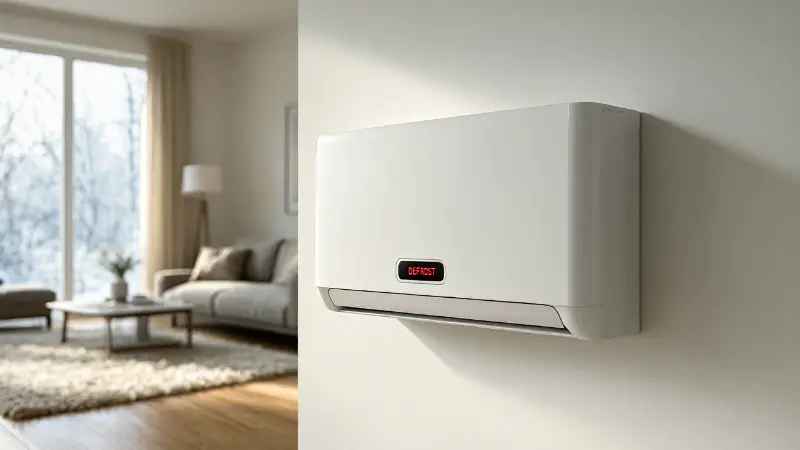
The most obvious sign is a heat pump that blows cool or lukewarm air for an extended period while the outdoor unit is steaming or running with the fan off. A normal defrost cycle is usually brief. If the cycle stretches on, or if the system seems to defrost every few minutes, the control system is not terminating the cycle correctly.
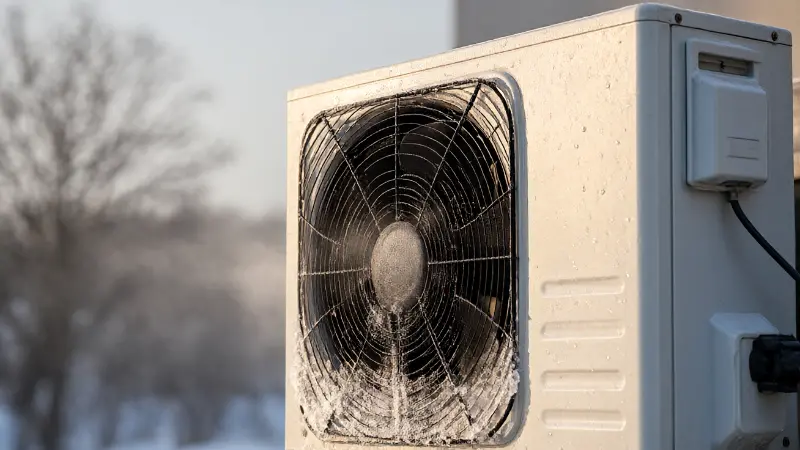
Another sign is ice that does not clear. A light frost that disappears after defrost is normal. A thick crust of ice that remains on the coil, or ice that covers the entire outdoor unit, suggests that defrost is not completing. In some stuck-defrost cases the coil may look clear because the system is spending too much time in defrost, but the indoor air stays cool because the system is not heating.
Listen for repeated whooshing or hissing from the outdoor unit as the reversing valve shifts. A valve that shifts every few minutes, combined with cool indoor air, is a strong clue. Also watch the thermostat for an auxiliary heat indicator that stays on far longer than usual. If the auxiliary heat is carrying the whole load, the heat pump is not contributing as it should.
Cause 1: A Faulty Defrost Control Board
The defrost control board is the brain of the defrost system. It monitors sensors, controls the reversing valve, stops the outdoor fan, and brings on the auxiliary heat. If the board fails, it may not terminate the cycle, may not start a cycle at all, or may behave erratically. A board that is wet, corroded, or contaminated by insects can produce intermittent faults that are difficult to reproduce.
Technicians often force a defrost cycle using the test terminals on the board. During a forced test, the reversing valve should click, the auxiliary heat should activate, and the outdoor fan should stop. If nothing happens, the board or its power supply is suspect. The board needs a low-voltage control signal, and a loose connection or a failing transformer can prevent it from operating.
A visual inspection can reveal water intrusion, burnt terminals, or loose spade connectors. Even a single loose connector can cause problems that seem random. However, testing and replacing a defrost board requires access to low-voltage wiring and the manufacturer’s terminal guide. Homeowners should not jumper test terminals or replace a board without training, because an incorrect connection can damage the compressor or create a safety hazard.
Cause 2: A Failed Coil or Ambient Temperature Sensor
Defrost decisions depend on temperature information. A coil sensor measures the outdoor coil temperature, and an ambient sensor measures the outdoor air temperature. The board compares the readings and decides when frost is likely and when the coil is warm enough to end defrost. If a sensor is open, shorted, or reading inaccurately, the board can keep the system in defrost too long or start cycles too often.
Sensors fail more often than many homeowners expect. A sensor can test within specification at room temperature and still behave incorrectly when it is cold or wet. A technician checks the sensor’s resistance against the manufacturer’s temperature-resistance chart and also verifies that the signal reaches the board. A sensor that tests correctly but does not communicate with the board points toward a wiring or board fault.
Sensor wiring is a common weak point. Rodents, UV exposure, and repeated freeze-thaw cycles can damage the insulation or break a conductor. A loose sensor clip that no longer holds the probe against the coil can also produce a poor reading. If the sensor is physically damaged or the resistance is far outside the expected range, replacement is the correct repair.
Cause 3: A Stuck Reversing Valve
The reversing valve changes the direction of refrigerant flow between heating and cooling. During defrost, it shifts so that hot gas reaches the outdoor coil. If the valve sticks, the system may not enter defrost properly, or it may remain in defrost because the valve does not shift back. A reversing valve fault is specific to heat pumps and can mimic a defrost control problem.
A valve that is stuck in the cooling position can make the heat pump blow cool air even when the thermostat is calling for heat. A valve that is stuck in the defrost position can keep the system in a cooling-mode defrost cycle long after the ice has melted. The valve may be mechanically stuck, or the solenoid coil that controls it may have failed. A technician can test the solenoid and confirm whether the valve is shifting.
Reversing valve replacement is a sealed-system repair. It requires refrigerant recovery, brazing, and recharging, and it is not a homeowner task. If a technician confirms that the valve is stuck, the repair is usually significant. On an older system, the cost may influence the decision between repair and replacement.
Cause 4: A Defrost Thermostat Stuck Closed
Some heat pumps use a defrost thermostat, also called a defrost temperature switch, rather than a thermistor on the coil. The thermostat closes when the coil is cold and opens when the coil warms during defrost. If the thermostat sticks closed, the board may believe the coil is still cold and keep the system in defrost, or it may initiate defrost repeatedly.
A thermostat that sticks open is a different problem. The board may never receive the signal that the coil is cold, so defrost may not start at all. In that case, ice builds up on the coil, and the system loses capacity. The symptom pattern depends on which failure mode occurs, which is why the defrost thermostat and the coil sensor are tested together.
Defrost thermostats are relatively inexpensive parts, but access and testing still require working inside the outdoor unit with the power off. The thermostat is usually mounted on the liquid line or the outdoor coil and is connected to the defrost board. A technician can test continuity at the relevant temperatures and replace the thermostat if it does not open and close as specified.
Cause 5: Low Refrigerant, Airflow, or Auxiliary Heat Problems
A low refrigerant charge reduces the heat pump’s capacity and can cause the outdoor coil to run colder than normal. That makes frost build faster and can trigger more frequent defrost cycles. If the charge is low enough, the system may struggle to complete defrost because there is not enough hot gas to melt the ice. Low refrigerant is a sealed-system fault that requires a technician to locate the leak, repair it, and recharge the system.
Airflow problems can also contribute. A clogged indoor filter, a blocked return, or a dirty indoor coil reduces the air moving across the indoor coil. That affects the whole refrigeration cycle and can lead to abnormal pressures and temperatures. Restricted airflow can also make the auxiliary heat run hotter than intended and trip a limit switch, which adds another layer to the problem.
Auxiliary heat that does not engage during defrost will make the indoor air feel cold even if the defrost cycle is normal. The heat strips, sequencer, relay, or control wiring may be at fault. If the thermostat shows an auxiliary heat indicator but the air stays cool, the strips may not be energised. If the indicator never appears during defrost, the control may not be calling for auxiliary heat at all.
Safe Checks a Homeowner Can Do
Before calling a technician, a few checks can clarify the problem and rule out simple causes. These checks do not require opening the outdoor unit or touching electrical components. They help you describe the symptoms accurately and decide how urgently the system needs service.
- Confirm that the thermostat is set to heat and that the set temperature is above room temperature.
- Check the air filter and replace it if it is dirty or overdue.
- Clear snow, leaves, and debris from around the outdoor unit without touching the coil fins.
- Observe whether the outdoor fan stops during defrost and restarts afterward.
- Note whether the indoor vents blow cool air during the cycle and how long the cycle lasts.
- Check the thermostat for an auxiliary heat indicator and note when it appears.
- Look for ice thickness on the outdoor coil and whether it clears after a cycle.
- Record any fault code displayed by the thermostat or the outdoor control board.
Do not open the outdoor unit’s electrical panel, jumper the defrost test terminals, or attempt to replace a sensor or board. The outdoor unit contains high voltage and refrigerant under pressure. Do not chip ice from the coil with a sharp tool, because the coil tubing is thin and easily punctured. Do not pour hot water on the unit unless the manufacturer specifically permits it.
Comparison Table: Stuck Defrost Symptoms and Likely Causes
| Symptom | Likely cause | Safe first check |
|---|---|---|
| Outdoor unit steams for an extended period and indoor air stays cool | Defrost board not terminating the cycle, or reversing valve stuck | Record cycle length and fault code; call a technician |
| System enters defrost every few minutes | Defrost thermostat stuck closed or sensor reading inaccurately | Note frequency and outdoor temperature; call for sensor testing |
| Thick ice remains on the coil after defrost | Failed defrost cycle, low refrigerant, or stuck reversing valve | Check ice thickness from a safe distance; call for service |
| Indoor air cool during defrost and auxiliary heat never appears | Auxiliary heat not engaging | Check thermostat indicator; confirm breakers are on |
| Heat pump blows cool air in heat mode with no defrost steam | Reversing valve stuck in cooling position | Confirm thermostat mode; call a technician |
| Frequent defrost plus high energy use | Low refrigerant charge or airflow restriction | Replace filter; call for refrigerant and airflow testing |
What Not to Do When the Heat Pump Is Stuck in Defrost
Do not switch the system to emergency heat and leave it there as a permanent solution. Emergency heat is intended for temporary use when the heat pump cannot operate. Relying on it for an extended period increases energy use and does not fix the defrost fault. Use it only as a short-term measure while you arrange service.
Do not repeatedly reset the system at the breaker in the hope that the fault will clear. A stuck defrost cycle is usually a component fault, and resetting power does not repair a failed sensor or board. Repeated resets can also stress the compressor and control components. If the system has a fault code, record it before resetting anything.
Do not attempt to force a defrost cycle by jumping terminals unless you are trained and have the manufacturer’s wiring diagram. The test terminals are intended for qualified technicians, and an incorrect jumper can damage the board or the compressor. Do not bypass a safety switch or disconnect the outdoor fan to “help” the defrost. These shortcuts can create a fire or shock hazard and may void the warranty.
When to Call a Technician
Call a qualified HVAC technician if the defrost cycle lasts longer than a few minutes, repeats frequently, or leaves ice on the coil. Also call if the indoor air stays cool during defrost and the auxiliary heat does not seem to engage. These symptoms point to the defrost board, sensors, reversing valve, refrigerant charge, or auxiliary heat circuit, and they require electrical and refrigerant diagnostics.
A technician will check the low-voltage supply to the board, verify sensor resistance against the manufacturer’s chart, test the defrost thermostat, and confirm that the reversing valve shifts. They may force a defrost cycle to observe the sequence and check the auxiliary heat operation. If the fault is in the sealed system, they will recover refrigerant, repair the leak, and recharge the system to the correct specification.
Other winter heating problems can compete for attention during a cold snap. A furnace that starts and stops too often may have a different cause, and a guide to furnace short cycling in winter explains the common patterns. Outdoor equipment also suffers in cold weather, and a guide to a stuck snow blower shear pin can help you deal with a separate snow-removal problem. Around the foundation, a guide to water running in a sump pump explains another cold-weather concern.
Preventing Repeat Defrost Problems
Schedule heat pump maintenance before the heating season. A technician can clean the outdoor coil, inspect the sensors and wiring, test the defrost board, and verify the refrigerant charge. Regular service catches a failing sensor or a loose connection before it causes a stuck defrost cycle. It also confirms that the auxiliary heat is working before the coldest weather arrives.
Keep the outdoor unit clear of snow, leaves, and debris. Do not stack snow against the unit or bury it with a snowblower. Maintain clearance around the cabinet so air can flow through the coil. A unit that is buried or blocked will frost faster and may struggle to complete defrost. Check the area after each significant snowfall if it is safe to do so.
Replace the indoor air filter regularly and keep the return grilles open. Good airflow supports efficient operation and reduces the load on the system. If the heat pump is older and has a history of defrost faults, discuss the repair history with your technician. A pattern of sensor and board failures may influence the decision between repair and replacement.
FAQ
How long should a heat pump stay in defrost mode?
A normal defrost cycle is typically brief, often a few minutes. The exact duration depends on the system and the amount of frost. A cycle that runs much longer than usual, or one that repeats almost immediately, suggests that the defrost control is not terminating correctly.
Why does my heat pump blow cold air during defrost?
During defrost, the system temporarily runs in cooling mode to heat the outdoor coil. The auxiliary heat should energise to keep the indoor air warm. If the auxiliary heat is not working, or if the cycle lasts too long, the vents will feel cool. This is why a stuck defrost cycle often feels like a no-heat problem.
Can I use emergency heat until the heat pump is repaired?
Emergency heat can provide temporary warmth while you arrange service, but it is not a permanent solution. It uses more energy and does not address the defrost fault. Use it only as a short-term measure, and have the heat pump diagnosed promptly.
Conclusion
A heat pump stuck in defrost mode during winter is usually caused by a defrost control board fault, a failed coil or ambient sensor, a stuck reversing valve, a defrost thermostat that will not open, or a refrigerant and airflow problem. The symptoms include extended defrost cycles, repeated cycling, ice that does not clear, and indoor air that stays cool because the auxiliary heat is not keeping up.
Homeowners can safely check the thermostat mode, air filter, outdoor clearances, and fault codes. Do not open the outdoor unit, jumper test terminals, or bypass safety switches. Call a qualified technician if the cycle does not terminate, repeats frequently, or leaves ice on the coil. A technician can test the sensors, board, valve, and refrigerant charge and confirm the correct repair.
Regular maintenance and a clear outdoor unit reduce the chance of a repeat fault. With prompt diagnosis, a stuck defrost cycle can often be repaired before it becomes a no-heat emergency in the middle of winter.